
Reviewed · NIGHT WATCHMAN TOURS
Medieval city tour with night watchman in Munich in German
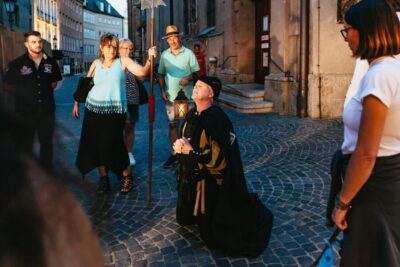
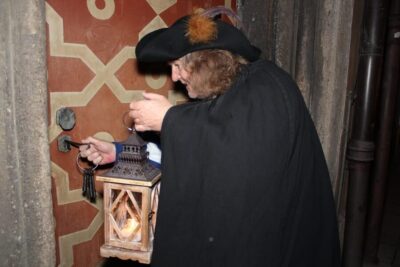
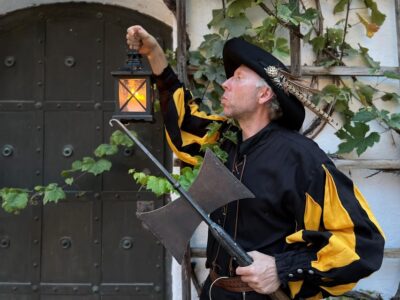
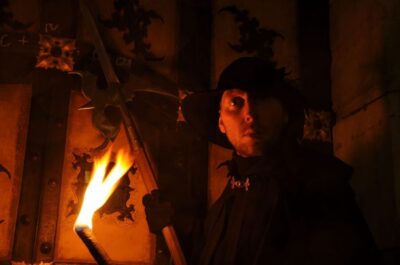
Munich after dark takes on a different mood when Wolfram the night watchman leads you through the old town with a lantern, halberd, and horn. His route links grim medieval subjects, such as executions, torture, and debt, with practical details about gates, walls, coins, and daily life.
I like the small maximum group of 10, which should make it easier to hear the guide and follow his demonstrations. I also like the route itself: it moves from Marienplatz to the Frauenkirche while tracing old walls and four symbolic city gates. The main drawback is simple: this is conducted in German, and the darker material may not suit young children or anyone who prefers a lighter city walk.
In This Review
- Key points at a glance
- Why this night walk feels different from a standard Munich tour
- Marienplatz and St. Peter’s: the night watchman’s first duties
- Petersplatz and Viktualienmarkt: death, burial, and the first wall
- Old Town Hall and Burgstraße: gates, weapons, and punishment
- Münzstraße and Alter Hof: silver pennies and the Wittelsbach court
- Dienerstraße and Weinstraße: closing the old Schwabing gates
- Schäfflerstraße and the Frauenkirche: debt and ambition
- Frauenplatz and Kaufingerstraße: traces and a final tower
- German language, group size, and practical comfort
- Is $16.13 a fair price for 90 minutes?
- Who should book this Munich night watchman tour?
- Should you book it?
- FAQ
- Where does the tour start?
- What time does the tour begin?
- Where does the tour end?
- How long does the experience last?
- Is the tour conducted in English?
- How many people can join the tour?
- Is admission to the stops included?
- Can I cancel for a refund?
Key points at a glance
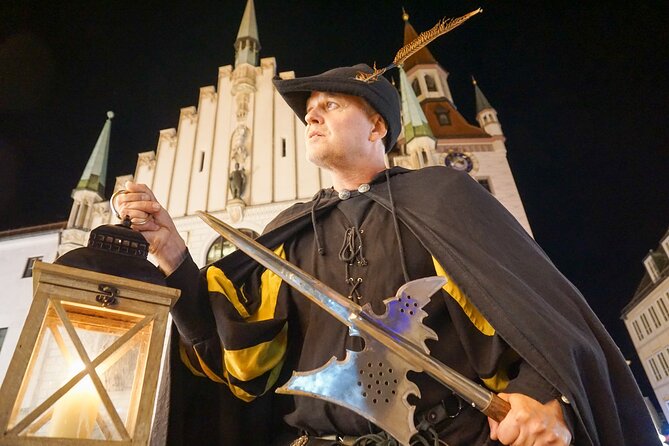
- A night watchman in full character: Wolfram carries a lantern, halberd, and horn while explaining his medieval duties.
- Fourteen stops in 90 minutes: The walk links Marienplatz, St. Peter’s, the Viktualienmarkt, Alter Hof, the Frauenkirche, and more.
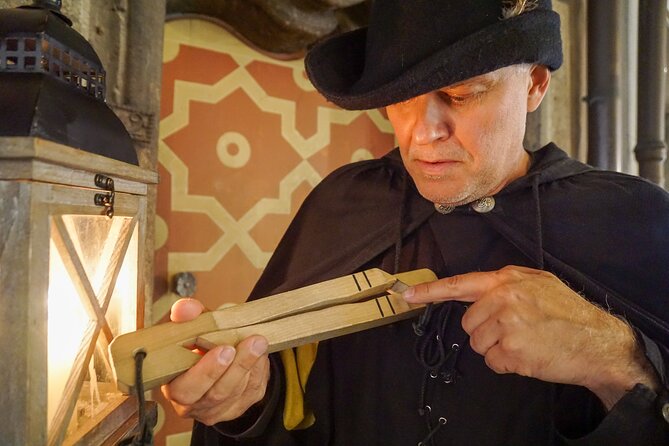
- Hands-on historical details: You see silver pennies, a tally stick, a medieval halberd, and the Poor Sinner Bell.
- The route follows old Munich: Wolfram points out where the first city wall and city gates once stood.
- A serious side of the Middle Ages: Expect executions, cemeteries, prisons, torture, punishments, and debt.
- Good value for a compact evening tour: At $16.13 per person, the experience gives you about an hour and a half in central Munich.
Why this night walk feels different from a standard Munich tour
Many old-town walks focus on grand buildings and famous names. This one asks you to picture Munich after sunset, when the city gates closed, the streets needed watching, and a night watchman had practical work to do.
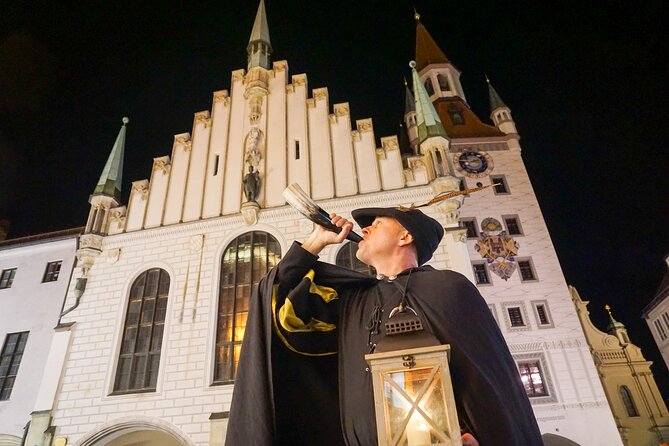
Wolfram begins at 8:30 pm outside Rathaus Apotheke at Marienplatz. He explains what a night watchman did in the Middle Ages before leading you through the old center. The lantern and horn are not just costume pieces. They help set the scene and give the tour a clear character from the first minutes.
I like the mix of objects and stories. You are not only looking at churches and squares. You handle the idea of medieval money through original silver pennies, see how a tally stick recorded debt, and learn how a halberd fitted the work of a watchman. Those details make the past easier to picture than a string of dates.
The tour has a reported rating of 4.9 out of 5 from 18 ratings, with 100 percent recommending it. That is a strong result, though the sample is small. The best match is someone who enjoys storytelling, historical detail, and a little theatrical atmosphere more than a quick list of Munich highlights.
More night watchman walks in Munich:
- Munich: Night Watchman Walking Tour
★ 4.7 · 2,092 reviews - Munich: Night Watchman Torch Tour in German
★ 4.8 · 1,280 reviews - Munich: Middle Ages Tour with Night Watchman
★ 4.9 · 652 reviews
Marienplatz and St. Peter’s: the night watchman’s first duties
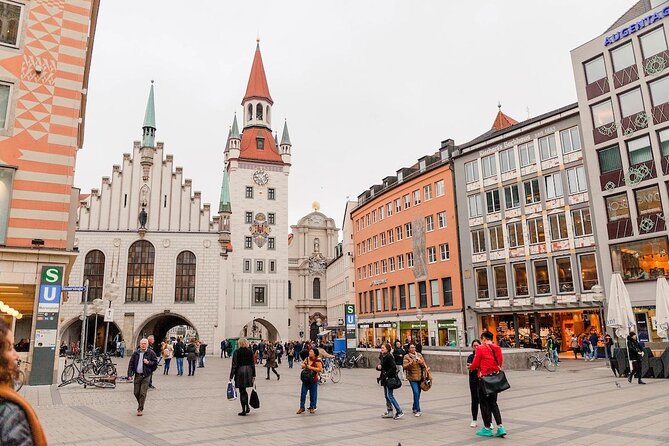
At Marienplatz, Wolfram introduces the responsibilities of his medieval job. This opening matters because it gives the rest of the walk a point of view. You are not simply following a guide from sight to sight. You are seeing the city through the eyes of someone responsible for safety, gates, warnings, and the night streets.
The first stop is brief, about seven minutes, but it establishes the tone. Since the tour begins outdoors at night, wear shoes suited to walking on city streets and bring enough clothing for the weather. The experience requires good weather, so poor conditions can lead to a new date or a full refund.
The next stop is St. Peter’s Church. Wolfram points out the Poor Sinner Bell and demonstrates the execution of Marco Bragadino. This is one of the more unusual parts of the tour, but it is also one of the darkest. You should expect a direct look at public punishment rather than a softened version of medieval life.
The St. Peter’s section lasts about 10 minutes. It gives the tour a dramatic early moment, but the subject may be uncomfortable for children or for anyone who prefers architecture without grim detail. If that sounds like you, this experience may not be the right way to spend an evening in Munich.
Petersplatz and Viktualienmarkt: death, burial, and the first wall
At Petersplatz, Wolfram explains the medieval cemetery and why people wanted to be buried as close to the altar as possible. This short stop, about eight minutes, connects religious belief with the physical layout of the city.
The point is not only that a cemetery once existed there. You also get a sense of how medieval people understood protection, status, and the afterlife. The wish to lie near the altar shows how strongly church space shaped everyday choices, even after death.
From there, the walk reaches the Viktualienmarkt area. The market is known today for food stalls and city life, but Wolfram uses it to mark the location of Munich’s first city wall. The stop takes around six minutes.
This is a useful change of scale. Churches and towers are easy to notice, but vanished walls are harder to read on your own. A guide who can place the first wall under the modern street plan helps you understand how small early Munich was and how the later city grew beyond it.
Old Town Hall and Burgstraße: gates, weapons, and punishment
At the Old Town Hall, Wolfram closes the Talburg gate and shows you a medieval halberd. The gate demonstration gives the tour a physical rhythm. Instead of only describing how the town was secured, he acts out the closing of an entrance.
The halberd also helps explain the night watchman’s public image. It was a working weapon and a clear sign of authority. This stop lasts about seven minutes, making it one of the shorter demonstrations, but the object gives it a practical focus.
Burgstraße brings a much heavier subject: Munich’s medieval prison, dungeon, torture, and punishments. Wolfram explains what happened inside this system and what forms of punishment were used in the Middle Ages.
Allow about 10 minutes here. The detail is valuable if you want more than a polished version of Munich’s past. It also means the experience is not a ghost tour built around harmless scares. Its darker moments come from real medieval practices and can feel unsettling.
I would especially consider this point if you are booking for a family. The supplied information says most people can participate, but it does not set a child age range. Since executions and torture are central topics, you should decide based on your child’s comfort with those subjects.
A few more Munich tours and experiences worth a look
- Munich Ghosts and Spirits Evening Walking Tour
★ 5.0 · 1,900 reviews - Bavarian Beer and Food Evening Tour in Munich
★ 4.5 · 1,575 reviews - On the road with the night watchman
★ 5.0 · 142 reviews - Munich: Night Watchman Tour for Kids (6 – 12 years) – 75 min
★ 4.9 · 140 reviews
Münzstraße and Alter Hof: silver pennies and the Wittelsbach court
At Münzstraße, Wolfram opens his purse and shows original silver pennies from the Middle Ages. This is one of the tour’s strongest details because coins make an abstract period feel immediate. You can connect medieval city life with something small, valuable, and handled every day.
The stop takes about 10 minutes. Wolfram is not only naming old money. He is giving you a physical example of the currency people used, saved, and carried. For anyone interested in ordinary life, this may be more memorable than another view of a grand facade.
At Alter Hof, the story shifts to power. This was the first castle built in Munich by the Wittelsbach family. Wolfram explains why Duke Ludwig, the builder, was also called the strict one.
The stop lasts around eight minutes. It helps connect the city’s streets with the ruling family that shaped Munich. You get a look at authority from two angles: the watchman’s daily work at street level and the duke’s power from the court above it.
The route works well here because it moves between small evidence and large political history. A coin shows how people paid. Alter Hof shows who controlled the city. That balance keeps the tour from becoming only a parade of rulers.
Dienerstraße and Weinstraße: closing the old Schwabing gates
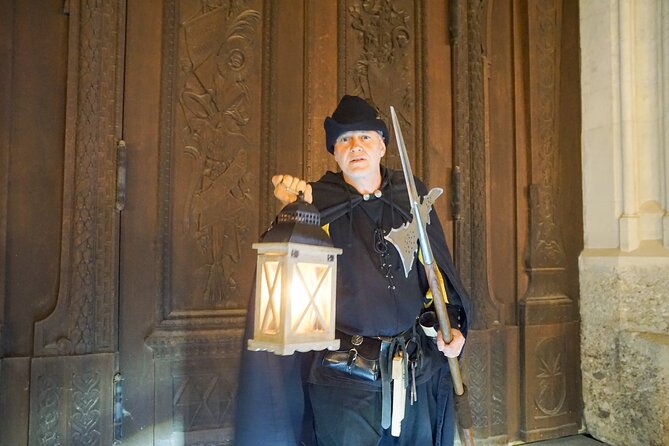
At Dienerstraße, Wolfram closes the Vorderes Schwabinger Tor and points out what still recalls Munich’s first city wall. This is a four-minute stop, but it has a clear purpose. You learn to look for fragments and street lines rather than expect a complete medieval gate to remain.
At Weinstraße, he closes the Rear Schwabing Gate and explains how addresses used to work. The stop takes about five minutes. It may sound like a small subject, yet old addresses reveal how differently people once navigated town.
These two stops also give the walk a sense of completion. The first wall is not treated as a single isolated fact at the Viktualienmarkt. You follow its memory through gates and streets, seeing how medieval Munich was organized and defended.
A few minutes at each location means the guide has to keep the pace moving. That is good for a compact tour, but it leaves little time to linger or take long photographs. You should approach this as a guided walk, not a relaxed evening of independent sightseeing.
Schäfflerstraße and the Frauenkirche: debt and ambition
At Schäfflerstraße, Wolfram introduces the tally stick and explains how it could be used to record debt. He carries his own and shows how the system worked. This is another especially good object lesson because the practice is easy to understand once you see the physical stick.
The stop lasts about five minutes. It adds an economic detail to the tour’s larger stories of religion, punishment, and power. Medieval Munich was not only churches, dukes, and city gates. People also borrowed, owed, traded, and kept accounts.
The Frauenkirche provides a sharp change in scale. Wolfram explains how this huge church could be built in just 20 years. The stop is about five minutes, enough to frame the building’s size and construction without turning the tour into a full church history lesson.
You will likely appreciate the timing here. After several stops about prisons, executions, and debt, the Frauenkirche gives the route a grand architectural pause. The focus remains on how the building was made, not on a long interior visit. The supplied details do not promise admission inside, so treat this as an exterior stop unless the guide says otherwise.
Frauenplatz and Kaufingerstraße: traces and a final tower
At Frauenplatz, Wolfram points out medieval traces that can still be found in Munich’s old town. This continues the theme introduced at the old city wall. The medieval city is not presented as something entirely lost. Parts of its layout and reminders remain in the modern streets.
The stop takes about five minutes. It is a good moment to connect the route’s separate pieces: gates, walls, churches, the castle, and street names. By now, you have a working picture of how the old center was built and controlled.
The final stop is on Kaufingerstraße, where Wolfram completes the Beautiful Tower and says goodbye. The walk ends near Hirmer at Kaufingerstraße 28, still in the central old town.
The stated duration is about one hour and 30 minutes, although the listed stop times add up to slightly more than that. Expect roughly an hour and a half, with normal walking between locations. The start and finish are both central, which makes it convenient to continue with dinner, public transport, or a short walk through the old town afterward.
German language, group size, and practical comfort
This is a German-language tour. That is the most important booking point. If you understand German well enough to follow a fast-moving historical story, you should get much more from the humor, wordplay, and explanations. If you do not, the props and locations may still be interesting, but the experience depends heavily on spoken detail.
The maximum group size is 10 people. That is a real advantage for a character-led walk. You should have a better chance of seeing the objects Wolfram shows and hearing his explanations than you would in a large group.
The starting time is 8:30 pm. In summer, that may not feel like deep night, while in winter it will be properly dark and much colder. One rating specifically praised Wolfram for keeping the story engaging despite icy conditions, but you should still dress for the season. This is an outdoor walking activity and weather can affect the schedule.
The tour accepts mobile tickets. Service animals are allowed, and the route is near public transportation. Most people can participate, though the information does not provide detailed accessibility notes about surfaces, steps, or the exact walking distance.
Free cancellation is available if you cancel at least 24 hours before the local start time. Changes or cancellations inside that window are not accepted for a refund. If bad weather or an insufficient number of bookings cancels the experience, you are offered another date or experience, or a full refund.
Is $16.13 a fair price for 90 minutes?
At $16.13 per person, this is priced below many longer guided city experiences. The value comes from the focused route and the amount of interpretation packed into it, not from admission to monuments. Each stop is listed as free admission, so you are paying for Wolfram’s storytelling, demonstrations, props, and route planning.
I consider that good value if you want an introduction to medieval Munich in one evening. You get 14 stops, several tangible objects, and a route through the most central part of town. The small group limit improves the value because the guide’s demonstrations are easier to follow.
The price is less attractive if you want extensive time inside churches or museums. This is a walking performance and history lesson, not an entrance-ticket tour. You are also paying for a German presentation, so the value drops quickly if you cannot understand the language.
Who should book this Munich night watchman tour?
I would choose this for you if you like old streets, practical history, and guides who stay in character. It should suit couples, friends, and small groups looking for a distinctive evening activity after daytime sightseeing.
It is also a good fit if you have already seen Marienplatz and the Frauenkirche but want to understand how the city worked before modern Munich took shape. The route revisits familiar places and gives them a medieval frame.
I would hesitate if you dislike grim stories, need a fully indoor activity, or want a quiet walk with long stops for photographs. The pace is steady, the subject matter includes executions and torture, and the tour is in German.
The high 4.9 rating from 18 ratings and universal recommendation indicate strong satisfaction, especially with Wolfram’s humor, competence, and ability to keep the group involved. The small number of ratings means I would treat that score as encouraging rather than final proof. The details of the experience make the decision clearer than the number alone.
Should you book it?
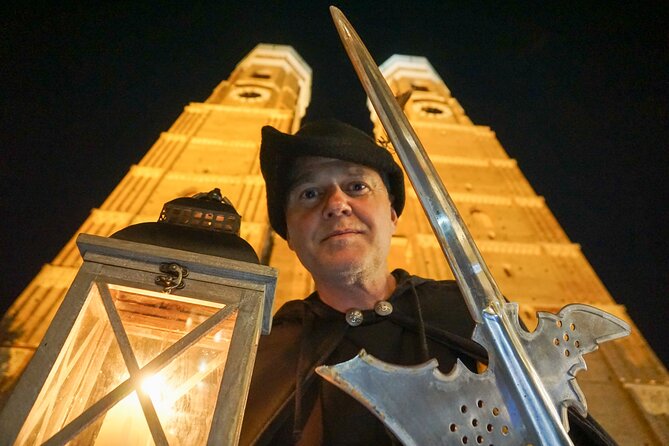
Book this tour if you want medieval Munich explained through objects, gates, and street-level stories, rather than a standard list of landmarks. Wolfram’s lantern, halberd, silver pennies, and tally stick give the walk a memorable shape, while the old walls and gates help you read the city beneath its modern surface.
Skip it if German is a barrier or if executions, torture, and medieval punishment sound unpleasant. For the right audience, $16.13 buys a compact, atmospheric history walk with a small group and a strong sense of place.
FAQ
Where does the tour start?
It starts at Rathaus Apotheke, Marienplatz 8, 80331 Munich, Germany.
What time does the tour begin?
The start time is 8:30 pm.
Where does the tour end?
The tour ends near Hirmer, Kaufingerstraße 28, 80331 Munich, Germany.
How long does the experience last?
The tour lasts approximately one hour and 30 minutes.
Is the tour conducted in English?
No. This experience is described as a German-language tour.
How many people can join the tour?
The tour has a maximum of 10 participants.
Is admission to the stops included?
The listed stops have no admission charge. The experience is an outdoor walking tour through Munich’s central streets.
Can I cancel for a refund?
Yes. You can cancel at least 24 hours before the local start time for a full refund. Cancellations or changes made less than 24 hours before the start are not refunded.
Just added around Munich
- Private tour from Munich to Rothenburg and Harburg★ 5.0 · 3 reviews
- Scenic Adventure Private Day Tour to The Konigssee Salzburg★ 4.5 · 3 reviews
- Private Transfer from Munich to Salzburg, English-speaking driver★ 3.5 · 3 reviews
- Munich: Capture the most Photogenic Spots with a Local★ 5.0 · 3 reviews
- Private Beer Tasting Tour in Munich with Oktoberfest Museum★ 4.3 · 3 reviews
- Munich Photoshoot: A Must-Have Holiday Experience!★ 5.0 · 3 reviews
- Paul’s Private Tour in the Alte Pinakothek Munich★ 5.0 · 3 reviews
- Private Tour to Hallstatt Salt Mine and Skywalk with Lunch★ 5.0 · 3 reviews
Night Watchman Tours, compared.
Der Nachtwächter für Kinder – Führung auf Deutsch
Read our review →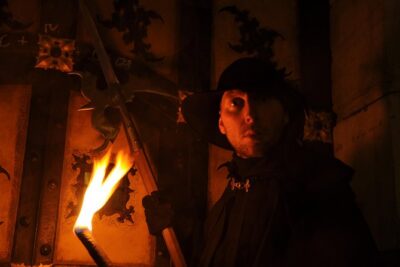
Night Watchman Tour for Kids (6 – 12 years) – 75 min
Read our review →
Browse the lists this tour appears in