
Reviewed · MUNICH OLD TOWN TOURS
A delicacy tour through Munich’s old town
Munich’s best introduction may come one bite at a time. This two-hour walk begins at Isartor with a seasonal drink, then moves through the old town for beer, bread, Obatzda, white sausage, and a freshly made Schmalznudel at Viktualienmarkt. You get food and place together, not a lecture followed by lunch.
I like the small tasting portions, which let you sample several Munich favorites without giving up half a day. I also like the local rhythm of the route, from a historic city gate to the market and its food stalls. The main drawback is simple: if you want a full meal, this tour may leave you looking for more food afterward.
In This Review
- Key points at a glance
- Isartor starts the Munich tasting tour
- Pfennigmuckerl and the small details of Munich baking
- Three beers, Obatzda, and a chance to taste like a sommelier
- The Alfons Schuhbeck stop adds a touch of culinary curiosity
- Viktualienmarkt brings the route into everyday Munich
- Watching Auszog’ne being made
- How the two-hour format affects the experience
- Is $46.25 a fair price?
- Who should book this Munich food walk?
- Should you book it?
- FAQ
- Where does the tour begin?
- Where does the tour end?
- How long does the experience last?
- What is included in the welcome drink?
- How much beer do I taste?
- What food is served with the beer?
- Is the tour available by mobile ticket?
- What is the cancellation policy?
Key points at a glance
- Starts with a seasonal drink at Isartor: The welcome taste may be warm or cold, and comes from St. Michaelshof at Viktualienmarkt.
- Three Munich beers in small pours: You receive three 0.1-liter samples, served with Obatzda and double-baked farmer’s crust bread.
- Includes several local specialties: Expect a Pfennigmuckerl, a small surprise connected with Alfons Schuhbeck, fresh white sausage, and a Schmalznudel.
- Ends at Viktualienmarkt: The route finishes at one of Munich’s best-known food markets, rather than returning to the starting point.
- A compact old-town outing: The experience lasts about two hours and accepts a maximum of 25 people.
- Strong value for a food sampler: At $46.25 per person, the price covers multiple tastings, a guide, and an easy introduction to Munich food traditions.
Isartor starts the Munich tasting tour
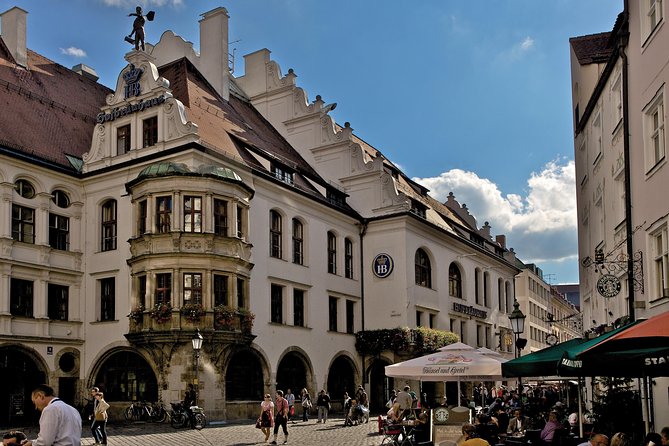
Isartor is a practical place to begin. This old city gate gives the tour a clear sense of arrival, and it is near public transportation, so you do not need to cross the whole center with an empty stomach and a hard-to-find meeting point.
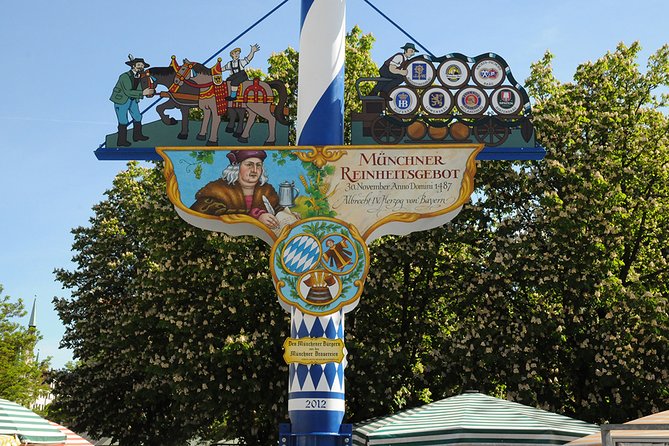
Your guide meets you here with a welcome drink made from a kosmo-bio-dynamic syrup from St. Michaelshof at Viktualienmarkt. The description uses that unusual term without explaining the recipe, so think of this as a seasonal house drink rather than a standard soft drink. Depending on the time of year, it is served warm or cold.
That small opening matters. A food walk should start with a taste, not with a long explanation of where to stand. The drink gives you an early sense of the tour’s approach: local products, short stops, and food as the way into Munich.
The route then continues on foot through the old town. The exact streets and timing can vary, but the plan is not to race between distant sights. The experience connects food stops with old-town places, making it a useful first activity if you want an orientation to central Munich.
More old town tours in Munich:
- Munich: Old Town & Viktualienmarkt City Walk in German
★ 4.7 · 2,304 reviews - Munich Old Town Walking Tour
★ 4.5 · 1,287 reviews - Munich: Spooky Tour of Old Town in German
★ 4.6 · 1,112 reviews
Pfennigmuckerl and the small details of Munich baking
One early taste is the traditional Munich Pfennigmuckerl from the Hofkunstmühle. The name may be unfamiliar even if you already know pretzels and rolls. That is part of the fun here. You are not being handed only the most famous German foods; you are getting a chance to try something tied more closely to Munich’s own baking culture.
Food walks are often strongest when they include such small items. A sausage and a beer can be found in many German cities. A local baked specialty gives you a detail to remember and a reason to pay attention when you see similar products in bakeries or markets later.
The Hofkunstmühle connection also points to the care taken with the bread portion of the route. The tour includes double-baked farmer’s crust bread with the beer tasting. That bread is more than a plate filler. It is there to carry the Obatzda, the soft cheese spread that is one of Bavaria’s familiar beer-hall companions.
You should expect tastes rather than full servings. That keeps the pace moving, but it also means you may want breakfast or a later meal, especially if you have a large appetite.
Three beers, Obatzda, and a chance to taste like a sommelier
The beer stop is the centerpiece for many people. You receive three samples of 0.1 liters each, with the guide moderating the tasting and encouraging you to try your hand as a beer sommelier.
The pours are small, which is good news. You can compare the beers without getting uncomfortably full or losing the thread of the tour. At 0.1 liters each, the total beer portion is 0.3 liters, enough for comparison but not a replacement for a full Munich beer.
The value comes from the explanation around the glasses. You are not simply given three drinks and sent along. The tasting lets you notice differences between Munich beers, even if you are new to beer terminology. Pay attention to color, aroma, bitterness, sweetness, and how each beer works with the food.
Obatzda gives the tasting its Bavarian character. This seasoned cheese spread is traditionally associated with beer gardens and beer halls, and it works especially well with crusty bread. The combination is hearty, salty, and designed for a relaxed drink rather than a quick snack.
I like this part because it gives you a practical way to understand local eating habits. Munich food culture is not only about famous dishes. It is also about the match between bread, cheese, and beer, served in modest portions and enjoyed slowly.
If you do not drink alcohol, the supplied details do not specify a nonalcoholic substitute. That is worth checking before you book. The beer tasting is a central feature, not a minor extra.
The Alfons Schuhbeck stop adds a touch of culinary curiosity
The route includes a short visit to Alfons Schuhbeck, where you receive a small surprise. The available details do not identify the surprise, so I would treat it as a bonus rather than plan your expectations around a particular product.
This stop helps break up the tasting. You move from a traditional bakery item and beer pairing to a more chef-linked food setting, then onward to the market. It gives the guide another chance to explain how Munich’s food scene includes both everyday specialties and higher-profile culinary names.
The visit is short, so do not expect a full cooking demonstration or a long restaurant meal. That is also why it fits neatly into a two-hour tour. You get a quick look and a taste, then keep moving through the old town.
A short stop can be especially useful for first-time visitors. You may not yet know which Munich food names deserve your attention. A guide can point out the relevance of a place, give you a taste, and let you decide if you want to return later.
More food tours in Munich:
- Munich: Viktualienmarkt Food Tour
★ 4.5 · 1,127 reviews - Munich: Beer and Food Tour with Dinner & Oktoberfest Museum
★ 4.7 · 1,086 reviews - Lunch Like a Local: Munich’s ORIGINAL Viktualienmarkt Food Tour
★ 5.0 · 416 reviews - Munich: Viktualienmarkt Food Tasting Tour in German
★ 4.7 · 394 reviews
Viktualienmarkt brings the route into everyday Munich
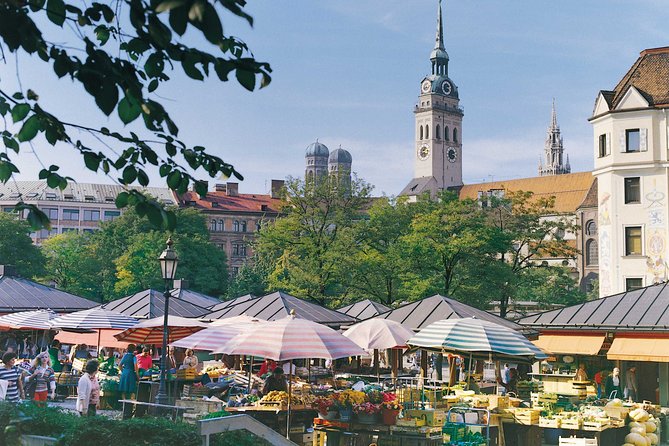
The walk continues to Viktualienmarkt, where the food becomes even more connected to the city’s daily market life. The market is not treated only as a photo stop. You get a fresh white sausage there, placing one of Bavaria’s most recognizable foods inside the setting where local produce and prepared foods come together.
White sausage, or Weisswurst, is a delicate Munich specialty and a very different experience from a heavily browned sausage. It is traditionally associated with a daytime meal, which makes it a fitting item for a food tour that starts earlier rather than late at night.
The tour description does not specify the exact serving style, condiments, or side dish. You should therefore expect the sausage itself as the confirmed inclusion, not a full restaurant presentation. Still, tasting it fresh at Viktualienmarkt gives the item a stronger sense of place than eating a generic sausage anywhere in Germany.
The market is also the practical end of the walk. The tour finishes at Viktualienmarkt, at 80 München-Altstadt-Lehel, rather than looping back to Isartor. That is useful if you want to continue sightseeing in central Munich, browse the market, or find a later meal nearby.
Because the tour ends at the market, you may want to leave extra time afterward. The stated activity length is about two hours, but the market itself can easily become part of your day if you are interested in food.
Watching Auszog’ne being made
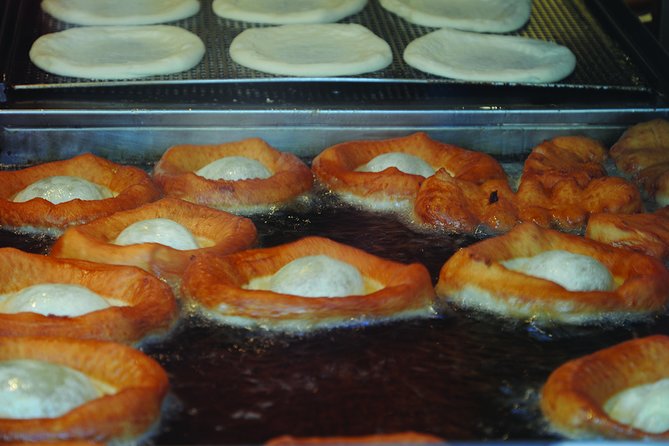
The final highlight is the Schmalznudel stop. Here, you can watch an Auszog’ne, also called a Strizerl or Schmalznudel, being made and then eat one fresh.
This is a fine way to finish because it adds movement and craft to the food list. Earlier stops are mainly about tasting. At the final stop, you see how the dough is handled and turned into the finished pastry. The supplied information does not describe the full cooking process, so I would not expect a long workshop. You are watching the preparation, not making one yourself.
The names can vary by local usage, but the basic idea is a traditional fried pastry. Freshness matters here. A pastry eaten soon after it is made has a different appeal from one that has been sitting in a display case for hours.
The Schmalznudel also brings some sweetness after the salty cheese, bread, beer, and sausage. That gives the route a sensible progression without turning it into a full meal. If you enjoy seeing food prepared in front of you, this may be the most memorable stop.
You should also keep your portion expectations realistic. The tour includes one final pastry, not an open-ended dessert tasting. The pleasure is in the warm, fresh finish and the chance to see a Munich specialty made in front of you.
How the two-hour format affects the experience
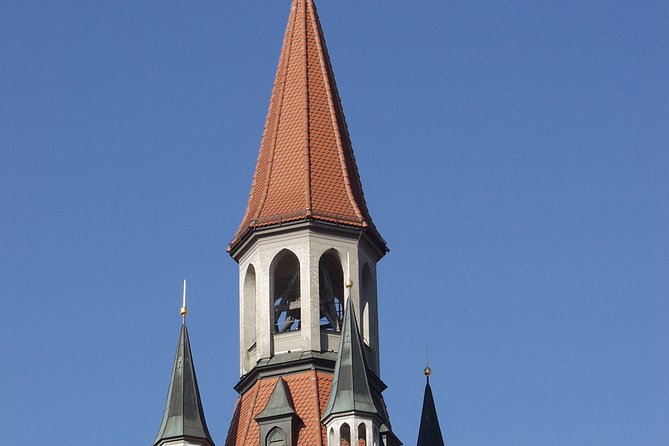
Two hours is a good length for this kind of outing. You receive enough tastings to understand the local food scene, but you do not spend an entire afternoon following a guide from one restaurant to another.
The short format does require a brisk pace. Several stops are packed into the walk: Isartor, the welcome drink, the bakery item, the beer tasting, the Alfons Schuhbeck visit, Viktualienmarkt, white sausage, and the Schmalznudel. Some stops will be quick by design.
I would book this early in your Munich stay if you want ideas for later meals. The tour can introduce you to foods you may want to order again, especially Obatzda, white sausage, or the pastry. It also gives you a natural endpoint at Viktualienmarkt, where you can continue exploring.
The group can include up to 25 people. That is not an intimate private tour, but it is still a manageable size for a city walk. A group of that size can make the tastings feel social, though you may need to stay close to the guide in busy old-town areas.
A guide named Claudia has led this route with an entertaining, informative approach. Her tour was described as full of stories at attractive places, with a pace that kept the experience lively. Since guide assignments can change, I would treat Claudia as a possible guide rather than a guaranteed one.
Is $46.25 a fair price?
At $46.25 per person, this is not the cheapest way to grab a beer and sausage in Munich. That comparison misses what you are paying for. The price includes a guided old-town walk, a seasonal welcome drink, a local baked item, three beer samples, Obatzda, farmer’s bread, a Schuhbeck-related surprise, white sausage, and a fresh Schmalznudel.
The value is strongest if you want context with your food. Buying the items separately might cost less, but you would have to choose the places, understand what to order, and connect the stops yourself. The guide handles that work and gives the tastings a story.
The value is weaker if you already know Munich food well or want large portions. This is a sampler, not a sit-down lunch. You are paying for range, explanation, and an organized route.
The rating is 4.7 out of 5 from 21 ratings, with 90 percent recommending the experience. That is a positive record, though the number of ratings is still modest. I would read it as a strong sign of satisfaction, not a guarantee that every group will have the same guide or pace.
The tour is booked an average of 38 days ahead. That suggests you should not leave it until the last moment if your Munich dates are fixed. Free cancellation is available if you cancel at least 24 hours before the local start time. Changes made inside that window are not accepted, and the experience requires a minimum number of people to operate.
Who should book this Munich food walk?
I would recommend it to first-time Munich visitors who want a quick, friendly introduction to local tastes. It is especially useful if you like trying several specialties but do not want to commit to a long meal or a full-day food tour.
Beer drinkers will get the clearest benefit from the three-sample tasting. So will people who enjoy learning how food and drink fit together. The route also works for curious eaters who want more than a standard pretzel and sausage.
Families and mixed groups may find the small portions helpful, but the supplied details do not confirm children’s pricing or special substitutions. Anyone with dietary restrictions should ask the provider before booking, since the included foods contain obvious dairy, bread, meat, pastry, and alcohol elements.
This is less suitable for someone seeking a private experience, a cooking class, or an extensive meal. The group may reach 25 people, the stops are short, and the route is built around tasting several items rather than lingering at one table.
Should you book it?
Book this tour if you want Munich food, old-town orientation, and local stories in one compact outing. The combination of beer samples, Obatzda, white sausage, Viktualienmarkt, and a freshly made Schmalznudel gives you a useful picture of Munich eating without taking over your day.
Skip it if you need a full lunch, avoid alcohol without a confirmed alternative, or already have a detailed Munich food plan. For most first-time visitors, though, $46.25 is a fair price for a guided sampler with a clear sense of place. Schedule it early, arrive hungry but not starving, and keep your afternoon open after the final pastry at Viktualienmarkt.
FAQ
Where does the tour begin?
The tour begins at Isartor in Munich, Germany.
Where does the tour end?
The tour ends at Viktualienmarkt, 80 München-Altstadt-Lehel, Germany.
How long does the experience last?
The tour lasts approximately two hours.
What is included in the welcome drink?
The welcome drink is prepared with kosmo-bio-dynamic syrup from St. Michaelshof on Viktualienmarkt. It is served warm or cold depending on the season.
How much beer do I taste?
You receive three beer samples of 0.1 liters each.
What food is served with the beer?
The beer tasting includes Munich Obatzda and double-baked farmer’s crust bread.
Is the tour available by mobile ticket?
Yes. The experience includes a mobile ticket.
What is the cancellation policy?
You can cancel for a full refund up to 24 hours before the experience start time. Cancellations or changes made less than 24 hours in advance are not accepted for a refund.
Just added around Munich
- Private Transfer from Munich to Salzburg, English-speaking driver★ 3.5 · 3 reviews
- Private tour from Munich to Rothenburg and Harburg★ 5.0 · 3 reviews
- Scenic Adventure Private Day Tour to The Konigssee Salzburg★ 4.5 · 3 reviews
- Munich: Capture the most Photogenic Spots with a Local★ 5.0 · 3 reviews
- Private Beer Tasting Tour in Munich with Oktoberfest Museum★ 4.3 · 3 reviews
- Munich Photoshoot: A Must-Have Holiday Experience!★ 5.0 · 3 reviews
- Paul’s Private Tour in the Alte Pinakothek Munich★ 5.0 · 3 reviews
- Private Tour to Hallstatt Salt Mine and Skywalk with Lunch★ 5.0 · 3 reviews
Munich Old Town Tours, compared.
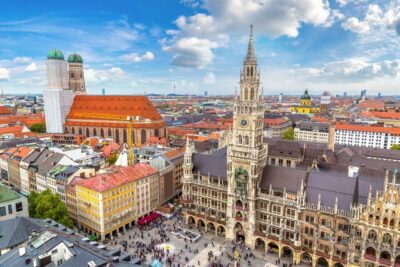
Old Town & Viktualienmarkt City Walk in German
Read our review →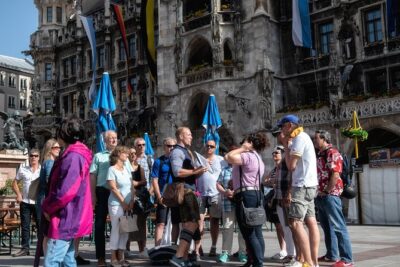
Mystic Munich – Sagas and Legends of the Old Town
Read our review →Munich Old Town Food Tour with 10+ Bavarian Specialties
Read our review →Browse the lists this tour appears in