
Reviewed · MUNICH OLD TOWN TOURS
Munich: Walking Tour Old Town and Viktualienmarkt
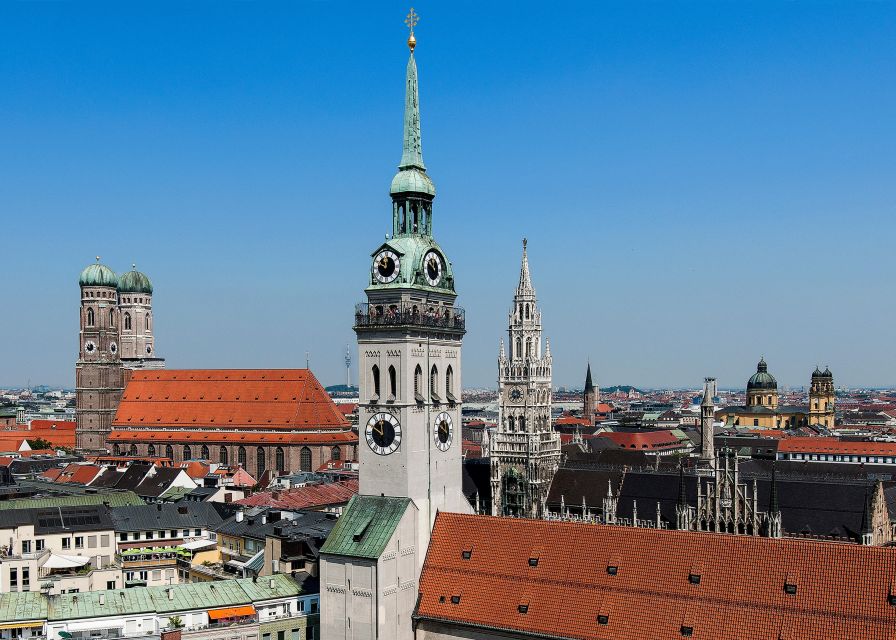
Munich’s best-known sights fit neatly into this 90-minute Old Town walk, but the real pleasure is the way food, royal power, beer culture, and everyday city life meet along the route. You begin at Marienplatz and finish at Odeonsplatz, covering a useful stretch of the historic center without needing a bus or tram.
I like the stop at Viktualienmarkt, where the tour adds smells, colors, and local food stalls to what could otherwise be a building-by-building city walk. I also like the guides’ flexible style. Karen, Claudia, Gerhard, and others have adapted walks for families, history fans, German learners, and groups with limited time.
The main drawback is the pace. Ten minutes at each listed sight gives you an excellent orientation, but not time for interior visits or long pauses. The meeting point around the Mariensäule can also be hard to spot, so confirm the exact instructions before you set out.
In This Review
- Key points to know before booking
- Why this route works for a first look at Munich
- Marienplatz and the New Town Hall
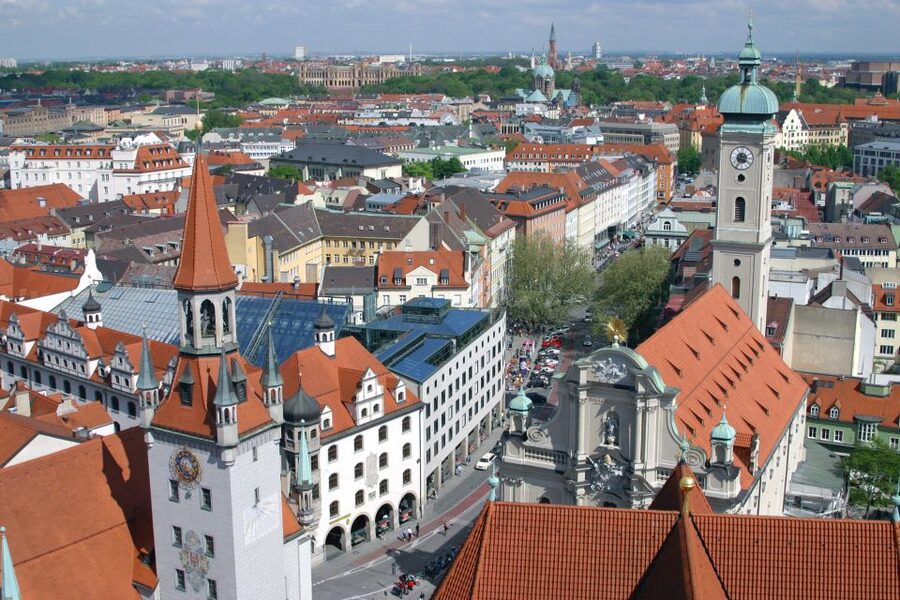
- St. Peter’s Church and the oldest parish church
- Viktualienmarkt, Munich’s open-air pantry
- Alter Hof and Munich’s medieval center
- Hofbräuhaus and the Bavarian beer story
- Maximilianstraße, where luxury replaces medieval lanes
- The Residenz and Bavarian royal power
- Odeonsplatz and the northernmost Italian city
- Guides who shape the experience
- Price, group size, and practical value
- Who should book this Munich walk?
- Should you book it?
- FAQ
- Where does the Munich Old Town tour start?
- How long does the walking tour last?
- Which languages are available?
- Which sights are included on the route?
- Are food and drinks included?
- Are entrance fees included?
- Can I book a private group?
- What should I bring?
Key points to know before booking
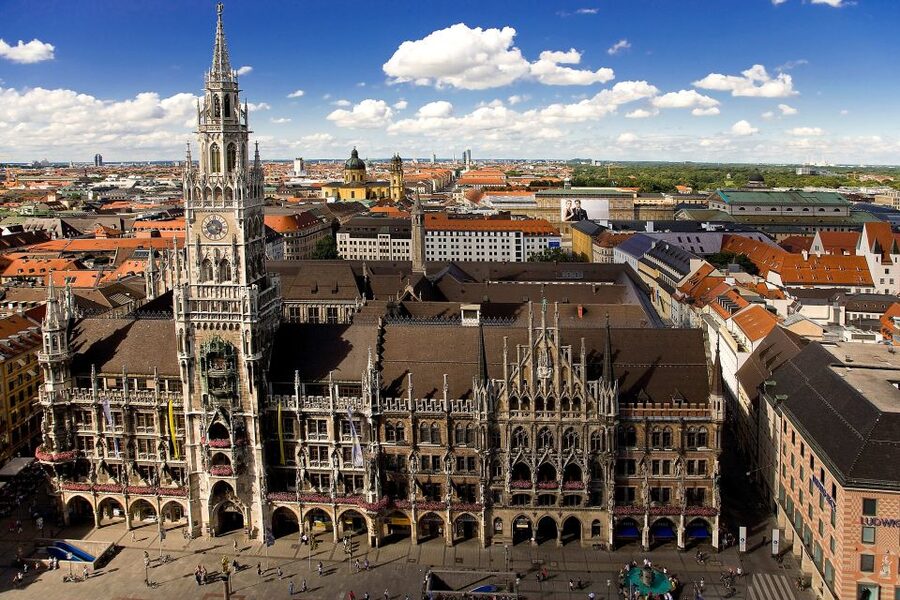
- Marienplatz is the starting point: Begin beneath the New Town Hall and its famous Glockenspiel, right in Munich’s central square.
- Viktualienmarkt adds a taste of daily Munich: You’ll pass stalls selling bread, cheese, sausages, and other delicacies, but food and drinks are not included.
- The route links major sights efficiently: St. Peter’s Church, Alter Hof, Hofbräuhaus, Maximilianstraße, the Residenz, and Odeonsplatz all appear in one compact walk.
- Guides adjust the conversation: Past guides have focused on architecture, beer culture, early Munich, family questions, and local recommendations.
- Choose group size with care: Shared and private options are available, and the advertised group price is $282 for up to 30 people.
- Wear proper walking shoes: The tour runs rain or shine, and the route is not suitable for people with mobility impairments.
Why this route works for a first look at Munich
A good first city walk should answer three basic questions: Where am I, what shaped this place, and what should I return to later? This route does all three.
Marienplatz gives you a clear center point. From there, the walk moves through church history, the food market, medieval streets, Bavarian beer culture, royal buildings, luxury shopping, and grand public squares. You get a broad introduction rather than a narrow specialist tour.
That makes the experience especially useful on your first day. You can mark the places that deserve a longer visit, ask for restaurant suggestions, and learn how Munich’s central districts connect. Guides have also been praised for giving practical tips, including places to eat, things to see later, and even convenient restroom locations.
The tour is conducted in English or German. Its short length suits you if you have only a morning or afternoon in the city, though you should not expect a slow, detailed architectural lecture at every stop.
More Viktualienmarkt tastings in Munich:
- Munich: Old Town & Viktualienmarkt City Walk in German
★ 4.7 · 2,304 reviews - Munich: Viktualienmarkt Food Tour
★ 4.5 · 1,127 reviews - Munich City Walking Tour, includes Third Reich & Viktualienmarkt
★ 5.0 · 458 reviews
Marienplatz and the New Town Hall
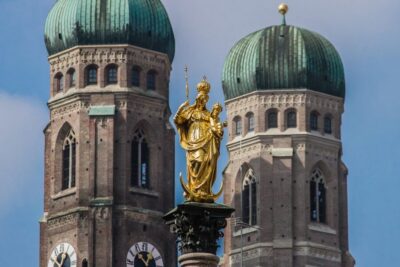
The walk starts at the Mariensäule, the column in the middle of Marienplatz. This is a central and sensible meeting point, but the square has a lot of open space around the statue. Look carefully for the guide and check the meeting instructions so you are not left wondering if you are in the wrong place.
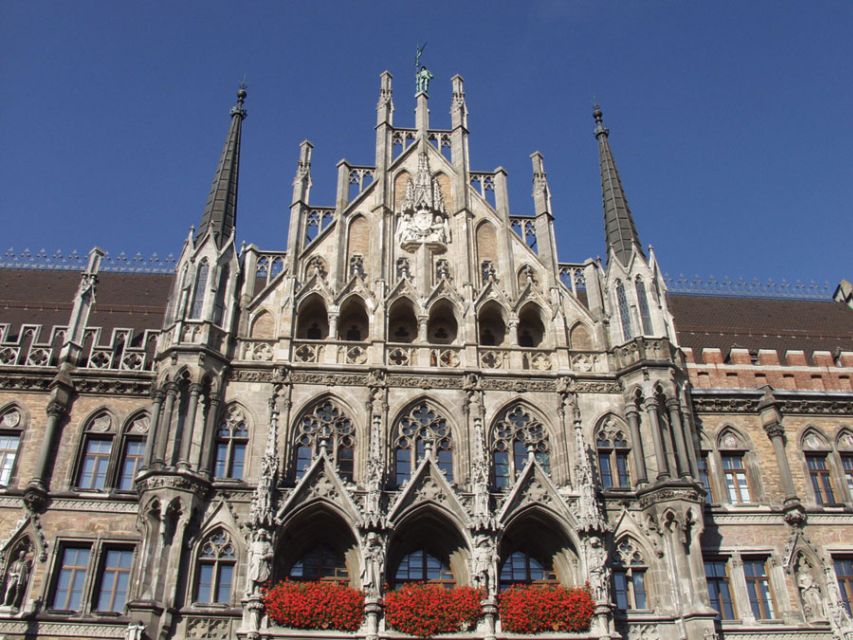
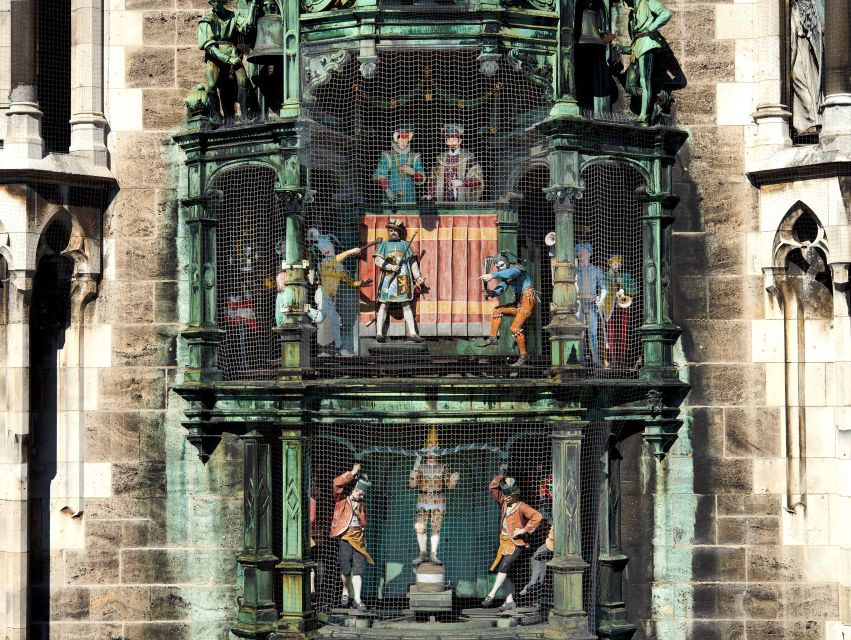
The first sight is the Neues Rathaus, or New Town Hall. Its Neo-Gothic facade and tall tower dominate the square, while the Glockenspiel draws attention with its moving figures and bells. You’ll get a short introduction here, enough to understand why Marienplatz is Munich’s civic heart.
This is also where a guide can help you read the city. Instead of simply pointing at a grand facade, a good guide can explain how the square functions as a meeting place and why the town hall became one of Munich’s most recognizable symbols. Several guides have used pictures to make past buildings and historical scenes easier to understand.
A short stop here is useful, but it is not an invitation to wait for a full Glockenspiel performance or climb the tower. The schedule allows about ten minutes for sightseeing, so treat Marienplatz as your orientation point.
St. Peter’s Church and the oldest parish church
From Marienplatz, you continue to St. Peter’s Church, known locally as Alter Peter. The church is presented as Munich’s oldest parish church, giving the tour an early link to the city’s religious and civic development.
The stop is mainly exterior sightseeing. You can admire the building and hear about its place in Munich’s story, but entrance fees are not included, and the tour does not promise time for an interior visit or tower climb.
I like this part because it breaks up the grand civic architecture with a more personal place of worship. A guide can also connect the church to the surrounding streets, showing how the oldest parts of Munich sit directly beside modern shops and busy public spaces.
If church interiors are a priority for you, plan a separate visit. The walking tour gives you context, not an extended church inspection.
Viktualienmarkt, Munich’s open-air pantry
Viktualienmarkt is the most sensory stop on the route. Munich’s largest and most traditional food market fills the area with stalls selling fresh bread, cheeses, sausages, and other delicacies. You can browse as you walk, and the market gives you a quick look at how food remains part of the city’s public life.
The tour includes sightseeing, not a meal. Food and drinks cost extra, and the schedule allows about ten minutes here. That is enough to take in the atmosphere and perhaps make a note of something to return for, but too short for a leisurely market lunch.
I would resist buying a full meal during the guided walk. You’ll get more from the tour if you stay with the group, listen to the guide, and return afterward if a stall catches your eye. The market is one of the strongest reasons to choose this route over a purely architectural walk.
More old town tours in Munich:
- Munich Old Town Walking Tour
★ 4.5 · 1,287 reviews - Munich: Spooky Tour of Old Town in German
★ 4.6 · 1,112 reviews - Munich: Old Town Walking Tour
★ 4.7 · 589 reviews - Munich: Old Town Guided Walking Tour
★ 4.6 · 479 reviews
Alter Hof and Munich’s medieval center
Next comes Alter Hof, or the Old Court, the former seat of the Wittelsbach dukes. This stop shifts the story from parish life and public markets to the rulers who shaped Bavaria.
The nearby Burgstraße is described as one of Munich’s oldest streets. Walking here helps you picture an earlier city, before the wide ceremonial avenues and large royal squares that appear later in the tour.
This section is valuable because it shows that Munich is not only a city of monumental nineteenth-century buildings. Its older lanes and courtyards are woven into the modern center. The guide’s storytelling matters here, since the remaining structures do not always explain their importance on their own.
The ten-minute sightseeing window keeps the walk moving. If you want detailed information about the Wittelsbach family or medieval urban planning, ask questions as you go and consider a longer historical tour later.
Hofbräuhaus and the Bavarian beer story
The route continues through the winding Platzlgassen alleys to the Hofbräuhaus. This famous beer hall has welcomed locals and royalty, and it remains one of Munich’s most familiar symbols.
The tour does not include a beer, meal, or reserved table. You see the building and hear about its role in Munich’s beer culture, then continue. That is a sensible approach for a short city orientation, since stopping to eat would quickly consume the walking time.
This is also a useful place to separate real local culture from postcard images. Munich’s beer tradition is important, but it is only one part of the city. Guides have been praised for explaining beer culture without letting it take over the entire tour.
If you want the full beer hall experience, return independently. The guided visit helps you understand why the Hofbräuhaus matters, while a separate visit lets you stay as long as you like.
Maximilianstraße, where luxury replaces medieval lanes
The change is striking as you reach Maximilianstraße. The route leaves the older alleys and passes one of Germany’s most expensive shopping streets, lined with high-end boutiques, jewelers, and designer showrooms.
You do not need to shop here to appreciate the street. It shows another side of Munich, one tied to wealth, status, and royal-era city planning. The contrast with Viktualienmarkt is part of the fun: one stop centers on food and daily purchases, the other on luxury and display.
This is a sightseeing stop rather than a shopping excursion. Ten minutes gives you time to absorb the architecture and window displays, but not to browse seriously. I find that useful because the street becomes a visual example of how different versions of Munich sit close together.
The Residenz and Bavarian royal power
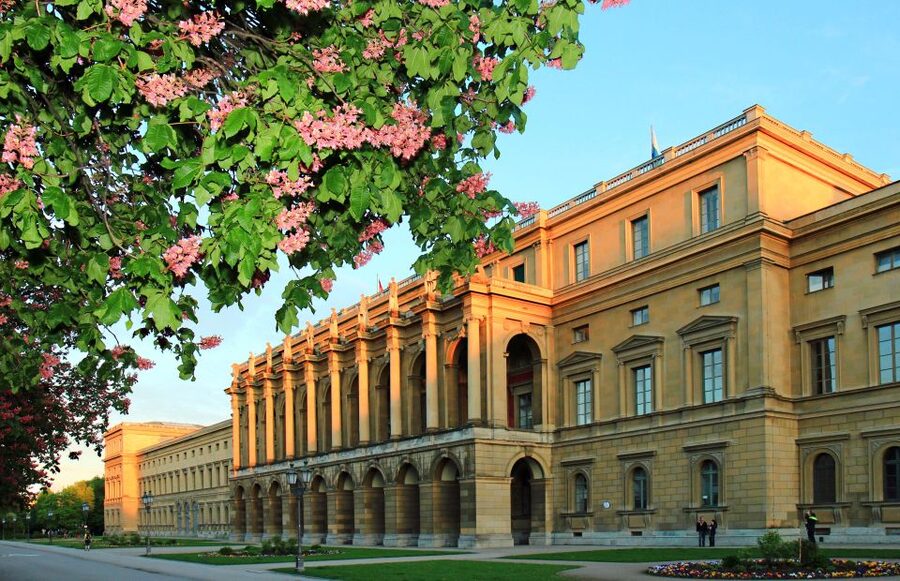
The tour continues past the Munich Residenz, the former seat of Bavarian royalty. Along with the Bavarian State Opera, it introduces the city’s royal and cultural power centers.
The opera house is a neoclassical landmark, while the Residenz represents the ruling Wittelsbach family. Together they help explain Munich’s formal side: grand facades, court life, music, ceremony, and state authority.
Again, the tour stays outside. Entrance fees are not included, and a ten-minute stop cannot cover the Residenz interiors, collections, and rooms. If royal apartments or palace art are high on your list, set aside a separate visit.
For a first walk, though, the exterior context is worthwhile. It gives you a reason to return, and the guide can point out details you might otherwise pass without noticing.
Odeonsplatz and the northernmost Italian city
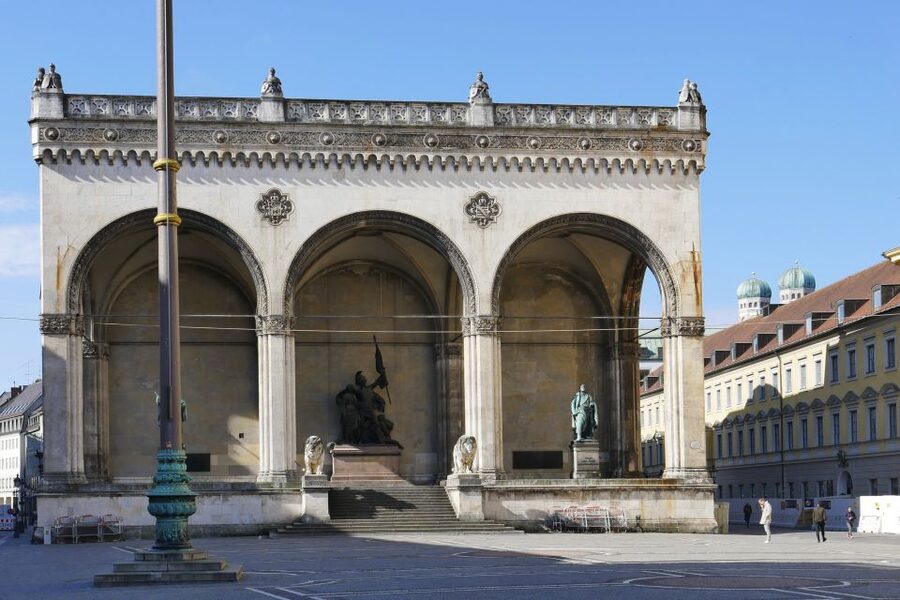
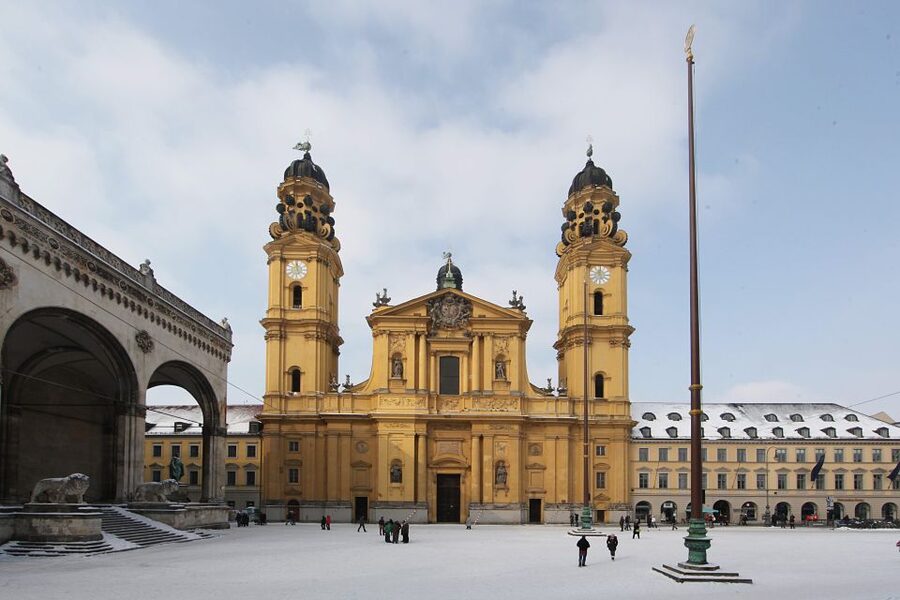
The final major stop is Odeonsplatz, one of Munich’s most impressive squares. The square is framed by the Feldherrnhalle and the Theatinerkirche, whose Italian Baroque design helps explain Munich’s reputation as the northernmost city of Italy.
This is a strong finish because several themes meet here. You see Bavarian state power, Italian architectural influence, and a wide ceremonial space designed for public display. After the narrower streets and market lanes, Odeonsplatz feels open and formal.
The route ends with time to pause and take in the surroundings. It is a good place to continue on foot, visit a nearby attraction separately, or simply use what you have learned to plan the rest of your day.
Guides who shape the experience
The quality of this tour depends heavily on the individual guide. The strongest reports describe guides who tell stories, answer questions, and adjust the walk to the people in front of them.
Karen has worked well with families and encouraged a ten-year-old to practice German. She also changed the focus to match the group’s interests. Claudia has focused closely on Munich’s early development and even continued beyond the scheduled time to discuss architecture. Gerhard has been praised for warmth, useful food suggestions, and a clear passion for the city.
Other guides, including Gitti, Tanja, Sabine, Christina, Michael, and Joe, have been credited with mixing facts, personal stories, humor, and practical advice. Michael was especially appreciated for explaining Munich’s past while sharing ideas for experiencing the city in a Bavarian way.
This range matters. You are not booking a recorded script delivered at every stop. The guide may ask what interests you and shape the conversation around it. Still, private groups generally offer the best chance for a fully personal pace. In a shared group, the guide must balance different ages, interests, and walking speeds.
Price, group size, and practical value
The listed price is $282 per group of up to 30 people. That can be fair for a private group, especially if you are traveling with family or friends and want one guide for everyone. Split among a small group, the cost becomes easier to justify than paying per person for several separate short tours.
For a large shared group, value depends on the final option and group size. A 90-minute walk is not cheap if you only want a quick orientation, but it covers many central sights with a live guide and avoids transport costs during the route. The price does not include meals, drinks, transportation to Marienplatz, or entrance fees.
The walk is wheelchair accessible according to the activity details, but it is also marked as unsuitable for people with mobility impairments. That is a point to clarify before booking, especially if anyone in your group has trouble with extended walking or uneven streets.
Wear comfortable shoes and bring rain protection. The tour runs in all weather, and the market and historic streets are best enjoyed when you are prepared to keep moving.
Who should book this Munich walk?
I would choose this tour if you are visiting Munich for the first time, want a quick orientation, or prefer history explained through streets and buildings rather than a museum-only visit. Families can benefit from the flexible storytelling, and the route gives older children several different settings to stay interested.
It also suits you if you enjoy asking questions. Guides have adapted the walk for architecture fans, beer culture, early Munich, local customs, and German practice. That flexibility can turn a standard sightseeing route into a more personal introduction.
I would choose something else if your main goal is to enter every major building, eat your way through Viktualienmarkt, or spend a long time at one site. The itinerary is broad and brisk. It shows you the city center, then leaves you to return to the places you want to explore properly.
Should you book it?
Book this Munich Old Town walk if you want a well-planned first look at the city, with a guide who can connect Marienplatz, the market, beer culture, royal buildings, and Odeonsplatz in one outing. The strong guide reports and repeated praise for tailored storytelling make it more appealing than a rigid point-and-speak tour.
Before booking, confirm the meeting instructions, decide if private or shared touring suits your group, and accept that this is an overview rather than a series of interior visits. For a compact introduction with useful local context, it offers solid value, especially when several people share the group price.
FAQ
Where does the Munich Old Town tour start?
The tour has two possible starting location options, with München 1 at the Mariensäule listed as the starting point. The exact meeting point can vary according to the option booked.
How long does the walking tour last?
The tour lasts 1.5 hours, or 90 minutes. Starting times depend on availability.
Which languages are available?
A live guide is available in English or German.
Which sights are included on the route?
The route includes the New Town Hall, St. Peter’s Church, Viktualienmarkt, Alter Hof, Hofbräuhaus, Maximilianstraße, the Munich Residenz, and Odeonsplatz.
Are food and drinks included?
No. Meals and drinks are not included. You can see the food stalls at Viktualienmarkt, but any purchases are separate.
Are entrance fees included?
No. Entrance fees are not included in the tour price.
Can I book a private group?
Yes. A private group option is available, alongside a shared group option.
What should I bring?
Bring comfortable shoes. The tour takes place rain or shine, so suitable weather protection is also sensible.
More Walking Tours in Munich
- Munich: Third Reich & WWII Walking Tour
★ 4.6 · 6,181 reviews - Third Reich Walking Tour Munich
★ 4.5 · 4,291 reviews - Munich: Night Watchman Walking Tour
★ 4.7 · 2,092 reviews - Munich Ghosts and Spirits Evening Walking Tour
★ 5.0 · 1,900 reviews
Just added around Munich
- Private Transfer from Munich to Salzburg, English-speaking driver★ 3.5 · 3 reviews
- Private tour from Munich to Rothenburg and Harburg★ 5.0 · 3 reviews
- Scenic Adventure Private Day Tour to The Konigssee Salzburg★ 4.5 · 3 reviews
- Munich: Capture the most Photogenic Spots with a Local★ 5.0 · 3 reviews
- Private Beer Tasting Tour in Munich with Oktoberfest Museum★ 4.3 · 3 reviews
- Munich Photoshoot: A Must-Have Holiday Experience!★ 5.0 · 3 reviews
- Private Tour to Hallstatt Salt Mine and Skywalk with Lunch★ 5.0 · 3 reviews
- Paul’s Private Tour in the Alte Pinakothek Munich★ 5.0 · 3 reviews
Munich Old Town Tours, compared.
Old Town & Viktualienmarkt City Walk in German
Read our review →
Mystic Munich – Sagas and Legends of the Old Town
Read our review →Munich Old Town Food Tour with 10+ Bavarian Specialties
Read our review →
Fall in Love with Munich in a Private Old Town Walking Tour
Read our review →Browse the lists this tour appears in