
Reviewed · DACHAU MEMORIAL TOURS
Full-Day Dachau Concentration Camp Memorial Site Tour from Munich
Dachau is not a sightseeing stop in the usual sense. It is a place of remembrance, and this six-hour guided visit gives you the context needed to understand what you are seeing. You travel from central Munich by train and bus, then spend about four hours at the memorial site with an English-speaking guide.
I like two things here: the guide manages the public-transport journey for you, and the site visit goes well beyond the famous gate. You’ll hear about Dachau’s creation, prisoner registration, daily life, SS training, the crematoriums, and the memorials. The main drawback is the pace. Some visitors want more free time in the museum and memorial areas after the guide’s presentation.
In This Review
- Key points to know before booking
- Why Dachau deserves a full day from Munich
- Meeting at Marienplatz and joining the group
- The train ride from Munich to Dachau
- Entering through the Jourhaus and Appellplatz
- The museum, barracks, and prisoner routine
- Memorials, religious sites, and Barrack X
- What the guides add to the visit
- Timing, walking, and what to bring
- Is $48.98 good value?
- Who should book this Dachau tour?
- Final decision: book it if you want context, not comfort
- FAQ
- Where does the Dachau tour begin?
- How do I get to Dachau during the tour?
- How long is the Dachau tour?
- Is the tour conducted in English?
- Are children allowed on the tour?
- Should I bring food and drinks?
- What happens if I need to cancel?
Key points to know before booking
- The tour begins at Marienplatz: Meet the guide at Marienplatz 11, in front of the Ludwig Beck store, where the guide carries a white and blue umbrella.
- Public transport is part of the experience: The group takes a shared train from Munich to Dachau, then a bus to the memorial site.
- The site visit lasts about four hours: You cover the main camp grounds, museum, memorials, crematoriums, and former prisoner areas.
- Guides provide the main value: Aileen, Adam, Keith, Marcin, Tom, Sam, Scott, Hein, and other guides have been praised for clear, careful presentations.
- This is emotionally heavy: Plan something quiet or pleasant after the tour rather than another demanding historical visit.
- Age rules are strict: The tour is for adults and young people aged 14 and older. Proof of age may be requested.
Why Dachau deserves a full day from Munich
Dachau was the first regular concentration camp established by the Nazi government, and it later became a model for the camp system. A visit here is not simply a walk through old buildings. It shows how a political prison camp developed into a place of forced labor, terror, medical abuse, mass death, and organized persecution.
That scale can be difficult to grasp from a guidebook. At Dachau, you move through the spaces where prisoners were registered, counted, punished, housed, and killed. The physical setting gives weight to the facts, while the guide connects the site to the rise and fall of the Third Reich.
I recommend going with a guide if this is your first visit. The grounds contain signs, exhibits, memorials, and reconstructed areas, but it is easy to miss how they fit together. A good guide also helps keep the focus on the victims and on the system that allowed these crimes to happen.
The strongest guides on this experience include Aileen, Adam, Keith, Marcin, Tom, Sam, Scott, and Hein. Their styles differ, but the qualities you want are similar: clear facts, respect for the subject, good group control, and a willingness to answer difficult questions without turning the visit into a performance.
More Dachau memorial tours from Munich:
- Dachau Concentration Camp Memorial Site Tour from Munich by Train
★ 4.5 · 5,637 reviews - From Munich: Dachau Memorial Site Day Tour
★ 4.8 · 2,723 reviews - From Munich: Dachau Memorial Site Half-Day Trip
★ 4.7 · 2,526 reviews
Meeting at Marienplatz and joining the group
The tour starts in central Munich at Marienplatz 11, in front of the Ludwig Beck store. Look for the guide with the white and blue umbrella. The opening briefing takes about 15 minutes and explains how the train and bus transfers will work.
This central meeting point is useful if you are staying in Munich’s old center or already planning to visit Marienplatz. It avoids a hotel pickup, so you must make your own way to the meeting place. Give yourself enough time to arrive without rushing. Missing the group at the start could be a serious problem because the tour uses scheduled public transport.
The group can include up to 30 people. That is large enough to keep the price reasonable, but it also means you should stay close to the guide during the station transfers and on the camp grounds. The guides are praised for keeping everyone together, which matters when moving through busy train and bus connections.
The tour is offered in English and includes a mobile ticket. You do not need to arrange separate train or bus tickets for the shared transfer. The guide leads the group through the process, which makes the journey much less stressful than navigating it alone.
The train ride from Munich to Dachau
The train journey is not private transport. You travel with the group on public transportation from central Munich toward Dachau. From the station, the group changes to a bus for the short ride to the memorial site.
That arrangement keeps the cost down. At about $48.98 per person, the price includes the guide and round-trip shared transport, but not a private vehicle. For many people, this is a fair trade. You get help with the route while avoiding the expense of a dedicated coach.
The train ride also gives the guide time to explain the wider setting: Hitler’s rise to power, the Nazi system, and why Dachau was opened. Several guides use the journey for background information, so the story begins before you reach the camp gates.
At Dachau station, you change from train to bus. The station is important because many prisoners arrived there before being forced to march along the route toward the camp. The transfer takes about 10 minutes in the scheduled itinerary, and the bus follows part of that historical route.
That detail changes the way you see the connection between the town and the memorial site. Dachau was not an isolated place outside society. Prisoners passed through ordinary transport networks and local streets before reaching the camp.
Entering through the Jourhaus and Appellplatz
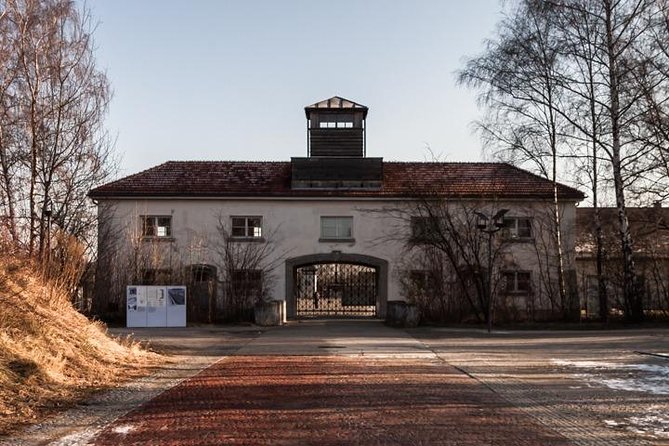
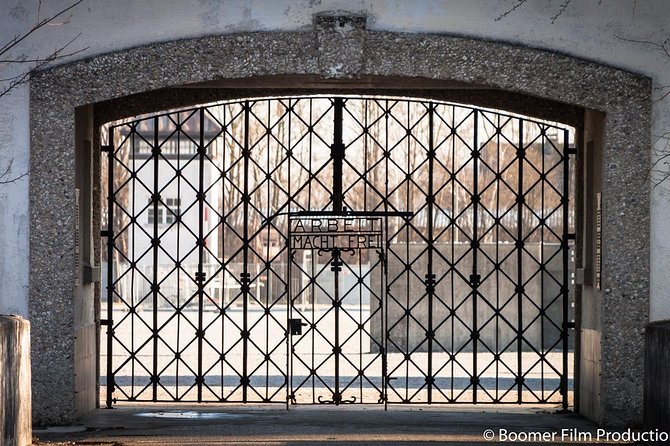
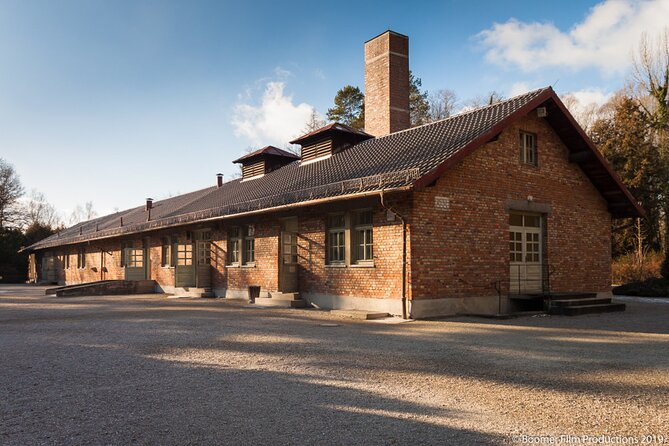
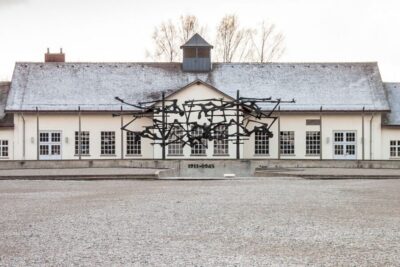
The memorial site visit takes about four hours, making it the heart of the day. You begin with the Jourhaus, the former entrance building and gateway into the camp. From there, the guide introduces the camp’s layout and explains how the site grew from its original purpose.
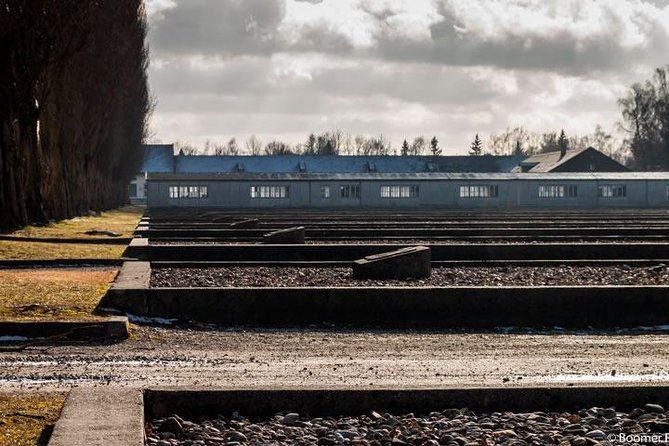
The Appellplatz, or roll call square, is one of the first major spaces you see. Prisoners were assembled there for counts, often under harsh conditions. Standing in this open area helps you understand the role of routine and control in camp life. The system depended not only on violence, but also on repeated procedures that stripped people of privacy, identity, and freedom.
The guide explains who the first prisoners were and how the camp’s prisoner population changed over time. You learn about registration, categorization, and treatment. These details are vital because the Nazi camp system did not treat every prisoner in exactly the same way. Categories were used to organize persecution and impose different forms of punishment and control.
This section can be difficult, but a thoughtful presentation gives you a framework for the rest of the visit. Instead of seeing disconnected buildings, you begin to understand how each part served the camp system.
A few more Munich tours and experiences worth a look
- From Munich: Neuschwanstein & Linderhof Castle Full-Day Trip
★ 4.5 · 12,494 reviews - From Munich: Neuschwanstein Castle Full-Day Trip
★ 4.7 · 3,977 reviews - From Munich: Dachau Memorial Site Full-Day Tour
★ 4.9 · 1,406 reviews - From Munich: Neuschwanstein Castle Full-Day Trip by Van
★ 4.8 · 1,177 reviews
The museum, barracks, and prisoner routine
The Memorial Site Museum is located in the former maintenance building. It provides documentary material and objects that explain Dachau’s operation and the experiences of the people held there.
The museum deserves time. One limitation of a guided schedule is that the guide must keep the group moving, and you may not have enough quiet time to read every panel or examine every exhibit. If you are someone who likes to study museum displays closely, you may wish to ask the guide when you can look around independently, or return another time if your schedule permits.
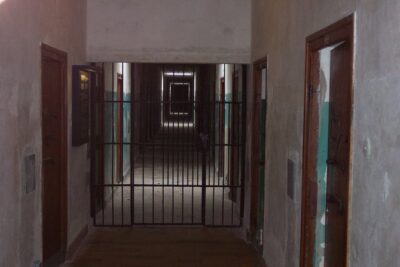
The tour also covers the barracks and prisoner life. You hear about daily routines, living conditions, work, discipline, and the ways prisoners were controlled. The barracks area is not just an architectural stop. It helps show how overcrowding and routine hardship became part of the camp’s daily machinery.
The guide also discusses the camp perimeter, fence, and guard towers. These features make the physical restrictions clear. The site’s layout was designed to control movement and visibility, and the boundaries remind you that escape was not a realistic option for most prisoners.
The emphasis on daily life is one of the tour’s strongest features. A broad account of the Nazi period can become abstract. At Dachau, the guide brings the focus back to meals, roll calls, registration, sleeping quarters, work, punishment, illness, and survival.
Memorials, religious sites, and Barrack X
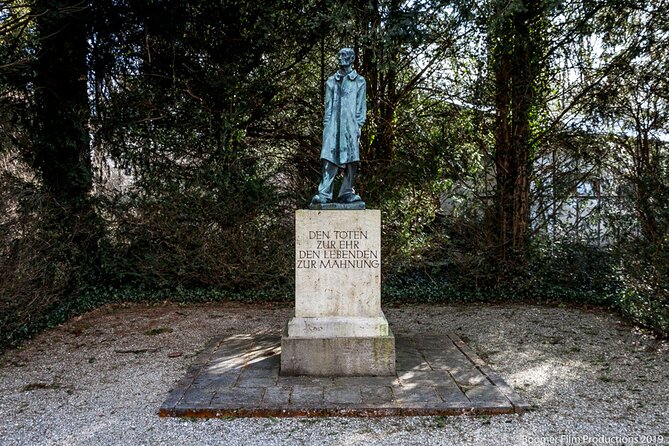
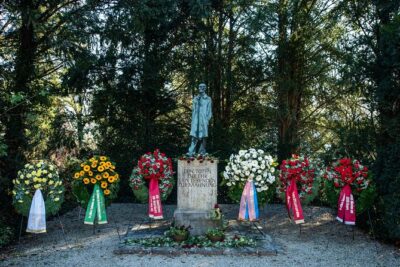
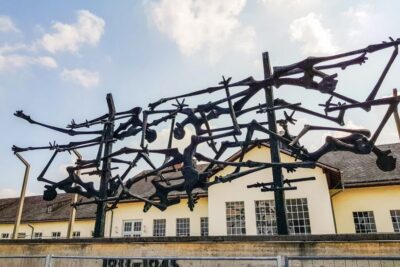
Dachau contains several memorials created after the war. The International Memorial is a major point of remembrance, while the Nandor Glid Sculpture presents the suffering of prisoners in a stark visual form.
The religious memorials add another layer to the site. Their presence reflects the different faith communities connected to the camp and the need to remember victims in more than one tradition. The guide explains how these memorial spaces fit into the memorial site as a whole.
Barrack X is among the most difficult areas of the visit. Here you see the crematorium buildings, mass grave areas, and the gas chamber. The guide explains what the structures were used for and places them in the wider development of Nazi mass murder.
This part requires emotional preparation. The tone is serious, and rightly so. The best approach is to listen, move at the group’s pace, and give yourself room to process what you are hearing. You do not need to rush from one feature to the next simply to collect facts.
Some people find the weather affects the experience. The tour operates in all weather conditions, so bring suitable clothing and shoes. Cold or wet weather may make the grounds more uncomfortable, but you should be prepared for the possibility rather than count on ideal conditions.
What the guides add to the visit
The guide is the main reason to choose this organized tour instead of visiting on your own. A self-guided visit allows you to set your own pace, but you must manage the route, transport, and interpretation yourself.
Aileen is praised for making the subject clear and for allowing time to explore. Adam is described as calm, well prepared, and effective at managing the group. Keith receives high marks for explaining difficult material and answering questions. Marcin is particularly appreciated for connecting Dachau with other concentration camps across Europe.
Tom is praised for explaining Hitler’s rise to power and the creation of Dachau, while Sam is noted for focusing on the key points and helping the group understand the camp’s significance. Scott, Hein, and other guides are also described as respectful and informative.
You should not expect every guide to use exactly the same script or spend equal time at every display. That can be a strength because the guide can respond to the group’s questions. It can also mean that the amount of independent museum time varies.
The subject calls for restraint. Based on the guide descriptions, this experience works best when the presentation is factual, human, and free of theatrical exaggeration. You want the guide to explain the evidence and the system, not turn the site into entertainment.
Timing, walking, and what to bring
The whole activity lasts about six hours. The itinerary allows roughly 15 minutes for the opening meeting, 10 minutes at Dachau station for the transfer, four hours at the memorial site, and the return to Marienplatz.
Four hours at the camp sounds generous, but it passes quickly. The grounds are large, and the tour includes the entrance building, roll call square, museum, barracks, perimeter, memorials, and crematorium area. You will walk between sections, stand while listening, and spend time indoors and outside.
A moderate level of physical fitness is recommended. Wear comfortable shoes and dress for the forecast. Since the tour runs in all weather conditions, rain protection, warm layers, or sun protection may be useful depending on the season.
Bring a snack and a drink. Food and drinks are not included, and options at Dachau are limited. It is better to carry something small from Munich than to assume you will find a full meal during the visit.
Luggage storage is not available. Leave large bags at your accommodation or make other arrangements before meeting the group. A small day bag is the practical choice.
The emotional load matters as much as the walking. You may feel tired or unsettled afterward, even if you normally handle historical sites easily. I would avoid scheduling a packed afternoon immediately after returning to Marienplatz.
Is $48.98 good value?
At $48.98 per person, the tour sits at a reasonable price for a six-hour guided outing from Munich. The cost covers the professional English-speaking guide and shared round-trip transport, so you are paying for both interpretation and practical help.
The public-transport format is less luxurious than a private coach. You may have to stand on a train or move through stations with the group. Still, the guide takes care of the route and transfers, and that removes much of the uncertainty for a first-time visitor.
The value is strongest if you want context. You can visit the memorial site independently, but a guide helps explain the sequence of events and the purpose of each area. The difference is especially noticeable in places such as the Appellplatz, Barrack X, and the former prisoner areas, where facts and setting need to be understood together.
The price is less attractive if you want a slow, private museum visit. The group size can reach 30, and the schedule may not provide enough free time for every exhibit. In that case, an independent visit could suit you better, provided you are comfortable arranging transport and building your own understanding.
Who should book this Dachau tour?
I would choose this tour if you are visiting Munich for the first time, want a clear introduction to Dachau, or prefer not to handle German public transport on your own. It also suits you if you value a guide who can answer questions and connect the camp to the wider Nazi system.
It is a good fit for adults and young people aged 14 or older who can manage a long, serious day. Children 14 and younger are not allowed, and proof of age may be requested. The subject is difficult, so think carefully about the maturity and emotional readiness of anyone in your group.
You may prefer a self-guided visit if you have already studied Dachau in detail, want to read every museum panel, or need complete control over your timing. The guided tour gives structure, but structure means you cannot linger everywhere for as long as you might like.
This is also not the right choice if you want a light excursion from Munich. The experience is somber, at times brutal, and emotionally demanding. That seriousness is not a flaw, but you should know what kind of day you are booking.
Final decision: book it if you want context, not comfort
Book this Dachau tour if you want the practical ease of guided train and bus travel plus a careful explanation of the memorial site. The guides, especially Aileen, Adam, Keith, Marcin, Tom, and Sam, are praised for clear presentations, thoughtful handling of the subject, and strong group organization.
The main tradeoff is limited independent time. You will see the essential areas and learn how they connect, but you may wish for another hour to read the museum displays or revisit the memorials on your own.
For most first-time visitors to Dachau, I think the guidance is worth the $48.98 price. Go with comfortable shoes, water, a snack, suitable clothing, and an open mind. Leave space in your schedule afterward. This is a necessary historical visit, but it is not an easy one.
Free cancellation is available if you cancel at least 24 hours before the start time. Changes or cancellations inside that window are not accepted for a refund, and if poor weather causes the activity to be canceled, you are offered another date or a full refund.
FAQ
Where does the Dachau tour begin?
The tour begins at Marienplatz 11 in Munich, in front of the Ludwig Beck store. Look for a guide holding a white and blue umbrella.
How do I get to Dachau during the tour?
You travel with the group by shared train from central Munich to Dachau, then transfer to a bus for the memorial site. The guide leads the group through the transfers.
How long is the Dachau tour?
The full experience lasts about six hours, including the journey from Munich and the return trip. About four hours are scheduled at the Dachau Memorial Site.
Is the tour conducted in English?
Yes. The experience is offered in English with a professional guide.
Are children allowed on the tour?
Children must be 14 or older to participate. Proof of age, such as a passport or student ID, may be requested.
Should I bring food and drinks?
Yes. Food and drinks are not included, and options at Dachau are limited. Bring a snack and something to drink.
What happens if I need to cancel?
You can receive a full refund if you cancel at least 24 hours before the experience begins. Cancellations or changes made less than 24 hours before the start time are not accepted for a refund.
Just added around Munich
- Private Transfer from Munich to Salzburg, English-speaking driver★ 3.5 · 3 reviews
- Private tour from Munich to Rothenburg and Harburg★ 5.0 · 3 reviews
- Scenic Adventure Private Day Tour to The Konigssee Salzburg★ 4.5 · 3 reviews
- Munich: Capture the most Photogenic Spots with a Local★ 5.0 · 3 reviews
- Private Beer Tasting Tour in Munich with Oktoberfest Museum★ 4.3 · 3 reviews
- Munich Photoshoot: A Must-Have Holiday Experience!★ 5.0 · 3 reviews
- Paul’s Private Tour in the Alte Pinakothek Munich★ 5.0 · 3 reviews
- Private Tour to Hallstatt Salt Mine and Skywalk with Lunch★ 5.0 · 3 reviews
Dachau Memorial Tours, compared.
Dachau Concentration Camp Memorial Site Tour from Munich by Train
Read our review →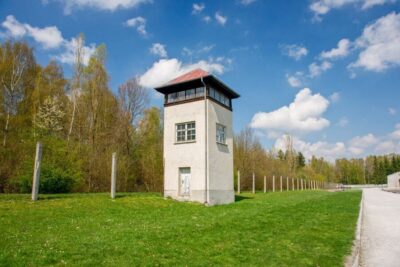
Dachau Concentration Camp Memorial Tour with Train from Munich
Read our review →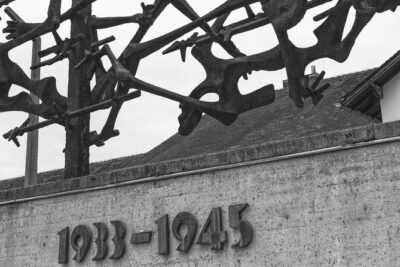
Early-Start Dachau Memorial Half-Day Tour from Munich
Read our review →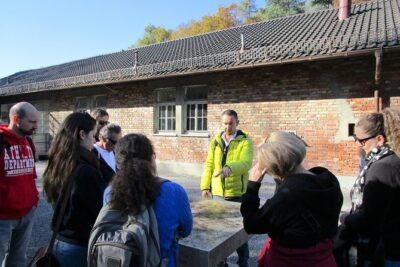
Guided Dachau Concentration Camp Memorial Site Tour with Train from Munich
Read our review →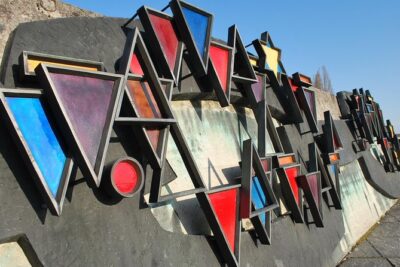
Dachau Small-Group Half-Day Tour from Munich By Train
Read our review →Browse the lists this tour appears in