
Reviewed · GHOST & TRUE CRIME TOURS
München: Stadtführung Henker, Huren, Hexen in GERMAN
Munich’s polished center has a darker side. On this German-language walking tour, you follow the old salt road from the Neuhauser Tor, where condemned people were led out for execution, toward churches and former civic buildings tied to witch hunts, punishment, and prostitution.
I like the mix of grim history and lively anecdotes, and I like that the route uses famous sights such as St. Michael’s, the Frauenkirche, and Alter Hof as reference points. Guide Julia earned especially warm praise for her clear, engaging manner. The main caution is sound: crowded streets, church music, bells, or a large group can make the guide hard to hear.
In This Review
- Key points
- A dark route through Munich’s bright center
- Starting beneath the Neuhauser archway
- Following the old salt road
- St. Michael’s Church and the religious side of punishment
- The former Jesuit college and the witch hunts
- Frauenkirche, bells, and the limits of a central route
- The executioner, the pimp, and Munich’s outsiders
- Alter Hof and the old civic order
- How the guides shape the experience
- Is $25 a fair price for two hours?
- Weather, walking, and accessibility
- Who should book this German-language walk?
- Should you book Henker, Huren, Hexen?
- FAQ
- What language is the tour conducted in?
- How long does the tour last?
- Where do I meet the guide?
- What places does the tour pass?
- Are food, drinks, or entrance fees included?
- Does the tour use actors or reenactments?
Key points
- The Neuhauser Tor begins the story: Meet under the old archway, once connected with the route taken by condemned people.
- Munich’s salt road shapes the walk: The historic route leads you toward the former Jesuit college and stories of witch hunts.
- Executioners had more than one job: The tour explains how executioners could also act as pimps and why their headquarters stood outside the city.
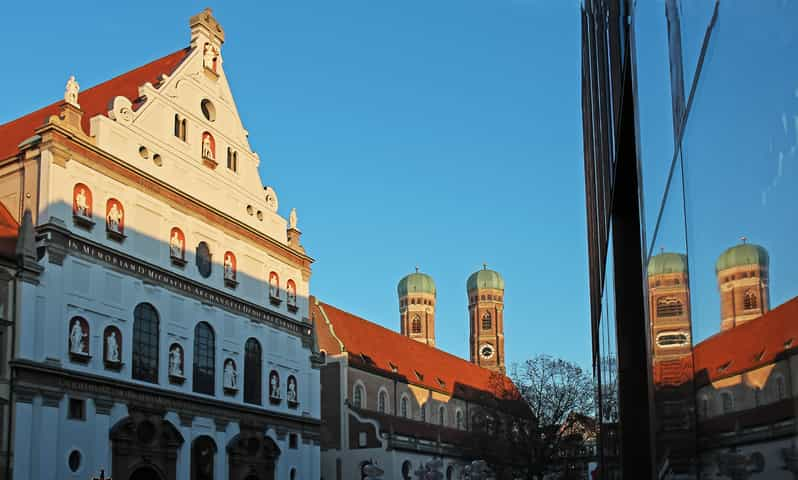
- Major landmarks provide the setting: You pass St. Michael’s Church, Frauenkirche, and Alter Hof while hearing the less polished stories behind Munich’s center.
- German is the only tour language: This matters greatly for a subject built around detail, wordplay, and spoken anecdotes.
- Two hours and about $25: That is fair value for a focused city walk, especially if you want social history rather than standard sightseeing.
A dark route through Munich’s bright center
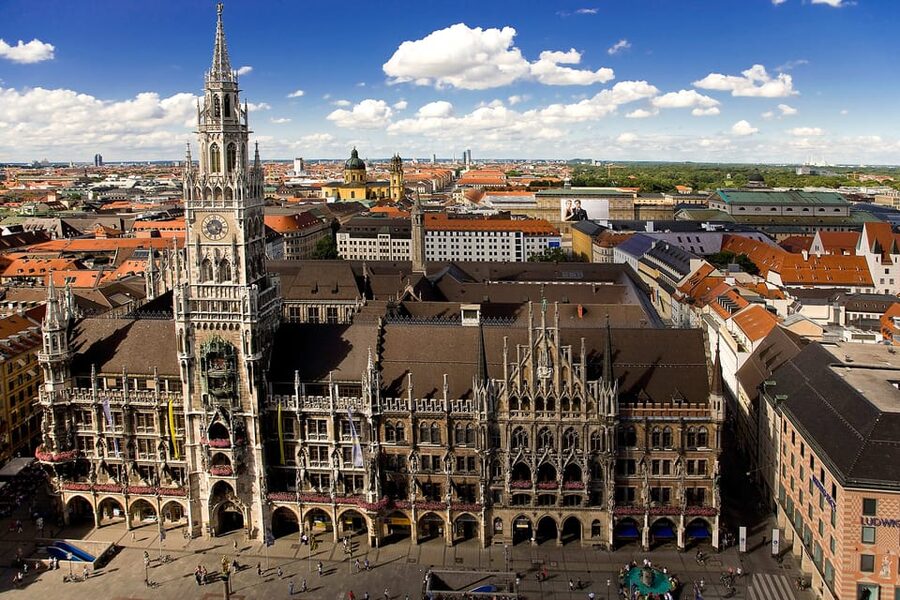
This is not a tour of spooky props or staged medieval scenes. There are no actors and no reenactments. Instead, a live German-speaking guide leads you through central Munich and explains how punishment, sex work, religious fear, and city government once fit together.
That approach suits you if you enjoy history with uncomfortable edges. The subject is not only the executioner at the gallows. It is also the system around him: who could live inside the city, who was pushed beyond its walls, who controlled prostitution, and how accusations of witchcraft became deadly.
The two-hour length gives the guide enough time to connect several subjects without turning the outing into an all-day history lecture. You still get a useful look at central Munich, but the main purpose is interpretation. The buildings and streets are the setting, not the whole show.
The experience is offered as a shared group tour or a private tour. A shared walk usually gives you the most economical way to hear the material. A private option may appeal if you want more control over questions and pace, but the supplied information does not specify the private-tour price or exact group limits.
More ghost and true crime walks in Munich:
- Munich Ghosts and Spirits Evening Walking Tour
★ 5.0 · 1,900 reviews - Munich: Spooky Tour of Old Town in German
★ 4.6 · 1,112 reviews - Munich: Raven Black Witches and Executioners Walking Tour
★ 4.7 · 294 reviews
Starting beneath the Neuhauser archway
Your meeting point is under the Neuhauser archway. Look for a guide carrying a large blue bag marked Weis(s)er Stadtvogel in white. That detail is useful in a busy city center, where a guide holding a small sign can be easy to miss.
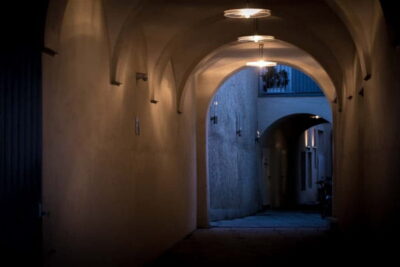
The Neuhauser Tor is an effective place to start because it introduces the hard boundary between civic order and punishment. This was the point where delinquents were led out of the city to be executed. You are not simply hearing about a distant prison or courtroom. You begin at a location connected with the public movement of condemned people through Munich.
Bring comfortable shoes. The tour takes place rain or shine, and the route is on foot for two hours. Munich’s central streets can be crowded, so stay close enough to hear the guide and watch for changes in pace.
The opening also sets the tone. This is dark material, but the tour includes amusing stories and anecdotes. You should expect a serious subject presented in an accessible way, not a solemn memorial visit.
Following the old salt road
From the Neuhauser area, the walk follows Munich’s historic salt road. Salt was a valuable trade good, so routes connected with its movement help explain why the city developed where it did and why certain streets mattered.
Here, the route becomes more than a sequence of gruesome facts. You begin to see the city as a place with regulated entrances, controlled trades, religious authority, and strict ideas about acceptable behavior.
The walk uses the old route as a thread through the story. That is useful for orientation. Instead of hearing unrelated tales about witches, prostitutes, and executioners, you move through the same urban core where those rules were enforced and debated.
The route’s central location is convenient, but it also brings a problem. Busy streets can swallow a guide’s voice. One low-rated account described missing much of the explanation because of crowd noise and poor timing near the Frauenkirche. If you have difficulty hearing, position yourself close to the guide and ask to move to a quieter spot when needed.
St. Michael’s Church and the religious side of punishment
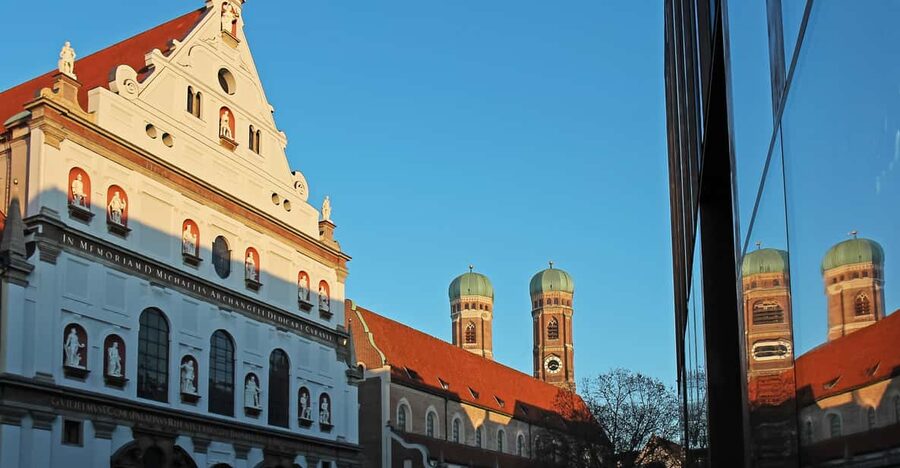
St. Michael’s Church is one of the important stops along the central route. The church gives the guide a place to discuss the religious climate behind witch hunts and public morality.
The value here is the connection between impressive architecture and difficult history. Munich’s churches are easy to admire as monuments, but this tour asks you to consider how religious institutions and civic authorities shaped ideas about sin, guilt, and punishment.
You should not expect an admission visit to the church. Entrance fees are not included, and the stated experience is a guided walking tour. The stop is mainly part of the outdoor route and the spoken explanation.
This section may be strongest for people who enjoy context. If you only want a list of crimes and punishments, the church discussion may feel like a detour. If you want to understand why witch accusations gained force, it gives the darker material a wider frame.
Something different, still within reach of Munich:
- From Munich: Neuschwanstein & Linderhof Castle Full-Day Trip
★ 4.5 · 12,494 reviews - Neuschwanstein & Linderhof Castle-Fairytale Day Tour from Munich
★ 4.5 · 7,275 reviews - Munich: Third Reich & WWII Walking Tour
★ 4.6 · 6,181 reviews - Dachau Concentration Camp Memorial Site Tour from Munich by Train
★ 4.5 · 5,637 reviews
The former Jesuit college and the witch hunts
The old Jesuit college is tied to the section about witch hunts. The route along the salt road leads you here to hear how fear, belief, and authority could turn suspicion into legal action.
The tour is not presented as a reenactment. You will not watch actors stage a trial or see theatrical torture scenes. The impact comes from the guide explaining what happened and why people in authority treated accusations as a threat to the city.
This is also where careful listening matters most. Witch-hunt stories often depend on names, dates, motives, and distinctions between rumor and evidence. The information provided for this tour does not promise a full academic lecture, so I would treat it as an accessible introduction rather than a specialist seminar.
The guide also addresses why some official headquarters were located outside the city. That question is one of the more useful practical details in the tour because it shows how authorities separated unpleasant work from the respectable center. The location itself becomes evidence of how Munich organized status and space.
Frauenkirche, bells, and the limits of a central route
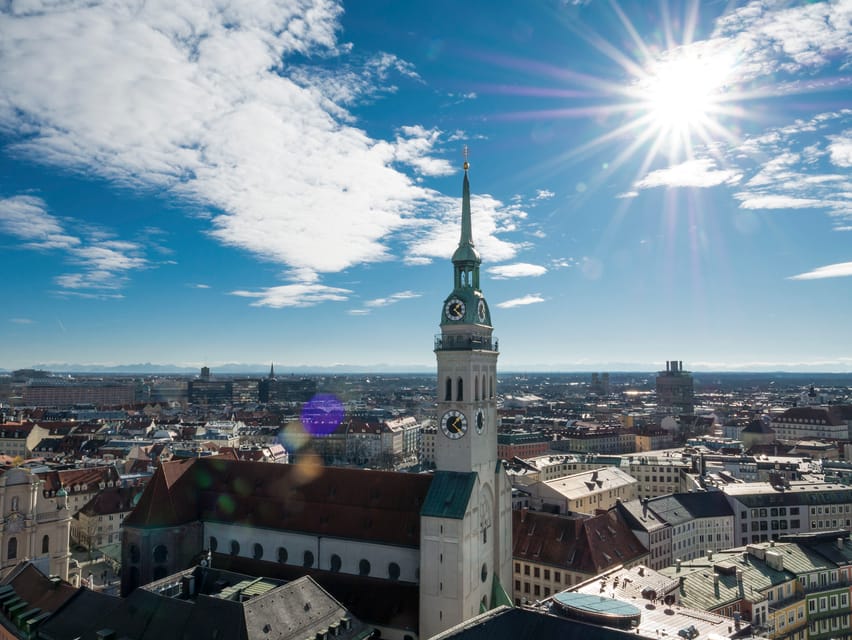
The Frauenkirche is one of Munich’s best-known landmarks, and the tour passes it as part of the story. It is an obvious place to orient yourself, but it is not always an ideal place to stand and listen.
At certain times, church activity and bells can overwhelm a guide. One account described a large choir rehearsal and the three o’clock bells making the explanation difficult to follow. That is not a reason to reject the tour, but it is a reason to think about timing and sound.
If you book a start time, remember that the same landmark that looks perfect on paper may be noisy in real life. A considerate guide can move the group a little away from the main flow, but you may need to speak up if you cannot hear.
The Frauenkirche section also illustrates a broader question about the tour. The historic links between the landmarks and the main subject may sometimes be direct, and sometimes more interpretive. One critical assessment felt that too many churches were included without enough firm evidence tying each one to the advertised theme.
That criticism is worth taking seriously. You are buying a themed city walk, not a visit to every major medieval punishment site. The route works best when you enjoy connections between places, institutions, and stories. It may disappoint you if you expect every stop to show a clearly preserved execution site or a documented prostitution district.
The executioner, the pimp, and Munich’s outsiders
The most unusual promise of the tour is its explanation of what executioners, prostitutes, and witches had in common. The answer is not that they formed a neat historical club. Rather, the tour examines how people considered socially suspect or necessary but dishonorable could be managed by the city.
Executioners occupy the center of this story. They carried out public punishment, yet their work placed them outside polite society. The guide explains that Munich’s executioner could also act as a pimp, an unexpected link between state violence and prostitution.
You also hear why the executioner’s headquarters were outside the city. That detail helps explain the social geography of Munich. Authorities needed the executioner, but did not want his work, home, or reputation too close to the respectable center.
The route may tell you about places connected with the executioner without always bringing you to a visible site you can inspect today. This is an important distinction. Some parts of the story are location-based, while others are reconstructed through the guide’s explanation.
The prostitution section includes the question of why prostitution ended in the 1970s. The supplied information does not give the full answer, so the guide’s explanation is the part you will need to hear on the walk. If that subject is your main reason for booking, make sure you can follow German comfortably.
Alter Hof and the old civic order
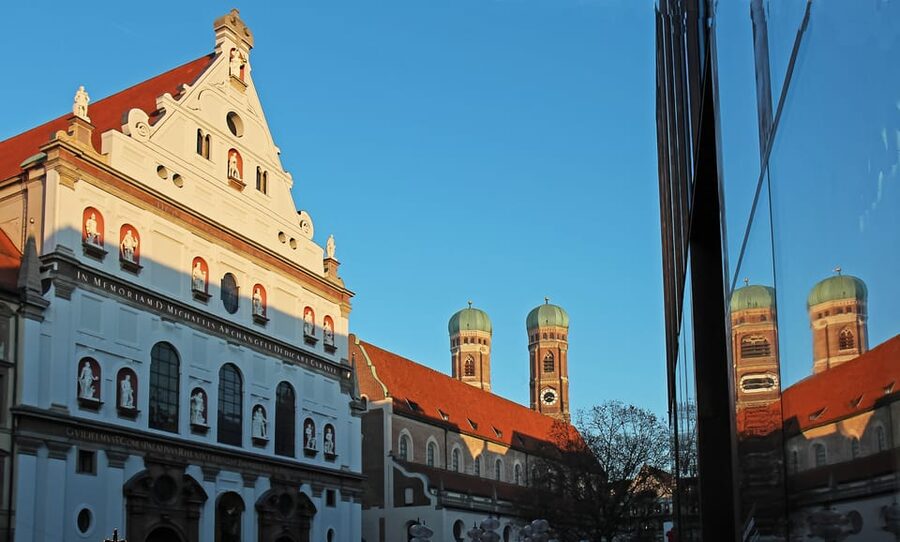
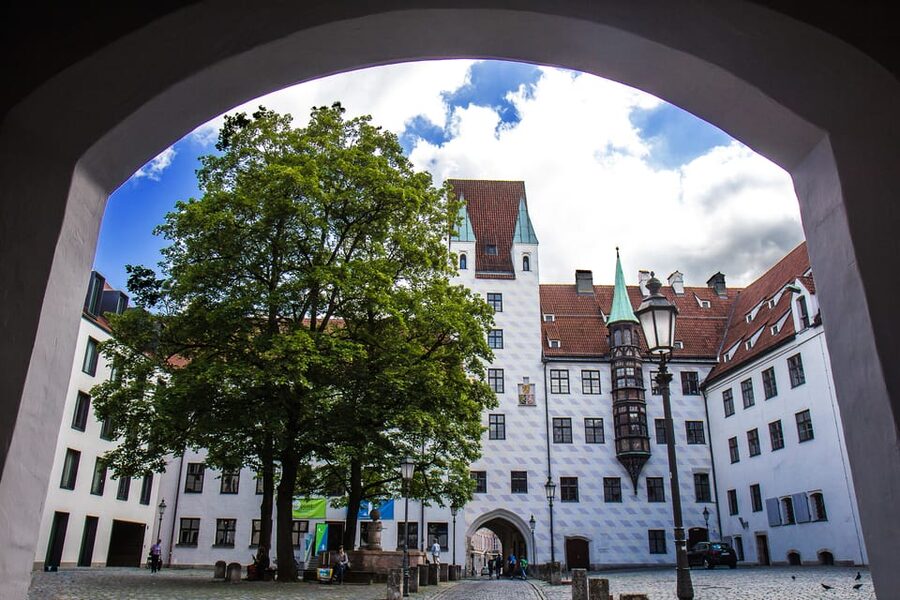
Alter Hof, Munich’s Old Court, adds another major landmark to the route. It helps shift the focus from punishment in the street to the city’s ruling structures.
A court, gate, church, college, and trade route each tell a different part of the story. Together, they show how Munich’s authorities governed movement, faith, work, and behavior. The tour’s strength is this broad view of city life, not simply a parade of shocking anecdotes.
You will want to look beyond the guide’s words at this point. Notice how close the major civic and religious buildings are to one another. The walk gives you a better sense of Munich’s compact historic center and how public power could operate within a small area.
Again, the experience does not include entrance fees. You pass the sites as part of the route, so you can visit interiors separately if you wish. The tour itself is about what happened around these places and what they represented.
How the guides shape the experience
The provider is Weis(s)er Stadtvogel GmbH, and the walk is conducted in German. That is the single biggest factor in deciding if this tour is right for you.
A guide who can tell an anecdote well makes this kind of subject memorable. Julia received especially strong praise for keeping the mood high despite poor weather and for organizing the outing well. Another German-language account called the tour very good and highlighted the guide’s interesting explanations.
The feedback is not uniformly positive. One person found the guide difficult to understand and felt the subject was stretched across too many church stops. That may reflect the guide, the crowd, the timing, or a combination of all three.
You can improve your chances by arriving early, standing near the guide, and asking questions when a point is unclear. A private tour may also give you a better chance to request quieter stopping points, though the available details do not promise a specific route adjustment.
The mood seems to be one of the stronger features. You get serious topics, but the guide uses fun stories and anecdotes rather than delivering a dry catalogue of dates. That balance makes the walk suitable for curious adults who enjoy history with a little bite.
Is $25 a fair price for two hours?
At about $25 per person, the tour is reasonably priced for a two-hour guided walk in central Munich. You are paying for a live guide and a focused theme, not for transport, meals, or entry to paid attractions.
The value depends on what you want from a city tour. If you prefer a standard introduction to Munich’s major sights, you may get more practical orientation from a general city walk. If you already plan to see the Frauenkirche, St. Michael’s, and Alter Hof on your own, this tour adds a different layer: the people and policies usually left out of postcard history.
The cost also makes the shared option appealing. You can try a specialized subject without committing to a costly private guide. If you value a slower pace or have a strong interest in the topic, compare the private price before booking.
Food and drinks are not included, and neither is hotel pickup or drop-off. That is normal for a central walking tour, but plan to arrive at the archway independently and bring what you need for two hours outside.
The free cancellation policy allows cancellation up to 24 hours ahead for a full refund. You can also reserve now and pay later, which helps if your Munich schedule is still shifting.
Weather, walking, and accessibility
Comfortable shoes are essential. The tour lasts two hours and takes place rain or shine, so check the forecast and dress for conditions.
The information is mixed on mobility. The activity is marked wheelchair accessible, but it is also listed as not suitable for people with mobility impairments. I would not assume that every part of the route is easy for every wheelchair user or person with limited mobility. Contact the provider before booking if this affects you.
There is no mention of a required fitness level, but you should be ready to walk through central Munich for the full duration. Crowds and noise may also make the experience harder if you need frequent breaks or clear, uninterrupted speech.
Who should book this German-language walk?
You should consider this tour if you:
- Understand German well enough to follow spoken history and jokes
- Want Munich’s uncomfortable social history, not just its grand buildings
- Enjoy witch-hunt stories, legal history, prostitution history, and public punishment
- Like walking tours built around anecdotes and local details
- Have already seen the main landmarks and want a different way to read them
- Can manage two hours on foot in changing weather
You may want another activity if you do not speak German, need a highly visual presentation, or want to enter the churches and historic buildings. You should also think twice if every stop must have a clearly visible connection to executioners, witches, or prostitution.
Should you book Henker, Huren, Hexen?
Book it if you want an unusual two-hour introduction to Munich’s darker civic history and you can follow German comfortably. The price is fair, the route is central, and the combination of executioners, witch hunts, and prostitution is far more distinctive than a standard sightseeing loop.
Go in with realistic expectations. This is a spoken history walk through present-day streets, not a theatrical ghost tour and not a forensic tour of surviving punishment sites. The guide’s storytelling, your position in the group, and the noise around major churches will shape how much you take away.
For the best chance of a good experience, wear comfortable shoes, find the blue bag under the Neuhauser archway, stand close to the guide, and avoid treating the most famous landmarks as guaranteed quiet lecture halls. If you want a guide-led look at the people pushed to Munich’s margins, this is a worthwhile choice.
FAQ
What language is the tour conducted in?
The live tour guide speaks German. No other tour language is listed.
How long does the tour last?
The walking tour lasts two hours.
Where do I meet the guide?
Meet under the Neuhauser archway. The guide carries a large blue bag with Weis(s)er Stadtvogel written on it in white.
What places does the tour pass?
The route includes St. Michael’s Church, the Frauenkirche, Alter Hof, the old salt road, the former Jesuit college, and the Neuhauser Tor area.
Are food, drinks, or entrance fees included?
No. Food, drinks, pickup, drop-off, and entrance fees are not included.
Does the tour use actors or reenactments?
No. The tour does not include actors or reenactments. It is led by a live guide who explains the history and tells anecdotes.
Just added around Munich
- Private Transfer from Munich to Salzburg, English-speaking driver★ 3.5 · 3 reviews
- Private tour from Munich to Rothenburg and Harburg★ 5.0 · 3 reviews
- Scenic Adventure Private Day Tour to The Konigssee Salzburg★ 4.5 · 3 reviews
- Munich: Capture the most Photogenic Spots with a Local★ 5.0 · 3 reviews
- Private Beer Tasting Tour in Munich with Oktoberfest Museum★ 4.3 · 3 reviews
- Munich Photoshoot: A Must-Have Holiday Experience!★ 5.0 · 3 reviews
- Paul’s Private Tour in the Alte Pinakothek Munich★ 5.0 · 3 reviews
- Private Tour to Hallstatt Salt Mine and Skywalk with Lunch★ 5.0 · 3 reviews
Ghost & True Crime Tours, compared.
Munich Ghosts and Spirits Evening Walking Tour
Read our review →
Raven Black Witches and Executioners Walking Tour
Read our review →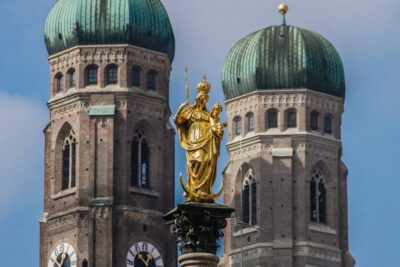
Mystic Munich – Sagas and Legends of the Old Town
Read our review →
Ghosts of Munich: The Haunted Apprentice Exploration Game
Read our review →Browse the lists this tour appears in