
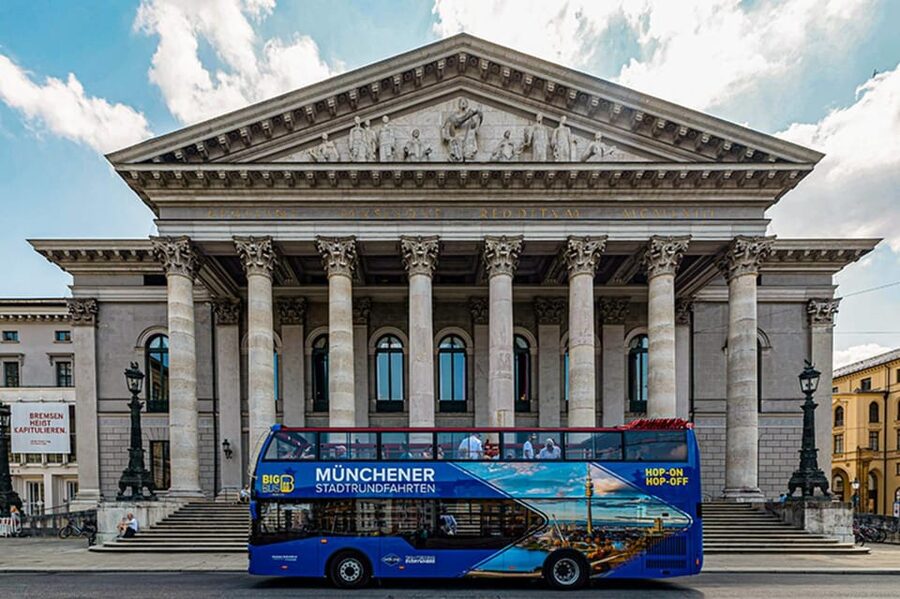
Reviewed · HOP-ON HOP-OFF BUS TOURS
Munich: Big Bus Hop-On Hop-Off Sightseeing Bus Tour
Munich’s Big Bus tour is most useful when you want to cover a lot of ground without wrestling with a map. The open-top double-decker gives you a clear view of the city, while the audio guide fills in the story behind grand squares, museums, palaces, and Olympic buildings.
I like the easy orientation and the freedom to hop off at Marienplatz, Nymphenburg Palace, or BMW Welt. I also like the multilingual commentary, available in nine languages, and the fact that the bus remains useful in poor weather, thanks to its retractable roof. The main catch is timing: the outer Orange Route runs only about every 60 minutes, and a 24-hour ticket may feel short if you want to explore several stops properly.
In This Review
- Key points to know before boarding
- What this Munich bus tour is really good at
- Start with the central loop and get your bearings
- Karlsplatz and the pedestrian center
- Kunstareal and Odeonsplatz: Munich’s grand civic face
- Eisbach and the English Garden connection
- Marienplatz and Viktualienmarkt
- Max-Joseph-Platz and the city’s palace quarter
- Why the Orange Route requires a plan
- Nymphenburg Palace and its gardens
- Olympiapark and BMW Welt
- Schwabing and the English Garden
- The audio guide, drivers, and bus comfort
- Is the $27 price good value?
- Practical ways to use your ticket
- Should you book Munich’s Big Bus tour?
- FAQ
- How long does the complete bus route take?
- Is the ticket valid for one or two days?
- How often do the buses run?
- Which languages are available for the audio guide?
- Are headphones included?
- Is the bus wheelchair accessible?
- Does the ticket include hotel pickup and drop-off?
- Can I visit the Deutsches Museum using the bus stop?
- Does the ticket cover both the central route and Orange Route?
Key points to know before boarding
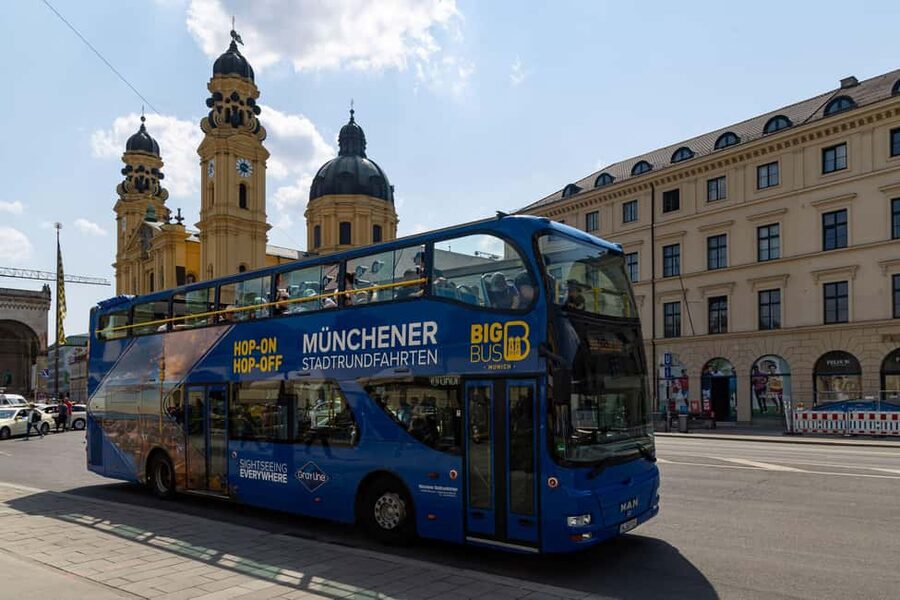
- Two routes cover very different sides of Munich: the central route handles the old town and museum quarter, while the Orange Route reaches Nymphenburg Palace, Olympiapark, BMW Welt, and Schwabing.
- The full ride takes about 2.5 hours: stay aboard for a useful first look, then use your ticket for selected stops.
- Central buses arrive about every 20 minutes: stops 1 through 7 are the easiest to use for flexible sightseeing.
- The Orange Route needs more planning: buses come about every 60 minutes at stops 7 through 11, so missing one can cost you an hour.
- Audio commentary is included in nine languages: headphones are provided, and the driver languages are English and German.
- Deutsches Museum is temporarily suspended: do not plan on using that stop until construction work is finished.
What this Munich bus tour is really good at
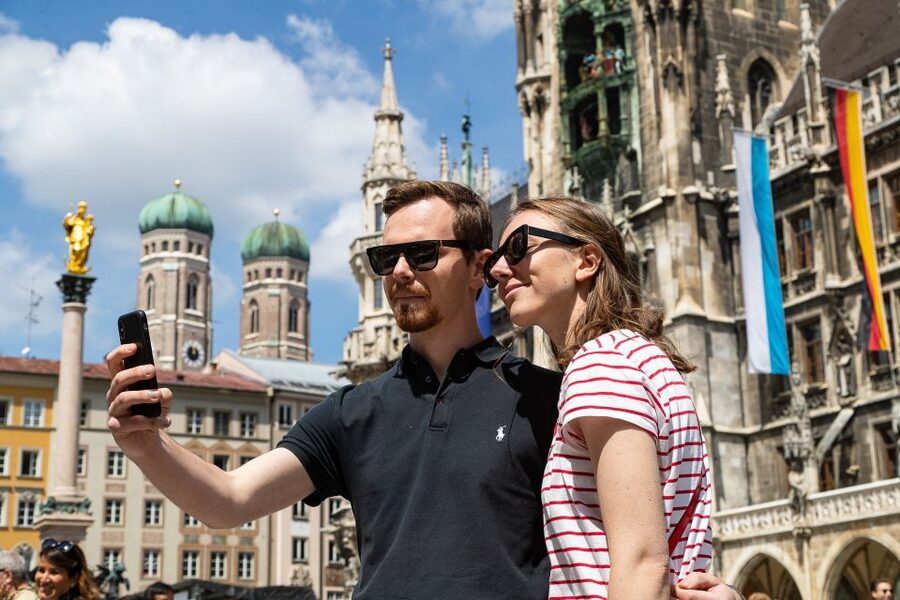
I see this tour as a moving introduction to Munich rather than a replacement for walking the old town. The bus connects places that are spread across the city, giving you a quick sense of how the historic center, museum district, palace grounds, Olympic Park, and Schwabing fit together.
The central route takes about 2.5 hours if you stay on board. That makes it a sensible choice on a first morning, on a rainy day, or during a short stay when you want to identify the places worth returning to on foot.
You can choose a 24-hour or 48-hour ticket. At around $27 per person, the shorter ticket is reasonable if you use it for transport between several major sights as well as for the commentary. The 48-hour option gives you more breathing room, especially because the less frequent Orange Route rewards patience.
This is not a private tour with a guide beside you explaining every building. The driver speaks English or German, while the recorded commentary comes through headphones in Chinese, English, French, German, Italian, Japanese, Portuguese, Russian, or Spanish. One guide, Rolf or Wolf, was particularly good at mixing city knowledge with dry humor, but the live guiding style can vary. The audio track is more dependable for language choice and basic facts.
More hop-on hop-off buses in Munich:
- Munich Hop-On Hop-Off Tour: 1-Day or 2-Day Ticket
★ 4.3 · 4,161 reviews - Munich City Hop-on Hop-off Tour
★ 3.5 · 1,233 reviews - Hop-On Hop-Off Tour CitySightseeing Munich
★ 4.0 · 309 reviews
Start with the central loop and get your bearings
The route begins at a meeting point that can vary according to the option you book. Confirm the exact departure point before setting out. The listed start and end locations are associated with Foto-Annahme, and the tour returns to the meeting point at the end.
If you have limited time, begin with the central loop. Buses run roughly every 20 minutes from stops 1 through 7, which makes it much easier to get off, explore, and catch another bus later.
The main central stops are:
- Karlsplatz, also called Stachus
- Kunstareal
- Odeonsplatz
- Eisbach
- Deutsches Museum, currently suspended
- Marienplatz and Tal
- Max-Joseph-Platz
The route is especially useful as a first look before you commit to Munich’s museums and squares. Sit upstairs when the weather is pleasant. On wet or cold days, the retractable roof and lower seating make the bus a practical shelter, though the best views are naturally less open.
Karlsplatz and the pedestrian center
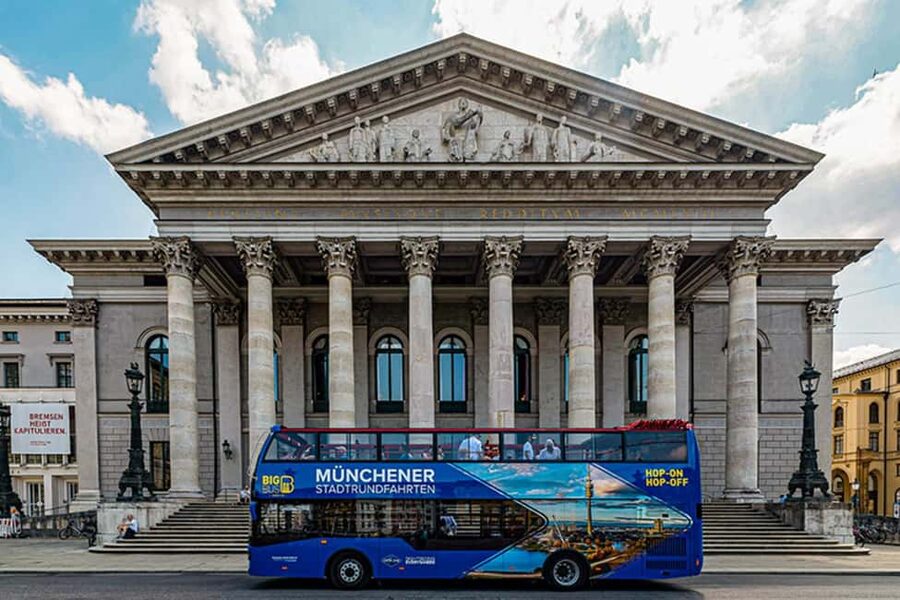
Karlsplatz, known locally as Stachus, is a strong starting point for Munich’s central shopping area. From here, you can walk into the pedestrian zone and arcades rather than treating the stop as just another place to take a photograph.
The bus commentary helps you identify the urban layout, but I would not spend your whole Munich visit sitting on the bus here. Use Karlsplatz as a launch point for a walk toward the old center, or return here after exploring.
The value of this stop is convenience. If your schedule is tight, you can get off, walk through the central streets, and later rejoin the route at a nearby stop. Check the direction of the next bus before leaving, since a short walk can put you on a different part of the loop.
Kunstareal and Odeonsplatz: Munich’s grand civic face
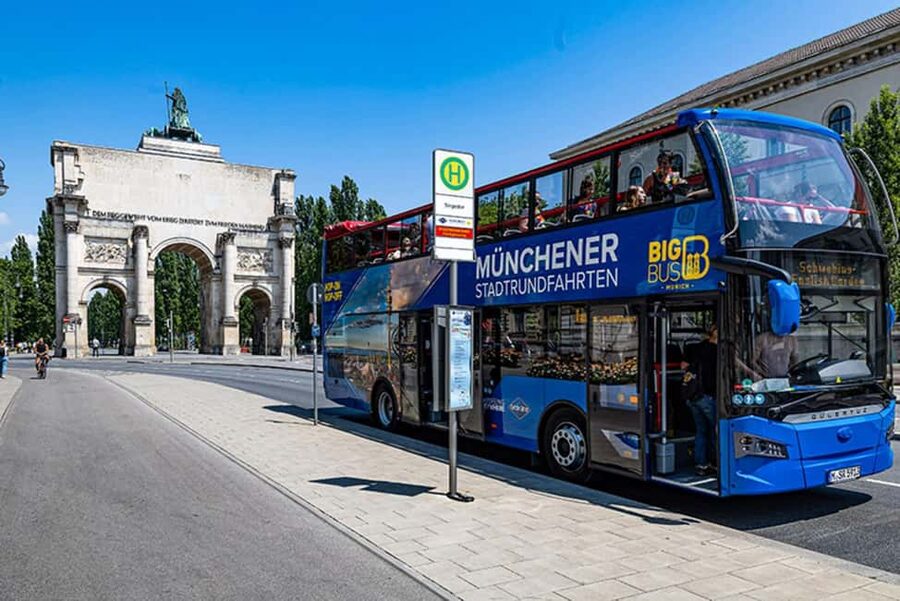
Kunstareal is Munich’s museum quarter, home to the Pinakotheken and other major art institutions. The bus gives you a look at the striking architecture and places the museums in the wider city plan. If you intend to visit the Alte Pinakothek, this is one of the most useful stops to choose.
I would use the bus commentary here as an introduction, then return on foot if art is a priority. A bus ride can explain what you are seeing, but it cannot give you the quiet time needed for a major museum.
Odeonsplatz is one of the city’s most impressive squares, with formal architecture and an important place in Munich’s public life. It is a good hop-off point for walking toward the Residenz area and the English Garden, although the tour information specifically identifies Eisbach and Schwabing as useful access points for the garden.
The central route works well here because buses are relatively frequent. You can explore without feeling that one missed departure will ruin the afternoon.
Something different, still within reach of Munich:
- From Munich: Neuschwanstein & Linderhof Castle Full-Day Trip
★ 4.5 · 12,494 reviews - Neuschwanstein & Linderhof Castle-Fairytale Day Tour from Munich
★ 4.5 · 7,275 reviews - Munich: Third Reich & WWII Walking Tour
★ 4.6 · 6,181 reviews - Dachau Concentration Camp Memorial Site Tour from Munich by Train
★ 4.5 · 5,637 reviews
Eisbach and the English Garden connection
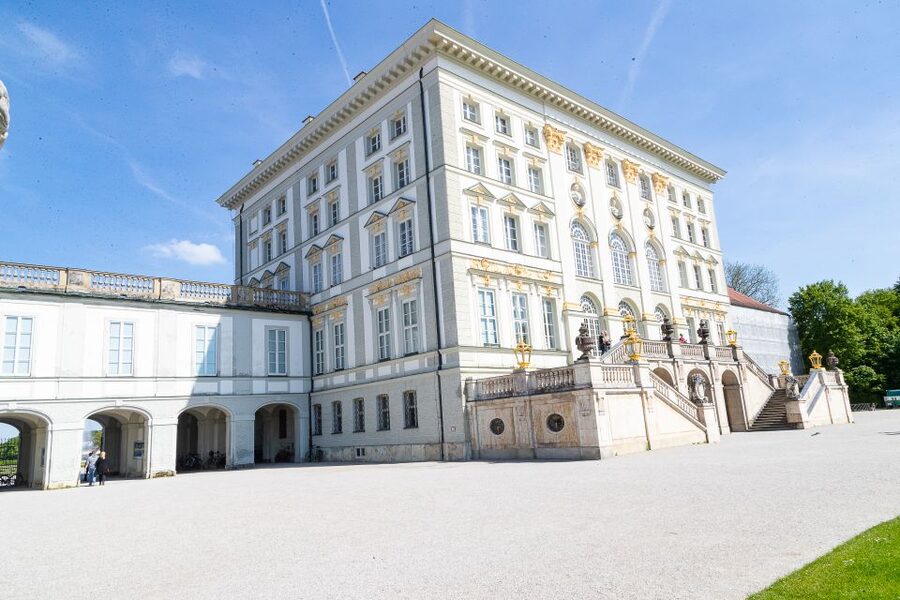
The Eisbach stop puts you near one of Munich’s most recognizable city scenes, where the river current attracts surfers. The stop also offers a practical route toward the English Garden, one of the city’s best places for a slower walk.
The tour does not replace time in the garden. It simply gets you close enough to choose how much time you want to spend there. You might hop off for a brief look, or combine the area with Schwabing for shops and cafés.
This is one of the points where the hop-on hop-off format earns its keep. You can leave the bus when the weather is good, walk for a while, and use the next central bus rather than arranging a separate ride across town.
Marienplatz and Viktualienmarkt
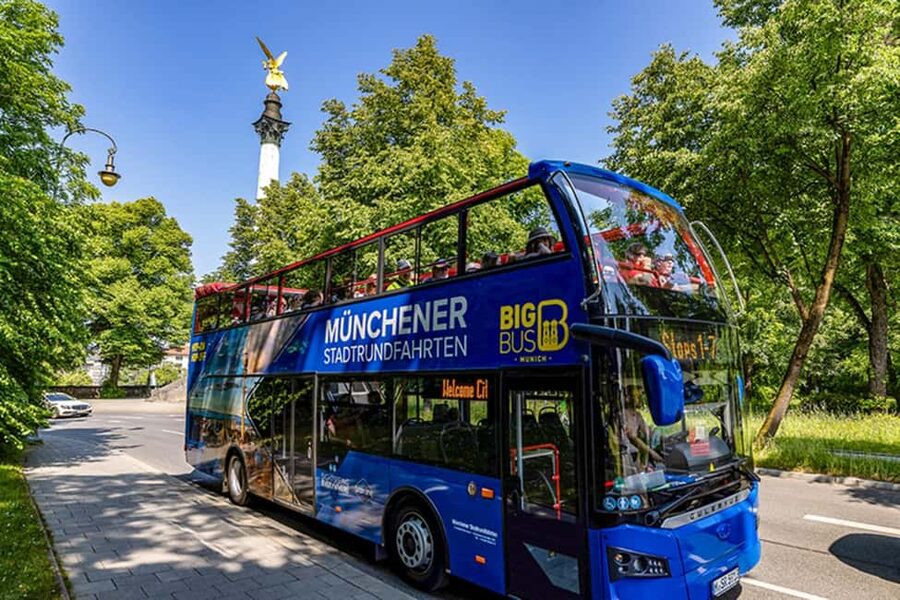
Marienplatz is the essential central stop. It puts you near Munich’s main square, the famous town hall, and the streets leading into the old center. From here, Viktualienmarkt is an easy target for food stalls and local treats, while Hofbräuhaus is also nearby.
I would get off here even if you use the bus mainly for orientation. Marienplatz is better experienced on foot, when you can stop for a market snack, look up at the architecture, and wander without watching the clock.
The stop is also a sensible place to break for lunch or spend the rest of the afternoon. One efficient plan is to take the complete central ride first, then return to Marienplatz and explore the old town on foot.
Because buses are frequent on the central section, you have more flexibility here than on the Orange Route. Still, note the final departure time. A short daily operating window was a concern for some riders, particularly those hoping to make several long stops.
Max-Joseph-Platz and the city’s palace quarter
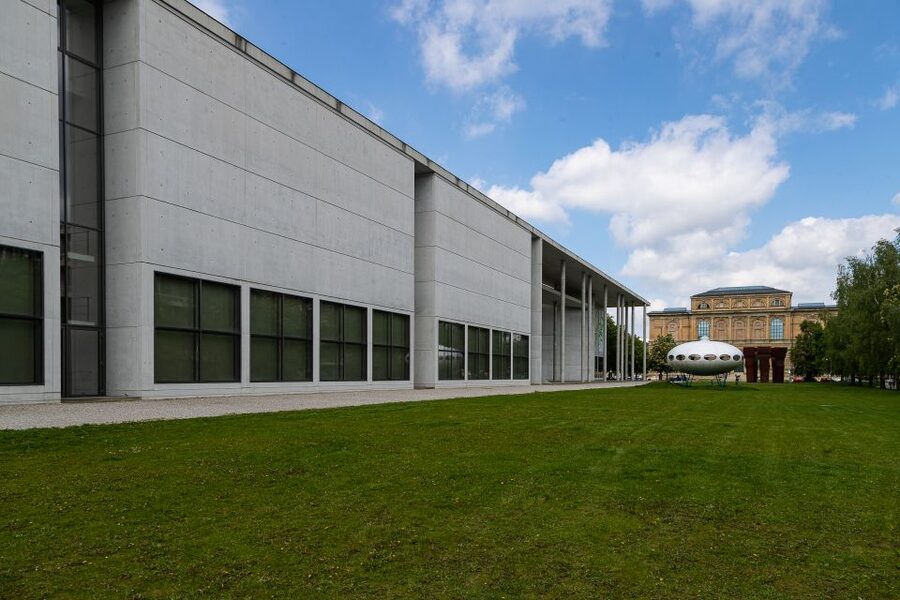
Max-Joseph-Platz brings you near some of Munich’s grandest architecture and the Residenz area. The square is worth seeing from the bus, but it also works as a starting point for a walk through central Munich’s ceremonial streets.
The audio commentary is useful when the bus is moving past large buildings that can be hard to identify from street level. You can pause the commentary and explore independently, but keep your headphones and bus ticket with you if you plan to reboard.
For architecture fans, this section is one of the stronger parts of the city route. For a first-time visitor, it also helps explain that Munich is more than Marienplatz and beer halls. The route gives you a broad look at the city’s royal and cultural center before sending you farther out.
Why the Orange Route requires a plan
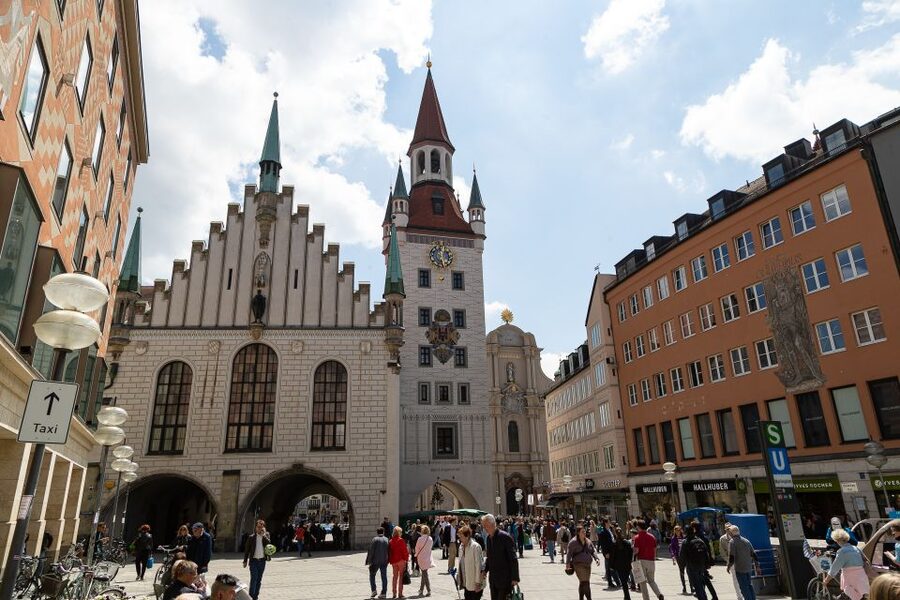
The Orange Route is where this ticket becomes more than a city-center loop. It reaches Nymphenburg Palace, Neuhausen, Olympiapark, BMW Welt and Museum, and Schwabing near the English Garden.
The tradeoff is frequency. Buses arrive about every 60 minutes at stops 7 through 11, compared with roughly every 20 minutes on the central section. I would write down the bus times before getting off, especially at Nymphenburg, BMW Welt, or Olympiapark.
There has also been some confusion about tickets and upgrades for the longer route. When booking, check carefully that your selected 24-hour or 48-hour option includes the Orange Route. Do not assume that every basic city ticket covers both loops.
The Orange Route can be worthwhile, but it is harder to use casually. If you want Nymphenburg Palace and BMW Welt on the same day, start early and keep the schedule in view.
Nymphenburg Palace and its gardens

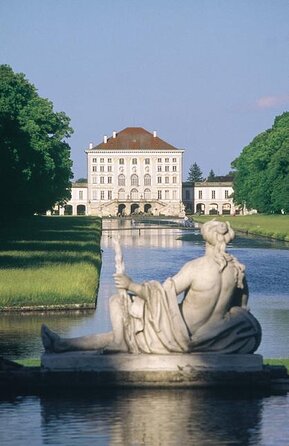
Nymphenburg Palace is the most obvious reason to choose the Orange Route. The palace and gardens offer a change of pace from the center, with grand grounds and a more spacious setting.
The bus passes by or stops at the palace area, but the ticket does not include palace admission. You will need to decide how much time to give the grounds and interiors, then work backward from the next bus.
This is a poor place to hop off without checking the timetable. With buses about an hour apart, a leisurely visit can easily become a long wait. That may be fine if you want a quiet stretch of the day, but it matters if you are trying to fit several sights into a 24-hour ticket.
I would choose Nymphenburg over several rushed stops. The palace is one of the places where getting off gives you something the bus cannot: room to walk, pause, and see the setting at your own speed.
Olympiapark and BMW Welt
The Orange Route continues toward Olympiapark and BMW Welt and Museum. This is Munich’s modern side, far removed in mood from the old squares and palace buildings.
Olympiapark offers broad views and distinctive structures connected with Munich’s Olympic past. BMW Welt and the BMW Museum add a strong draw for car enthusiasts and for anyone interested in modern design, engineering, and branded architecture.
The stop is practical because these attractions sit outside the old center. A separate visit requires planning another transport connection, while the bus links them with the rest of your sightseeing.
Allow enough time if you plan to visit an attraction rather than simply view it from the bus. The bus only provides transportation and an outside look. Entry fees and any additional tours are not included in the ticket.
The timetable deserves special attention here. A bus was reported arriving an hour later than expected at BMW Welt, which shows why you should not plan a tightly timed connection. Use the Orange Route with some slack.
Schwabing and the English Garden
Schwabing gives the route a more local, relaxed feel, with stylish shops and access toward the English Garden. It is a useful final stop if you want to trade formal sights for a neighborhood stroll.
You might use Schwabing as your last hop-off point, then walk in the direction of the English Garden before returning to the city by another method. The tour information confirms the area as a place to browse and visit the garden, but it does not include hotel transfers or a dedicated walking tour.
This stop is best for flexible schedules. If you are using the bus as your only transport, check the final Orange Route departure carefully. The hourly service and limited operating hours can make an evening visit difficult.
The audio guide, drivers, and bus comfort
The audio guide is included, and headphones are provided on board. Nine language choices make the ticket more useful for mixed-language groups, though Arabic is not listed among the available options.
The commentary gives you basic context for the sights and helps explain buildings that pass quickly. It is informative rather than theatrical. You will not get the spontaneous humor or back-and-forth of a strong live guide, but you can listen in your own language and focus on the views.
The driver languages are English and German. A driver-guide called Rolf, or possibly Wolf depending on the spelling, was praised for dry humor and affection for Munich. Other experiences with spoken English were less clear, so I would treat the live commentary as a bonus rather than the main reason to book.
The bus itself is described as clean and comfortable, with WiFi on board. The open upper deck is the place for views, while the retractable roof gives the ride some flexibility in bad weather. Heavy rain can make the tour one of the easiest ways to see Munich without losing the day, but cold and damp conditions will still affect your comfort.
Is the $27 price good value?
At $27 per person, this is not the cheapest way to cross Munich. If you only need transport between two places, public transportation may be better value, but this ticket adds sightseeing commentary and the ability to reboard at multiple stops.
I think the price works best in three situations:
- You have only one or two days in Munich.
- You want a quick first look before choosing where to spend more time.
- You plan to visit at least one outlying sight, such as Nymphenburg Palace or BMW Welt.
The value drops for a family of four paying adult prices, particularly if everyone already knows Munich or prefers walking. The 48-hour ticket can improve the calculation because you are less likely to rush through the Orange Route.
Remember that hotel pickup and drop-off are not included. Entry to museums, palaces, and other attractions is also separate. The ticket is for the bus, commentary, WiFi, and route access.
Practical ways to use your ticket
For a 24-hour ticket, I would do this:
- Take the central loop without getting off, allowing about 2.5 hours.
- Return to Marienplatz or Karlsplatz for a proper walk and meal.
- Use the afternoon for one central museum or the English Garden.
- Only attempt the Orange Route if Nymphenburg or BMW Welt is a real priority.
For a 48-hour ticket, split the experience:
- Use the first day for the central route, Marienplatz, Viktualienmarkt, Kunstareal, and Odeonsplatz.
- Use the second day for Nymphenburg Palace, Olympiapark, BMW Welt, and Schwabing.
- Check the Orange Route timetable before each hop-off.
- Keep in mind that the ticket is valid for 24 or 48 hours, not simply until the end of a calendar day.
The tour is wheelchair accessible. Service times can change between summer and winter, so check the current schedule before you build a day around the bus.
Should you book Munich’s Big Bus tour?
I would book it if you want fast orientation, flexible sightseeing, and transport to Munich’s outlying highlights. It is especially handy in rain, during a short first visit, or when your group has different interests.
I would skip it if you have several full days, enjoy walking, and mainly want the old town. The central sights are close enough to explore on foot, and the hourly Orange Route requires more patience than the name hop-on hop-off might suggest.
The best choice for most first-time visitors is to use the bus as a framework, not as your whole Munich experience. Ride once for the big picture, get off at Marienplatz and one Orange Route sight, then spend the rest of your time walking through the city.
FAQ
How long does the complete bus route take?
If you stay on board without hopping off, the entire route takes about 2.5 hours.
Is the ticket valid for one or two days?
You can book a ticket valid for either 24 hours or 48 hours.
How often do the buses run?
Buses arrive about every 20 minutes daily at stops 1 through 7. Stops 7 through 11 on the Orange Route receive buses about every 60 minutes.
Which languages are available for the audio guide?
The audio guide is available in Chinese, English, French, German, Italian, Japanese, Portuguese, Russian, and Spanish.
Are headphones included?
Yes. Headphones for the audio guide are provided on the bus.
Is the bus wheelchair accessible?
Yes, the activity is wheelchair accessible.
Does the ticket include hotel pickup and drop-off?
No. Hotel pickup and drop-off are not included, and the tour ends back at the meeting point.
Can I visit the Deutsches Museum using the bus stop?
The Deutsches Museum stop is temporarily suspended because of construction work.
Does the ticket cover both the central route and Orange Route?
The tour information describes both routes, but some ticket options may require an upgrade for the longer route. Check your selected option to confirm that it includes Nymphenburg Palace, Olympiapark, BMW Welt, and Schwabing.
Just added around Munich
- Private Transfer from Munich to Salzburg, English-speaking driver★ 3.5 · 3 reviews
- Private tour from Munich to Rothenburg and Harburg★ 5.0 · 3 reviews
- Scenic Adventure Private Day Tour to The Konigssee Salzburg★ 4.5 · 3 reviews
- Munich Photoshoot: A Must-Have Holiday Experience!★ 5.0 · 3 reviews
- Munich: Capture the most Photogenic Spots with a Local★ 5.0 · 3 reviews
- Private Beer Tasting Tour in Munich with Oktoberfest Museum★ 4.3 · 3 reviews
- Paul’s Private Tour in the Alte Pinakothek Munich★ 5.0 · 3 reviews
- Private Tour to Hallstatt Salt Mine and Skywalk with Lunch★ 5.0 · 3 reviews
Hop-On Hop-Off Bus Tours, compared.
Munich Hop-On Hop-Off Tour: 1-Day or 2-Day Ticket
Read our review →

Munich Premium Sightseeing Hopping and Traditional Bavarian Delicacies
Read our review →Browse the lists this tour appears in