
Reviewed · MUSEUMS
Munich: Deutsches Museum Entry Ticket
The most striking thing about Munich’s Deutsches Museum is its sheer range. In one building on a small river island, you can move from aviation and astronautics to chemistry, atomic physics, printing, railways, and microscopy. The museum turns big scientific ideas into things you can see and touch.
I like the hands-on experiments, which give children and adults a reason to stay engaged, and I like the collection’s real objects, including a first diesel engine, historic printing presses, a lunar rover, and iconic airplanes. The $17 admission also gives you a full day, so you can take your time.
The main consideration is focus. This is a science and technology museum, not a general Munich museum, and the 20 exhibitions cover a lot of ground. If you want to see everything, one visit may feel rushed, especially since the museum contains about 20,000 square meters of exhibition space.
In This Review
- Key things to know before visiting
- Arriving at Munich’s science island
- Twenty exhibitions covering the history and future of technology
- Hands-on stations make difficult ideas easier
- Model railway, microscopy theater, and chemistry demonstrations
- A collection built around real milestones
- How long should you spend inside?
- Is the $17 admission a good value?
- Who will enjoy the Deutsches Museum most?
- Practical details for a smoother visit
- Should you book the Deutsches Museum?
- FAQ
- Where is the Deutsches Museum located?
- How much does admission cost?
- How long is the ticket valid?
- What are the museum’s opening hours?
- Is the Deutsches Museum wheelchair accessible?
- Are children allowed to visit alone?
Key things to know before visiting

- Twenty permanent exhibitions: Topics range from aviation and astronautics to chemistry, railways, atomic physics, and more.
- Real objects, not just displays: See historic machines, printing presses, aircraft, a lunar rover, and the first diesel engine.
- Hands-on learning: Interactive stations and experiments make difficult ideas easier to grasp.
- Special demonstrations: The model railway, microscopy theater, and chemistry presentations add scheduled moments to your visit.
- Central Museumsinsel location: The museum sits close to Munich’s city center on a small river island.
- Practical one-day ticket: Admission costs $17, includes all exhibitions, and is valid for one day.
Arriving at Munich’s science island
The Deutsches Museum is at Museumsinsel 1, 80538 Munich. Its setting helps you fit the museum into a city day, since it sits close to central Munich rather than out on the edge of town. You begin at the main entrance and finish there when you leave.
I like this location because the museum can work as either a main event or a planned stop between other central sights. You do not need to build a separate day around a distant attraction. Once inside, though, give yourself more time than the address might suggest. The building contains 20,000 square meters of exhibition space, and the subjects are spread across a large interior.
The museum is open daily from 9 a.m. to 5 p.m. Last admission is at 4:30 p.m. That last half-hour is not enough for a proper visit, so I would arrive early if you want to see several sections. A full day ticket gives you room to pause, eat, revisit a favorite display, and avoid the pressure of racing from room to room.
The space is barrier free from the entrance to the restrooms, and the activity is wheelchair accessible. Children under 12 must be accompanied by an adult. Those details matter here because the museum is designed for extended visits, not a quick look around one small gallery.
More museums in Munich:
- Munich: Beer and Food Tour with Dinner & Oktoberfest Museum
★ 4.7 · 1,086 reviews - Munich: FC Bayern Museum + Arena View
★ 4.5 · 944 reviews - Munich: FC Bayern Museum Entry Ticket
★ 4.6 · 193 reviews
Twenty exhibitions covering the history and future of technology
The museum’s main strength is its range. You can explore how technology developed, how scientific ideas work, and where those fields may lead. The subjects are not presented as one narrow story. Instead, you get many separate routes through science and technology.
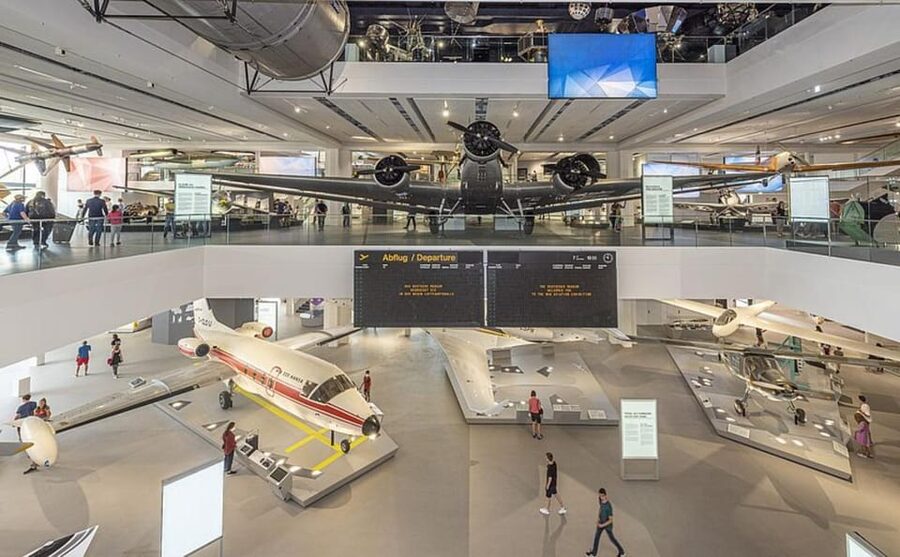
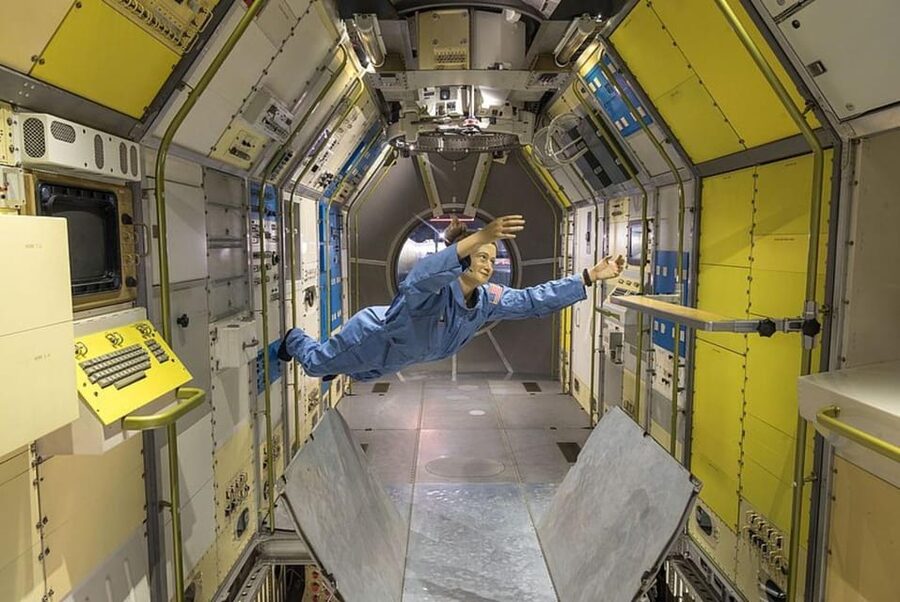
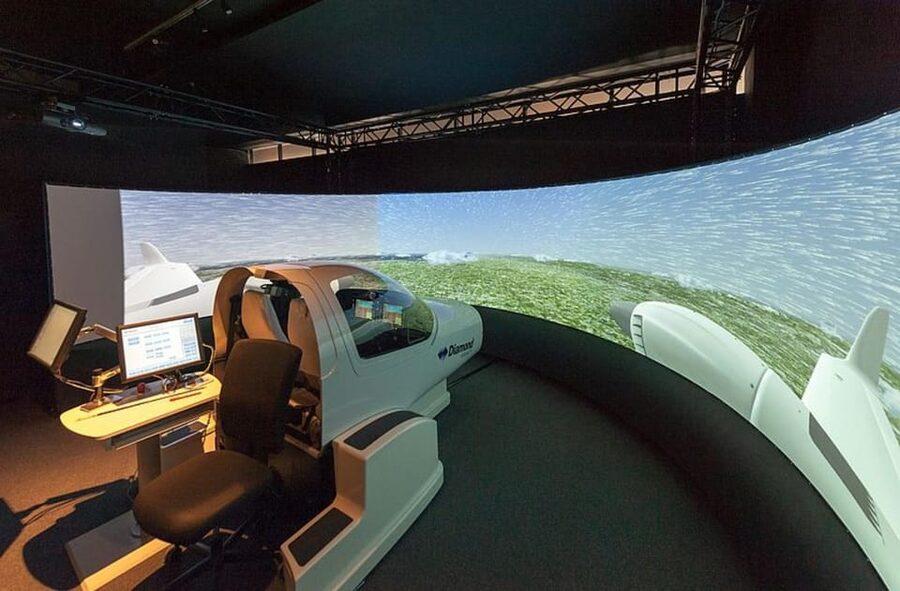
Aviation and astronautics are natural crowd-pleasers. Aircraft give you an immediate sense of size and engineering, while space-related objects connect familiar technology with exploration beyond Earth. The lunar rover is one of the collection’s memorable highlights because it links museum display with a very specific chapter in space exploration.
Chemistry and atomic physics offer a different kind of visit. These subjects can feel abstract in a textbook, but demonstrations and interactive stations give you a physical way to understand them. I would spend time at these exhibits rather than simply reading labels. The point is not to memorize facts. It is to watch a principle at work.
The collection contains more than 125,000 objects, but you will not see all of them on display. That number helps explain why the museum feels like a serious research institution as well as a public attraction. The displayed objects are selected examples, with the larger collection preserved behind the scenes.
You will also encounter printing technology and mechanical engineering. Historic printing presses show how information once moved through society, while the first diesel engine gives you a direct look at a major step in industrial technology. These are useful displays because they show the physical side of progress. Technology was built from metal, fuel, gears, pressure, and patient trial and error.
Hands-on stations make difficult ideas easier

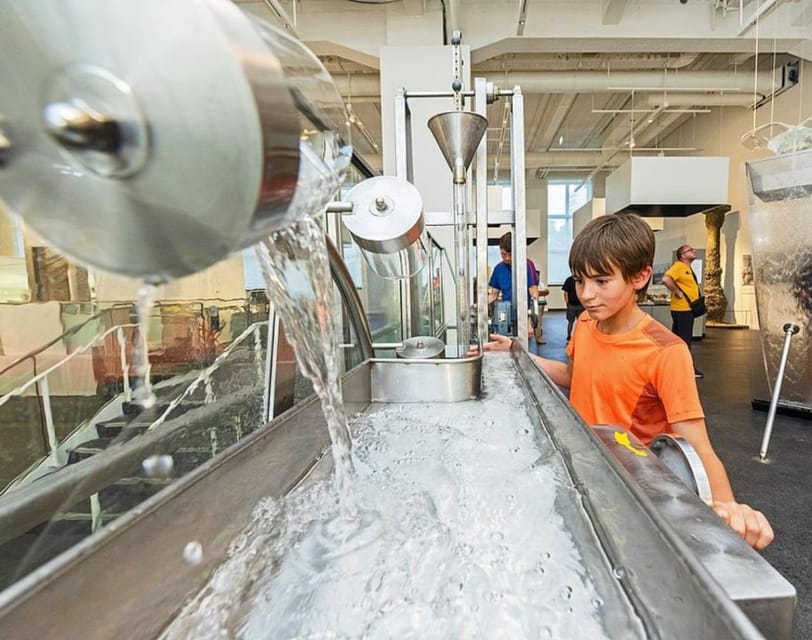
The interactive exhibits are a major reason I would recommend this museum to families and curious adults. You are not limited to looking at machines behind glass. Hands-on stations and experiments ask you to test, observe, and work out what is happening.
That approach is especially helpful when the subject is unfamiliar. A short written explanation may tell you how a scientific principle works, but an experiment can make the idea stick. Children can take part without needing a technical background, while adults can use the displays to refresh ideas they last encountered in school.
The interactive material also gives the museum a useful rhythm. Large aircraft and historic engines provide scale and drama. Smaller stations give you something to do with your hands. Demonstrations then create a shared moment for the room. This mix helps prevent the visit from becoming a long walk past static cases.
Still, the museum is not an amusement park. The activities serve science and technology first. If you want nonstop entertainment, some rooms may feel quiet or academic. I see that as part of the bargain. The museum works best when you are willing to read a little, try something, and follow a subject for more than a few minutes.
Model railway, microscopy theater, and chemistry demonstrations

Several demonstrations give the museum a special character. The model railway is a natural stop for families, but it is not only for children. Railways make a useful subject because they bring together transport, energy, engineering, scheduling, and industrial change in one compact display.
The microscopy theater offers another kind of experience. Microscopy can make an invisible world visible, and a theater format gives the subject a sense of occasion. Instead of silently peering at a small instrument alone, you get a presentation built around observation and explanation.
Chemistry demonstrations add movement and surprise to the visit. They show scientific principles in action and can help connect the chemistry displays with everyday materials and processes. Exact demonstration schedules are not provided with the ticket details, so you should check the museum’s current information during your visit if a particular presentation matters to you.
These demonstrations are worth planning around when possible. Galleries are available throughout the day, but a live or timed presentation gives your visit a clear anchor. I would choose one or two priority demonstrations, then explore nearby exhibitions before and after.
Something different, still within reach of Munich:
- From Munich: Neuschwanstein & Linderhof Castle Full-Day Trip
★ 4.5 · 12,494 reviews - Neuschwanstein & Linderhof Castle-Fairytale Day Tour from Munich
★ 4.5 · 7,275 reviews - Munich: Third Reich & WWII Walking Tour
★ 4.6 · 6,181 reviews - Dachau Concentration Camp Memorial Site Tour from Munich by Train
★ 4.5 · 5,637 reviews
A collection built around real milestones
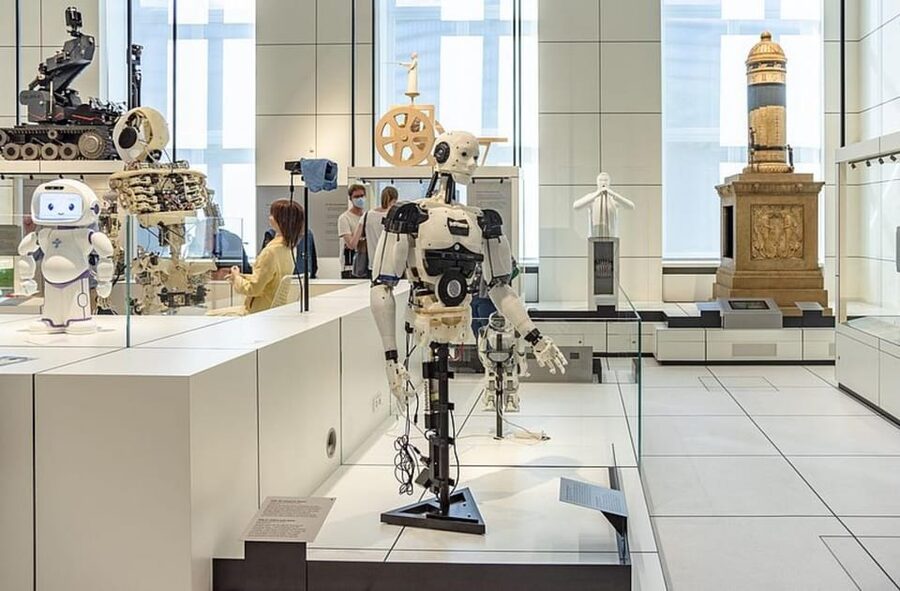
The Deutsches Museum was founded in 1903 by Oskar von Miller. Its purpose was to give the public a broad view of science and technology, and that goal still shapes the visit. You are not looking at a single artist’s work or one period of architecture. You are following the tools and ideas that changed how people lived and worked.
The first diesel engine is a good example of the museum’s approach. It is not merely an old machine. It represents an important change in power and industry. The historic printing presses do something similar for communication. They show the machinery behind the spread of printed information.
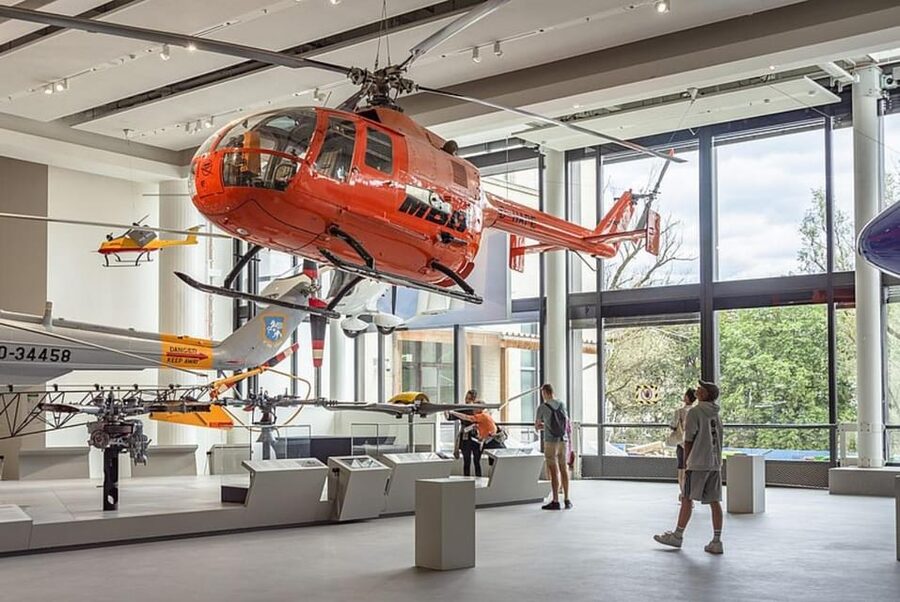
The lunar rover brings the story into the space age. Iconic airplanes show another side of engineering, where design, weight, power, and human travel meet. Taken together, these objects make technology feel less distant. They are reminders that major changes often begin with a physical object that someone designed, tested, repaired, and improved.
The museum also preserves cultural material through Germany’s largest museum library and a leading special archive on the history of science and technology. You will not experience the library and archive as normal exhibition stops, but their presence adds context. The museum is not only displaying old equipment. It is also preserving the records needed to study how science and technology developed.
How long should you spend inside?
Your ticket is valid for one day, and that is useful because the museum is too large for a quick overview if you want to do more than skim. A short visit can still work if you choose two or three subjects in advance. A longer visit lets you combine large objects, interactive stations, and demonstrations.
I would divide the museum into priorities:
- Start with the exhibition that matters most to you, while your attention is fresh.
- Add a hands-on section next, especially if you are visiting with children.
- Plan one demonstration, such as the model railway, microscopy theater, or chemistry presentation.
- Leave time for a final gallery or a return to an object you passed too quickly.
The museum is open from 9 a.m. to 5 p.m., so an early start gives you the most flexibility. Arriving near the last admission time limits the value of the $17 ticket. You may still see a few highlights, but you will not have time to understand the museum’s full range.
There is no required tour route described for the ticket. That is good news if your group has different interests. One person can focus on aircraft, another on chemistry, and a child can spend longer at interactive stations. The tradeoff is that you need to make your own plan.
Is the $17 admission a good value?
At $17 per person, this is a solid value if you plan to stay for several hours. The ticket covers entry and all exhibitions for one day, so you are not paying separately for the aviation, chemistry, space, printing, or physics sections.
The value is strongest for people who enjoy museums with real objects and things to test. A family can spread the visit across different age levels, while an adult with a specific interest can focus on one area without having to pay for a separate attraction.
The price is less compelling if you only have 30 or 45 minutes in Munich. The museum is close to the center, but its size means a brief stop will show you only a fraction of what admission provides. If your schedule is tight, choose this museum because you genuinely want science and technology, not simply because it is nearby.
A multilingual audio guide is available as a download through the Deutsches Museum app. That can help you build context as you move through the galleries. It also gives you a more self-directed visit than a guided group tour. No individual guide is listed for this experience, so you should expect to explore at your own pace with the app and museum displays.
Who will enjoy the Deutsches Museum most?
I would recommend this experience to families with school-age children, engineering fans, science students, and adults who like to understand how familiar objects work. The hands-on stations make it approachable, while the major objects give serious museum-goers plenty to study.
It also suits mixed groups. You do not all need the same interest to enjoy the visit. One person can examine a historic machine while another tries an experiment or watches a demonstration.
The museum may be a poor match if your ideal Munich day centers on art, royal history, food, or traditional Bavarian culture. Its subject is clearly science and technology. One rating described it simply as a science and technology only museum, which is exactly the right expectation. If you like that subject, the narrow focus is a benefit. If you do not, the large size will not change your mind.
The museum receives about 1.5 million visitors each year, so it is an established major attraction rather than a small specialist collection. That scale brings variety, but it also means you should expect a substantial institution with many rooms and a lot to take in.
Practical details for a smoother visit
Admission includes access to all exhibitions and a downloadable multilingual audio guide through the Deutsches Museum app. The ticket does not list a guided tour, so plan for independent exploration.
The museum is wheelchair accessible, with barrier-free access from the entrance to the restrooms. This is especially useful for a visit that may last much of the day.
Discounted admission applies to pupils, trainees, full-time students, and severely disabled adults. When booking, select Youth for those categories. Severely disabled children and young people from ages 6 to 17 can enter free when the Child option is selected, and an accompanying person may enter free in the specified registered cases.
You can cancel up to 24 hours before the activity for a full refund. A reserve-now, pay-later option is also available, which can help if your Munich schedule is still changing.
Should you book the Deutsches Museum?
Book it if you want a serious but accessible look at science and technology, especially if your group enjoys aircraft, engines, space, chemistry, railways, or interactive experiments. The $17 price makes sense when you can give the museum several hours, and the one-day ticket lets you set your own pace.
Skip it if you want a quick, traditional sightseeing stop or if your interests lie mainly outside science and technology. For the right audience, though, the museum offers an unusually broad visit: real milestones such as the first diesel engine and lunar rover, hands-on stations, and demonstrations that make the ideas easier to grasp. Arrive early, choose your priorities, and let the museum fill the rest of the day.
FAQ
Where is the Deutsches Museum located?
The museum is at Museumsinsel 1, 80538 Munich, on Museumsinsel near the city center.
How much does admission cost?
The listed admission price is $17 per person. Discounted and free admission categories are available for some pupils, trainees, students, and disabled visitors.
How long is the ticket valid?
The ticket is valid for one day and includes access to all exhibitions.
What are the museum’s opening hours?
The Deutsches Museum is open daily from 9 a.m. to 5 p.m. Last admission is at 4:30 p.m.
Is the Deutsches Museum wheelchair accessible?
Yes. The museum is wheelchair accessible, with barrier-free access from the entrance to the restrooms.
Are children allowed to visit alone?
Children under 12 must be accompanied by an adult.
Just added around Munich
- Private Transfer from Munich to Salzburg, English-speaking driver★ 3.5 · 3 reviews
- Private tour from Munich to Rothenburg and Harburg★ 5.0 · 3 reviews
- Scenic Adventure Private Day Tour to The Konigssee Salzburg★ 4.5 · 3 reviews
- Munich: Capture the most Photogenic Spots with a Local★ 5.0 · 3 reviews
- Private Beer Tasting Tour in Munich with Oktoberfest Museum★ 4.3 · 3 reviews
- Munich Photoshoot: A Must-Have Holiday Experience!★ 5.0 · 3 reviews
- Paul’s Private Tour in the Alte Pinakothek Munich★ 5.0 · 3 reviews
- Private Tour to Hallstatt Salt Mine and Skywalk with Lunch★ 5.0 · 3 reviews
Museums, compared.

Beer and Food Tour with Dinner & Oktoberfest Museum
Read our review →

Magic Bavaria – Museum of Fun, Photos and Illusions
Read our review →
Munich Nymphenburg Palace & Carriage Museum Fast-Track Tour
Read our review →
Munich Nymphenburg Palace Tickets and Tour, Carriage Museum
Read our review →
Residenz Palace, Museum and Treasury Private Tour
Read our review →
Munich Private Walking Tour with the BMW Museum and BMW Welt
Read our review →Browse the lists this tour appears in