Reviewed · GUIDED
Munich’s 500 Years of Architecture Guided Tour
Munich’s story is written in stone, stucco, brick, iron, and sometimes a rather wild modern building. This two-hour tour follows that story in order, beginning at the Gothic Frauenkirche and moving through Renaissance, Baroque, Neo-Classicism, Historicism, Jugendstil, street art, and modern design. Guide Philipp adds royal gossip, local legends, and darker chapters to the usual sightseeing script.
I like the clear timeline, which helps you see how Munich changed instead of simply collecting church names. I also like the switch from the Old Town to the quieter Isar River, followed by Art Nouveau and contemporary art. The main drawback is pace: with many stops, inside visits, and a tram ride in only two hours, some places will receive a brisk explanation rather than a long look.
In This Review
- Key points to know before booking
- Start at Frauenkirche, where Munich’s story turns Gothic
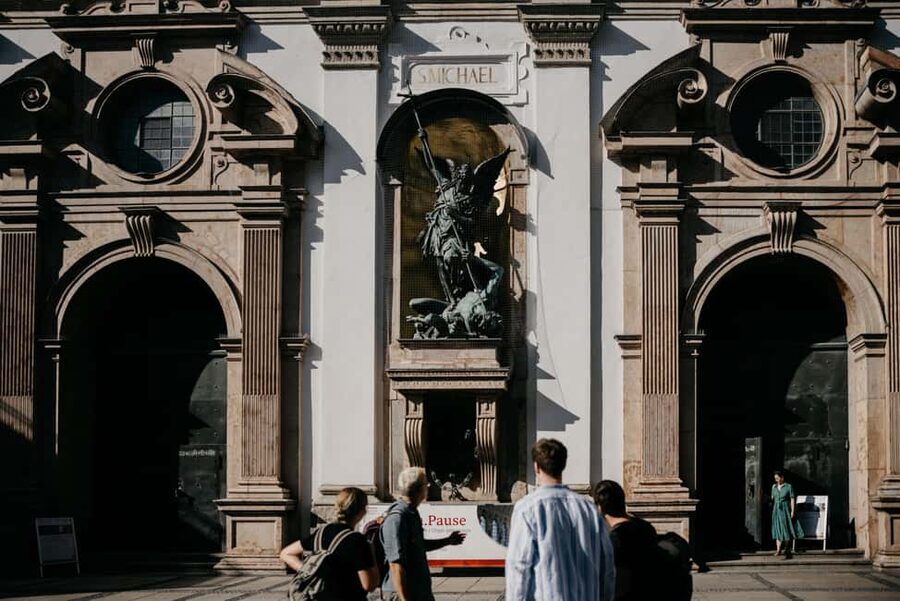
- Renaissance drama at St. Michael’s Church
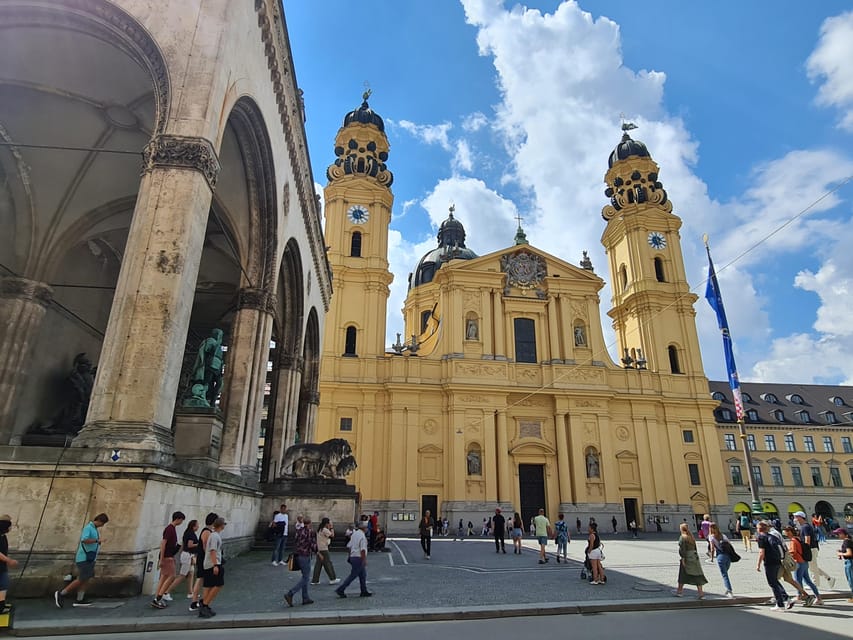
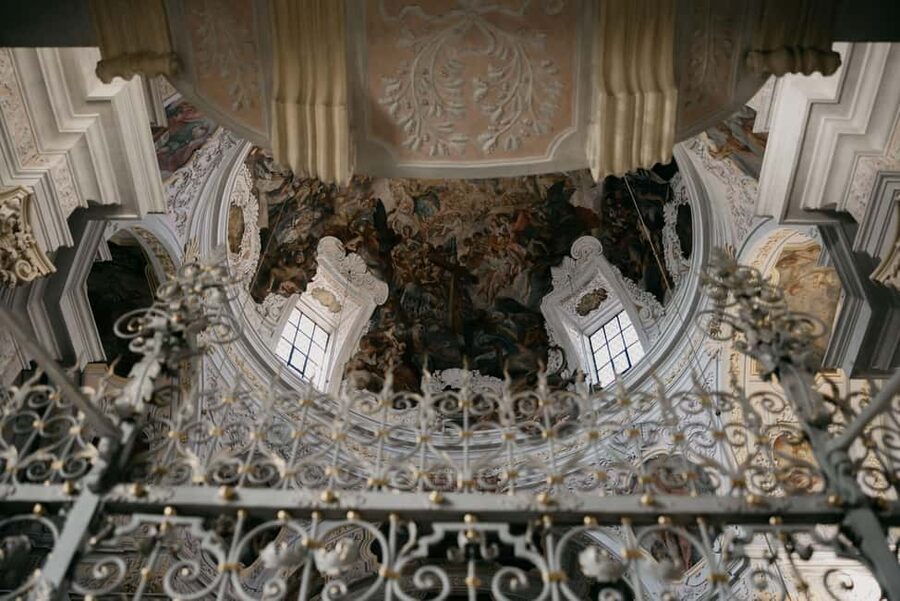
- Trinity Church and Theatine Church add Baroque weight
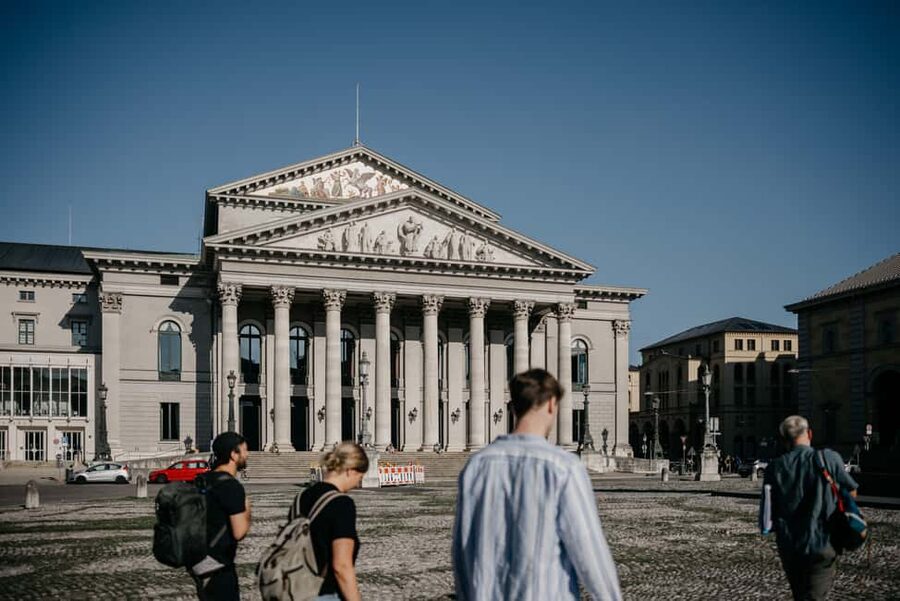
- Opera, Maximilianstraße, and the city built for show
- A quieter turn at St. Lukas and the Isar River
- Sudetendeutsches Museum and the modern finish
- What $36 buys you in two hours
- Who will enjoy this Munich walk most
- Practical plan for the day
- Should you book Munich’s 500 Years of Architecture tour?
- FAQ
- How long does the Munich architecture tour last?
- What languages does Philipp speak during the tour?
- Where does the tour begin?
- How can I find the guide?
- How do I reach Frauenkirche by public transport?
- Does the tour include food and drinks?
- Does the tour include transportation to the meeting point?
- Is the tour suitable for wheelchair users?
- Can I cancel the booking for a refund?
Key points to know before booking
- A five-century architecture lesson: Follow Munich from late Gothic design at Frauenkirche to modern art and architecture.
- Three possible interior visits: The route includes Frauenkirche, St. Michael’s Church, Trinity Church, Theatine Church, and other major buildings, with access to up to three impressive interiors.
- A change of scene at the Isar: Leave the crowded Old Town for riverside locations and two unusual world records.
- Christmas market atmosphere: The route includes several markets, including a medieval-style market in a striking setting.
- A memorable final stretch: Jugendstil, graffiti, and the unusual Alte Utting create a playful finish to the historical route.
- Small practical warning: Expect plenty of walking, winter weather, and limited suitability for wheelchairs or people with mobility impairments.
Start at Frauenkirche, where Munich’s story turns Gothic
Meet Philipp outside the main entrance of Frauenkirche at Frauenplatz 1. He is easy to spot in winter: look for the yellow hat, yellow backpack, and large blue presentation folder. That detail matters in a busy square, especially near Christmas when the Old Town fills with shoppers and market stalls.
Frauenkirche is the right place to begin. Its twin towers and broad late-Gothic form are among Munich’s clearest symbols, but the point here is not just to take a photo. Philipp uses the cathedral to set the scene for Munich in the late 15th century, when the city was shaped by church power, rulers, trade, and ambitious building projects.
You can expect stories alongside the architecture. The tour promises legends, royal tales, and some of Munich’s less cheerful episodes, so the opening should feel more like local storytelling than a dry list of dates. If you enjoy knowing why a building looks the way it does, this chronological format gives you a useful framework for the rest of your stay.
The start is convenient. Marienplatz station, served by the S-Bahn and U3 and U6 subway lines, is about a five-minute walk away. Munich’s main railway station is roughly a 15-minute walk. Wear shoes that can handle stone paving and bring a warm layer, since part of the introduction and many transitions take place outdoors.
A few more Munich tours and experiences worth a look
- Munich 3-Hour Guided Bike Tour
★ 4.5 · 1,731 reviews - Munich’s Beer Halls and Breweries: 3-Hour Guided Tour
★ 4.6 · 928 reviews - Guided Dachau Concentration Camp Memorial Site Tour with Train from Munich
★ 5.0 · 920 reviews
Renaissance drama at St. Michael’s Church
The next major stop is St. Michael’s Church, one of the tour’s strongest architectural moments. The building belongs to the Renaissance chapter and is presented as a world-record-holding masterpiece. The supplied information does not specify which record, so you should treat that phrase as a prompt for Philipp’s explanation rather than a fact to repeat without context.
St. Michael’s matters because it shows Munich looking beyond its medieval Gothic roots. The church’s scale and design reflect a period when rulers used architecture to express authority and religious purpose. This is also a good point to listen for the stories of the Bavarian royal family, which form part of the tour’s larger narrative.
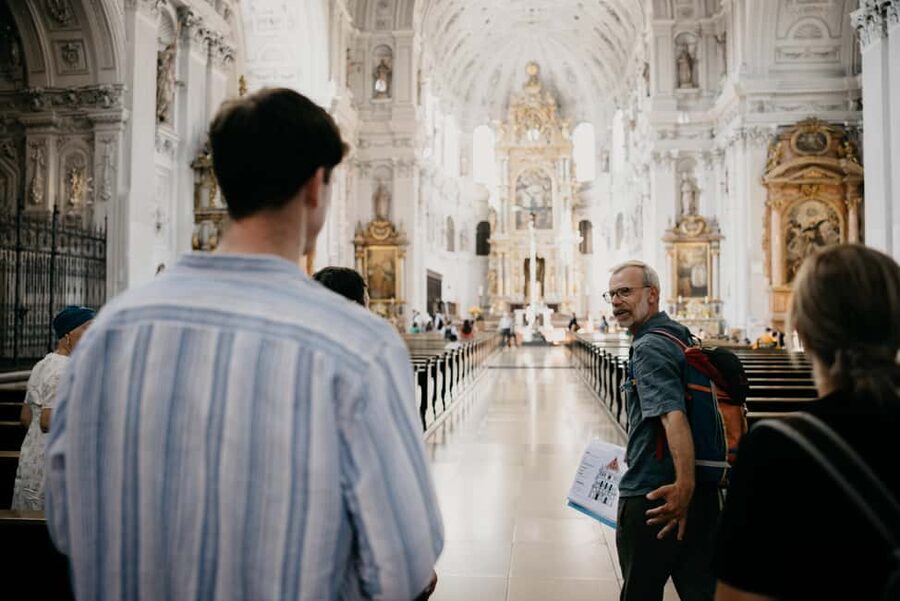
Interior access is one of the tour’s useful features. You may visit up to three impressive buildings from inside, though the exact interiors can depend on opening conditions and the guide’s timing. That is worth keeping in mind if you are booking mainly for church interiors. The tour gives you a broad look at several buildings, but it is not a two-hour church study.
Trinity Church and Theatine Church add Baroque weight
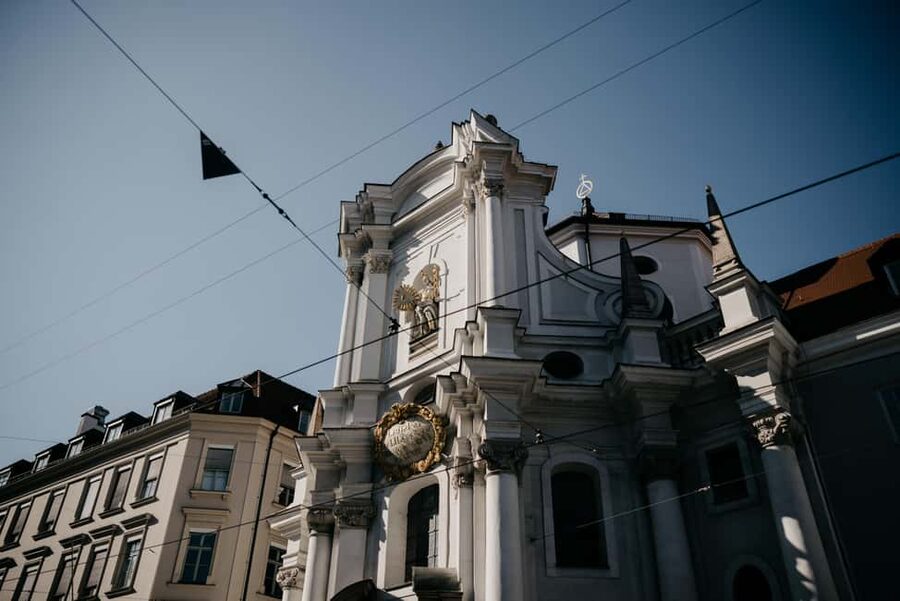
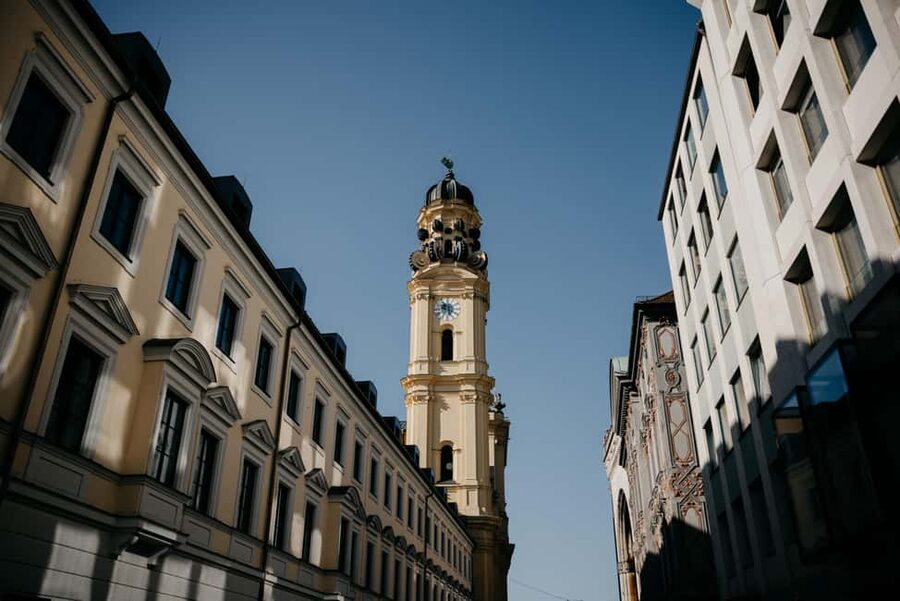
Trinity Church and Theatine Church bring the route into Munich’s more theatrical architectural periods. Their role in the tour is to show the change from Renaissance restraint to Baroque splendor and then to the elegance of later styles.
You will not simply move from one pretty facade to another. The guide connects architecture with rulers, religious life, and the city’s changing public image. The value is in the comparison: after seeing a Gothic cathedral and a Renaissance church, you can better notice the stronger decoration, grander presentation, and different mood of the Baroque buildings.
Theatine Church is also near several important civic and royal spaces, so it helps bridge the religious and political sides of Munich. The route then continues toward the Bavarian State Opera and Maximilianstraße, where the focus shifts from church architecture to public display and city planning.
Because this is a walking tour with several stops, interiors may be brief. You should expect an informed look and a story or two, not a long silent period inside each church. That tradeoff suits visitors who want a wide view of Munich’s architecture in one outing.
Opera, Maximilianstraße, and the city built for show
The Bavarian State Opera and Maximilianstraße represent a more formal, outward-facing Munich. Here, architecture is tied to ceremony, power, shopping, and the image a city wants to project.
Maximilianstraße is especially useful for understanding Historicism, the 19th-century habit of borrowing and reshaping earlier architectural styles. Philipp’s route uses this part of town to explain how Munich’s rulers and planners created a grand urban setting rather than leaving the Old Town’s medieval pattern untouched.
I like this portion because it keeps the tour from becoming a procession of churches. You get to see how architectural choices affect streets, public buildings, and the way a city presents itself. The route also gives you a chance to connect Munich’s royal past with places you might otherwise pass quickly.
The Old Town portion includes several Christmas markets. One is described as a medieval market in a magical setting, which should appeal if you visit during the winter season and want more than the standard central market. Market conditions are seasonal, so the exact stalls and atmosphere will depend on your date. In cold weather, the markets also make a practical warm-up stop, though crowds can slow the group.
Something different, still within reach of Munich:
- From Munich: Neuschwanstein & Linderhof Castle Full-Day Trip
★ 4.5 · 12,494 reviews - Neuschwanstein & Linderhof Castle-Fairytale Day Tour from Munich
★ 4.5 · 7,275 reviews - Munich: Third Reich & WWII Walking Tour
★ 4.6 · 6,181 reviews - Dachau Concentration Camp Memorial Site Tour from Munich by Train
★ 4.5 · 5,637 reviews
A quieter turn at St. Lukas and the Isar River
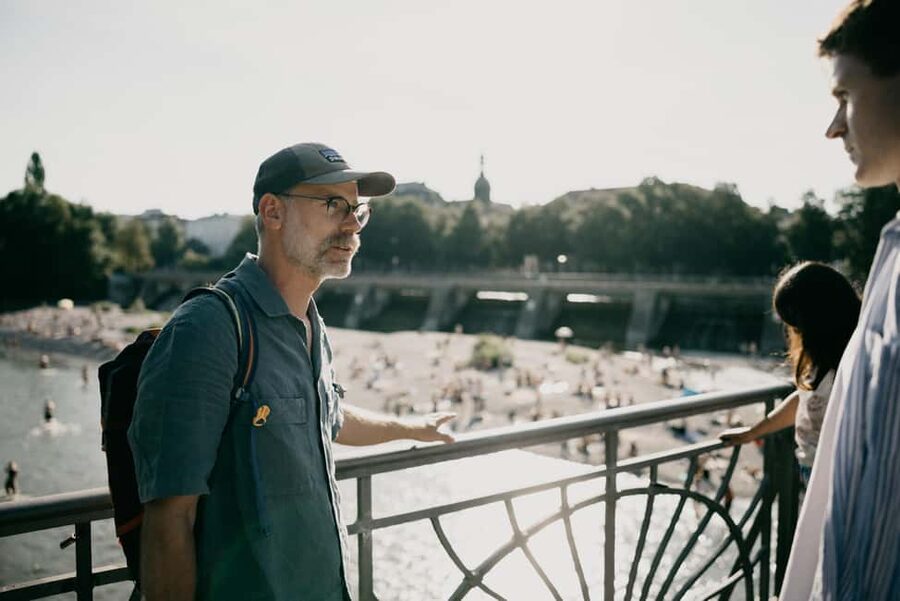
The tour then leaves the central streets and heads toward the Isar River by tram. This change is one of its best ideas. After churches, royal avenues, and Christmas market activity, the riverside offers a calmer setting and a different view of Munich.
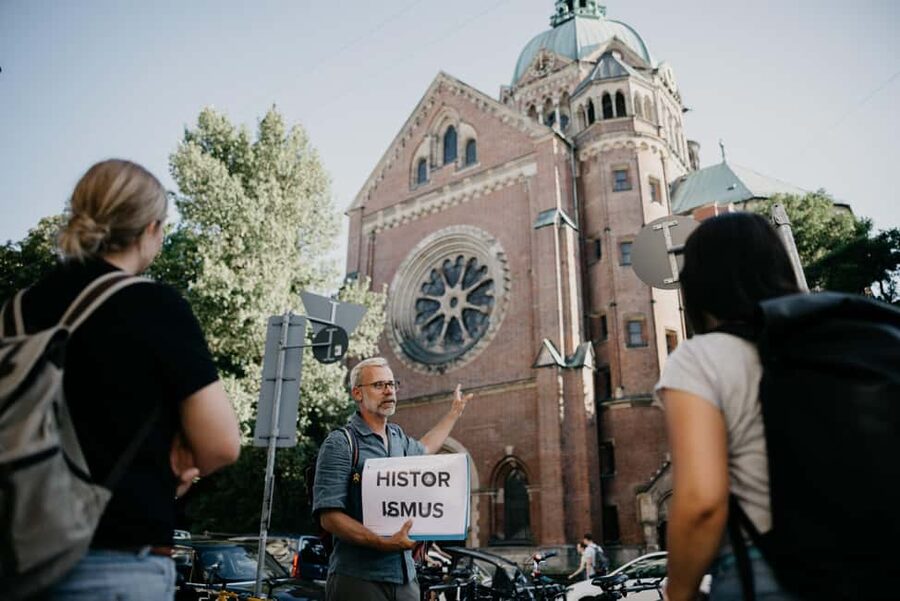
St. Lukas is included as a guided stop, followed by Müllersche Volksbad. The route promises two more world records and surprising stories in this part of town, though the supplied details do not identify the records. That means you will want to hear Philipp’s explanation on the day, especially if you enjoy unusual local facts.
Müllersche Volksbad adds another architectural layer. It is associated with public bathing and civic design, making it a useful counterpoint to palaces, churches, and opera houses. Here, architecture is not only about rulers or worship. It also reflects public life and the city’s investment in shared facilities.
The tram ride changes the rhythm, but it also creates a practical question. Transportation to and from the meeting point is not included. The tour description says the group will take a tram to the Isar, but it does not state whether a tram ticket is included in the $36 price. Ask Philipp or the booking service before you go, and carry a valid local ticket if required.
Sudetendeutsches Museum and the modern finish
The route ends at the Sudetendeutsches Museum, which provides the final link between older Munich and the present. The tour description calls this a fantastic modern museum and places it after Jugendstil and street art, so the closing section is designed to show that Munich’s architectural story is still being written.
The Sudetendeutsches Museum is not treated as an isolated museum visit. It is part of the final movement from historic styles to modern expression. That makes the ending more playful than a standard Old Town walk, especially after the solemn churches and royal buildings earlier in the route.
The route also includes street art and the Alte Utting, a much-loved local curiosity praised by The New York Times. The available details do not say how long you spend at Alte Utting or whether you enter it, so think of it as a notable stop and visual finale rather than a full venue visit.
The combination of Jugendstil, graffiti, and contemporary design is a strong choice. It keeps Munich from feeling like a museum frozen in the past. You get a sense of how old buildings, new art, and informal creative spaces sit alongside one another.
There is one point to clarify before booking. The listed route finishes at the Sudetendeutsches Museum, while the meeting-point information says the activity ends back at the original meeting point. Those details conflict. Confirm the actual endpoint with Philipp, particularly if you have a train, dinner reservation, or another tour afterward.
What $36 buys you in two hours
At $36 per person, this is priced as a compact introduction rather than an all-day architectural course. The value is strong if you want a guide to connect many parts of Munich quickly, particularly if you are visiting in winter and want Christmas markets, historic interiors, the Isar, and modern art in one booking.
The tour’s best asset is its range. You see at least five centuries of building styles and move through more than one part of the city. You also get a live guide in English or German, rather than relying on plaques or a phone app.
The limitation is time. Two hours is enough for a brisk overview, but not enough to linger at every church, museum, market, river stop, and art installation. If you prefer slow photography, long interior visits, or detailed architectural analysis of each building, a private tour or a longer specialist walk may suit you better. A private group is available, which could help if you want more control over pace and questions.
Food and drinks are not included. The route also does not include transportation to the meeting point. Bring your own water and plan any meal or coffee stop before or after the tour rather than expecting a scheduled break.
Free cancellation is available up to 24 hours in advance, and you can reserve now and pay later. Those terms are useful in winter, when weather can affect your plans.
Who will enjoy this Munich walk most
I would recommend this tour to a first-time Munich visitor who wants a strong orientation without spending half a day indoors. The chronological structure is especially helpful if you find architectural history confusing. Instead of hearing disconnected facts, you see a progression from Gothic forms to modern art.
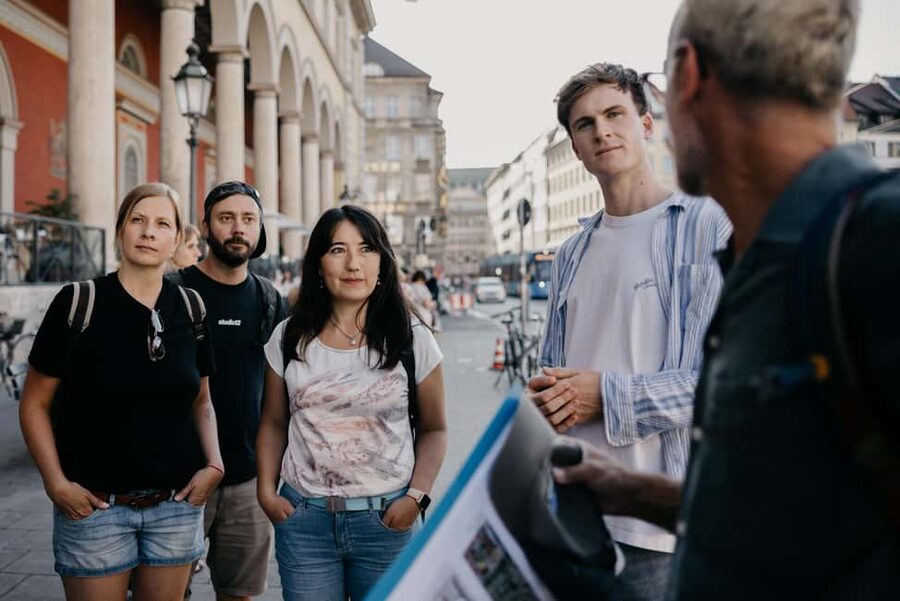
It also suits people who want stories. Philipp’s style, based on the available descriptions, is personable and lively, with attention to royal tales, legends, local surprises, and darker moments. The tour is meant to entertain as well as explain.
You should be comfortable walking outdoors and moving between several stops. Warm clothing and comfortable shoes are essential in winter. The activity is not suitable for wheelchair users or people with mobility impairments, and it is not recommended for people over 95 years of age. Smoking is not allowed.
The tour can work well for couples, friends, and families with older children who enjoy history and unusual city details. A private group option may be worth considering if your party has special requests or wants a more personal pace. Philipp invites you to contact him about private tours, vouchers, and special requests.
Practical plan for the day
Meet outside Frauenkirche, not at a vague square or nearby cafe. Look for Philipp’s yellow winter hat, yellow backpack, and blue presentation folder. Arrive with enough time to find Frauenplatz and settle into the group before the walking begins.
Use Marienplatz station if you are coming by public transport. From Munich Hauptbahnhof, the walk is about 15 minutes, so you do not need a taxi simply to reach the start.
Dress for winter, even if the forecast looks mild. The route moves between interiors and open streets, and the Isar portion can feel different from the sheltered Old Town. Bring a camera, though remember that a two-hour route leaves limited time for repeated photo stops.
If you want to visit a particular church inside, ask at the start how the interior visits are expected to work that day. The activity allows up to three impressive buildings from inside, not guaranteed entry to every named church.
Should you book Munich’s 500 Years of Architecture tour?
Book it if you want a lively, broad introduction to Munich that reaches beyond Marienplatz. The mix of Gothic churches, royal architecture, Christmas markets, the Isar, Jugendstil, graffiti, and Alte Utting gives you a more varied picture than a standard Old Town walk.
Skip it if you need step-free access, dislike winter walking, or want a slow architectural study. The route covers a lot in two hours, and the endpoint should be confirmed before you commit to a tight schedule.
For most visitors who value stories, variety, and a guide who makes connections between old and new Munich, $36 is a fair price. Philipp’s personal approach and the unusual riverside and modern-art finish give this tour a clear identity.
FAQ
How long does the Munich architecture tour last?
The tour lasts two hours. Starting times vary, so check availability when booking.
What languages does Philipp speak during the tour?
The live tour is offered in English and German.
Where does the tour begin?
It begins outside the main entrance of Frauenkirche at Frauenplatz 1 in Munich.
How can I find the guide?
Philipp will be wearing a yellow winter hat and carrying a yellow backpack and a large blue presentation folder.
How do I reach Frauenkirche by public transport?
The easiest option is to use the S-Bahn or U3 and U6 subway station at Marienplatz, then walk about five minutes. Munich Hauptbahnhof is about a 15-minute walk from the meeting point.
Does the tour include food and drinks?
No. Food and drinks are not included.
Does the tour include transportation to the meeting point?
No. Transportation to and from the meeting point is not included. The route description also mentions taking a tram to the Isar, so confirm any tram-ticket details before departure.
Is the tour suitable for wheelchair users?
No. The activity is not suitable for wheelchair users or people with mobility impairments.
Can I cancel the booking for a refund?
Yes. You can cancel up to 24 hours in advance for a full refund. You can also reserve now and pay later.
Just added around Munich
- Private tour from Munich to Rothenburg and Harburg★ 5.0 · 3 reviews
- Scenic Adventure Private Day Tour to The Konigssee Salzburg★ 4.5 · 3 reviews
- Private Transfer from Munich to Salzburg, English-speaking driver★ 3.5 · 3 reviews
- Munich: Capture the most Photogenic Spots with a Local★ 5.0 · 3 reviews
- Private Beer Tasting Tour in Munich with Oktoberfest Museum★ 4.3 · 3 reviews
- Munich Photoshoot: A Must-Have Holiday Experience!★ 5.0 · 3 reviews
- Paul’s Private Tour in the Alte Pinakothek Munich★ 5.0 · 3 reviews
- Private Tour to Hallstatt Salt Mine and Skywalk with Lunch★ 5.0 · 3 reviews
Guided, compared.
Munich’s Beer Halls and Breweries: 3-Hour Guided Tour
Read our review →
Guided Dachau Concentration Camp Memorial Site Tour with Train from Munich
Read our review →
Birthplace of the Third Reich Guided Walking Tour
Read our review →
Classic Guided City Tour by Bike (English Tour Only)
Read our review →