Reviewed · GUIDED
Munich’s Hidden Architecture Guided Tour
Munich’s south offers a very different picture of the city: shipping containers turned into cultural spaces, street art, old neighborhoods, river paths, and a boat perched on a bridge. This two-hour walk with architect Philipp takes you from Piazza Zenetti through places many first-time visitors would miss, ending near Gans Woanders in Giesing.
I like the tour’s focus on architecture with a local edge, not just famous façades. I also like the mix of city and nature, from Bahnwärter Thiel and Alte Utting to the Isar, willow island, and Little Venice. The main consideration is winter weather: you’ll be walking outdoors for two hours, and the route is not suitable for wheelchair users or people with mobility impairments.
In This Review
- Key points to know before booking
- Why Munich’s south is worth your time
- Starting at Piazza Zenetti
- Münchner Volkstheater and the city’s cultural side
- Bahnwärter Thiel, a creative space built from old materials
- The boat on the bridge at Alte Utting
- Dreimühlenstraße and the move toward the Isar
- Crossing at Wittelsbacherbrücke
- Claude-Lorrain-Straße and Giesing’s local character
- Little Venice and the willow island
- Three Christmas markets along the route
- Finishing at Gans Woanders
- How much value does the $36 price offer?
- Who should book this walk?
- Practical advice for the two-hour route
- Should you book Munich’s Hidden Architecture Guided Tour?
- FAQ
- How long does Munich’s Hidden Architecture Guided Tour last?
- What is the price of the tour?
- Where does the tour start?
- How do I reach Piazza Zenetti?
- How will I recognize the guide?
- What languages does Philipp speak on the tour?
- Does the tour include Christmas markets?
- Is food or drink included?
- Where does the tour finish?
- Is the tour suitable for wheelchair users?
Key points to know before booking
- Alte Utting is the tour’s signature sight: See the former passenger ship set on a bridge, a Munich oddity praised by The New York Times.
- Three seasonal Christmas markets: The route includes festive markets, but this part depends on the winter season and available dates.
- A walk through lesser-known Munich: Explore Bahnwärter Thiel, Giesing, street art, cultural spaces, and older southern districts.
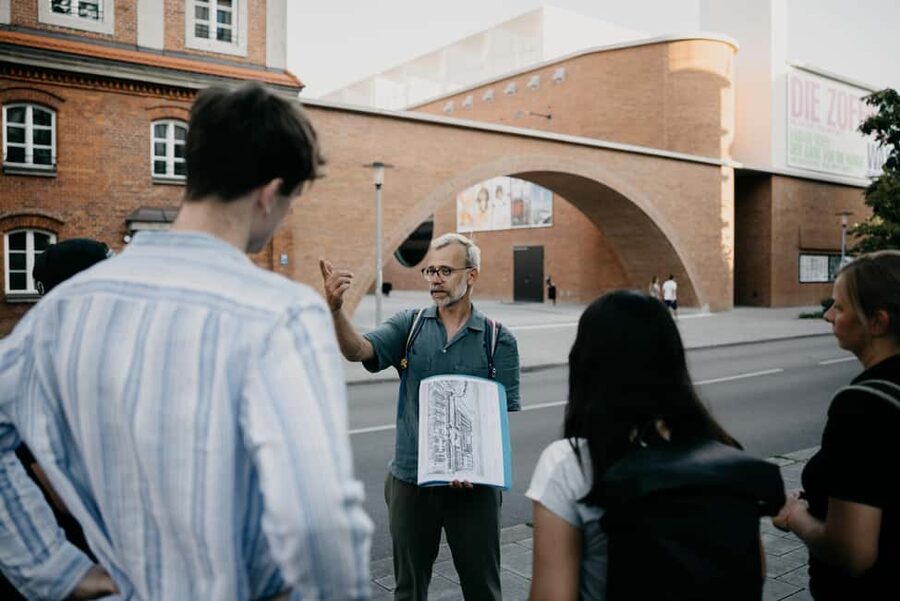
- Architecture is explained by an architect: Philipp leads in English or German and brings a professional eye to details you might otherwise pass.
- Isar scenery balances the urban stops: Expect river views, nature, Wittelsbacherbrücke, willow island, and Little Venice.
- Bring winter gear and good shoes: Food, drinks, and transport are not included, and participation is at your own risk.
Why Munich’s south is worth your time
Central Munich is full of grand churches, royal buildings, and polished squares. That is useful for a first look at the city, but it can leave you with a narrow idea of Munich. South of the center, the city feels more improvised and lived-in.
This tour links several places where old infrastructure, art, nightlife, neighborhood life, and nature meet. You are not simply walking from one postcard view to another. You are seeing how Munich uses former industrial spaces, bridges, boats, containers, and riverside areas in modern ways.
The walk also adds a historical layer. You’ll hear about more than 700 years of history in districts that are less familiar to most visitors. That combination is the real appeal: old Munich is still present, but it shares the stage with street art, cultural hubs, and independent gathering places.
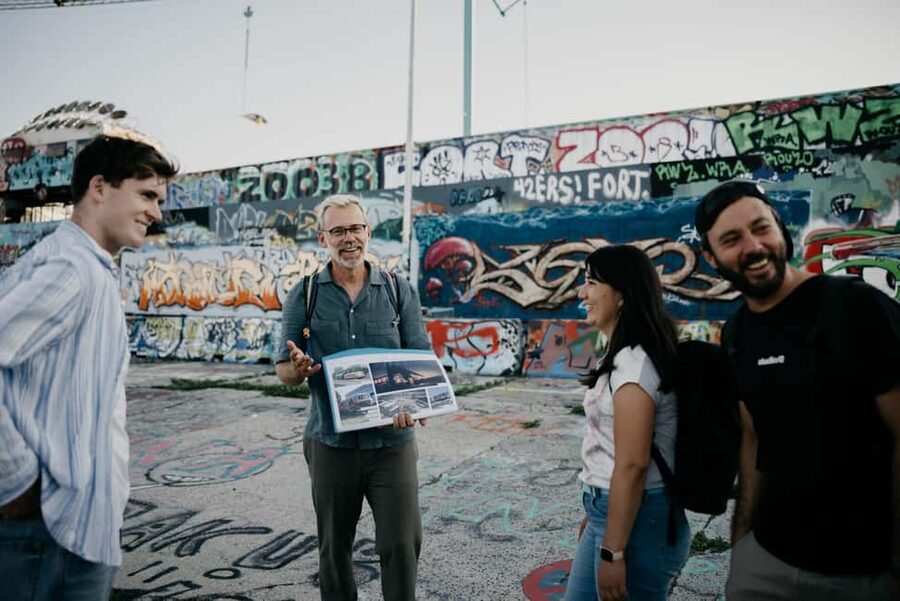
Philipp’s background as a professional architect matters here. The strongest praise for the tour focuses on his explanations, his ability to answer questions, and the way he draws attention to small details. You can expect the architecture to be treated as more than decoration. Materials, unusual conversions, urban planning, and the relationship between buildings and public spaces all have a place in the walk.
A few more Munich tours and experiences worth a look
- Munich 3-Hour Guided Bike Tour
★ 4.5 · 1,731 reviews - Munich’s Beer Halls and Breweries: 3-Hour Guided Tour
★ 4.6 · 928 reviews - Guided Dachau Concentration Camp Memorial Site Tour with Train from Munich
★ 5.0 · 920 reviews
Starting at Piazza Zenetti
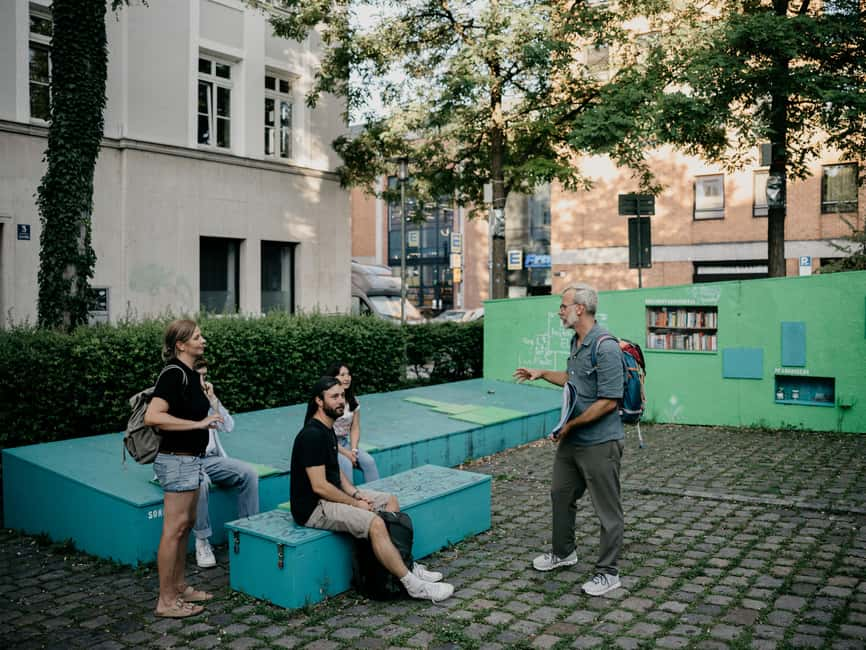
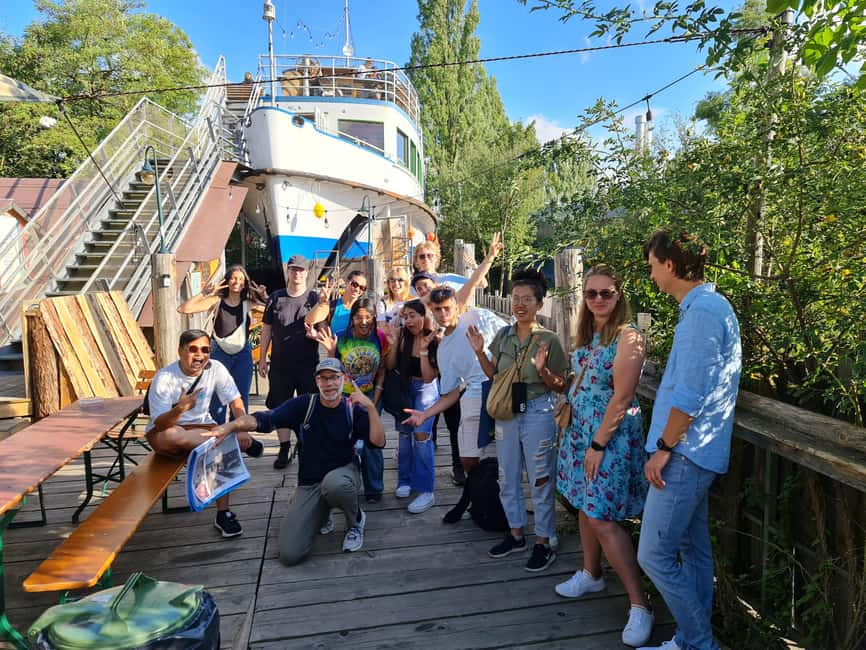
The meeting point is Piazza Zenetti, at the intersection of Tumblingerstrasse and Zenettistrasse. Look for turquoise and green outdoor furniture and small trees in boxes. Philipp will be carrying a colorful backpack and a blue folder.
The easiest approach is the U3 or U6 subway to Goetheplatz, followed by a walk of about 10 minutes. Give yourself enough time to find the square, especially if you are arriving after dark or during the busy Christmas season.
This opening location sets the tone. You are away from Munich’s best-known central sights, in an area where public space and creative projects are part of the everyday setting. It is a good place to begin a walk about how the city changes as you move south.
Münchner Volkstheater and the city’s cultural side
The Münchner Volkstheater is one of the early guided stops. The theater represents Munich’s cultural life beyond the big tourist landmarks, and Philipp uses it as part of the story of the southern districts.
The value here is not simply seeing a theater from outside. With an architect guide, you get a closer look at how a public cultural building fits into its neighborhood. You may also hear how this part of Munich has developed as a place for creative activity and new forms of public life.
Keep your expectations realistic. The tour does not promise an interior theater visit or a performance. Treat this as an architectural and urban stop within a larger walk.
Bahnwärter Thiel, a creative space built from old materials
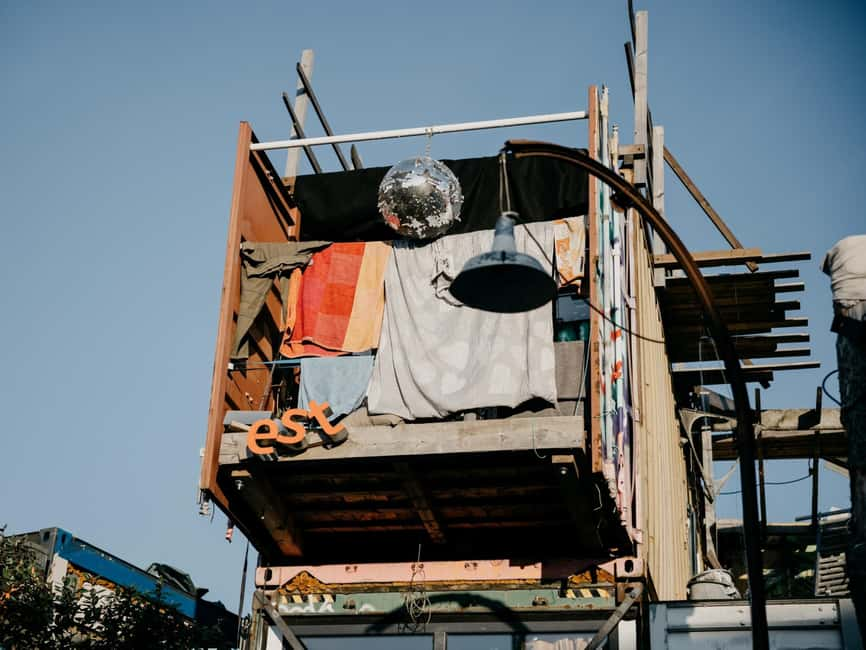
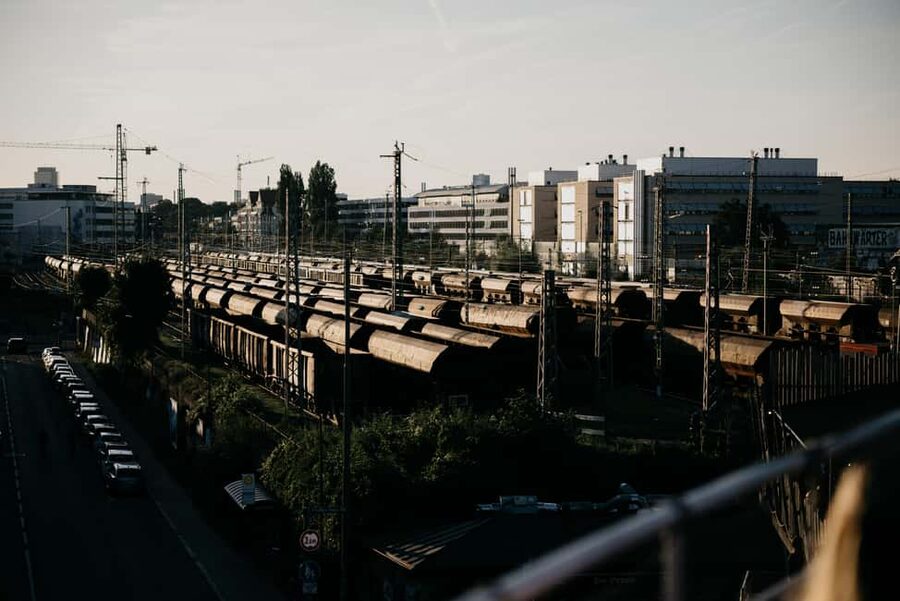
Bahnwärter Thiel is one of the tour’s most distinctive stops. Its setting uses shipping containers, wood, and other rough-edged materials to create a cultural hub. The result is a place that feels far removed from Munich’s formal center.
This is where the tour’s theme becomes clear. You are looking at a city space made through adaptation rather than polished planning. Old or ordinary objects take on new uses, and art becomes part of the physical setting.
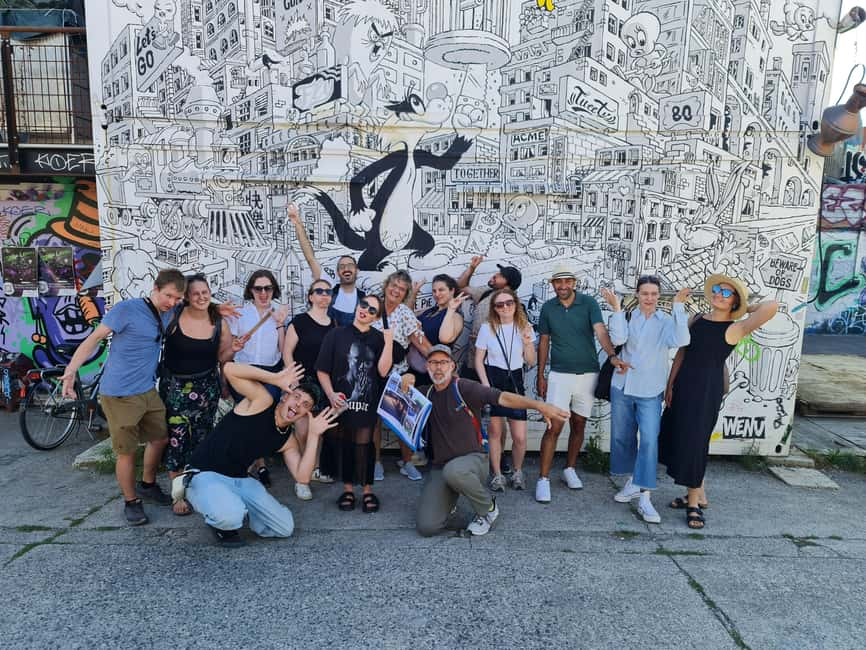
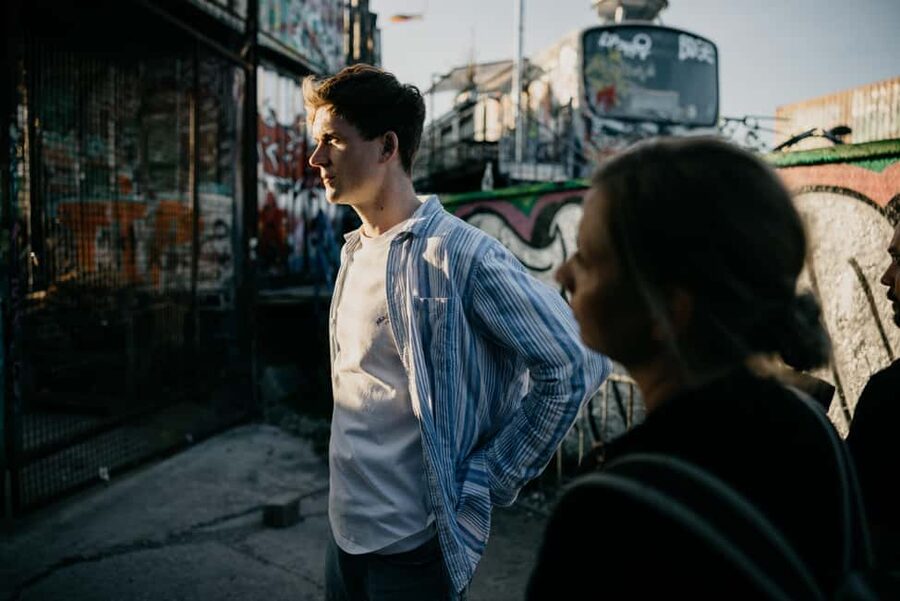
Street art is another important part of the stop. Philipp’s explanations help you notice how color, temporary structures, and public art change the feeling of an area. If you enjoy creative districts, photography, or architecture that breaks from convention, Bahnwärter Thiel may be one of your favorite sections.
The setting can also be rougher and less predictable than a museum or historic square. Wear shoes you can walk in comfortably, and do not expect a traditional sightseeing site with formal displays.
Something different, still within reach of Munich:
- From Munich: Neuschwanstein & Linderhof Castle Full-Day Trip
★ 4.5 · 12,494 reviews - Neuschwanstein & Linderhof Castle-Fairytale Day Tour from Munich
★ 4.5 · 7,275 reviews - Munich: Third Reich & WWII Walking Tour
★ 4.6 · 6,181 reviews - Dachau Concentration Camp Memorial Site Tour from Munich by Train
★ 4.5 · 5,637 reviews
The boat on the bridge at Alte Utting
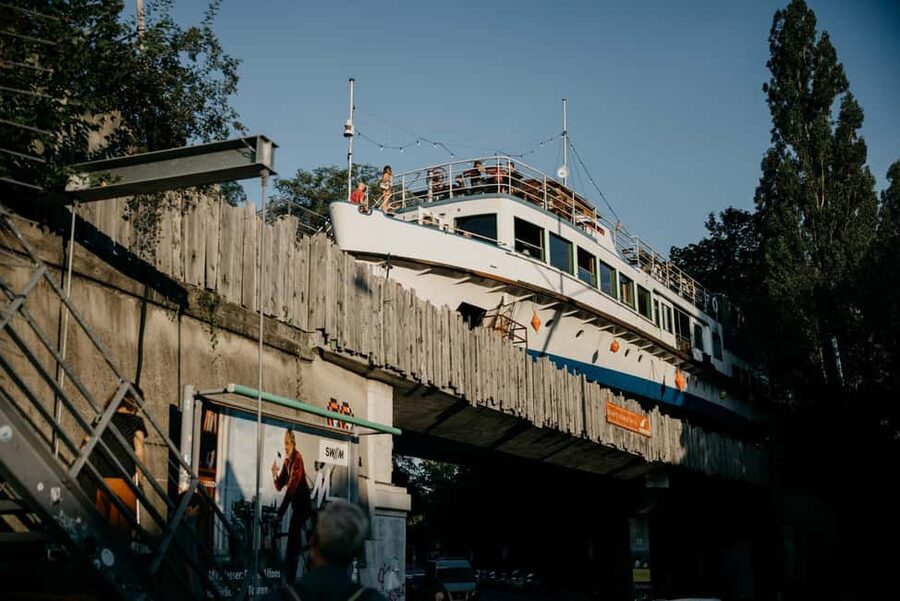
Alte Utting is the tour’s most unusual landmark. A former passenger ship sits on a bridge above Lagerhausstrasse, creating one of those Munich sights that sounds invented until you see it.
The boat has drawn international attention, including from The New York Times, which highlighted the question of whether Munich was getting cool and pointed to the boat on the bridge. That attention is understandable. The sight is strange, memorable, and very Munich in its willingness to give an old object a new public role.
For you, this stop offers more than a fun photograph. It shows how an unused or displaced piece of transport history can become a meeting place and cultural site. It also connects the tour’s architectural themes: reuse, adaptation, and the creative life of former industrial areas.
The tour includes a guided look at Alte Utting, but food and drinks are not included. Do not book this walk expecting a meal stop or a long period inside the venue. The point is to see the site and understand why it matters within Munich’s changing south.
Dreimühlenstraße and the move toward the Isar
From the urban creative spaces, the route continues toward Dreimühlenstraße. This part of the walk helps connect the cultural stops with the residential districts and river areas farther south.
A guided walk is especially useful here because the value is spread across the route. You are not stopping at one famous monument. You are watching the surroundings change, with older neighborhood character sitting alongside newer cultural uses.
The pace should suit people who enjoy seeing a city in sections rather than rushing between major attractions. At the same time, a two-hour tour has limits. Philipp cannot spend a long time at every stop, so ask questions when something catches your eye.
Crossing at Wittelsbacherbrücke
Wittelsbacherbrücke brings the Isar into the center of the experience. The bridge offers a change in mood after the street art and converted structures. You get open views, river scenery, and a stronger sense of Munich’s natural setting.
The Isar is one of the city’s defining features, but many short city tours give it only a quick glance. Here, the river is part of the route rather than a background detail. The walk shows how public paths, bridges, neighborhoods, and nature sit close together in southern Munich.
If you are taking the tour in winter, this may be one of the coldest portions. The river can make an outdoor walk feel sharper, especially after sunset. Wear a proper warm layer, gloves, and shoes with good support.
Claude-Lorrain-Straße and Giesing’s local character
Claude-Lorrain-Straße leads you farther into the southern districts and toward Giesing. Giesing is presented as one of Munich’s last more authentic neighborhoods, with its own character rather than the carefully polished feel of the historic center.
That distinction is useful, but it is worth understanding what it means. You are not entering a preserved medieval village or a formal open-air museum. You are walking through a real urban district, where everyday buildings, local streets, art, and older layers of the city sit together.
The tour uses Giesing to explain more than 700 years of history in Munich’s southern neighborhoods. Philipp’s professional training gives him a strong base for pointing out architectural details, while his easy speaking style helps keep the material approachable. Several participants praised his ability to answer questions and make the walk enjoyable, even for people who had lived in Munich for many years.
That makes this section appealing to repeat visitors as well as first-time visitors. If you already know central Munich, Giesing can help you see the city from another angle.
Little Venice and the willow island
The route includes Little Venice, along with views of the Isar and a beautiful willow island. This is a gentler section of the walk, giving you time to notice water, trees, and the city’s edges.
The name Little Venice should not lead you to expect a large canal district or a direct copy of Venice. The attraction is the small-scale atmosphere and the way water and greenery shape the setting. It is a pleasant counterpoint to the container-built cultural spaces earlier in the tour.
This portion is also a reminder that Munich’s southern character is not only about alternative culture. The city’s river corridors offer nature within walking distance of dense neighborhoods. Bring a camera if you like changing light, bridges, water, and evening views.
Three Christmas markets along the route
The winter version of this tour includes three Christmas markets, with the final part of the walk reaching one of Munich’s more unusual festive markets. This gives the experience a seasonal feel that a standard architecture walk may not have.
These markets are likely to appeal to you if you prefer smaller, more local-feeling settings over the biggest central market crowds. The tour’s focus is on unusual cultural spaces, so the Christmas stops fit the wider theme rather than feeling like a separate sightseeing add-on.
The exact starting times and seasonal availability need to be checked before booking. The information provided does not specify market dates, opening hours, or which stalls will be operating on a particular day.
Food and drinks are not included, but the markets give you a chance to buy something along the way if they are open. Bring some cash or a payment method suitable for seasonal stalls, though the tour details do not guarantee how individual vendors accept payment.
Finishing at Gans Woanders
The route finishes at Gans Woanders. This is a fitting endpoint for a walk built around creative spaces, neighborhood life, and unusual architecture.
The stated route ends there after the Little Venice section. The meeting-point information also refers to the activity ending back at the meeting point, so confirm the exact finish arrangement when you book, particularly if you need to catch a train or make a dinner reservation.
Because food and drinks are excluded, you should not assume that a meal is part of the booking. Gans Woanders may be useful for continuing your evening, but the supplied tour information does not promise a reserved table, included refreshments, or a set amount of free time.
How much value does the $36 price offer?
At $36 per person, this is reasonably priced for a two-hour guided walk led by an architect, especially if you want interpretation rather than a simple route between sights. The value comes from the connections Philipp makes between architecture, history, street art, repurposed spaces, the Isar, and Giesing.
You are also getting access to places that are harder to identify on your own. A map can bring you to Alte Utting or Bahnwärter Thiel, but it will not explain why these places matter or how they fit into Munich’s urban story.
The price is less attractive if you want a long stop at each location, included food, or a full-day excursion. Two hours passes quickly across this many stops. You will get a broad introduction, not an exhaustive study of every district.
A private group option is available, which may improve the value for families or friends who want a more personal pace. The details do not state the private-group surcharge, so check that before committing.
Who should book this walk?
I would choose this tour if you have already seen central Munich’s main sights, or if you prefer local districts to grand monuments. It suits people interested in architecture, street art, adaptive reuse, cultural venues, photography, and urban history.
It is also a good choice for anyone who wants a winter activity that feels tied to Munich rather than a generic Christmas outing. The markets, evening views, and warm clothing requirement make it seasonal and atmospheric.
You may want a different tour if you dislike walking outdoors in cold weather, need step-free access, or prefer indoor museums. The route is not suitable for wheelchair users or people with mobility impairments, and participation is at your own risk.
The walk is offered in English and German. A private group is available, and cancellation is free up to 24 hours before the activity for a full refund. You can also reserve now and pay later, which helps if your winter schedule is still changing.
Practical advice for the two-hour route
Wear comfortable walking shoes. The route includes city streets, bridge areas, riverside sections, and outdoor cultural spaces, so comfort matters more than style.
Dress warmly, especially for an evening departure. The Isar section and bridge crossings can feel colder than the built-up parts of the route. A camera is worthwhile for Alte Utting, street art, the river, and the seasonal markets.
Smoking is not allowed during the activity. Food and drinks are not included, and transport to and from the meeting point is your responsibility.
If you want to ask detailed questions about architecture, Philipp appears to be the right kind of guide for you. The strongest praise centers on his ability to explain places clearly, respond to questions, and point out details that even long-term Munich residents had missed.
Should you book Munich’s Hidden Architecture Guided Tour?
Book it if you want to trade Munich’s postcard center for a walk through creative spaces, Giesing, the Isar, and unusual landmarks such as Alte Utting. The architect-led commentary and mix of street art, history, nature, and Christmas markets give the tour a clear identity.
Skip it if you need an indoor experience, step-free access, or a slow visit focused on only one attraction. For most walkers who enjoy seeing how a city really works beyond its famous center, $36 is a fair price for a lively introduction to Munich’s south.
FAQ
How long does Munich’s Hidden Architecture Guided Tour last?
The tour lasts two hours.
What is the price of the tour?
The listed price is $36 per person.
Where does the tour start?
The meeting point is Piazza Zenetti, at the intersection of Tumblingerstrasse and Zenettistrasse.
How do I reach Piazza Zenetti?
The suggested route is to take the U3 or U6 subway to Goetheplatz, then walk about 10 minutes to Zenettiplatz.
How will I recognize the guide?
Philipp will be wearing a colorful backpack and carrying a blue folder. The meeting area has turquoise and green outdoor furniture and small trees in boxes.
What languages does Philipp speak on the tour?
The live tour is available in English and German.
Does the tour include Christmas markets?
Yes. The tour includes visits to three alternative Christmas markets, subject to the seasonal schedule and available tour dates.
Is food or drink included?
No. Food and drinks are not included in the tour price.
Where does the tour finish?
The listed route finishes at Gans Woanders. The meeting information also refers to returning to the meeting point, so confirm the exact end arrangement before booking.
Is the tour suitable for wheelchair users?
No. The activity is not suitable for wheelchair users or people with mobility impairments.
Just added around Munich
- Scenic Adventure Private Day Tour to The Konigssee Salzburg★ 4.5 · 3 reviews
- Private Transfer from Munich to Salzburg, English-speaking driver★ 3.5 · 3 reviews
- Private tour from Munich to Rothenburg and Harburg★ 5.0 · 3 reviews
- Munich: Capture the most Photogenic Spots with a Local★ 5.0 · 3 reviews
- Private Beer Tasting Tour in Munich with Oktoberfest Museum★ 4.3 · 3 reviews
- Munich Photoshoot: A Must-Have Holiday Experience!★ 5.0 · 3 reviews
- Paul’s Private Tour in the Alte Pinakothek Munich★ 5.0 · 3 reviews
- Private Tour to Hallstatt Salt Mine and Skywalk with Lunch★ 5.0 · 3 reviews
Guided, compared.
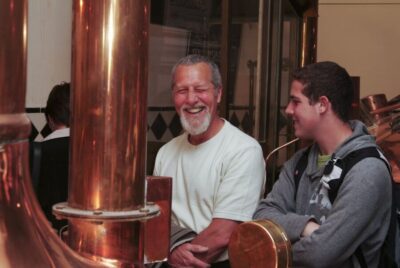
Munich’s Beer Halls and Breweries: 3-Hour Guided Tour
Read our review →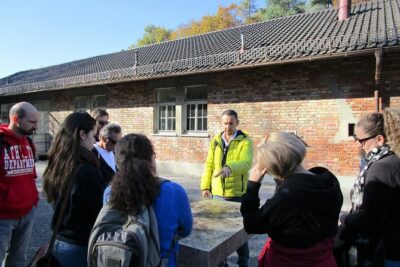
Guided Dachau Concentration Camp Memorial Site Tour with Train from Munich
Read our review →
Birthplace of the Third Reich Guided Walking Tour
Read our review →
Classic Guided City Tour by Bike (English Tour Only)
Read our review →