Reviewed · GUIDED
Nuremberg Private Guided Tour from Munich by Rail
Nuremberg gives you two very different German cities in one day. Inside the old walls, you’ll find market squares, churches, a castle, and Albrecht Dürer’s former home. Outside the center, the city confronts its Nazi past through the former rally grounds and, on some schedules, the courtroom tied to the Nuremberg Trials. A private guide makes that contrast easier to understand, especially when you can stop and ask questions.
I like the door-to-door rail planning and the freedom to shape the day around your interests. Guides including Jason, Susanne, Paul, Nick, Chris, and Akim have helped families, couples, solo visitors, and larger private groups manage trains, buses, and underground connections without guesswork. The main drawback is cost: at $474.09 per person, this is a serious splurge, and the long train ride leaves roughly six hours for Nuremberg itself.
In This Review
- Key points at a glance
- Munich to Nuremberg by train
- Starting inside the medieval Altstadt
- Handwerkerhof and the old crafts tradition
- Hauptmarkt and the wishing ring
- Kaiserburg and the high point of the old town
- Dürer, St. Sebald, and the city’s cultural side
- Congress Hall and the former rally grounds
- The Nuremberg Trials courthouse
- Lunch, shopping, and making the schedule yours
- What the guides add
- Price, group size, and value
- Who should book this Nuremberg day trip?
- FAQ
- How long does the tour last?
- Where does the tour start?
- Does the tour return to Munich?
- Is hotel pickup included?
- Is train transportation included?
- Is the tour private?
- What language is offered?
- Are food and drinks included?
- Are entrance fees included?
- Can I cancel for a full refund?
- Should you book it?
Key points at a glance
- The train ride is part of the service: Round-trip rail transport from Munich is included, with hotel pickup and drop-off offered.
- You set the emphasis: Ask for more medieval history, more WWII context, a slower lunch, shopping time, or help with mobility needs.
- Nuremberg’s old town is walkable: The main sights run through the walled Altstadt, market square, churches, castle, and Dürer district.
- The Nazi-era sites need context: Congress Hall and the former rally grounds are powerful mainly because your guide explains what happened there.
- Guides handle complicated connections: The day may involve trains, buses, the underground, and trams, depending on the plan.
- The price works best for small groups: A private booking gives you personal attention, but the per-person cost can be hard to justify for one or two people.
Munich to Nuremberg by train
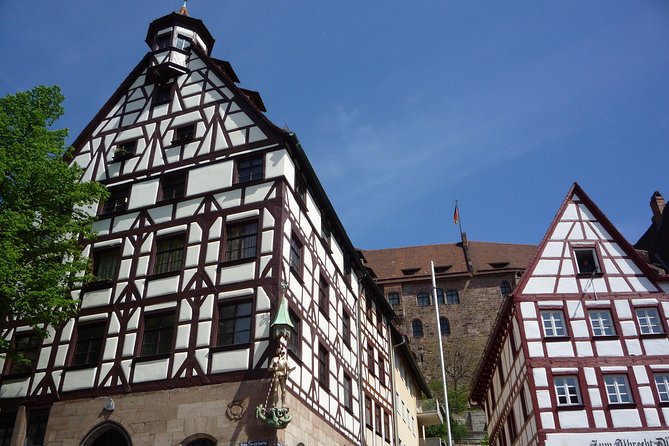
The day begins at Munich Hauptbahnhof, unless you arrange hotel pickup. Meeting at the station is also possible. From there, you travel by train to Nuremberg, with the trip taking about 90 to 120 minutes each way according to the tour details and firsthand accounts.
That rail ride matters. You avoid driving and parking, and your guide handles the tickets and connections. Guides have met groups at Munich hotels, walked them through the station, and helped with onward buses, underground trains, and trams. For a first visit to Germany, that support can remove a fair amount of morning stress.
The tradeoff is time. An eight to nine-hour day includes the round trip, so you may have about six hours in Nuremberg. If you want a slow lunch, several museums, and every major sight, you’ll need to set priorities early.
One practical point: confirm the meeting details before the morning of the tour. Most arrangements work smoothly, but one booking had a communication problem involving pickup instructions. I would make sure you know the exact time, location, and whether the guide is meeting you at your hotel or at the station.
More Nuremberg day trips from Munich:
- Nuremberg Guided Day Trip from Munich by Train
★ 4.5 · 546 reviews - From Munich: Nuremberg Day Trip by Train
★ 4.4 · 357 reviews - From Munich: Nuremberg Old Town Private Day Trip
★ 5.0 · 5 reviews
Starting inside the medieval Altstadt
The old town is the heart of the experience. The walled Altstadt brings together much of what makes Nuremberg appealing: medieval streets, restored buildings, churches, small shops, market stalls, and the Imperial Castle above the city.
You get about an hour for the general old-town visit, followed by shorter stops. That may sound brief, but a guide can make the walking efficient. Jason has been praised for keeping a relaxed pace while still covering a lot. Susanne has adjusted the day around group interests, and Paul has taken a more personal approach, sharing local connections and choosing a favorite restaurant for lunch.
The old town is also the place to slow down and ask questions. Nuremberg’s story is not only about the Nazi period. Your guide can connect the medieval imperial city, the Renaissance era, wartime destruction, postwar rebuilding, and present-day life. If you only visit the rally grounds, you miss much of the city’s character.
Handwerkerhof and the old crafts tradition
Handwerkerhof is a small reproduction of a traditional crafts court near the station area. It has shops and restaurants arranged around a compact setting designed to recall older Nuremberg trades.
The scheduled stop is only about 10 minutes, so think of it as a quick orientation rather than a shopping visit. You’ll have time to look around and get a sense of the crafts theme, but not enough time for a leisurely meal or detailed browsing unless your guide adjusts the schedule.
This is one of the lighter stops on a day weighted toward history. That balance is useful. After serious discussion of war and dictatorship, a short look at traditional food and crafts gives the tour a more ordinary, human side.
Hauptmarkt and the wishing ring
Hauptmarkt has been the city’s central marketplace since the 14th century. Today, it remains a natural meeting point and one of the easiest places to pause for food, photos, or a look at everyday city life.
The stop lasts about 15 minutes, followed by 10 minutes at the nearby Beautiful Fountain, known in German as Der Schöne Brunnen. The Gothic fountain rises like a small golden tower, and its famous ring is tied to a local wishing tradition.
You won’t need admission tickets for either stop. Their value is not in spending a long time there, but in hearing the stories that turn a market and fountain into part of Nuremberg’s identity. During a busy market period, a guide can also help you use the short stop well, though the schedule may feel tight if you want to browse.
A few more Munich tours and experiences worth a look
- Munich Private Tour with a Local – Highlights & Hidden Gems
★ 5.0 · 469 reviews - Mike’s Neuschwanstein & Linderhof Private Tour from Munich
★ 5.0 · 197 reviews - Dachau Concentration Camp Private Tour by Train from Munich
★ 5.0 · 185 reviews - Fall in Love with Munich in a Private Old Town Walking Tour
★ 5.0 · 182 reviews
Kaiserburg and the high point of the old town
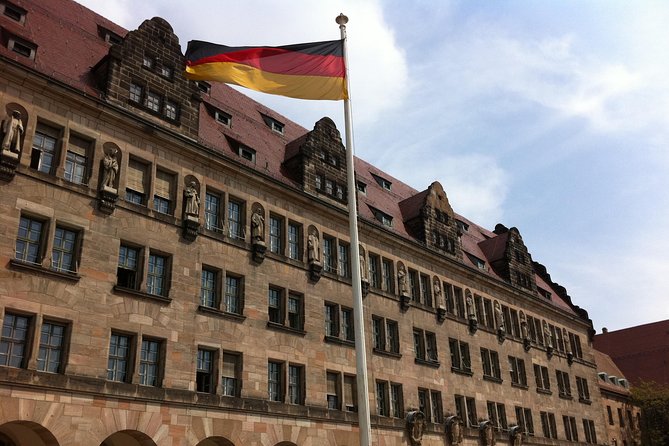
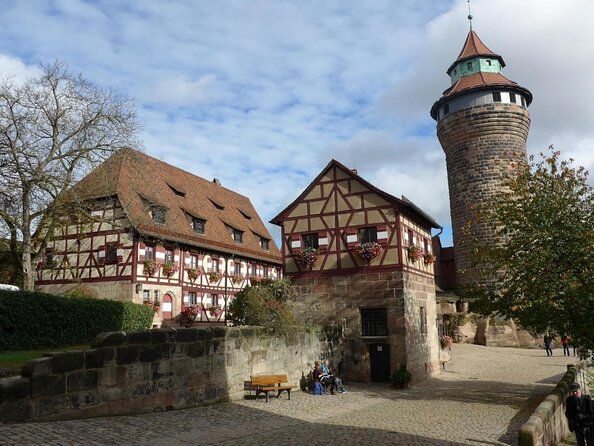
The Imperial Castle dates back at least to the year 1050 and is one of the city’s strongest visual markers. It sits above the old town, linking Nuremberg to the medieval Holy Roman Empire and its imperial rulers.
The listed visit is about 15 minutes, with admission shown as free for this tour. That timing suggests an exterior look and historical explanation rather than a full castle museum visit. If entering the castle interiors is important to you, ask before booking or during the planning conversation, since the supplied schedule does not promise a full interior visit.
The castle stop also brings a welcome change in viewpoint. You’ll see how the old town fits together below, and the climb gives the guide a natural chance to explain Nuremberg’s role as an imperial center. Wear comfortable shoes. The day combines extended walking with several forms of public transportation.
Dürer, St. Sebald, and the city’s cultural side
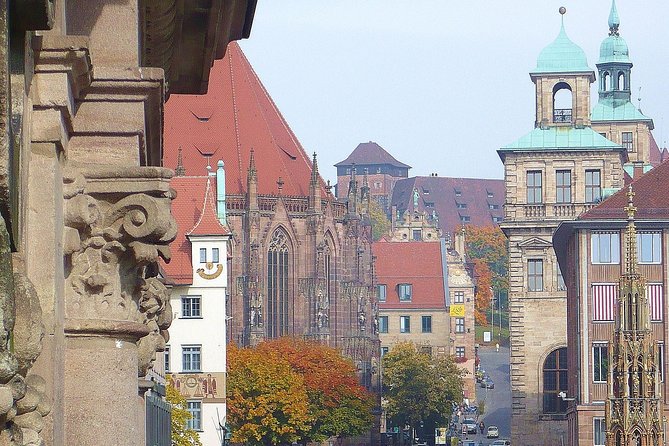
Albrecht Dürer House is the original home of the famous Renaissance artist. The scheduled stop is only five minutes, and the admission fee is not included. That means you should treat it as a brief exterior visit unless you specifically request time to go inside.
Dürer gives the tour a useful change of focus. Nuremberg is not only a place of imperial power and political trauma. It was also a major center of art, printing, and trade. A guide can help you see how the city’s cultural importance fits beside its medieval and modern history.
St. Sebaldus Church receives about 15 minutes. It is the oldest church in Nuremberg and is dedicated to Saint Sebald, the city’s patron saint. Admission is not included, so check with your guide about the day’s plan if you want to enter.
This part of the walk works best for people who want more than WWII history. It also gives you quiet architectural moments between the larger subjects. Visitors focused only on the Nazi sites may find these stops less urgent, but skipping them would make the city feel one-dimensional.
Congress Hall and the former rally grounds
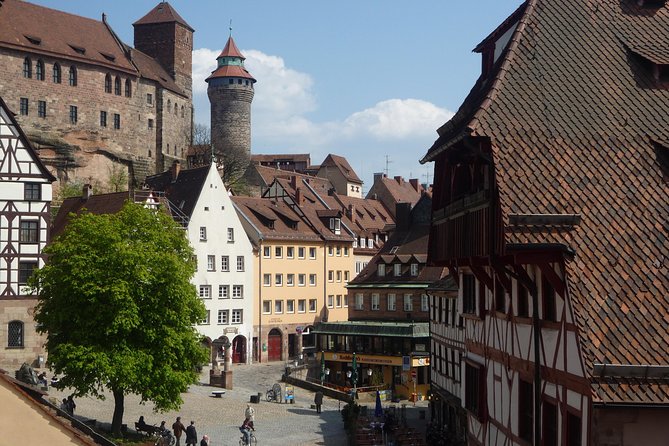
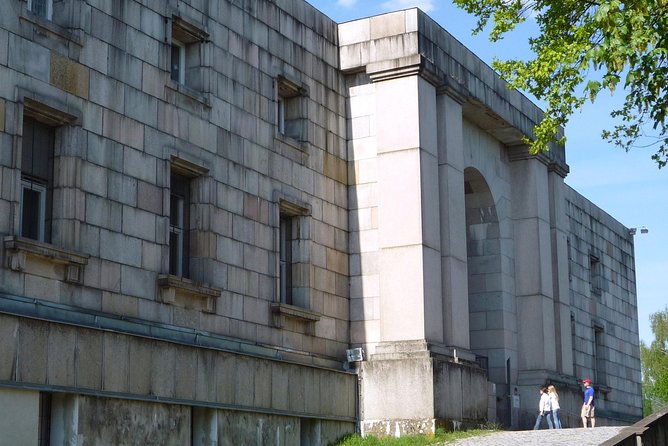
The WWII portion is a major reason to book this outing. Kongresshalle, or Congress Hall, is the unfinished Nazi Party building at the former rally grounds. Its scale and unfinished state make it a stark reminder of the regime’s plans for mass spectacle and political control.
The former rally grounds are not a conventional sightseeing stop. Much of the area is open space, and modern sports fields and outdoor events now use parts of it. You should go for the setting and the explanation, not for a concentration of preserved buildings.
That distinction matters. Without a guide, you may see a large complex and struggle to understand how it functioned. A strong guide uses photographs, maps, and before-and-after images to show what the area looked like during the Nazi period and what changed after the war. Paul and Susanne have been praised for using visual material and clear explanations, while Jason has helped groups connect the rally grounds to the broader story of Nuremberg.
The scheduled visit to the Documentation Center Nazi Party Rally Grounds is about an hour. The tour information lists an entrance charge of €7.50 per person for the Documentation Center or the courthouse exhibition, despite the general itinerary showing the rally grounds as free. Budget for that fee if your plan includes the indoor exhibition, and ask which admission applies to your selected itinerary.
The Nuremberg Trials courthouse
The courthouse is not listed as one of the numbered sightseeing stops, but several tour plans have included the courtroom and courthouse exhibition. The site is tied to the postwar trials of leading Nazi officials, making it an important counterpart to the rally grounds.
This visit can require an underground connection from the main station, so it is another place where private guiding helps. Chris, for example, has led small groups from the train station to the courthouse, then through the old town, castle, rally grounds, and back to the station.
If the courthouse is your top priority, say so when arranging the tour. The day cannot guarantee every site in equal depth, especially when the train ride takes up several hours. You may need to choose between more time inside the courthouse exhibition, a longer old-town walk, or a relaxed meal.
Lunch, shopping, and making the schedule yours
Food is not included, but the private format gives you room to choose. Some guides have stopped at a beer garden or a favorite local restaurant. Others have allowed time for lunch near the market square or by the castle.
I like this flexibility more than a fixed group menu. You can keep lunch quick if history is your main reason for coming, or make it a proper break if you prefer a gentler day. Tell your guide whether you want regional food, a casual beer garden, or only a short stop.
The same applies to shopping. The basic schedule includes only short stops at Handwerkerhof and Hauptmarkt, but a private group can often discuss small changes. Do not expect unlimited free time. With trains and local connections to catch, the guide must keep an eye on the clock.
What the guides add
The strongest part of this experience is the personal guide. Jason is repeatedly described as warm, clear, and strong on both Nuremberg’s past and current issues. Susanne has been flexible about priorities and helpful with restaurants and public transport. Paul has brought local stories, family connections, and a relaxed sense of humor.
Nick has also handled a disrupted return train by arranging another way home, a useful reminder that rail travel can occasionally go wrong. Other guides, including Jeff and Akim, have been praised for clear English and solid historical explanations.
The feedback is not perfect. One guide seemed disengaged, and another sat apart and slept during the Munich to Nuremberg train ride rather than offering commentary. That tells you something important: the quality of the day depends heavily on the guide assigned.
You can improve your odds by sending your interests in advance. Ask for a guide who can focus on WWII history, medieval Nuremberg, local culture, disability needs, or a slower walking pace. The provider cannot promise a specific guide unless confirmed, but named guides have made a strong impression on past bookings.
Price, group size, and value
The listed price is $474.09 per person. That is expensive for a day trip, especially when food and some entrance fees are extra. Group discounts may help, and the private format makes more financial sense for a family or group of several people than for a solo visitor.
What you are paying for is not simply a train ticket. The package includes hotel pickup and drop-off, a private English-speaking guide, round-trip rail transport, and help with the city’s local transit. You also get control over the pace and the chance to ask questions without a large group holding you back.
For two people, I would compare this price with a regular group excursion or a self-guided rail day. For four or more people, the cost may feel more reasonable, particularly if nobody in your group wants to manage German train connections or research the courthouse and rally grounds.
Most bookings are made about 86 days ahead, so popular dates may fill early. Free cancellation is available up to 24 hours before the start time. After that point, the payment is not refunded, and late changes are not accepted.
Who should book this Nuremberg day trip?
I would choose this tour if you want Nuremberg’s difficult 20th-century story explained carefully, but you also want time for the castle, churches, market, and old streets. It suits families, couples, solo visitors who prefer company, and private groups that value a flexible schedule.
It is especially useful if Munich is your base and you do not want to plan several train and city-transit connections yourself. It can also work well for a group with disability needs, since one booking specifically praised the guide’s ability to adapt the information and pace.
I would hesitate if you want a long, unhurried museum day. The train takes up much of the schedule, and the standard plan moves briskly. I would also hesitate if your main goal is shopping or nightlife, since the focus is firmly on history and sightseeing.
FAQ
How long does the tour last?
The full experience lasts approximately eight to nine hours, including the train journey between Munich and Nuremberg.
Where does the tour start?
The standard meeting point is Munich Hauptbahnhof at 80335 Munich, Germany. Meeting at the Munich train station is also possible.
Does the tour return to Munich?
Yes. The activity ends back at the meeting point in Munich after the return train journey.
Is hotel pickup included?
Yes. Hotel pickup and drop-off are included, though you should confirm the exact pickup details before the tour.
Is train transportation included?
Yes. Round-trip train transport from Munich is included in the tour price.
Is the tour private?
Yes. Only your group participates in the private activity.
What language is offered?
The tour is offered in English.
Are food and drinks included?
No. Food and drinks are not included, so you should budget separately for lunch and refreshments.
Are entrance fees included?
Some listed stops are free, but admission to the Albrecht Dürer House and St. Sebaldus Church is not included. The courthouse exhibition or Documentation Center admission is listed as €7.50 per person.
Can I cancel for a full refund?
Yes. You can cancel at least 24 hours before the local start time for a full refund. Cancellations or changes made less than 24 hours before the start time are not accepted for a refund.
Should you book it?
Book this private rail tour if you want a carefully guided introduction to Nuremberg and prefer someone else to manage the connections. The best version of the day combines the old town, Kaiserburg, St. Sebaldus, the courthouse, and the Nazi rally grounds, with enough flexibility for lunch and questions.
The price is the chief obstacle. For a solo visitor or couple, a self-guided train trip may cost far less. For a family or small group, the private service can be worth it, especially if you request your priorities in advance and confirm which admissions are included.
My practical advice is simple: book it for the guide and the historical context, not just for transportation. Ask to prioritize the courthouse if that matters to you, clarify hotel pickup, and allow for a brisk day. Done that way, Nuremberg becomes more than a quick excursion from Munich. It becomes a clear, thoughtful look at a city shaped by emperors, artists, war, and the hard work of remembering.
Just added around Munich
- Private Transfer from Munich to Salzburg, English-speaking driver★ 3.5 · 3 reviews
- Private tour from Munich to Rothenburg and Harburg★ 5.0 · 3 reviews
- Scenic Adventure Private Day Tour to The Konigssee Salzburg★ 4.5 · 3 reviews
- Munich Photoshoot: A Must-Have Holiday Experience!★ 5.0 · 3 reviews
- Munich: Capture the most Photogenic Spots with a Local★ 5.0 · 3 reviews
- Private Beer Tasting Tour in Munich with Oktoberfest Museum★ 4.3 · 3 reviews
- Paul’s Private Tour in the Alte Pinakothek Munich★ 5.0 · 3 reviews
- Private Tour to Hallstatt Salt Mine and Skywalk with Lunch★ 5.0 · 3 reviews
Guided, compared.
Munich’s Beer Halls and Breweries: 3-Hour Guided Tour
Read our review →
Guided Dachau Concentration Camp Memorial Site Tour with Train from Munich
Read our review →
Birthplace of the Third Reich Guided Walking Tour
Read our review →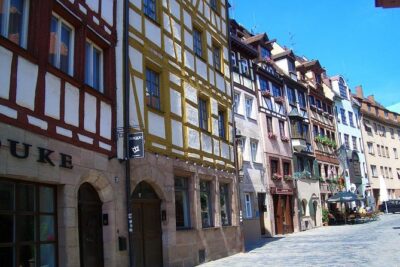
Classic Guided City Tour by Bike (English Tour Only)
Read our review →