
Reviewed · DACHAU MEMORIAL TOURS
Dachau Concentration Camp Private Tour by Train from Munich
Dachau is not a sightseeing stop you breeze through. It is a quiet, sobering place where the physical remains, photographs, documents, and personal stories force Nazi persecution out of the textbook and into view. This private tour takes you there by train from Munich, then gives you about three hours at the memorial with a guide who can explain what you are seeing.
I like the door-to-door help and the fact that train and bus costs are included. I also like the private format: guides such as Lucia, Jason, Nick, Lucy, and Achim have been praised for giving clear context and answering questions at your pace. The main caution is price. At $266.16 per person, it costs much more than joining a large group tour, and the quality depends heavily on the guide assigned to you.
In This Review
- Key points to know before you book
- Why a private Dachau visit matters
- Meeting in Munich and riding north
- Entering through the Arbeit macht frei gate
- Barracks, bunker, and the daily camp system
- The crematorium and the weight of the site
- Museum documents, photographs, and the English documentary
- Returning to Munich by train
- What the $266.16 price really buys
- Which guide experience should you expect?
- Who will get the most from this tour?
- Should you book the private Dachau tour?
- FAQ
- Where does the Dachau tour begin?
- How do you get from Munich to Dachau?
- How long does the full experience last?
- Is the Dachau visit private?
- What does the tour include?
- Are meals included?
- Can children join the tour?
Key points to know before you book
- A 30-minute train ride begins the history lesson: Your guide meets you in central Munich and accompanies you north to Dachau, then helps with the connecting bus.
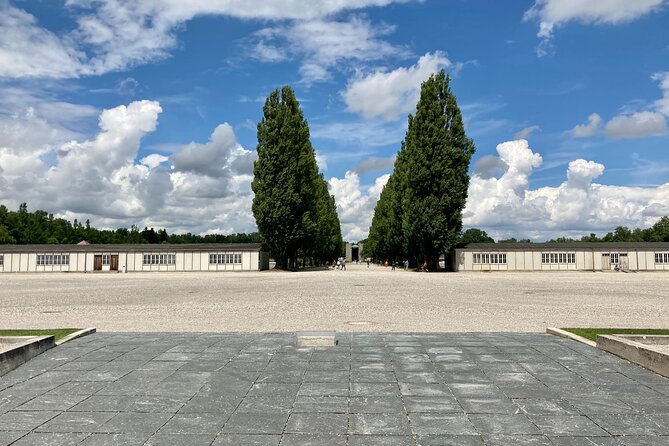
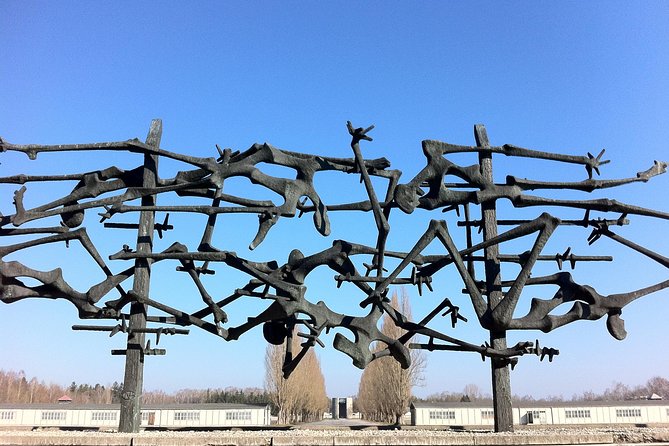
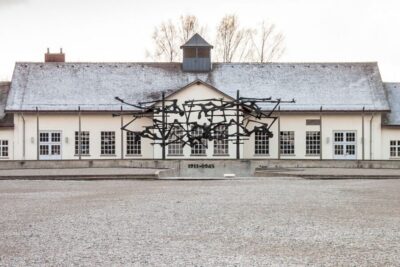
- The memorial visit lasts about three hours: You see the gatehouse, prisoner area, bunker, crematorium, administration headquarters, museum, and other surviving or reconstructed features.
- It is a private experience: Only your own group participates, making it easier to ask difficult questions or adjust the pace.
- Guides are officially accredited: The provider says its guides are trained, licensed, and certified by the Dachau Memorial.
- This is an emotionally serious outing: Children under 13 are not allowed, and the tour requires a moderate level of physical fitness.
- The cost pays for convenience and personal attention: Train tickets, private guiding, and pickup from a central Munich hotel are included, but food and drinks are not.
Why a private Dachau visit matters
Dachau was the first permanent concentration camp established by Nazi Germany. It opened in 1933 and became a model for the camp system that followed. That fact gives the site unusual importance: you are not simply visiting one former camp, but a place that helped shape the machinery of imprisonment, forced labor, punishment, and murder used across Nazi-occupied Europe.
A guide helps you grasp that larger picture. Without context, the grounds can seem stark but confusing. With a good guide, the gatehouse, barracks, bunker, crematorium, and administration buildings fit into a timeline that begins before the Second World War and follows the camp’s growth and changing purpose.
The tour also places Dachau within the political and social changes of Germany after the First World War. Guides praised in the feedback, especially Lucia and Achim, explained the economic and cultural pressures that helped Hitler rise to power before turning to the camp itself. That background is valuable because Dachau did not appear out of nowhere. It grew through a series of political choices, public fears, legal changes, and organized persecution.
This is one of the best reasons to choose a private guide rather than simply taking the train on your own. You can ask how the camp system developed, who was imprisoned there, and how Nazi officials such as Heinrich Himmler were connected to the site. You can also pause when a subject needs more explanation instead of keeping up with a large group.
More Dachau memorial tours from Munich:
- Dachau Concentration Camp Memorial Site Tour from Munich by Train
★ 4.5 · 5,637 reviews - From Munich: Dachau Memorial Site Day Tour
★ 4.8 · 2,723 reviews - From Munich: Dachau Memorial Site Half-Day Trip
★ 4.7 · 2,526 reviews
Meeting in Munich and riding north
Your guide can meet you at Munich Hauptbahnhof, at a centrally located hotel, or directly at the memorial. For most visitors, meeting in central Munich is the most useful choice. It removes the worry of finding Dachau on your own and lets the guide handle the train tickets and the transfer to the local bus.
The train ride takes about 30 minutes. The journey is not just dead time. Several guides use it to explain Germany’s political background, the camp’s creation, and what you will see at the memorial. Lucia was especially praised for providing information from the first train ride until the return to the hotel.
You should still treat the train portion as public transport, not a private vehicle transfer. The tour includes train tickets, but you will need to move between the train and bus and walk around the memorial grounds. A moderate level of physical fitness is recommended.
If you prefer to meet at the station, allow enough time to locate the guide and platform. If you are staying in central Munich, hotel pickup is easier, but confirm your preferred meeting point when booking. Pickup is offered only from a centrally located Munich hotel, not necessarily from every address in the wider Munich area.
Entering through the Arbeit macht frei gate
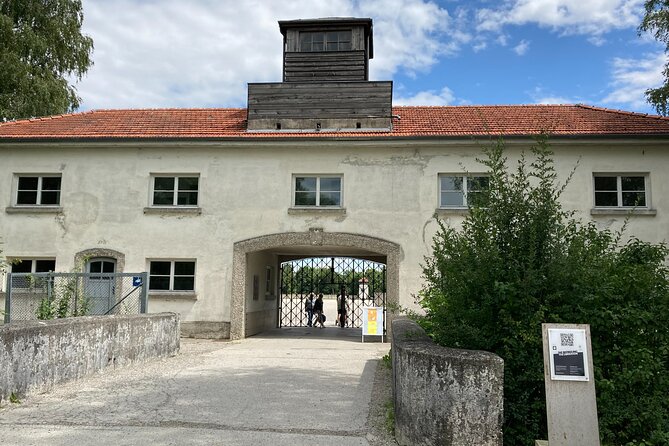
The first powerful moment comes at the gatehouse, where the iron gateway carries the phrase Arbeit macht frei, or Work makes you free. The words were a cruel lie. Seeing them in their original setting gives the phrase a force that a photograph rarely carries.
From there, the guide leads you through the camp grounds and explains how prisoners entered, were registered, controlled, and housed. The goal is not to rush from one object to the next. The value lies in understanding how an ordinary-looking administrative system was used to strip people of rights and identity.
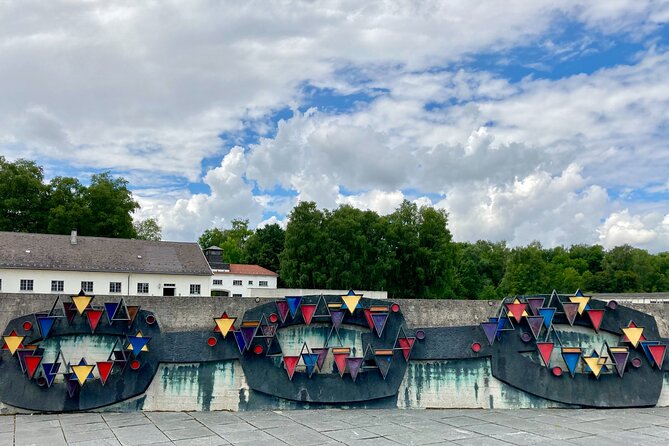
Dachau imprisoned roughly 200,000 people over its years of operation. The people held there included communists, German political dissidents, gay men, Jehovah’s Witnesses, and Jewish and Polish men and women. A good guide makes clear that the camp system targeted more than one group, while also explaining how Nazi persecution changed and intensified during the war.
The private setup works well here. You can ask about a photograph, a document, or a term you do not understand. You can also tell the guide if you need a quieter pace. This is not a place where questions should be saved until the end.
Barracks, bunker, and the daily camp system
The cell blocks and reconstructed barracks help you understand the cramped, controlled routine forced on prisoners. You will see how the camp was laid out and learn about the rules, punishments, labor, disease, hunger, and fear that shaped daily life.
Some of the buildings and features are original, while others have been reconstructed as part of the memorial. That distinction matters. The site is not presented as if every structure survived untouched. Instead, the remaining evidence and carefully prepared displays show how the camp functioned and how it was later preserved as a place of remembrance.
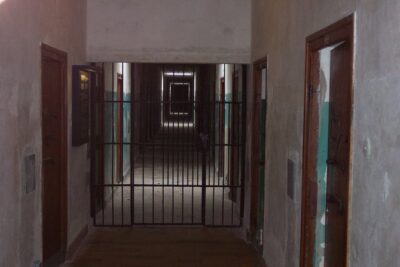
The bunker, or prison area, is one of the more unsettling parts of the grounds. It illustrates the extra layer of punishment used against prisoners who fell foul of the camp authorities. Your guide can connect the rooms and procedures there to the wider system of intimidation.
This section can be difficult for young people, which is why the minimum age is 13. Even older teenagers may respond in different ways. If you are bringing children, talk with them in advance about what the visit involves. The tour is educational, but it is not light family entertainment.
A few more Munich tours and experiences worth a look
- Dachau Concentration Camp Memorial Tour with Train from Munich
★ 4.5 · 955 reviews - Guided Dachau Concentration Camp Memorial Site Tour with Train from Munich
★ 5.0 · 920 reviews - Dachau Small-Group Half-Day Tour from Munich By Train
★ 5.0 · 811 reviews - Nuremberg Guided Day Trip from Munich by Train
★ 4.5 · 546 reviews
The crematorium and the weight of the site
The crematorium area is among the most difficult parts of the visit. The buildings and rooms make the killing process feel horribly concrete. You may find this section emotionally overwhelming, even if you have studied Nazi Germany for years.
A strong guide handles this part with restraint. The best feedback repeatedly praises guides for being thoughtful, calm, and respectful while explaining painful material. Nick was praised for encouraging discussion without making the subject feel casual, while Lucia was described as compassionate when the group became emotional.
That standard matters. One poor experience included inappropriate joking and too much personal conversation during the tour. The provider states that its guides are officially trained and certified, but no tour company can guarantee that every guide will suit every group. If the subject is especially important to you, tell the operator when booking that you want a serious, historically focused presentation.
You should also give yourself permission not to absorb every detail at once. The point is not to prove how much suffering you can process. Pay attention, ask questions, and take a quiet pause if needed.
Museum documents, photographs, and the English documentary
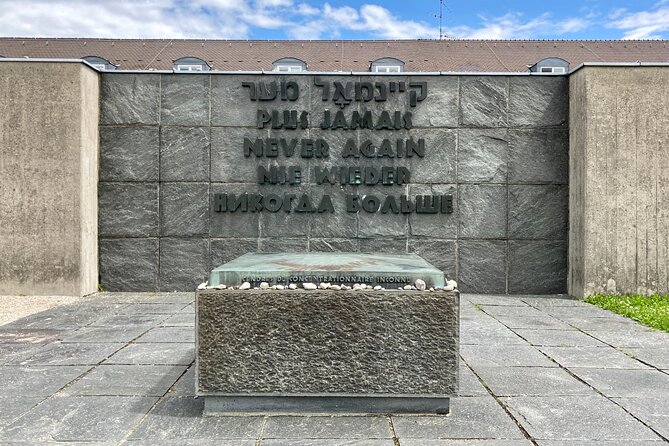
After the guided portion, you have free time to explore the museum. This is a useful part of the tour because the guide-led walk gives you the framework, while the displays allow you to examine evidence at your own pace.
Expect photographs, documents, explanations of the camp system, and material about the people imprisoned there. The English-language documentary is another option if you want a more structured presentation. Since the museum time is not described as fully guided, ask your guide to point out the displays most useful for your interests before you begin exploring alone.
This free time also gives you a chance to slow down after the outdoor walk. The main guided visit lasts about three hours, so the overall schedule is not a quick stop. Wear practical shoes and dress for the weather. The memorial is near public transportation, but you will be on your feet for much of the experience.
Returning to Munich by train
After the memorial, your guide accompanies you back to Munich by train. The complete outing takes about four to five hours, including the meeting, train journey, bus transfer, memorial visit, museum time, and return trip.
That timing makes Dachau easy to fit into a Munich morning or afternoon, but you should not schedule an important event immediately afterward. The tour may finish at the original meeting point, and the emotional weight of the visit can make you want time alone or a quiet meal.
Several guides have also helped groups navigate Munich after returning. Jason helped one group find its way to a soccer stadium, while other guides assisted with finding restaurants or returning to Munich’s old town. That kind of practical help is a pleasant extra, though it should not be treated as a guaranteed part of the tour.
What the $266.16 price really buys
At $266.16 per person, this is a premium option. You are paying for a private guide, transport from Munich to Dachau and back, the connecting bus, and the ease of having someone manage the route. You also get the freedom to ask questions throughout the visit rather than following a fixed large-group script.
The value improves for a family or small group that wants personal attention. A private tour lets you set the pace, focus on World War II or German political history, and request more explanation when a topic is difficult. It can also reduce the stress of navigating public transport for the first time.
The price is harder to justify if you are comfortable taking the train and bus independently and reading the memorial displays on your own. Large group tours cost less, and the memorial itself provides substantial museum material. In that case, the private format is a luxury rather than a necessity.
Group discounts are available, so check the final price for your party rather than assuming the per-person rate tells the whole story. Food and drinks are not included, so plan to eat before or after the outing.
Which guide experience should you expect?
Guide assignment can vary. Several names connected with especially strong experiences include Lucia, Jason, Nick, Lucy, Achim, Richard, and Keith.
Lucia received the most repeated praise for combining clear teaching with patience and compassion. She was described as particularly good with families and teenagers, and she used the train journey to explain the background before arrival. Achim was praised for arranging the facts in a clear timeline and handling complex subjects with care.
Jason was noted for detailed explanations, extra stories, and help with local directions. Nick received praise for his command of Dachau and German history, as well as his respectful manner. Richard was valued for answering questions and helping the group return to Munich’s old town.
There was also a sharply negative account involving a guide named Eric. The concern was not about the route or the memorial, but about personal conversation and joking that felt unsuitable. The provider responded that Eric was officially trained and issued a partial refund after the complaint. This is a reminder to communicate your expectations clearly, especially during a visit as serious as this one.
Who will get the most from this tour?
I would choose this experience if you want help making sense of Dachau rather than simply checking the memorial off your Munich itinerary. It suits adults, older teenagers, families, history students, and anyone interested in World War II, Nazi Germany, or the moral choices that allowed persecution to grow.
It is also a good fit if public transport makes you uneasy. The train and bus are simple enough, but the guide removes the uncertainty and keeps the day moving. You can begin at your hotel, travel with someone who knows the route, and return to central Munich without solving each step yourself.
I would think twice if you want a casual half-day outing. Dachau is serious, sometimes distressing, and physically tiring. You should also compare prices if your main goal is transportation, since a less expensive large-group option may cover the same basic route.
The tour is restricted to people aged 13 and older. It is also best for anyone able to walk around the grounds for several hours. Exact accessibility details are not provided, so ask the operator before booking if you have mobility concerns.
Should you book the private Dachau tour?
Book it if you value a private, guided explanation more than the lowest price. The train access is straightforward, but the added context can change the visit from a sequence of stark buildings into a clear account of how the camp system developed and how it affected different groups.
I would especially consider it for a family group or first-time visitor to Munich. Request a certified guide who will keep the presentation historically focused, and mention any subjects you want covered. If you are cost-conscious or prefer to explore independently, compare a large group tour or self-guided visit first.
The experience has a 4.8 rating from 185 reviews, with 96 percent recommending it, but the mixed guide account is worth remembering. The memorial itself is essential for many people visiting Munich. The private format can make it more understandable and personal, but the guide is the part that determines how well the day is handled.
FAQ
Where does the Dachau tour begin?
You can meet your guide at Munich Hauptbahnhof, at a centrally located Munich hotel, or at the Dachau Memorial. Tell the provider your preferred meeting point when booking.
How do you get from Munich to Dachau?
You travel by train from Munich to Dachau, a journey of about 30 minutes, and then take a bus to the Dachau Concentration Camp Memorial Site. Transport costs are included.
How long does the full experience last?
The total tour takes approximately four to five hours. This includes meeting your guide, traveling from Munich, spending about three hours at the memorial, and returning to Munich.
Is the Dachau visit private?
Yes. Only your own group participates in the activity, allowing you to ask questions and discuss specific interests with the guide.
What does the tour include?
The experience includes a private guide and train tickets from Munich to Dachau. The transport costs for the stated route are included.
Are meals included?
No. Food and drinks are not included in the tour price.
Can children join the tour?
Children under 13 are not allowed to participate. The tour is suitable for participants aged 13 and above, and a moderate level of physical fitness is recommended.
Just added around Munich
- Private Transfer from Munich to Salzburg, English-speaking driver★ 3.5 · 3 reviews
- Private tour from Munich to Rothenburg and Harburg★ 5.0 · 3 reviews
- Scenic Adventure Private Day Tour to The Konigssee Salzburg★ 4.5 · 3 reviews
- Munich: Capture the most Photogenic Spots with a Local★ 5.0 · 3 reviews
- Private Beer Tasting Tour in Munich with Oktoberfest Museum★ 4.3 · 3 reviews
- Munich Photoshoot: A Must-Have Holiday Experience!★ 5.0 · 3 reviews
- Paul’s Private Tour in the Alte Pinakothek Munich★ 5.0 · 3 reviews
- Private Tour to Hallstatt Salt Mine and Skywalk with Lunch★ 5.0 · 3 reviews
Dachau Memorial Tours, compared.
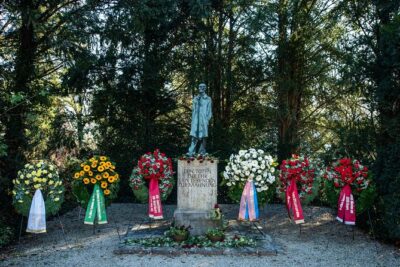
Dachau Concentration Camp Memorial Site Tour from Munich by Train
Read our review →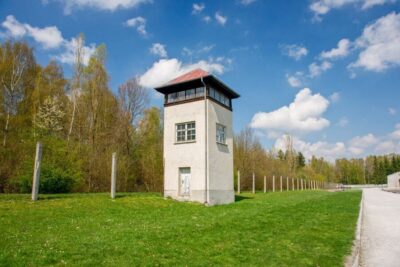
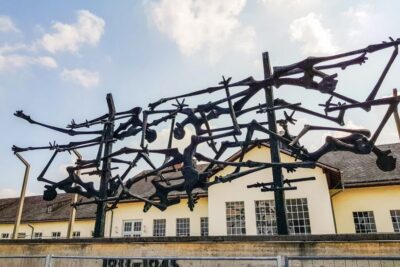
Dachau Concentration Camp Memorial Tour with Train from Munich
Read our review →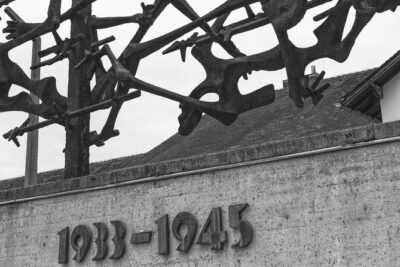
Early-Start Dachau Memorial Half-Day Tour from Munich
Read our review →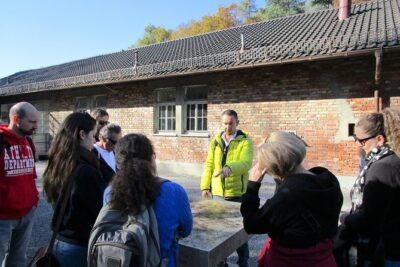
Guided Dachau Concentration Camp Memorial Site Tour with Train from Munich
Read our review →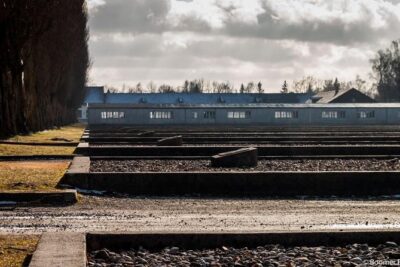
Full-Day Dachau Concentration Camp Memorial Site Tour from Munich
Read our review →Browse the lists this tour appears in