
Reviewed · CITY TOURS
Munich City Pass: Admission to 45 activities and Public Transport
Munich’s best value may be a single pass that turns a long list of museums, palaces, gardens, and city sights into one flexible plan. For one to five days, you can visit more than 45 attractions, with public transport available as an add-on or included option.
I like the freedom to mix major sights such as the Deutsches Museum and Nymphenburg Palace with smaller stops such as the Valentin-Karlstadt-Musäum. I also like that the pass can cover S-Bahn and U-Bahn travel, which saves both money and ticket-machine time.
The catch is simple: you need a busy sightseeing schedule to make the price work. Some attractions require advance reservations, and the Neue Pinakothek information says it was closed for renovation through 2025, so check current opening details before you build your plan.
In This Review
- Key points at a glance
- How the Munich City Pass works
- The art museums around Königsplatz and the Pinakotheken
- Science, transport, crystals, and the natural world
- Royal Munich at Nymphenburg and the Residenz
- Historic rooms, ancient art, and city museums
- Stadiums, film sets, and views over Munich
- Making the pass pay for itself
- Who should buy it
- FAQ
- How long is the Munich City Pass valid?
- Does the pass include public transportation?
- Which major museums are included?
- Is Nymphenburg Palace included?
- Does the pass include the FC Bayern Museum?
- Do any attractions require advance booking?
- Should you book the Munich City Pass?
Key points at a glance
- One to five days: Pick a short pass for a focused visit or several days for a museum-heavy stay.
- More than 45 included attractions: Big-name museums sit alongside palaces, gardens, sports, film, and family sights.
- Public transport option: Choose inner Munich travel or the wider M to M-6 area, depending on your plans.
- A strong museum pass: The Deutsches Museum, Pinakothek museums, Bavarian National Museum, and Egyptian Museum give you plenty to see.
- Palaces beyond the city center: Nymphenburg, Schleissheim, Lustheim, and the Nymphenburg park palaces reward careful planning.
- Useful extras: A 24-hour hop-on hop-off express circle, the Olympiapark park railway, and access to the FC Bayern Museum add variety.
How the Munich City Pass works
This is not a guided sightseeing tour with one fixed route. It is a menu of included admissions that you use during the pass period. You choose a validity of one, two, three, four, or five days, then visit the sights that fit your schedule.
The listed price is $48 per person, though the final cost can vary by the pass option selected. Public transport is included only if you choose the transport version. That version can cover the inner area or the full M to M-6 zone, so check the area carefully if you plan to reach sights outside central Munich.
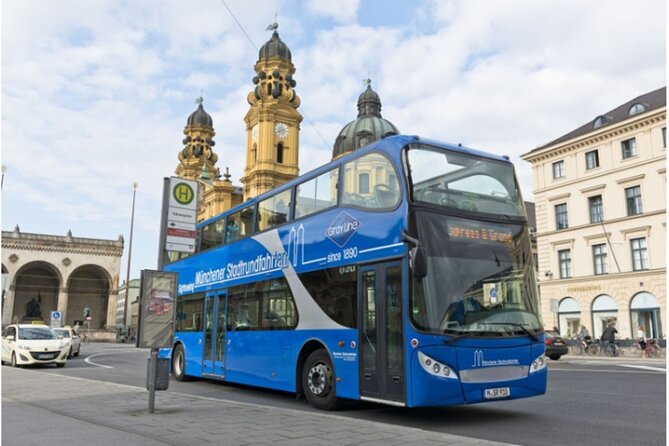
You also receive a 24-hour hop-on hop-off express circle with seven stops. That is useful on your first day, when you want a quick look at the city and a simple way to move between major points. It is not a substitute for Munich’s regular transport network, but it can help you get your bearings fast.
The pass is confirmed at booking and delivered digitally. Keep the instructions handy. A few attractions and guided activities must be booked ahead by you, and the digital pass explains how to do that. The activity allows a maximum of 15 participants, although most of your sightseeing will be independent rather than part of one organized group.
More city tours in Munich:
- Munich: Old Town & Viktualienmarkt City Walk in German
★ 4.7 · 2,304 reviews - Munich: City Bus Tour & FC Bayern Munich Allianz Arena Tour
★ 4.5 · 2,071 reviews - Munich City Hop-on Hop-off Tour
★ 3.5 · 1,233 reviews
The art museums around Königsplatz and the Pinakotheken
Munich is a very good city for art, and the pass gives you several ways to spend a full day indoors.
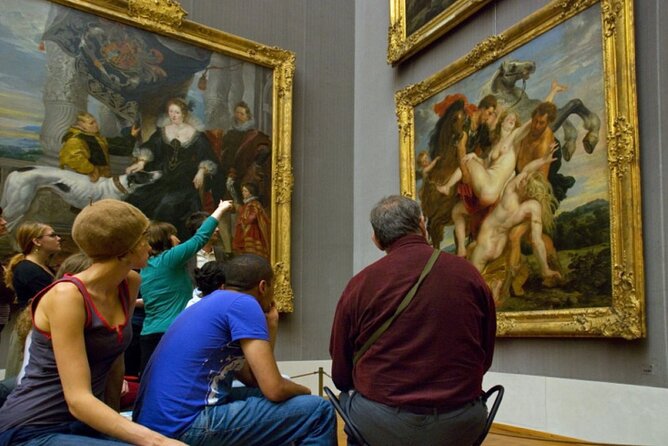
At the Alte Pinakothek, you can see European painting from the 14th through the 18th century. Allow around two hours, but art lovers could easily stay longer. This is one of the pass attractions that can justify a large share of the price on its own, especially if you combine it with nearby museums.
The Pinakothek der Moderne shifts the focus to modern art and is one of Europe’s larger modern-art collections. Museum Brandhorst adds modern and contemporary works behind a striking facade. The Lenbachhaus is especially notable for its Blue Rider collection, a major reason to put it high on your list if you care about twentieth-century German art.
Kunsthalle Munich covers a broad span from antiquity to the present. Its changing presentation means the exact experience can vary, so check what is on display during your visit. Haus der Kunst also focuses on contemporary art and gives the pass a strong present-day counterpoint to the older collections.
Sammlung Schack offers paintings by Franz von Lenbach, while the Bavarian National Museum covers a much wider range of art and objects. It is one of Germany’s largest museums, and its variety makes it a useful choice when your group has mixed interests.
The Museum Villa Stuck gives you a chance to see the home of Franz von Stuck, one of Europe’s important artists. It is a more personal stop than a giant collection, and it works well when you want a change of scale.
The Neue Pinakothek requires special caution. The supplied information says it was closed from January 1, 2019, through 2025 for renovation. Since reopening information can change, confirm its status before counting it as part of your plan.
Science, transport, crystals, and the natural world
The Deutsches Museum is one of Munich’s essential stops. It is one of the world’s largest and oldest science and technology museums, with enough material for a serious visit. The pass includes admission, but two hours may only give you a sample. If science, engineering, or technology is your main interest, give this museum more time and trim your list elsewhere.
The Deutsches Museum Verkehrszentrum focuses on land vehicles. It is a good companion to the main museum, though visiting both in one day could leave you rushed. Flugwerft Schleissheim takes the subject into the air, with nearly 70 aerospace exhibits spread across about 8,000 square meters.
The Museum Mensch und Natur presents natural history, while the Museum Reich der Kristalle displays diamonds, emeralds, gemstones, and other minerals. The State Coin Collection contains more than 3,000 objects, with the oldest dating to the third millennium BC. These smaller museums are ideal for filling a free hour, but they may not all be worth a long cross-town journey during a one-day pass.
The Museum Fünf Kontinente presents cultural objects from around the world. The Jewish Museum Munich gives you a view of the city’s past and culture from a Jewish perspective. Both add depth to a Munich visit that might otherwise focus only on royal buildings and grand art.
The NS-Dokumentationszentrum is one of the most important inclusions. It examines Munich’s relationship with Nazism and the effects of dictatorship. This is a place for learning and remembrance, not a light stop to squeeze in between shopping and lunch. I would give it enough time for the subject to sink in.
The Munich Museum of Egyptian Art covers 5,000 years of Egyptian culture and art. The Museum of Egyptian Art, the State Coin Collection, and the Jewish Museum are particularly useful for showing how broad this pass really is. It is not limited to famous postcard sights.
Royal Munich at Nymphenburg and the Residenz
Nymphenburg Palace is one of the pass’s strongest inclusions. The former refuge of the Munich court gives you grand rooms and a royal setting outside the tight center. The nearby Marstallmuseum adds a superb collection of carriages from the late seventeenth through the nineteenth centuries, with examples from Germany, France, and England.
The palace park contains Amalienburg, Pagodenburg, and Badenburg. These are separate stops in the pass, but they belong to one outing. Do not treat each as a full independent attraction requiring a separate city crossing. Plan a half-day around Nymphenburg if you want the palace, park buildings, and Marstallmuseum without hurrying.
The Botanischer Garten München-Nymphenburg is another good match for this area. Its flowers and greenhouses provide a quieter break after palace interiors. The exact time you need depends on the season and your interest in plants, but two hours is a sensible allowance.
The Munich Residenz offers another major royal experience in the city center. Its Treasury is especially important, with prestigious collections that reward a slower visit. The contrast between Nymphenburg’s open park setting and the Residenz’s central, layered interiors gives you two different views of Munich’s ruling past.
Schloss Schleissheim lies farther from central Munich and includes two collections: Gertrud Weinhold’s Ecumenical Collection and a collection devoted to Prussia’s cultural history. Lustheim Palace, part of the Schleissheim complex, contains a Meissen porcelain collection. These sights are valuable, but they require more transport time, so they make better use of a three-to-five-day pass than a one-day version.
Something different, still within reach of Munich:
- From Munich: Neuschwanstein & Linderhof Castle Full-Day Trip
★ 4.5 · 12,494 reviews - Neuschwanstein & Linderhof Castle-Fairytale Day Tour from Munich
★ 4.5 · 7,275 reviews - Munich: Third Reich & WWII Walking Tour
★ 4.6 · 6,181 reviews - Dachau Concentration Camp Memorial Site Tour from Munich by Train
★ 4.5 · 5,637 reviews
Historic rooms, ancient art, and city museums
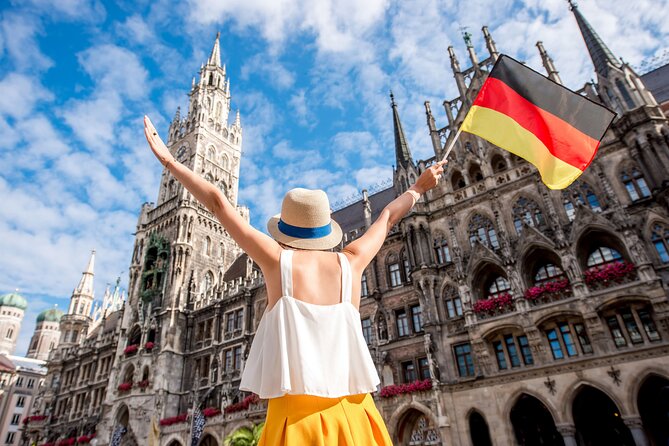
The Cuvilliestheater is one of Germany’s finest Rococo theaters. Napoleon visited it, and the ornate interior makes this a quick but memorable stop. It is a good choice when you want grand decoration without committing to a large museum.
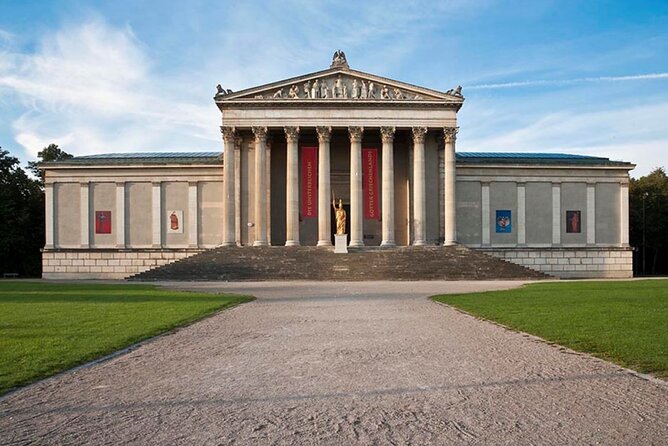
The Glyptothek holds ancient art, including a noted Greek vase collection and works in gold, bronze, ceramic, and glass. It offers a clear focus, which can be refreshing after a huge museum with many departments.
The Munich Egyptian Museum and Glyptothek both work well for visitors who like ancient civilizations, while the Residenz Treasury offers a more royal version of precious objects. Put these together only if you enjoy looking closely at objects, since the subjects are different but all reward attention.
The Münchner Stadtmuseum, near Viktualienmarkt, sends you into Munich’s past. Its location makes it easy to pair with a central market stop, although the amount you can see may depend on current exhibitions and opening arrangements.
The Deutsches Theatermuseum has no permanent exhibition because of space limits, but it presents special exhibitions on different subjects. That makes it a useful bonus rather than a sight to plan your entire day around. Check the current display before heading over.
The quirky Valentin-Karlstadt-Musäum offers a lighter change of mood. It celebrates the original humor and character of Valentin and Karlstadt. I would use this as a short, unusual stop between larger museums rather than as the main reason to buy the pass.
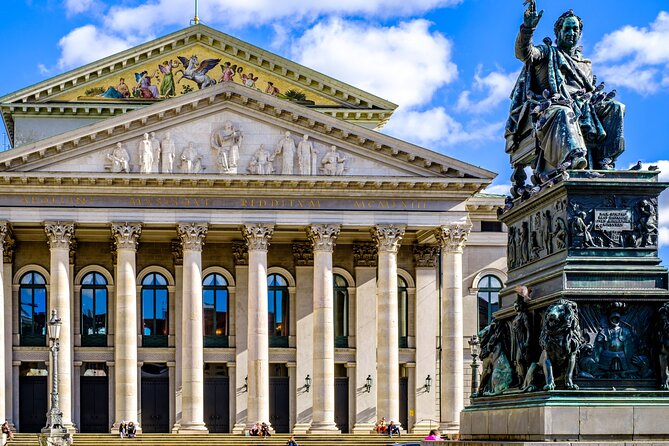
Ruhmeshalle und Bavaria gives you the 18-meter statue of Bavaria in front of the Hall of Fame. It is a compact sight with a strong visual payoff, especially if you want something different from another indoor collection.
Stadiums, film sets, and views over Munich
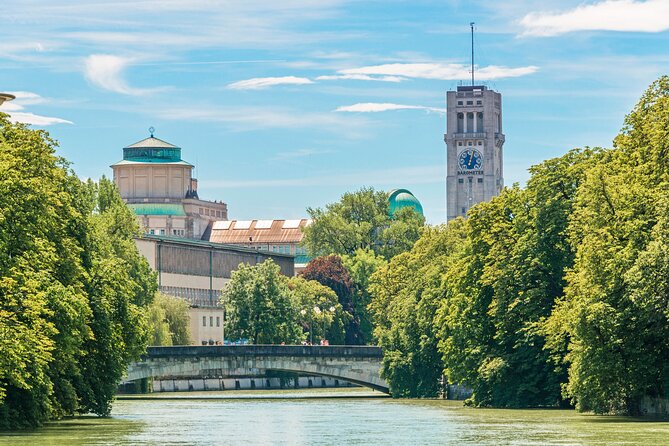
The FC Bayern Museum at Allianz Arena is Germany’s largest club museum. If you follow football, this may be one of the pass’s best-value stops. It gives you a focused look at the history and identity of Germany’s record champion, though it is a long way from the central museum cluster.
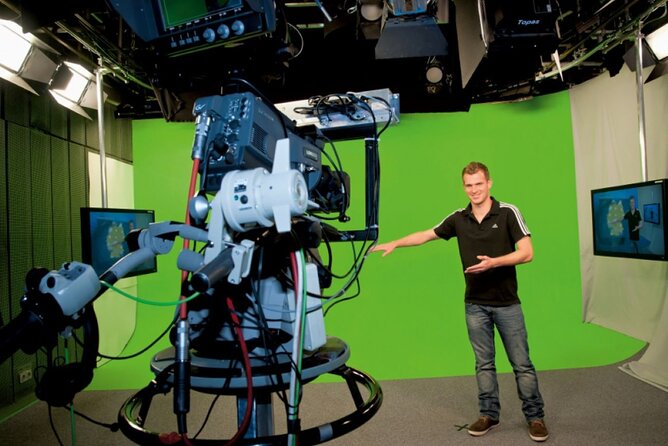
Bavaria Filmstadt uses original scenes from major films and well-known television productions. It adds a behind-the-scenes flavor to the pass and suits families or anyone who wants a break from paintings and royal apartments.
At Umadum, the Munich Giant Wheel, you can ride the world’s largest transportable observation wheel and see Munich from above. This is a simple way to add a skyline view to a museum-heavy itinerary.
Olympiapark includes its park railway. The park itself gives you room to move after long hours indoors, while the railway adds a modest attraction for families and anyone who enjoys seeing a large site without walking every part of it.
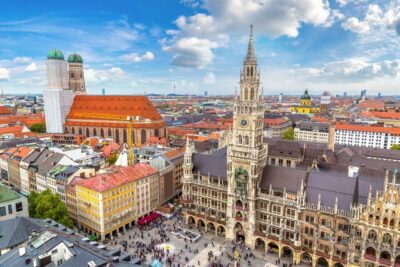
The New Town Hall tower provides a view over Munich from the Neues Rathaus. It is among the most appealing central stops because it pairs a historic building with a straightforward city view. Availability and any required booking should be checked in advance, since the pass instructions note that some guided or scheduled attractions need reservations.
SEA LIFE Munich, in Olympiapark, brings underwater exhibits into the mix. It is a natural companion to the park railway and the Giant Wheel, making this area especially practical for a family day.
Making the pass pay for itself
At $48 per person, the pass can be a good deal, but only if you use it with purpose. The strongest financial case comes from combining several paid admissions in one day or two, then using the transport option enough to avoid separate fares.
For example, a museum-focused day could include the Alte Pinakothek, one of the modern-art museums, and the Bavarian National Museum. A palace day could combine Nymphenburg Palace, the Marstallmuseum, and the park palaces. Add public transport and the value improves.
A one-day pass is best for a tightly planned schedule. A two-day pass gives you room to separate the central museums from Nymphenburg or Olympiapark. Three to five days make the most sense if you want Schleissheim, Bavaria Filmstadt, Allianz Arena, and several smaller museums without turning every day into a race.
You do not need to visit all 45-plus attractions. That would be exhausting and impossible for most people. The pass works because you can choose several admissions that fit your interests, not because you must collect them all.
The public transport option was especially useful for one visitor who used the S-Bahn and U-Bahn. That practical benefit matters. Munich’s transport network can carry you between central museums, palace areas, Olympiapark, and farther attractions, though crowded trains can still be uncomfortable. The pass cannot control capacity, so allow extra time at busy periods.
Who should buy it
I would consider this pass for a first Munich visit of at least two days if you enjoy museums, palaces, or organized sightseeing. It is also a good fit for families because SEA LIFE, the Giant Wheel, the park railway, Bavaria Filmstadt, and the vehicle museums add variety.
It suits repeat visitors who want to explore beyond the usual center. Schleissheim, the FC Bayern Museum, the Jewish Museum, the NS-Dokumentationszentrum, and the smaller collections give you reasons to use Munich as more than a one-day stop.
I would be more cautious if you mainly want to walk the old town, visit one museum, and spend long afternoons in cafes. In that case, individual tickets may be simpler. You should also check opening days, renovation notices, and reservation rules before buying, especially for the Neue Pinakothek and any attraction with a scheduled entry.
Free cancellation is available when you cancel at least 24 hours before the local start time. Changes or cancellations made inside that window are not refunded.
FAQ
How long is the Munich City Pass valid?
You can choose a pass valid for one to five days, depending on your schedule and budget.
Does the pass include public transportation?
Public transportation is included if you select the transport option. You can choose coverage for the inner area or the full M to M-6 area.
Which major museums are included?
Included attractions include the Deutsches Museum, Alte Pinakothek, Bavarian National Museum, Pinakothek der Moderne, Lenbachhaus, Kunsthalle Munich, Museum Brandhorst, and the Munich Museum of Egyptian Art.
Is Nymphenburg Palace included?
Yes. The pass includes Nymphenburg Palace, the Marstallmuseum, and the park palaces Amalienburg, Pagodenburg, and Badenburg.
Does the pass include the FC Bayern Museum?
Yes. Admission to the FC Bayern Museum at Allianz Arena is included.
Do any attractions require advance booking?
Yes. A few attractions and guided tours must be booked in advance. The digital City Pass provides the instructions for making those reservations.
Should you book the Munich City Pass?
Book it if you plan to visit several museums and paid sights, especially if you also need S-Bahn or U-Bahn transport. The best value comes from a two-day or longer plan built around clusters: central art museums, Nymphenburg, Olympiapark, or the farther Schleissheim and Allianz Arena attractions.
Skip it if your Munich plans are mostly walking, one museum, and relaxed meals. Before paying, check current opening dates and choose the transport zone that matches your itinerary. Used with a clear plan, this pass can save both admission money and precious time at ticket counters.
Just added around Munich
- Private Transfer from Munich to Salzburg, English-speaking driver★ 3.5 · 3 reviews
- Private tour from Munich to Rothenburg and Harburg★ 5.0 · 3 reviews
- Scenic Adventure Private Day Tour to The Konigssee Salzburg★ 4.5 · 3 reviews
- Munich: Capture the most Photogenic Spots with a Local★ 5.0 · 3 reviews
- Private Beer Tasting Tour in Munich with Oktoberfest Museum★ 4.3 · 3 reviews
- Munich Photoshoot: A Must-Have Holiday Experience!★ 5.0 · 3 reviews
- Paul’s Private Tour in the Alte Pinakothek Munich★ 5.0 · 3 reviews
- Private Tour to Hallstatt Salt Mine and Skywalk with Lunch★ 5.0 · 3 reviews
City Tours, compared.
Old Town & Viktualienmarkt City Walk in German
Read our review →
City Bus Tour & FC Bayern Munich Allianz Arena Tour
Read our review →

Classic Guided City Tour by Bike (English Tour Only)
Read our review →
Munich City Walking Tour, includes Third Reich & Viktualienmarkt
Read our review →

Munich City Walk and Oktoberfest Tour With Beer Tent Reservation
Read our review →
Browse the lists this tour appears in