
Reviewed · THIRD REICH & WWII TOURS
Munich City Walking Tour, includes Third Reich & Viktualienmarkt
Munich’s story comes alive best when you connect its grand squares with its everyday food culture. This 3-hour-15-minute walking tour does just that, moving from the Frauenkirche and Marienplatz through royal squares, old city gates, churches, and the Viktualienmarkt, with the difficult Third Reich period placed within Munich’s larger story.
I like the practical city advice woven into the history, especially the tips on getting around, choosing sights, and saving money at other attractions. I also like the mid-tour pause for a Bavarian beer, pretzel, bratwurst, or potato salad at Viktualienmarkt. The main concern is simple: this is a talk-heavy tour, and much of it takes place outdoors. On a cold or snowy day, long stops can feel less comfortable.
In This Review
- Key points before you book
- Why this Munich walk works best on your first day
- Starting near Schützenstrasse and entering the old center
- Hofbräuhaus, Isartor, and Munich’s medieval edge
- Marienplatz, Max-Joseph-Platz, and royal Munich
- Churches, old towers, and small details
- Odeonsplatz and the weight of Munich’s past
- Karlsplatz and the move into market life
- The Viktualienmarkt lunch break
- How much walking and standing should you expect?
- Price, timing, and who gets the most value
- Should you book this Munich walking tour?
- FAQ
- How long is the Munich walking tour?
- What language is the tour offered in?
- How much does the tour cost?
- What food and drink are included?
- How large is the tour group?
- Where does the tour start?
- Where does the tour end?
- Can I cancel for a full refund?
Key points before you book
- A strong first-day orientation: You see central Munich while learning how to navigate the city and plan the rest of your stay.
- Third Reich context, not a dedicated Nazi-history tour: The subject is handled as part of Munich’s wider political and social story.
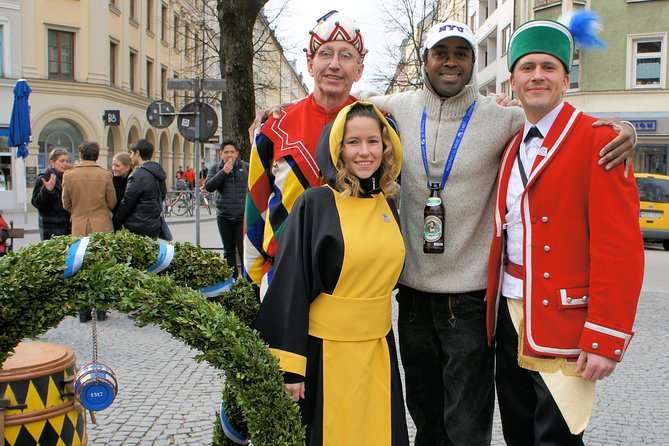
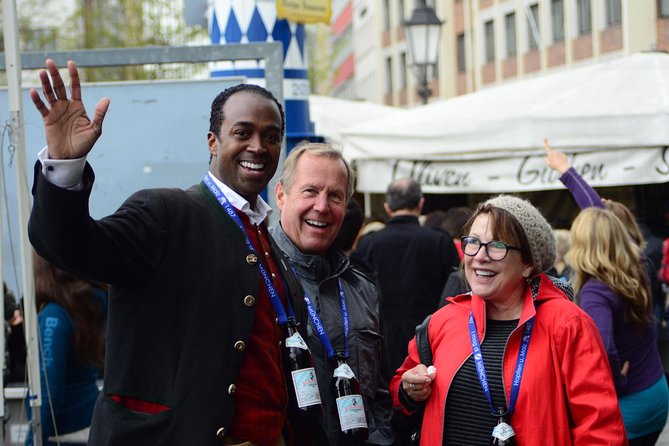
- A real Bavarian food break: The market stop includes a bratwurst or potato salad, a pretzel, and a beer.
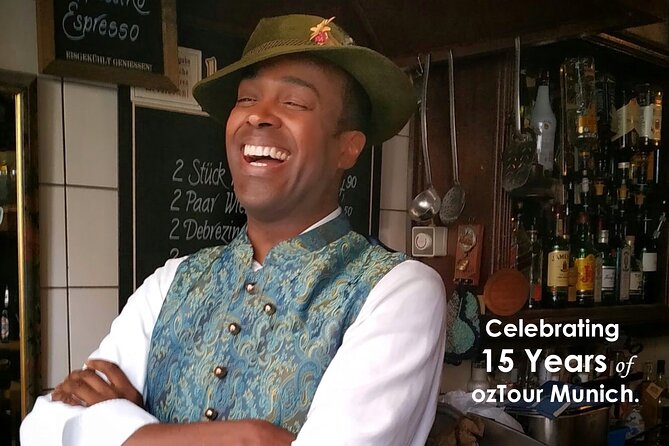
- Guides with personality: Ozzie, also called Ozzy or Oz, is praised for humor, local insight, and wide-ranging explanations. Patrick is also named as a guide.
- A compact central route: The tour covers major sights without using a bus or train, so comfortable shoes matter.
- Small by walking-tour standards: The group can include up to 20 people, with English as the tour language.
Why this Munich walk works best on your first day
I would place this tour near the start of a Munich visit. It gives you a working map of the center, not just a parade of monuments. You pass the places most first-time visitors want to see, but the guide also explains how Munich functions, how to move around, and how Bavarian identity shapes daily life.
That practical layer is a major reason the tour earns its $31.78 price. You are not paying for entry to a museum or a special attraction. The value comes from the guide’s time, the route, the historical framing, and the chance to ask questions before you set out on your own.
The strongest guide feedback centers on Ozzie, who uses humor and a broad sweep of information to connect Munich’s past with current German politics and local culture. He has been described as a local celebrity and a Costco of knowledge, a playful way of saying that he covers a lot. Patrick is also named positively as a guide.
That style will suit you if you enjoy history with side trips into city planning, culture, politics, and local habits. If you prefer short explanations followed by plenty of photo time, you may find the pace slow. Several parts involve standing while the guide talks, so the experience depends heavily on your guide and on the weather.
More Third Reich and wartime history walks in Munich:
- Munich: Third Reich & WWII Walking Tour
★ 4.6 · 6,181 reviews - Third Reich Walking Tour Munich
★ 4.5 · 4,291 reviews - Munich: Birthplace of the Third Reich Guided Walking Tour
★ 4.6 · 771 reviews
Starting near Schützenstrasse and entering the old center
The listed meeting point is Schützenstr 11, near Munich’s central area and public transportation. The walk then heads into the historic center, with no coach transfer included. You should expect regular walking on city streets and pauses at public squares and buildings.
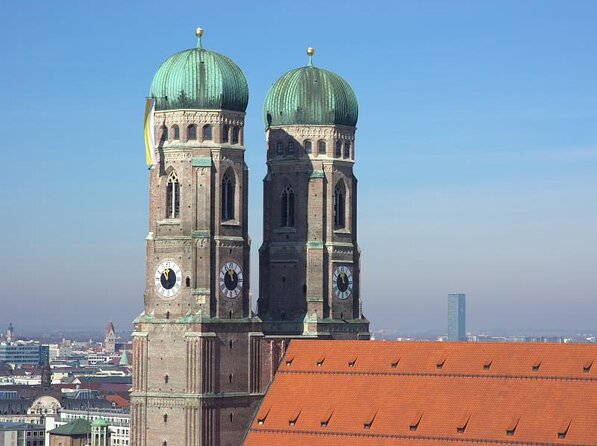
The first major stop is the Frauenkirche, Munich’s famous twin-towered cathedral. Its late Gothic interior is vast and spare compared with some of the city’s more ornate churches. The guide can point out the historic crypt and the famous Devil’s Footstep, a local legend tied to a mark near the entrance.
The scheduled stop is about 10 minutes, and admission is free. That short time is enough for an introduction and a look inside, but not a full church visit. If the cathedral catches your interest, save it for a return visit when you can explore at your own pace.
The route also includes the German Hunting and Fishing Museum, housed in a former Augustinian church. Its exhibits cover hunting and fishing in Germany, with wildlife specimens, old weapons, and Bavarian Wolpertinger creatures. The museum’s 3,000 square meters of displays are far more than you can see during a quick street walk, so treat this as an exterior or orientation stop unless your guide’s timing allows more.
Hofbräuhaus, Isartor, and Munich’s medieval edge
The Hofbräuhaus is one of Munich’s best-known beer halls, dating to 1589 when it served as a royal brewery. Today, it is associated with Bavarian beer, hearty food, traditional music, and large halls full of activity.
The tour allows about 10 minutes here, with no admission ticket required. That is enough to see the setting and understand its place in Munich’s beer culture, but not enough for a leisurely meal. You will have a better chance to eat and drink at Viktualienmarkt later in the route.
The walk continues to Isartor, one of the last surviving medieval city gates. Built in 1337, it once formed part of Munich’s fortifications. Its central tower and historic frescoes offer a reminder that the city center was once a walled settlement, not simply a collection of grand nineteenth-century buildings.
Isartor also houses the Valentin-Karlstadt Museum, devoted to Bavarian comedian Karl Valentin. The tour allows five minutes, so the museum is not a proper visit. Still, the stop adds a useful bit of local character. Munich is not only palaces, churches, and beer halls. It also has a strong comic and theatrical tradition.
Marienplatz, Max-Joseph-Platz, and royal Munich
At Marienplatz, the city’s central square since 1158, you get one of the tour’s essential Munich views. The New Town Hall dominates the square with its ornate facade and famous Glockenspiel. The Mariensäule adds another historic marker, while shopping streets and restaurants radiate outward.
The scheduled 25 minutes gives the guide time to explain the square and point out details that are easy to miss when you are focused on taking pictures. It is also a natural place to get your bearings. From here, many central sights are easy to reach on foot.
Marienplatz can feel crowded, especially around the New Town Hall, and a walking group of up to 20 people needs to stay together. Keep your attention on the guide rather than expecting a quiet, uninterrupted look at the architecture.
Next comes Max-Joseph-Platz, a neoclassical square named for King Maximilian Joseph. The National Theatre and Munich Residenz frame the space, making it a good place to understand the city’s royal and cultural ambitions.
The square is given about five minutes. That is brief, but useful if the guide explains how opera, monarchy, and the Residenz fit together. You will not tour the Residenz during this experience, and admission to attractions is not included.
The route also points out the Maximilianeum, a palace-like building above the Isar River. King Maximilian II founded it in 1852 to support gifted students, and it has housed the Bavarian State Parliament since 1949. It is one of those Munich sights that makes more sense once you know what you are looking at.
Platzl adds another slice of old Munich. With cobbled streets, historic buildings, the ornate Orlandohaus, and the Hofbräuhaus, it has the traditional Bavarian look many people expect. The guide’s value here is in separating the genuine historical setting from the polished image presented for visitors.
More Viktualienmarkt tastings in Munich:
- Munich: Old Town & Viktualienmarkt City Walk in German
★ 4.7 · 2,304 reviews - Munich: Viktualienmarkt Food Tour
★ 4.5 · 1,127 reviews - Munich: Walking Tour Old Town and Viktualienmarkt
★ 4.7 · 839 reviews - Lunch Like a Local: Munich’s ORIGINAL Viktualienmarkt Food Tour
★ 5.0 · 416 reviews
Churches, old towers, and small details
The next church stop is St. Michael’s, Munich’s largest Renaissance church. Built in the late sixteenth century for the Jesuits, it has a powerful facade and a huge barrel-vaulted interior with early Baroque touches.
The church also contains a royal crypt associated with Bavarian rulers. The tour allows about 10 minutes, enough for a focused introduction and a quick look inside. If you enjoy church interiors, write this one down for a longer return visit.
St. Peter’s Church, known locally as Alter Peter, is Munich’s oldest parish church. Its tower rises 91 meters and is known for city views, though this walking tour does not include a tower climb. Inside, Gothic, Baroque, and Rococo details share the space, including an ornate high altar.
Only five minutes are scheduled here. That makes the church a highlight to note rather than a complete visit. If you want the tower view, plan separate time and check current entry arrangements on your own.
A small stop at the Wolfsbrunnen fountain adds a pleasing change of scale. Built in 1904, the Art Nouveau fountain shows Little Red Riding Hood and a wolf. The Wolf family commissioned it as a memorial to their name. It is not one of Munich’s headline sights, but details like this help turn a standard city route into a more personal walk.
Odeonsplatz and the weight of Munich’s past
At Odeonsplatz, the tour reaches one of central Munich’s grandest spaces. Leo von Klenze designed the square in the early nineteenth century, and its Italian-inspired style is easy to spot in the surrounding buildings.
The Theatine Church, Feldherrnhalle, and Residenz all meet here, while Ludwigstrasse begins nearby. The scheduled 15 minutes gives the guide room to explain the architecture and the square’s place in Bavarian public life.
This is also where the Third Reich material matters. Munich played an important role in the rise of National Socialism, and the city’s central spaces carry political meaning as well as architectural beauty. The experience includes that period in a careful, informative way, linking sites and events to Munich’s broader development.
You should set your expectations correctly. The tour is titled to include Third Reich history, but it is not presented as a specialist memorial or Nazi-history walk. If you want an extended treatment of the subject, a dedicated documentation center or memorial visit would need to be added separately.
One practical point deserves attention: the published end point is Odeonsplatz, while the route description places Viktualienmarkt later as the final stop. Since the supplied details give both, confirm the day’s final meeting point with the operator before setting a strict schedule.
Karlsplatz and the move into market life
Karlsplatz, better known as Stachus, shifts the mood from royal Munich to modern city movement. The square developed after the medieval walls were removed in the eighteenth century. Karlstor, the old gate, remains the key historic feature.
The square has a large fountain in summer and an ice rink in winter. The tour allows 15 minutes, giving you time to see the gate and absorb the contrast between old fortifications and a busy central junction.
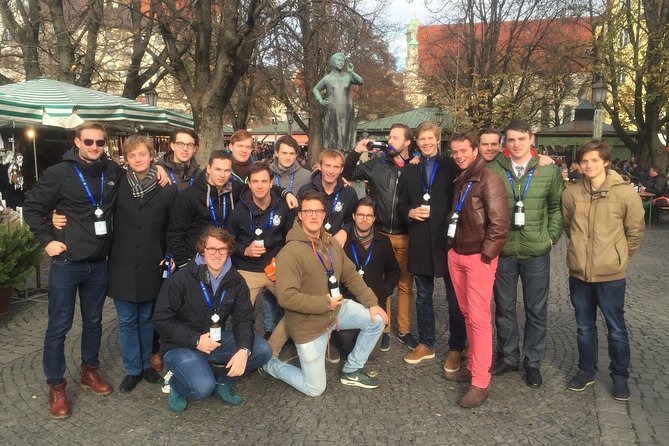
From there, the route heads toward Viktualienmarkt, where the tour’s strongest food element arrives. This is more than a quick photo stop. The market began as a farmers’ market in the early nineteenth century and now sells produce, Bavarian specialties, and handmade goods around a beer garden and traditional maypole.
The Viktualienmarkt lunch break

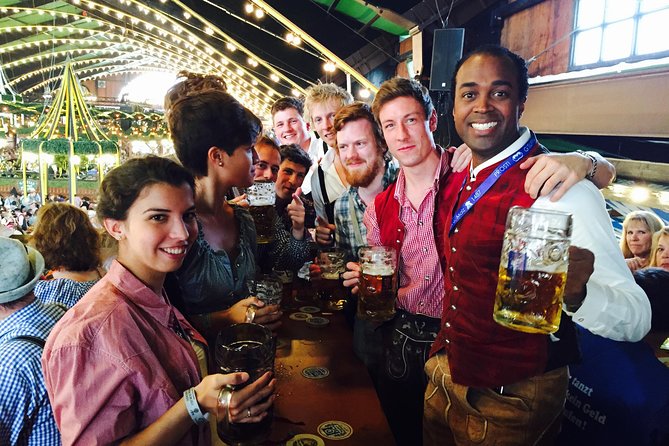
The 30-minute market stop is a welcome pause after a long stretch outdoors. The included food is a traditional market snack: one Bavarian bratwurst, with options such as spicy, cheese, or regular, or Bavarian potato salad with a pretzel. You also receive one Bavarian beer and a reusable beer bottle holder.
The details say snacks are not included, which conflicts with the sample menu describing the market food and beer. Read the inclusion wording carefully when booking, and confirm exactly what the price covers. The description also says the selections contain no artificial flavors, colors, preservatives, additives, fillers, or GMOs.
Even with the meal included, 30 minutes is a short market visit. You will have time for the planned snack and beer, but not a relaxed survey of every stall. I like the choice of this stop because it gives you a direct taste of Bavarian food culture rather than leaving you with only stories about it.
The market is also where you may choose to leave if you have had enough walking. One person did exactly that midway through the experience. That makes the stop a useful break, but remember that leaving means missing the rest of the route and the remaining historical explanations.
How much walking and standing should you expect?
The pace is generally described as calm rather than strenuous, but this is still a city walking tour lasting more than three hours. You move between churches, squares, gates, and markets, with repeated stops for explanations.
The biggest physical issue is not speed. It is standing outdoors. In freezing weather, snow, or rain, even an easy route can feel tiring when the guide gives a long talk in one place. Dress for the forecast, wear comfortable shoes, and consider hand warmers in winter.
Families can participate, and the guide has been praised for engaging with children. Still, younger children may find the historical talks long, especially if they are not used to standing in cold weather.
The group maximum is 20 people. That is small enough for a personal feel, though not intimate in the way a private tour would be. English is the only listed language.
Price, timing, and who gets the most value
At $31.78 per person, this is fairly priced for a long guided orientation that includes a market food and beer component, assuming those items are covered as described. The free admission at most stops keeps the cost focused on the guide rather than tickets.
I see the best value for first-time visitors who want context before exploring independently. You will learn where the key sights are, get suggestions for moving around Munich, and pick up ideas for meals and later visits. The tour can also help you avoid spending your whole trip in a narrow tourist bubble.
It is less suitable if you want entry into every church, museum, or palace. It is also not ideal if your main goal is a detailed Third Reich study, since that subject shares time with architecture, Bavarian customs, food, current affairs, and city navigation.
Free cancellation is available up to 24 hours before the start time for a full refund. Service animals are allowed, the route is near public transportation, and most people can participate.
Should you book this Munich walking tour?
Book it if you want a lively introduction to Munich on your first day, especially if you enjoy history explained through streets, squares, politics, food, and local habits. Ozzie’s style, when he is your guide, is energetic and wide-ranging, while Patrick has also received strong praise.
Think twice if cold weather will spoil an outdoor tour, or if you prefer a quiet route with brief commentary. The strongest version of this experience is a city orientation with serious historical content and a very welcome market snack. It is not a museum tour, a private walk, or a dedicated Third Reich study.
For most visitors, I would book it early in the stay, wear good shoes, and leave the rest of the day open. That gives you time to return to the Frauenkirche, St. Michael’s, St. Peter’s, or the Residenz after you know which places deserve a closer look.
FAQ
How long is the Munich walking tour?
The tour lasts approximately 3 hours and 15 minutes.
What language is the tour offered in?
The tour is offered in English.
How much does the tour cost?
The listed price is $31.78 per person.
What food and drink are included?
The sample menu includes one Bavarian bratwurst or Bavarian potato salad with a pretzel, one Bavarian beer, and one reusable beer bottle holder. The booking details also state that snacks are not included, so confirm the exact food and drink inclusion before paying.
How large is the tour group?
The maximum group size is 20 people.
Where does the tour start?
The listed starting point is Schützenstr 11, 80335 München, Germany.
Where does the tour end?
The listed end point is Odeonsplatz, Odeonspl. 3, 80539 München, Germany. The route details also place Viktualienmarkt later as a stop, so confirm the final location with the operator.
Can I cancel for a full refund?
Yes. You can cancel at least 24 hours before the local start time for a full refund. Cancellations or changes made less than 24 hours before the start time are not accepted for a refund.
More Walking Tours in Munich
- Munich: Night Watchman Walking Tour
★ 4.7 · 2,092 reviews - Munich Ghosts and Spirits Evening Walking Tour
★ 5.0 · 1,900 reviews - Munich Old Town Walking Tour
★ 4.5 · 1,287 reviews - Munich: Old Town Walking Tour
★ 4.7 · 589 reviews
Just added around Munich
- Private tour from Munich to Rothenburg and Harburg★ 5.0 · 3 reviews
- Scenic Adventure Private Day Tour to The Konigssee Salzburg★ 4.5 · 3 reviews
- Private Transfer from Munich to Salzburg, English-speaking driver★ 3.5 · 3 reviews
- Munich: Capture the most Photogenic Spots with a Local★ 5.0 · 3 reviews
- Private Beer Tasting Tour in Munich with Oktoberfest Museum★ 4.3 · 3 reviews
- Munich Photoshoot: A Must-Have Holiday Experience!★ 5.0 · 3 reviews
- Paul’s Private Tour in the Alte Pinakothek Munich★ 5.0 · 3 reviews
- Private Tour to Hallstatt Salt Mine and Skywalk with Lunch★ 5.0 · 3 reviews
Third Reich & WWII Tours, compared.

Birthplace of the Third Reich Guided Walking Tour
Read our review →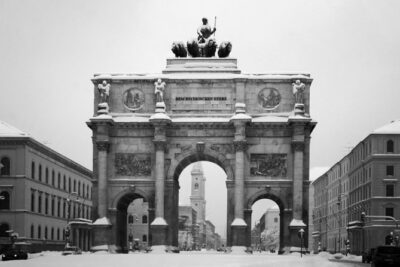
Munich World War II Sites Including Dachau Concentration Camp
Read our review →
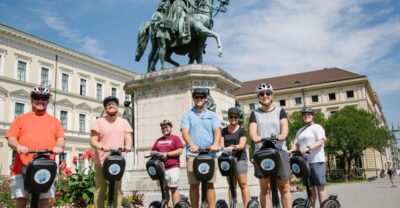
Munich 3-Hour Segway Tour: Nazi Munich & Royal Architecture
Read our review →
Dachau Concentration Camp Memorial Site And Third Reich Day Tour From Munich
Read our review →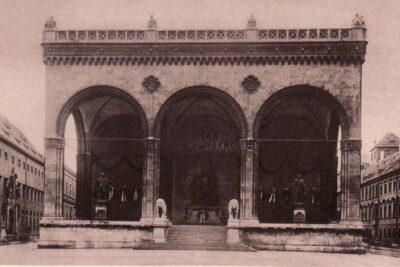
Browse the lists this tour appears in