
Reviewed · SEGWAY TOURS
Munich Classic City Segway Tour (English or German Guide)
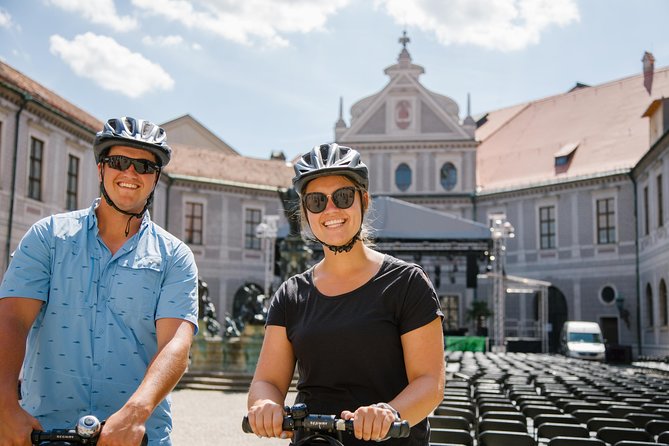
Munich’s best first look may come on two wheels. This small-group Segway tour moves from the royal center to the English Garden, along the Isar, and out to landmarks that are too spread out for a short walking tour. You stop often for photos and short talks, so the pace mixes sightseeing with plenty of riding.
I like the careful 10 to 15 minutes of practice before departure, and I like the group limit of eight. Guides such as Mark, Rob, Karl, Dan, and Achim are praised for clear instruction, good humor, and strong knowledge of Munich’s past. The main catch is simple: you need decent balance and comfortable knees, and the ride is not suitable for anyone under 14.
In This Review
- Key points to know before you book
- Why a Segway works well in Munich
- Starting at Karlsplatz with a proper practice session
- Hofgarten, the English Garden, and the Bavarian Chancellery
- Königsplatz and the Pinakotheken
- The Isar River and Munich’s everyday side
- Odeonsplatz, the Residenz, and stories of the court
- The Eisbach Wave and Munich’s modern character
- Brienner Strasse and Munich’s Nazi-era past
- Maximilianeum and the Angel of Peace
- What the $92.19 price buys you
- Who will enjoy this ride most
- Guide style and the small-group advantage
- Should you book the Munich Classic City Segway Tour?
- FAQ
- How long does the Munich Classic City Segway Tour last?
- Where does the tour start and finish?
- Is Segway training included?
- How many people can join the tour?
- Is the tour offered in English or German?
- Is the tour suitable for children?
- Are museum and attraction admission fees included?
- What happens if the weather is poor?
Key points to know before you book
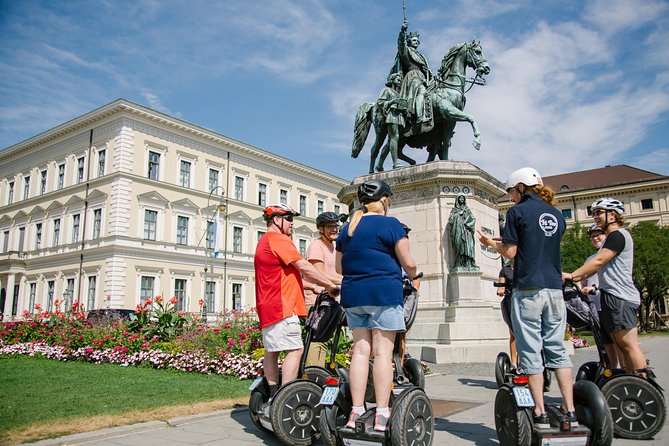
- You cover a lot of ground: The route links the Hofgarten, English Garden, Pinakotheken, Isar River, royal sites, and major squares in one outing.
- The group stays small: A maximum of eight riders gives your guide room to help with Segway handling and answer questions.
- Training comes first: You receive 10 to 15 minutes of instruction before the city ride begins.
- The history is not only royal: The tour includes Königsplatz, Hitler’s former office block, and other places tied to Munich’s Nazi-era past.
- The tour is more orientation than museum visit: You see many sites from outside, with admission fees not included.
- Weather matters: Poor conditions can lead to a new date or a full refund, and free cancellation applies up to 24 hours before departure.
Why a Segway works well in Munich
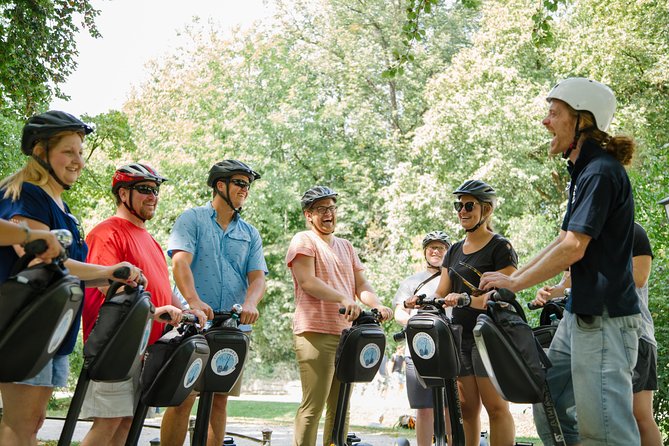
Munich’s center is easy to walk, but its sights do not all sit close together. The old royal quarter, art museums, English Garden, Isar River, and Maximilianeum form a wide loop. On foot, you would spend much of a half-day simply crossing between them.
A Segway lets you make that loop without turning the day into a long march. You can glide through open areas, stop every few hundred feet, and keep moving after a short explanation. I find this format especially useful at the start of a Munich stay because you see the city’s layout before choosing which places deserve a longer visit.
The ride itself is part of the appeal. You lean gently to move and steer, and the machine does the work. That sounds easy, but it still takes a little balance. The training period is not a formality. Your guide needs to see that everyone can start, stop, turn, and stay in control before the group heads into town.
The tour lasts about three to three and a half hours. That is long enough to get a broad look at Munich, but not long enough to enter every museum or study each monument. Think of it as a moving introduction with photo stops, not a substitute for an indoor sightseeing day.
More Segway tours in Munich:
- Munich: City Highlights Guided Segway Tour
★ 4.6 · 266 reviews - Munich 3-Hour Segway Tour: Nazi Munich & Royal Architecture
★ 4.9 · 194 reviews - Munich Segway Tour
★ 5.0 · 181 reviews
Starting at Karlsplatz with a proper practice session
You meet at Fat Tire Tours Munich at Karlsplatz 4. The office provides the Segway, helmet, sunscreen, raincoat, free Wi-Fi, and luggage storage, which is useful if you arrive with a small bag and do not want to carry it around the city.
The first 10 to 15 minutes are set aside for instruction. Guides have been praised for being patient with first-time riders, including people who had never used a Segway before. Rob, also referred to as Bob in one account, is singled out for patient teaching, while Robert is praised for combining instruction with a relaxed manner.
That early practice shapes the rest of the outing. If you are nervous, use the time to ask about braking, turning, and stopping near other people. If you already know how to ride, resist the urge to rush the lesson. Munich’s public spaces can be busy, and smooth control matters more than speed.
Your English or German guide leads the group from the meeting point and brings you back there at the end. Since the group is capped at eight, you should get more direct help than on a large city tour. The small size also makes it easier to hear the commentary during stops.
Hofgarten, the English Garden, and the Bavarian Chancellery
The route soon reaches Hofgarten, one of Munich’s most pleasant formal green spaces. This is a good early stop because it gives you a calmer setting after the training session and places you near several important central buildings.
From there, you ride through the English Garden, Munich’s famous central park. The listed stop is about 10 minutes, so expect a quick look rather than a full park outing. The value here is seeing how quickly Munich shifts from grand civic architecture to broad open space.
You also pass the Bavarian Chancellery. This is a pass-by rather than an interior visit, so your guide’s explanation and your own photos do most of the work. I like this part of the route because it shows the modern seat of regional government alongside the older royal and religious buildings that define the city center.
The English Garden section can feel different depending on the day. One guide, Achim, led a Sunday outing with fewer pedestrians and cars to contend with. That does not guarantee the same conditions, but it suggests that quieter traffic can make the riding more relaxed.
Königsplatz and the Pinakotheken
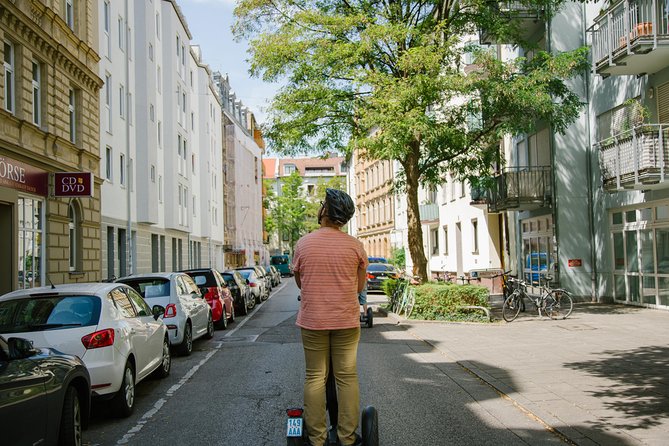
Königsplatz is one of the tour’s most important historical stops. Today, it is tied to Munich’s cultural life and monumental architecture. It also served as a Nazi marching ground, so the guide’s commentary here adds a serious layer to what might otherwise look like an elegant public square.
The stop is listed at about five minutes. That is enough for a concise explanation and photographs, but not a full historical lecture. I would note the key points during the talk and return later if this period of Munich’s past matters to you.
The route then reaches the Pinakotheken, a group of major art galleries. You see some of the oldest galleries in the world from the outside, but admission is not part of the Segway tour. This is a useful orientation stop if you plan to visit Munich’s museums later.
Do not book this experience expecting gallery time. The Pinakotheken are included because they fit the route and help explain Munich’s role as a cultural center. Your five-minute stop gives you a reason to mark the museum district on your map.
A few more Munich tours and experiences worth a look
- Munich 3-Hour Guided Bike Tour
★ 4.5 · 1,731 reviews - Munich’s Beer Halls and Breweries: 3-Hour Guided Tour
★ 4.6 · 928 reviews - Guided Dachau Concentration Camp Memorial Site Tour with Train from Munich
★ 5.0 · 920 reviews - Munich: Birthplace of the Third Reich Guided Walking Tour
★ 4.6 · 771 reviews
The Isar River and Munich’s everyday side
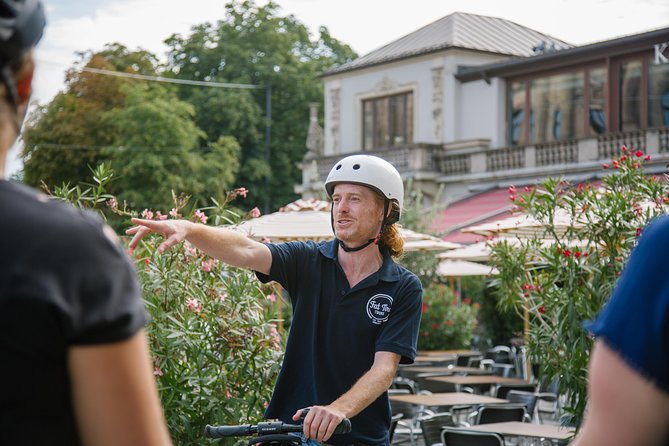
The ride along the Isar gives the tour a welcome change of mood. The river is central to Munich and serves as a popular place for relaxation. The listed stop lasts about 10 minutes, enough to pause, take pictures, and hear how the river fits into local life.
This part may be one of the most useful for understanding Munich beyond its monuments. You have already seen palaces, squares, and government buildings. Along the Isar, you get a sense of the city as a place where people go to slow down and spend time outdoors.
The route does not promise a long river excursion, and admission is not relevant here. Still, the Isar stop helps break up the historical material. A three-hour tour packed only with political and royal sites could feel heavy. The river adds breathing room.
Odeonsplatz, the Residenz, and stories of the court
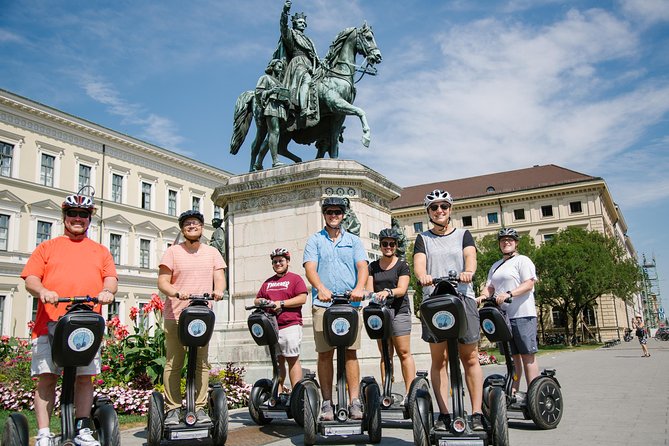
Odeonsplatz brings you back into the grand center. The square features the Feldherrnhalle and Theatinerkirche, two of Munich’s most recognizable landmarks. The stop is listed at about 10 minutes, which gives your guide time to connect the buildings with the city’s political and religious past.
Next comes the Residenz München, the former royal palace complex. You ride through the area and hear stories about local aristocracy. This is another outside-focused stop, not a palace tour, so you should plan a separate visit if you want the rooms, collections, and interior detail.
I like the way these stops work together. Odeonsplatz shows Munich as a ceremonial public city, while the Residenz points to the rulers who shaped it. The Segway keeps the sequence moving, but you still have enough time to get the basic story and identify where to return on foot.
The historical tone can be direct. One German-language comment found the tour strong on Munich’s past but a little too focused on Hitler. That is a fair consideration. The route includes several places tied to the Nazi period, and the subject is part of Munich’s story. If you prefer a tour devoted mainly to art, food, or architecture, this will feel more politically weighted.
The Eisbach Wave and Munich’s modern character
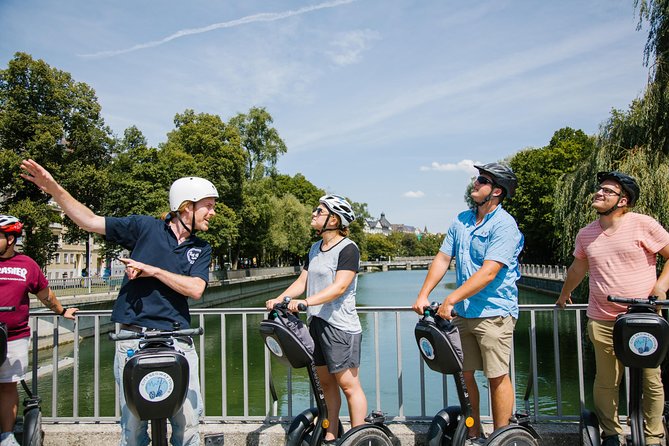
At the Eisbach Wave, you stop to watch Munich’s famous river surfers. The wave is a striking sight because it brings an active, modern city scene into a route otherwise filled with palaces, churches, and state buildings.
The stop lasts about 10 minutes. You have time to watch the surfers and take photos, though conditions and the performance itself are not under the tour’s control. The guide can provide context, but the main attraction here is visual and immediate.
This is one of the tour’s strongest changes of pace. After hearing about rulers and political movements, you see people practicing a demanding sport in the middle of the city. It also makes a good photo stop for anyone who wants something more distinctive than another formal square.
Brienner Strasse and Munich’s Nazi-era past
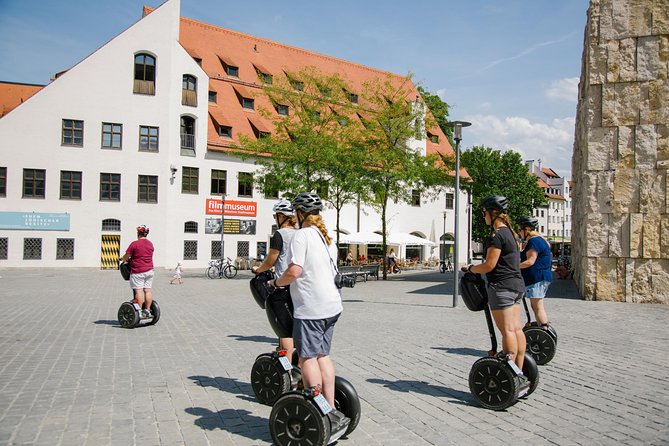
The stop at Brienner Strasse 45 covers the former headquarters of the National Socialist German Workers’ Party and Hitler’s office block. It is a brief, five-minute stop, with no admission fee listed.
This section is important, but you should know what to expect. You are not entering a museum or spending an hour on archival material. Instead, the guide places the building in Munich’s political story while you view the site from the outside.
The combination of Königsplatz and Brienner Strasse means the tour does not soften Munich’s difficult past. That is a strength if you want a more honest first orientation. It can be less appealing if you are seeking a light sightseeing ride with little serious history.
Maximilianeum and the Angel of Peace
The Maximilianeum is the palatial home of a foundation for gifted students and the Bavarian Landtag, the state parliament. The stop is about five minutes, and the tour treats it as an exterior landmark rather than an institutional visit.
The building helps widen the route beyond the old royal center. You see how Munich’s political life continues in grand surroundings, not only in monuments left by former rulers.
The final listed sight is the Angel of Peace, a monument marking 25 peaceful years after the Franco-German War. Again, the stop is short, around five minutes, but it gives the tour a fitting closing note after the heavier political sites.
By this stage, you have crossed several parts of Munich and seen how its public spaces carry different layers of memory. The tour then returns to the Karlsplatz meeting point, where the activity ends.
What the $92.19 price buys you
At $92.19 per person, this is not the cheapest way to look around Munich. A walking tour costs less in many cities, and you will not enter the Pinakotheken, Residenz, or other paid attractions during this outing.
The value comes from time and coverage. You are paying for the Segway, helmet, training, a guide, and the ability to connect distant sights in roughly three hours. If you tried to cover the same route on foot, you would likely spend more energy and have less time for stops.
The group limit also matters. With no more than eight people, the guide can watch inexperienced riders and answer questions. The equipment, sunscreen, raincoat, Wi-Fi, and luggage storage add practical value, though they should not be the main reason you book.
I would see the price as reasonable for a first-day city orientation, especially if you have limited time in Munich. It is less compelling if you plan a long stay, prefer museums, or already know the center well. In that case, a focused museum visit or a slower walking tour may give you more depth for less money.
The experience is booked on average 28 days in advance, so planning ahead is sensible. Confirmation arrives at booking, and free cancellation is available up to 24 hours before the start time.
Who will enjoy this ride most
I would recommend it to you if you want to get your bearings quickly, enjoy a little novelty, and prefer seeing a city from outside rather than spending the morning indoors. It suits couples, friends, and active adults who are comfortable learning a new machine.
It can also work well for a first visit. The route gives you a useful list of places to revisit, including the English Garden, Pinakotheken, Residenz, Eisbach Wave, and the riverfront.
You should think twice if you have knee or balance problems. German law requires all riders to be over 14, and the experience is not recommended for people with those physical concerns. Most people can participate, but the operator still requires you to manage the Segway safely.
Weather is another practical issue. The tour requires good conditions. If poor weather cancels it, you are offered another date or a full refund. That makes a sunny-day booking more appealing than trying to force it into a rainy forecast.
Guide style and the small-group advantage
The guide can make or break a moving city tour. The strongest pattern here is clear instruction paired with lively commentary. Mark is praised for friendly insight into Munich’s past, Karl for combining history with an enjoyable ride, and Achim for being informative and funny.
Dan is associated with a smooth experience from booking through the finish. Robert is praised for stretching the tour beyond the expected time, though you should not count on an extension. These details point to a guide-led experience where personality matters as much as the route.
The English or German option gives you a choice of language, but the supplied information does not promise a particular guide on a particular departure. Book for the format and route, then treat the named guides as examples of the team’s style rather than a guarantee.
A group of eight is small enough for personal attention but large enough to keep the ride social. You should still expect to follow the guide’s pace and stop when instructed. This is a guided ride, not an independent rental.
Should you book the Munich Classic City Segway Tour?
Book it if you want a fast, playful introduction to Munich and like the idea of combining city history with an active ride. The broad route, patient training, small group, and frequent photo stops make it a strong choice for a first or short visit.
Skip it if your priority is going inside museums, spending long periods at monuments, or avoiding balance-based activities. The tour gives you many useful glimpses, but the short stops mean you will need to return on foot for real depth.
For most fit visitors over 14, I would put this near the start of a Munich itinerary. Take notes on the places that catch your eye, then use the rest of your stay to explore the Residenz, Pinakotheken, English Garden, or historical sites more fully.
FAQ
How long does the Munich Classic City Segway Tour last?
The tour lasts approximately three to three and a half hours, including the initial Segway training.
Where does the tour start and finish?
It starts at Karlsplatz 4, 80335 München, Germany, at the Fat Tire Tours Munich office. The activity ends back at the same meeting point.
Is Segway training included?
Yes. You spend about 10 to 15 minutes learning and practicing on the Segway before the city ride begins.
How many people can join the tour?
The maximum group size is eight people.
Is the tour offered in English or German?
Yes. You can take the tour with an English or German guide.
Is the tour suitable for children?
All participants must be over 14, as required by German law.
Are museum and attraction admission fees included?
No. Admission fees are not included. The tour mainly views the listed sights from outside or passes by them.
What happens if the weather is poor?
If poor weather causes cancellation, you are offered a different date or a full refund. You can also cancel up to 24 hours before the start time for a full refund.
Just added around Munich
- Private tour from Munich to Rothenburg and Harburg★ 5.0 · 3 reviews
- Scenic Adventure Private Day Tour to The Konigssee Salzburg★ 4.5 · 3 reviews
- Private Transfer from Munich to Salzburg, English-speaking driver★ 3.5 · 3 reviews
- Munich: Capture the most Photogenic Spots with a Local★ 5.0 · 3 reviews
- Private Beer Tasting Tour in Munich with Oktoberfest Museum★ 4.3 · 3 reviews
- Munich Photoshoot: A Must-Have Holiday Experience!★ 5.0 · 3 reviews
- Paul’s Private Tour in the Alte Pinakothek Munich★ 5.0 · 3 reviews
- Private Tour to Hallstatt Salt Mine and Skywalk with Lunch★ 5.0 · 3 reviews
Segway Tours, compared.
Munich 3-Hour Segway Tour: Nazi Munich & Royal Architecture
Read our review →
Third Reich and World War II Segway Tour of the City
Read our review →
Browse the lists this tour appears in