
Reviewed · THIRD REICH & WWII TOURS
Munich: Third Reich and World War II Segway Tour of the City
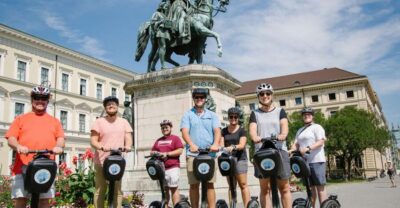
Munich’s difficult 20th-century story is easier to grasp when you can move between its key sites in one compact outing. This three-hour Segway tour takes you past Hitler’s former apartments, the Old Synagogue site, the Brown House, Königsplatz, and Odeonsplatz, while also adding stories about Bavarian kings and daily city life.
I like the way the Segway lets you cover a large part of Munich without wearing out your feet. I also like the careful practice session before departure, especially since guides such as Abdel and Jamal have been praised for patience, clear English, and calm handling of first-time riders. The main consideration is that riding beside traffic can feel scary at first, and the historical commentary may be lighter than a specialist walking tour.
In This Review
- Key points to know before you book
- Getting started at Robot City Segway Tour München
- Why a Segway works well for Munich
- Munich’s royal story before the war
- Königsplatz and the architecture of power
- Odeonsplatz, the Führer’s building, and the Brown House
- The Old Synagogue site and Munich’s wartime story
- Hitler’s Munich apartments from 1920 to 1933
- Schelling-Salon and the everyday side of history
- Practical Munich tips at the end of the ride
- Is $100 a fair price?
- Weather, comfort, and riding confidence
- Who will get the most from this tour?
- Final call: book it for coverage and character
- FAQ
- How long is the Munich Segway tour?
- What language is the tour offered in?
- How many people can join the group?
- Is the Segway included in the price?
- Where does the tour meet?
- Is hotel pickup included?
- Who cannot join the tour?
Key points to know before you book
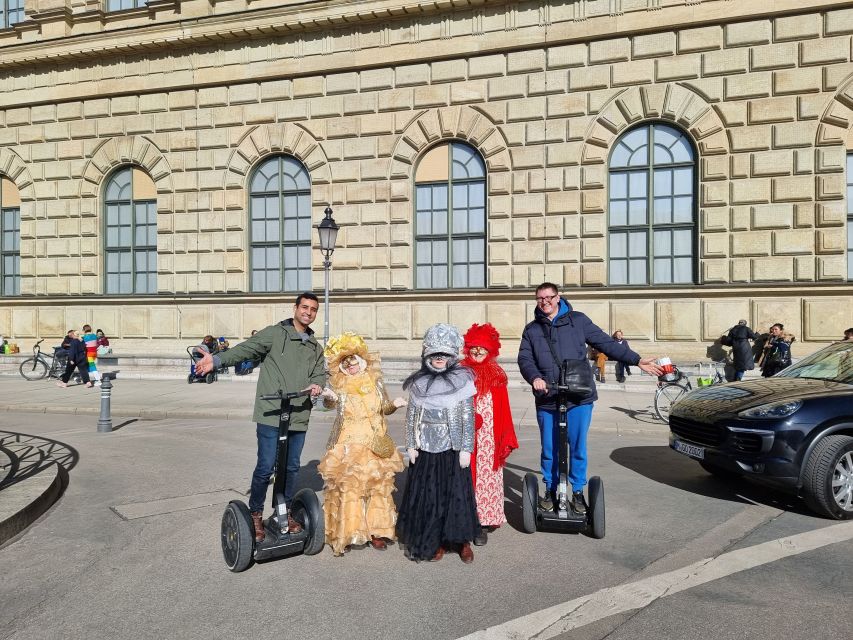
- Three hours covers a wide stretch of central Munich: You see far more ground than on a standard walking tour.
- The tour begins with hands-on Segway training: First-time riders get practice before heading into the city.
- WWII sites are viewed from outside: The route gives useful context, but it is not an indoor museum tour.
- Small groups are limited to 10 people: That makes it easier to ask questions and get help while riding.
- Guides have included Abdel and Jamal: Their patient instruction and friendly manner have been major strengths.
- Road conditions affect the experience: Cycle tracks and parks are comfortable, but city streets can feel demanding, especially in rain or cold.
Getting started at Robot City Segway Tour München
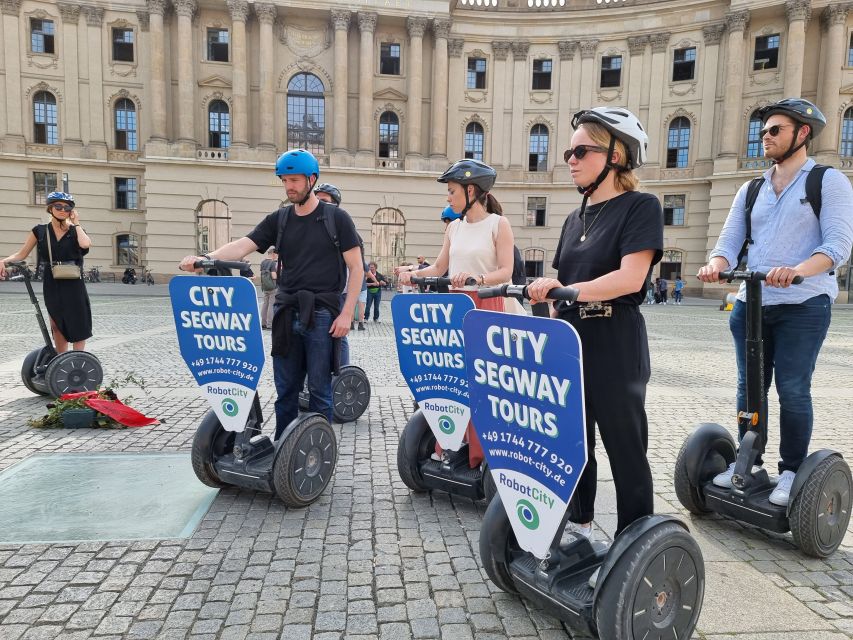
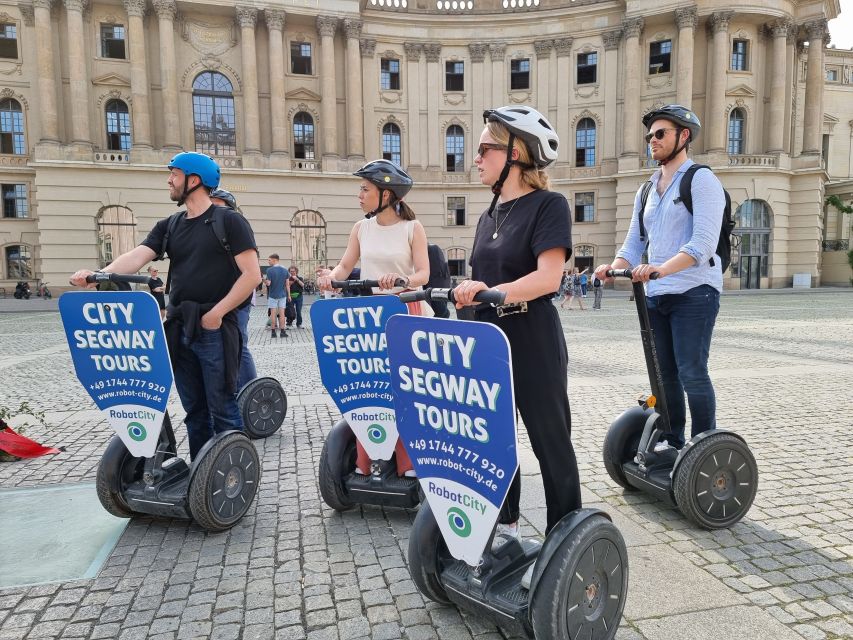
You meet your guide at the Robot City Segway Tour München office in Munich. Hotel pickup is not included, so plan your route to the office before the starting time.
The first part matters more than you might expect. You receive a helmet, learn how to control the Segway, and practice before setting off. Several people who had never ridden one before found the machines easy to manage after this introduction, but you should still allow yourself a few minutes to feel steady.
A good guide will watch how each person handles the Segway before leading the group onto city streets. Abdel has been praised for being patient with nervous beginners, while Jamal has been singled out for giving detailed training. That personal attention is important because the tour is not simply a ride with a guide talking from the front. You need to control the machine, watch the route, and listen at the same time.
The group size is capped at 10 people. That is large enough to keep the tour social, but small enough for the guide to notice if someone is having trouble. The experience is offered in English or German, and language matters here because the historical stops depend on spoken explanation.
More Third Reich and wartime history walks in Munich:
- Munich: Third Reich & WWII Walking Tour
★ 4.6 · 6,181 reviews - Third Reich Walking Tour Munich
★ 4.5 · 4,291 reviews - Munich: Birthplace of the Third Reich Guided Walking Tour
★ 4.6 · 771 reviews
Why a Segway works well for Munich
Munich’s central sights are spread across several districts and public spaces. On foot, you can cover them, but the distance between stops takes time. A Segway gives you a practical middle ground: faster than walking, more open than a bus, and still close to street-level details.
You will glide along streets, cycle tracks, and through park areas. The park sections are often the most relaxed part of the ride, while city roads require more care. One rider found the roads intimidating but enjoyed the park and cycle tracks much more. That is a useful warning for anyone who dislikes balancing machines or feels uneasy near traffic.
The riding itself is part of the appeal. You get a breeze, a clear view around you, and the novelty of moving through Munich without pedaling. At the same time, the Segway does not turn the tour into a free-form ride. The guide controls the route and pace, and the historical stops remain the main point.
If your priority is to see many major locations in a short time, this format makes sense. If you want long, quiet stops inside museums or churches, choose a walking tour instead.
Munich’s royal story before the war
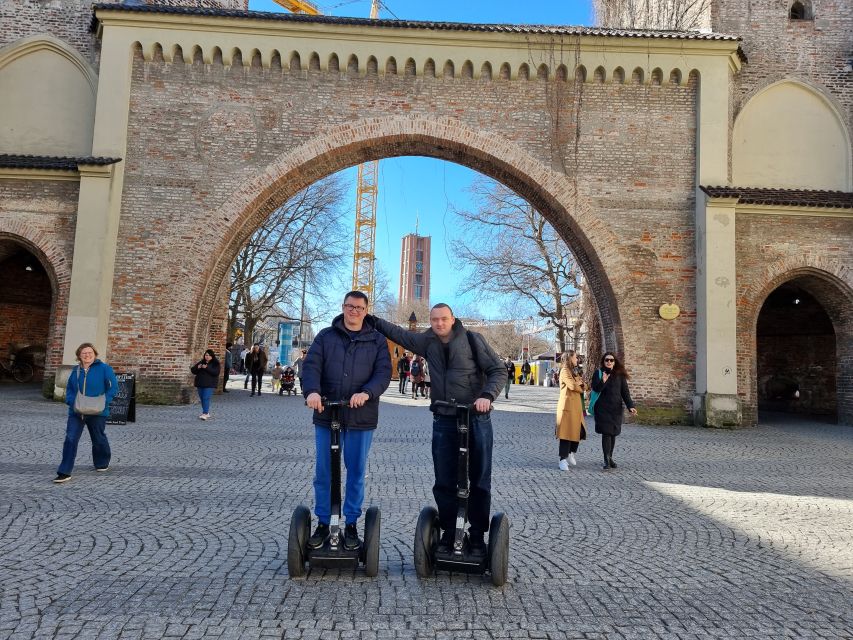
The tour is not limited to Hitler and World War II. Along the way, your guide also discusses the Bavarian kings and Munich’s earlier development. That broader context helps you see the city as more than a collection of wartime sites.
The royal story gives the central squares a useful frame. Munich’s grand buildings and formal spaces did not appear only during the Nazi period. They reflect older Bavarian power, ceremony, and civic ambition. Listening to the guide while crossing between these areas helps connect the city’s older identity with the political events that came later.
The commentary is intended to be entertaining as well as informative. That balance works well on a moving tour, where you need clear facts but also need to stay alert to the route. The guide may not offer the depth of a dedicated academic lecture, so anyone seeking a detailed study of Nazi architecture or Bavarian monarchy should plan a museum visit separately.
Königsplatz and the architecture of power
Königsplatz is one of the route’s most important stops. The broad square is closely tied to Munich’s role during the Nazi period, and the guide explains what happened there during World War II.
This is a good place to pause and consider how public spaces can be used for political display. The scale of the square makes the point without needing a long walk. You can take in the surrounding buildings, hear the guide’s explanation, and then continue without losing the momentum of the tour.
The Segway is useful here because it gets you to the square quickly from other central sights. The tradeoff is that the stop remains an outdoor overview. You are not entering a museum or taking part in a formal site interpretation, so listen closely and write down any details you want to investigate later.
More Segway tours in Munich:
- Munich: City Highlights Guided Segway Tour
★ 4.6 · 266 reviews - Munich 3-Hour Segway Tour: Nazi Munich & Royal Architecture
★ 4.9 · 194 reviews - Munich Segway Tour
★ 5.0 · 181 reviews - Munich: City Highlights Guided Segway Tour
★ 4.5 · 161 reviews
Odeonsplatz, the Führer’s building, and the Brown House
Odeonsplatz is another key location on the route. The guide points out the square and explains its role in Munich’s political history, then connects it with nearby Nazi-era sites, including the Führer’s building and the Brown House.
Seeing these places in relation to one another is one of the tour’s strongest features. A map can show you where they are, but riding between them gives you a better sense of their place in the city. You are not studying isolated addresses. You are following a route through the center of Munich and seeing how political power occupied familiar streets and public spaces.
The Brown House was associated with the Nazi Party. The tour uses the location to explain Munich’s part in Hitler’s rise to power. For many people, this is more useful than a general city sightseeing ride because the guide gives the buildings a clear connection to the events being discussed.
Expect exterior viewing rather than entry. The tour does not include museum admission, and the supplied details do not promise access inside these buildings. The value comes from the guide’s explanation and the ability to visit several linked sites in one afternoon.
The Old Synagogue site and Munich’s wartime story
The stop at the site of the old synagogue brings a different focus. Instead of looking only at political headquarters and grand squares, you consider the Jewish life that existed in Munich and what happened to it during the Nazi period.
This is an important part of the route because it keeps the tour from becoming a simple study of Hitler’s movements. The Old Synagogue site adds the human cost of the period and gives the guide a chance to explain what Munich experienced during World War II.
You should expect a brief outdoor stop, not a long memorial visit. The guide’s words carry much of the meaning, so this is a place where a strong English or German speaker will get the most from the experience. If you want extensive time at Jewish history sites, pair the Segway tour with a separate museum or memorial visit.
Hitler’s Munich apartments from 1920 to 1933
The tour includes stops outside Hitler’s former apartments, including the apartment connected with his years from 1920 to 1929 and another associated with 1933. These addresses help place his Munich years on an ordinary city map.
That detail is useful because it shows how political history unfolded through everyday neighborhoods, not only monumental buildings. The guide explains the period when Hitler lived in Munich and traces part of his rise to power. You get a more personal and geographic view of his connection to the city.
Do not expect to enter the apartments. The experience is about seeing the locations from outside and hearing the story at the site. For someone interested in WWII history, these stops are likely to be the main reason to book. For someone who wants only Munich’s royal and cultural highlights, the route may feel too focused on a dark chapter.
The guide’s skill matters particularly here. A patient, engaging guide can make a street address meaningful. A less detailed explanation may leave the stop feeling brief. Past tours led by Abdel received especially strong praise for combining historical information with a friendly manner.
Schelling-Salon and the everyday side of history
Schelling-Salon offers a change of mood. The pub remained open throughout World War I and World War II, giving the guide a way to talk about ordinary social life during periods of upheaval.
This stop is valuable because it shifts attention away from official buildings and political leaders. Munich’s history also lives in pubs, restaurants, and places where people continued their routines while major events unfolded around them.
The tour does not include a meal or promise a stop for drinks. Think of Schelling-Salon as a point of explanation rather than a dining break. If you want to return later, your guide can help you decide how it fits into your own Munich plans.
Practical Munich tips at the end of the ride
During the tour, your guide suggests places to visit later. Hofbräuhaus am Platzl, the famous beer hall originally built in 1589, is one recommendation. Hofbraukeller, which serves traditional Bavarian food, is another.
These suggestions add value because the guide can connect the sightseeing route with the rest of your stay. You can finish the tour with a better idea of where to eat, which areas deserve another look, and how Munich’s historic center fits together.
Keep in mind that restaurant recommendations are not part of the ticket. Food, drinks, and personal spending are separate. Still, a local guide’s suggestions can save you time, especially if this is your first visit and you want a traditional Bavarian meal after the ride.
Is $100 a fair price?
At $100 per person, this is not a cheap way to sightsee. You are paying for a three-hour guided experience, the Segway, a helmet, instruction, and access to a small group rather than a large vehicle or a self-guided route.
The value improves if you want to cover a lot of Munich in one outing. You get transportation between the sights and historical commentary at the same time. One past rider felt the combination could save money compared with arranging separate sightseeing and transport, and that is a fair way to assess it.
The price is harder to justify if you mainly want indoor access or detailed academic history. No entry fees are included, and the route appears designed for exterior stops. You may want to add a museum visit on another day, which raises the total cost of a history-focused itinerary.
For couples or small groups who enjoy trying something different, the Segway itself adds a real experience rather than serving only as transport. You also avoid spending three hours walking between widely spaced locations.
Weather, comfort, and riding confidence
Weather can change the feel of the tour. The experience has gone ahead in rain, snow, and freezing conditions, so you should dress for the forecast and expect limited shelter while riding. Cold hands and wet clothing can make balancing less pleasant.
The route is not equally easy at every point. Parks and cycle tracks offer a calmer ride, while roads can make first-timers nervous. If you are already comfortable on a Segway, you may wish for more free riding time in the English Garden or similar park areas. The scheduled route focuses on sightseeing, not extended recreational riding.
The tour is not suitable for children under 14 or for pregnant women. A helmet is included. You should also be honest with yourself about balance and comfort around city traffic before booking, since the guide cannot remove every road-related challenge.
Who will get the most from this tour?
I would choose this tour if you have only a short stay in Munich and want to combine city orientation with WWII history. It is also a good pick for first-time Segway riders who appreciate a proper training session and a guide who will take the time to help.
History-minded visitors will like the route’s concentration of sites linked to Hitler’s Munich years, the Nazi Party, the Old Synagogue, and wartime Munich. Couples and small groups may also enjoy the unusual format, especially if another standard walking tour feels too familiar.
I would think twice if you want a slow, reflective memorial experience. The machine, traffic, and three-hour schedule create movement and energy, even at serious stops. You should also choose another format if you dislike riding outdoors in cold or wet weather.
The guides are a major part of the decision. Abdel has been praised for patience, humor, and historical explanation, while Jamal has been noted for careful training. Guides can change, but the strongest reports point to attentive instruction as a key strength. One language mix-up required an interpreter to join a tour, so if language clarity is crucial, confirm that your selected departure is in English or German.
Final call: book it for coverage and character
Book this Munich Segway tour if you want to see a wide area quickly, care about the city’s World War II story, and like the idea of learning while moving. The mix of royal Munich, Nazi-era sites, Hitler’s former apartments, the Old Synagogue site, and local pub recommendations gives the outing more substance than a simple highlights ride.
Skip it if you want indoor visits, extensive time at each memorial, or a completely traffic-free experience. At $100, the tour earns its price through the equipment, instruction, small group, and amount of ground covered. For a first Munich visit with limited time, that combination can be a sensible and memorable use of three hours.
FAQ
How long is the Munich Segway tour?
The tour lasts three hours.
What language is the tour offered in?
Live tours are offered in English and German.
How many people can join the group?
The group is limited to 10 participants.
Is the Segway included in the price?
Yes. The tour includes the Segway, a helmet, and a guide.
Where does the tour meet?
You meet the guide at Robot City Segway Tour München in Munich.
Is hotel pickup included?
No. Hotel pickup and drop-off are not included.
Who cannot join the tour?
Children under 14 and pregnant women are not permitted to take part.
Just added around Munich
- Private Transfer from Munich to Salzburg, English-speaking driver★ 3.5 · 3 reviews
- Private tour from Munich to Rothenburg and Harburg★ 5.0 · 3 reviews
- Scenic Adventure Private Day Tour to The Konigssee Salzburg★ 4.5 · 3 reviews
- Munich: Capture the most Photogenic Spots with a Local★ 5.0 · 3 reviews
- Private Beer Tasting Tour in Munich with Oktoberfest Museum★ 4.3 · 3 reviews
- Munich Photoshoot: A Must-Have Holiday Experience!★ 5.0 · 3 reviews
- Paul’s Private Tour in the Alte Pinakothek Munich★ 5.0 · 3 reviews
- Private Tour to Hallstatt Salt Mine and Skywalk with Lunch★ 5.0 · 3 reviews
Third Reich & WWII Tours, compared.

Birthplace of the Third Reich Guided Walking Tour
Read our review →
Munich World War II Sites Including Dachau Concentration Camp
Read our review →
Munich City Walking Tour, includes Third Reich & Viktualienmarkt
Read our review →
Munich 3-Hour Segway Tour: Nazi Munich & Royal Architecture
Read our review →
Dachau Concentration Camp Memorial Site And Third Reich Day Tour From Munich
Read our review →Browse the lists this tour appears in