
Reviewed · SEGWAY TOURS
Munich Segway Tour
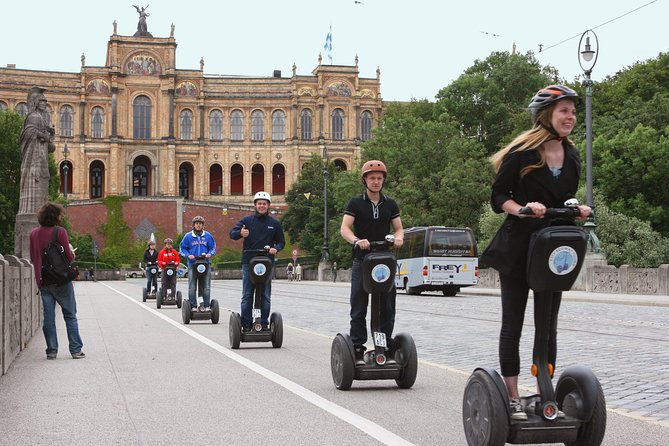
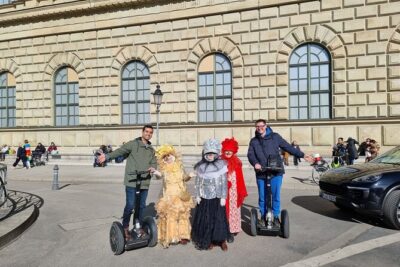
Munich is made for covering ground, and this small-group Segway tour lets you move from royal gardens to market stalls, university buildings, museums, and the Isar waterfront in one half-day. The best part is the mix of riding and storytelling: guides such as Karl, Mark, Rob, and Susanna bring in everything from Munich’s beer customs to the city’s Nazi-era past.
I like the 30-minute training session, which gives first-time riders time to learn the controls before heading into town. I also like the eight-person limit, since it keeps the group compact enough for questions and photo stops. The main caution is that Segway riding requires balance and confidence, with uphill and downhill sections that can be difficult for anyone with knee or balance problems.
In This Review
- Key points to know before you book
- Why a Segway works well in Munich
- Starting at Karlsplatz and learning the Segway
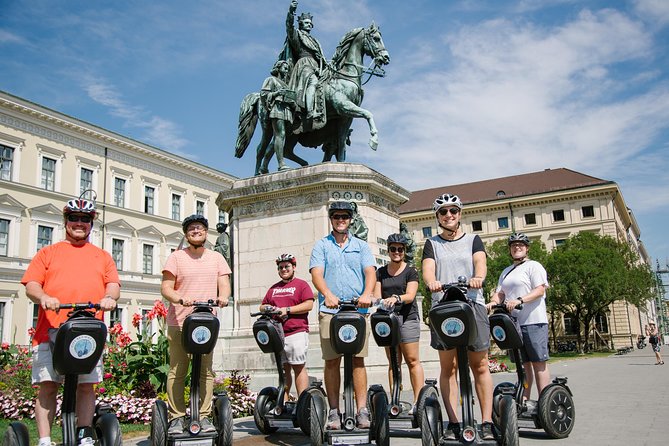
- Hofgarten and Munich’s royal center
- The English Garden and the Isar waterfront
- Viktualienmarkt and the city’s food culture
- Museums, university buildings, and the old city
- Gartnerplatz and Munich beyond the postcard center
- What the guides do best
- Safety, comfort, and who should skip it
- Is $90.05 good value?
- Booking details and cancellation
- Should you book the Munich Segway Tour?
- FAQ
- Where does the Munich Segway Tour start and end?
- How long does the tour last?
- Is Segway training included?
- What is the maximum group size?
- What are the age and weight requirements?
- What happens if the weather is poor?
Key points to know before you book

- A real orientation comes first: You receive about 30 minutes of instruction before setting off.
- The group is capped at eight: That makes it easier to hear the guide and get personal help.
- You cover a lot of Munich: The route links Hofgarten, the English Garden, the Isar, Viktualienmarkt, Residenz, and major museums.
- The guides add plenty of context: Karl, Mark, Rob, and Susanna are praised for history, local stories, patience, and safety advice.
- The ride includes slopes: You must be able to climb and descend stairs without assistance and weigh between 100 and 250 pounds.
- The price is about $90.05: That is fair if you want transport, instruction, and a city overview in one outing.
Why a Segway works well in Munich
Munich’s center is compact enough to explore on foot, but some of its most appealing sights are spread across parks, neighborhoods, and the Isar waterfront. A Segway fills the gap. You move faster than a walking group, yet slowly enough to stop for photographs and listen to the guide.
This is not simply a ride around the main square. The route brings together royal Munich, student Munich, market Munich, museum Munich, and the outdoor life of the English Garden. You get a useful first look at the city before choosing where to return later.
The electric two-wheeler also changes how you experience the streets. You are not looking through a bus window, and you are not spending the whole morning checking a map. The guide handles the route while you focus on the buildings, gardens, river, and passing neighborhoods.
The trade-off is that you need to learn a new skill. Most beginners appear to get the hang of it during the orientation, but the machine still demands balance, attention, and controlled movements. This is not a passive sightseeing trip.
More Segway tours in Munich:
- Munich: City Highlights Guided Segway Tour
★ 4.6 · 266 reviews - Munich 3-Hour Segway Tour: Nazi Munich & Royal Architecture
★ 4.9 · 194 reviews - Munich: City Highlights Guided Segway Tour
★ 4.5 · 161 reviews
Starting at Karlsplatz and learning the Segway
The listed meeting point is Karlsplatz 4, 80335 München, at the City Segway Tours office. The tour description also places the start in central Munich near the Hauptbahnhof, so check the exact confirmation details before setting out. The activity ends back at the same meeting point.
Plan for a 30-minute lesson before the city ride begins. You learn the basic forward, backward, turning, and stopping movements, then practice until you feel comfortable enough to travel with the group. A helmet is included, as are wet-weather ponchos if rain arrives.
That training matters. Several guides receive praise for helping people who had never ridden before, with Mark and Rob singled out for patience and clear coaching. Karl is also praised for getting riders comfortable quickly. The best advice is simple: do not rush through the practice period, even if the machine seems easy after the first few minutes.
You must weigh approximately 100 to 250 pounds, or 45 to 110 kilograms, and be at least 14 years old. You also need to manage movements such as climbing and descending stairs without assistance. Anyone with knee or balance problems should think carefully before booking.
Hofgarten and Munich’s royal center
Once the group leaves the office, the route moves through Munich’s old center and toward Hofgarten, the Royal Gardens. This is one of the tour’s pleasant changes of pace. After city streets and traffic, the formal garden gives you room to ride and a calmer setting for the guide’s explanation.
Hofgarten also puts Munich’s royal past into view. The tour includes the former Royal Residence, or Residenz, another major reminder that Munich was once the seat of Bavarian rulers. You may not receive the same interior detail as you would on a dedicated Residenz visit, but seeing the building in context helps you decide if you want to return for a longer visit.
The guide may also point out nearby landmarks such as the Jewish Museum and Ludwig-Maximilians-Universität. These stops are mainly pass-bys rather than extended admissions, so keep your expectations in check. The value is the connection between several parts of the city, not a full museum tour.
Guides use photographs and stories to explain some sights along the way. Rob is praised for carrying a picture book that helped make buildings and historical details easier to understand. That sort of visual aid is useful when you are standing outdoors with only a few minutes at each location.
The English Garden and the Isar waterfront
The ride continues toward the English Garden, one of Munich’s signature open spaces. You pass through one of the city’s most enjoyable public areas and may see the famous river surfers, an unusual local scene that has become one of Munich’s best-known sights.
The surfing stop gives the outing a modern, slightly eccentric side. It is a good counterpoint to the palaces and formal squares earlier in the route. Karl is praised for including local observations about everyday Munich, from ice cream to watching the surfers, rather than presenting only dates and monuments.
The route also reaches the Isar waterfront. Here, the attraction is less about one grand building and more about seeing how Munich uses its river. The Isar is part of the city’s outdoor life, and riding beside it helps you understand why parks and open-air spaces matter so much to Munich.
You should remember that outdoor routes depend on weather and conditions. The tour requires good weather, and rain may lead to a new date or a full refund. Ponchos are supplied, but poor weather can still make a three-hour ride less comfortable.
Something different, still within reach of Munich:
- From Munich: Neuschwanstein & Linderhof Castle Full-Day Trip
★ 4.5 · 12,494 reviews - Neuschwanstein & Linderhof Castle-Fairytale Day Tour from Munich
★ 4.5 · 7,275 reviews - Munich: Third Reich & WWII Walking Tour
★ 4.6 · 6,181 reviews - Dachau Concentration Camp Memorial Site Tour from Munich by Train
★ 4.5 · 5,637 reviews
Viktualienmarkt and the city’s food culture
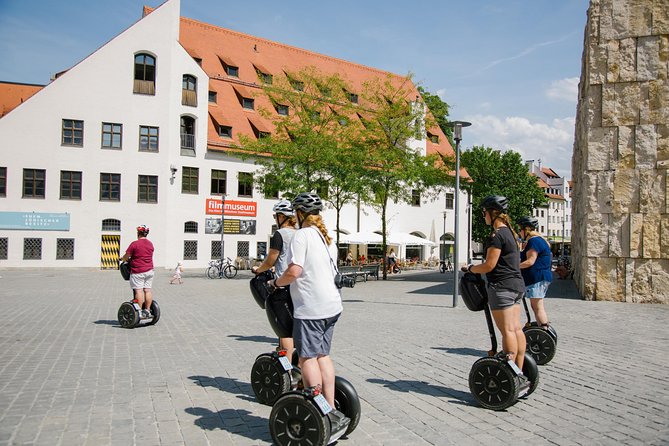
Viktualienmarkt gives the tour a welcome taste of daily Munich. This central market is filled with food and drink stalls, making it a natural place for a snack or lunch break. Food is not included, so bring money if you want to buy something during the stop.
The market helps balance the formal sightseeing. You see a working public space rather than only royal buildings and museum facades. The guide can also connect the market to Munich’s beer traditions and contemporary culture, two subjects that make more sense when you are among places where locals shop, eat, and meet.
Do not count on a long meal here. The tour description identifies a lunch or snack break, but it does not promise a specific restaurant, menu, or amount of free time. If you want a full sit-down meal, plan it before or after the tour.
Museums, university buildings, and the old city
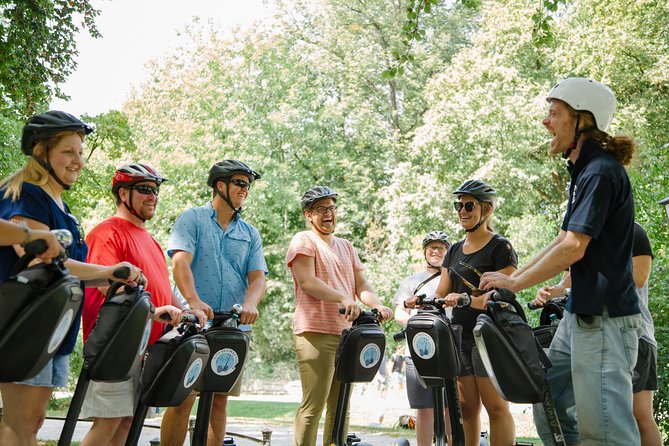
The route passes the Deutsches Museum, one of Munich’s major museum institutions, and the Jewish Museum. It also goes by Ludwig-Maximilians-Universität. These sights are not presented as full guided visits, but they add useful range to the tour.
The Deutsches Museum points to Munich’s scientific and technical side. The university area gives you a sense of the city as a center of learning. The Jewish Museum adds an important historical and cultural layer, especially when the guide discusses Munich’s difficult 20th-century past.
Several guides are praised for handling serious history well. Rob is noted for giving detailed context on the Nazi regime and World War II, while other guides are described as offering clear historical explanations at each stop. That is a real strength, since a fast-moving city ride can otherwise become a string of names and dates.
You should not expect a full lecture on every subject. The guide has to keep the group moving and watch the route. Think of the tour as a well-chosen introduction, with enough context to guide your later museum and neighborhood choices.
Gartnerplatz and Munich beyond the postcard center
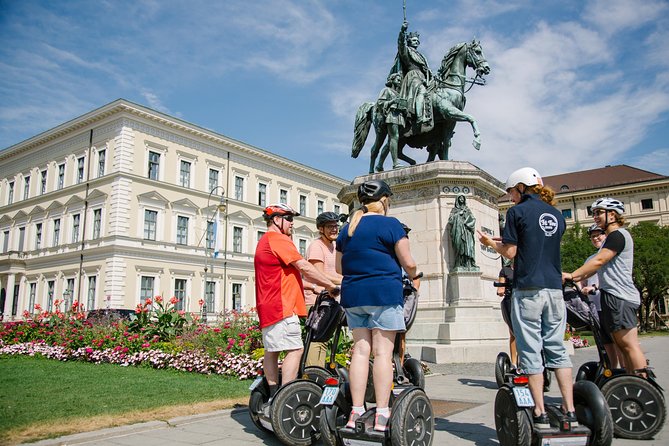
The ride through Gartnerplatz brings in a more contemporary neighborhood feel. This part of the route shows that Munich is not only palaces, beer halls, and monumental squares. You see a district with its own urban character as the Segway carries you away from the most familiar postcard sights.
This is where the tour’s wide coverage pays off. In one outing, you can move between the old center, royal spaces, market streets, parks, the river, and a more modern neighborhood. That range is difficult to achieve on foot in three or four hours without spending much of the time navigating.
The route can vary. One rider found that the map shown in the app did not exactly match the path taken. I would treat the map as a broad guide rather than a promise of every turn. Weather, road conditions, group ability, and the guide’s judgment may affect the sequence.
What the guides do best
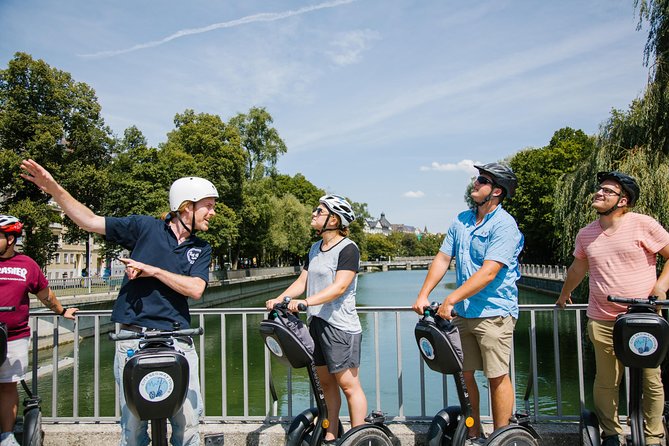
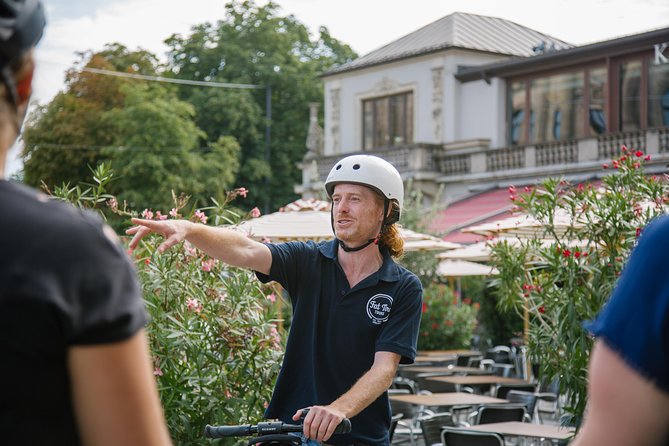
The human side of this tour is a major part of its value. Karl is praised for being informative, engaging, and attentive to safety. Mark receives repeated praise for his history knowledge, patience with beginners, humor, and ability to adjust the tour to the group.
Rob is described as courteous, helpful, and especially strong at instruction and navigation. Susanna is praised for combining calm Segway teaching with vivid historical storytelling. You may not receive one of these exact guides, but the repeated strength of the guide team is worth noting.
A good guide has two jobs here. First, the guide must keep eight moving machines together safely. Second, the guide must make outdoor explanations interesting while watching traffic, slopes, pedestrians, and the group’s confidence level.
That combination explains why a private walking guide is not the only alternative. A Segway guide can show you more ground, but the experience depends on the instructor’s judgment. You should feel free to ask for help during the training and to say if a slope or traffic situation makes you uncomfortable.
Safety, comfort, and who should skip it
The tour is intended for people who can balance, steer, stop, and react without assistance. It is not recommended for anyone with knee or balance problems. The reported fall on a downhill section is a reminder that accidents can happen, particularly when a first-time rider loses control.
This does not make the tour unsafe by definition, but it does make the physical requirements important. Wear comfortable clothing and shoes that allow stable movement. Since the route may include slopes and several hours on your feet, consider your stamina as well as your curiosity.
The small group helps. With no more than eight riders, the guide can keep a closer eye on beginners than would be possible in a large sightseeing group. Still, every rider remains responsible for following instructions and riding within their ability.
The minimum age is 14, so this is suitable for teenagers and adults who meet the physical requirements. It is not a good choice if you want a quiet, fully seated tour or if you dislike balancing on moving equipment.
Is $90.05 good value?
At about $90.05 per person, the tour is not a budget activity. The price includes the Segway, helmet, 30-minute orientation, guide, and ponchos in wet weather. Food and drinks are extra.
I think the cost is reasonable if you value coverage. In three to four hours, you see parts of Munich that would require several separate walks, while also receiving a basic city orientation and historical commentary. The group limit of eight adds value because you are not lost in a large convoy.
The value is weaker if you already know Munich well or plan to spend your time inside museums. Many sights are viewed from outside or passed along the route, so this should not replace visits to the Residenz, Deutsches Museum, Jewish Museum, or other interiors you particularly want to explore.
For a first or second day in Munich, I like the tour as a way to set priorities. You can mark the places that deserve a return visit, then explore them at your own pace later.
Booking details and cancellation
The experience is offered with a mobile ticket and usually confirms at booking. If you book within seven days of the date, confirmation may arrive within 48 hours and remains subject to availability.
Free cancellation is available up to 24 hours before the start time. Cancellations or changes inside that window are not accepted for a refund. If bad weather cancels the tour, you can choose another date or receive a full refund. The same applies if the minimum number of riders is not reached.
The tour is near public transportation, which makes the central meeting point practical. Give yourself enough time to find Karlsplatz 4 and check the final meeting instructions rather than relying only on the general description.
Should you book the Munich Segway Tour?
Book it if you want to see a wide slice of Munich in one outing, enjoy a little adventure, and like having a guide connect the city’s royal, cultural, commercial, and outdoor sides. It suits active first-time visitors, couples, families with riders aged 14 and up, and anyone who wants more range than a walking tour provides.
Skip it if balance is a concern, if you have knee trouble, or if you want long visits inside museums and palaces. For the right rider, the strongest reasons to book are the eight-person limit, the solid beginner training, and guides such as Karl, Mark, Rob, and Susanna, who combine practical coaching with stories that give Munich some shape.
FAQ
Where does the Munich Segway Tour start and end?
The listed meeting point is Karlsplatz 4, 80335 München, Germany. The activity ends back at the meeting point.
How long does the tour last?
The tour lasts approximately three to four hours and returns by mid-afternoon.
Is Segway training included?
Yes. The tour includes a 30-minute Segway orientation session before the city ride begins.
What is the maximum group size?
The tour has a maximum of eight participants.
What are the age and weight requirements?
The minimum age is 14. Riders must weigh approximately 100 to 250 pounds, or 45 to 110 kilograms.
What happens if the weather is poor?
The tour requires good weather. If it is canceled because of poor weather, you can select a different date or receive a full refund.
Just added around Munich
- Private Transfer from Munich to Salzburg, English-speaking driver★ 3.5 · 3 reviews
- Private tour from Munich to Rothenburg and Harburg★ 5.0 · 3 reviews
- Scenic Adventure Private Day Tour to The Konigssee Salzburg★ 4.5 · 3 reviews
- Munich: Capture the most Photogenic Spots with a Local★ 5.0 · 3 reviews
- Private Beer Tasting Tour in Munich with Oktoberfest Museum★ 4.3 · 3 reviews
- Munich Photoshoot: A Must-Have Holiday Experience!★ 5.0 · 3 reviews
- Private Tour to Hallstatt Salt Mine and Skywalk with Lunch★ 5.0 · 3 reviews
- Paul’s Private Tour in the Alte Pinakothek Munich★ 5.0 · 3 reviews
Segway Tours, compared.
Munich 3-Hour Segway Tour: Nazi Munich & Royal Architecture
Read our review →

Munich Classic City Segway Tour (English or German Guide)
Read our review →
Third Reich and World War II Segway Tour of the City
Read our review →
Browse the lists this tour appears in