Reviewed · TOURS
Munich – Illuminati & other Secret Societies, Tour in German
Munich’s grand churches and squares hide a second city, one marked by secret symbols, Masonic signs, and political intrigue. This two-hour walk follows that trail from Karlstor through the center, linking the Illuminati, Freemasons, Knights Templar, the Order of the Golden Fleece, and the mysterious Guglmänner.
I like two things right away: the tour turns familiar Munich sights into a clue hunt, and it gives real attention to the Freemasons’ medieval origins in the dombau huts. The main caution is that some of the talk can be broader than Munich itself, so this is best for you if you enjoy ideas, symbols, and historical speculation as much as city sightseeing.
In This Review
- Key points about Munich’s secret-society walk
- Start under Karlstor, where Munich’s clues begin
- The Old Academy and the city’s coded details
- St. Michael’s Church and the Freemason story
- Frauenkirche and the symbols that surround Munich
- Promenade Square and the political story of Bavaria
- What the two-hour format feels like
- Is $29 a fair price for this Munich tour?
- Who will enjoy this walk most?
- My practical verdict on the Illuminati tour
- FAQ
- Where does the tour meet?
- How long does the tour last?
- What language is the tour in?
- How much does the tour cost?
- Which Munich sights are included on the route?
- What secret societies and orders are discussed?
- Is the tour wheelchair accessible?
- Can I cancel the booking?
Key points about Munich’s secret-society walk
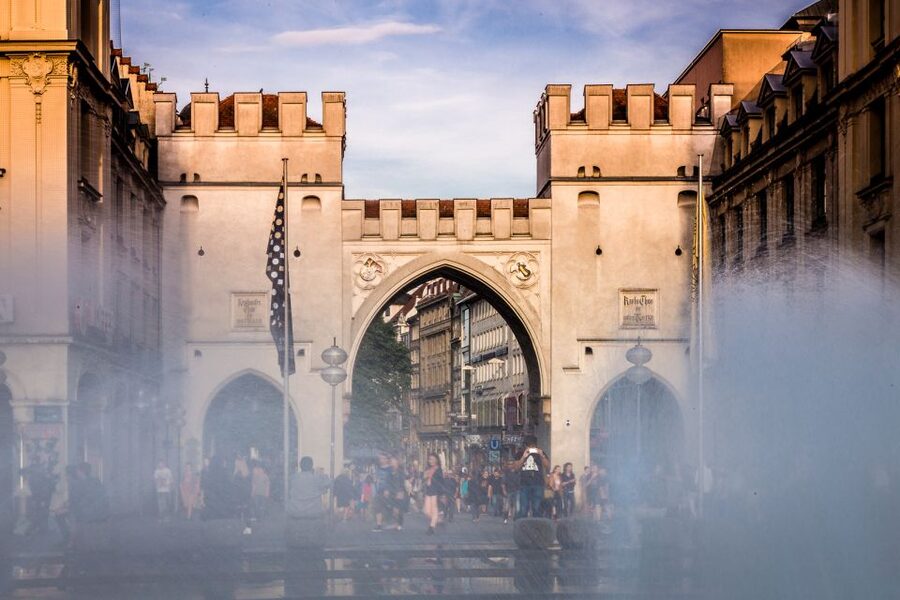
- Karlstor meeting point: Start directly under the arch at Karlstor, Neuhauser Str. 47.
- Four central stops: Follow the route to the Old Academy, St. Michael’s Church, Frauenkirche, and Promenade Square.
- Illuminati and Freemasons: Hear how a Bavarian Elector tried to end their conspiracy and how Masons figured in the creation of the Kingdom of Bavaria.
- Symbols hiding in plain sight: Your guide points out details that ordinary passersby often miss.
- German-language format: The regular tour is in German. English is offered only as a private tour.
- Two hours for $29: The price is reasonable if you want a focused history walk rather than a standard overview of Munich.
Start under Karlstor, where Munich’s clues begin
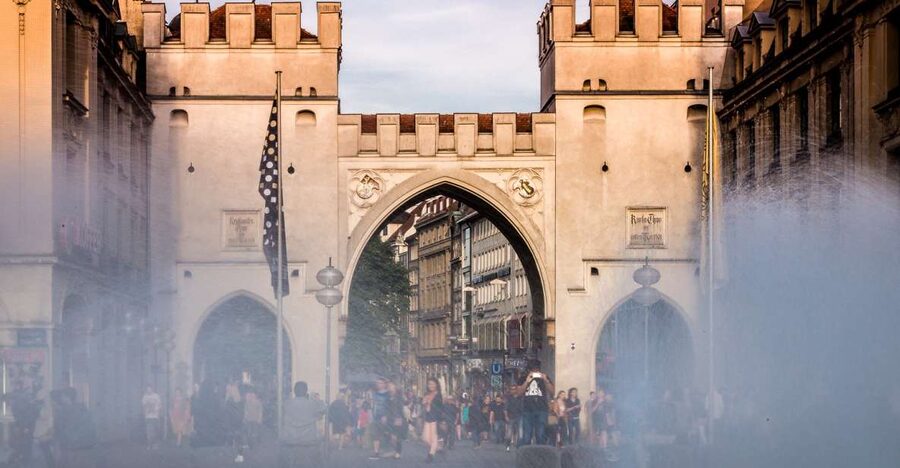
Meet your guide directly under the archway of Karlstor at Neuhauser Str. 47, 80331. This is a central and easy-to-find starting point, but look for the guide beneath the gate itself rather than simply waiting somewhere along Neuhauser Strasse.
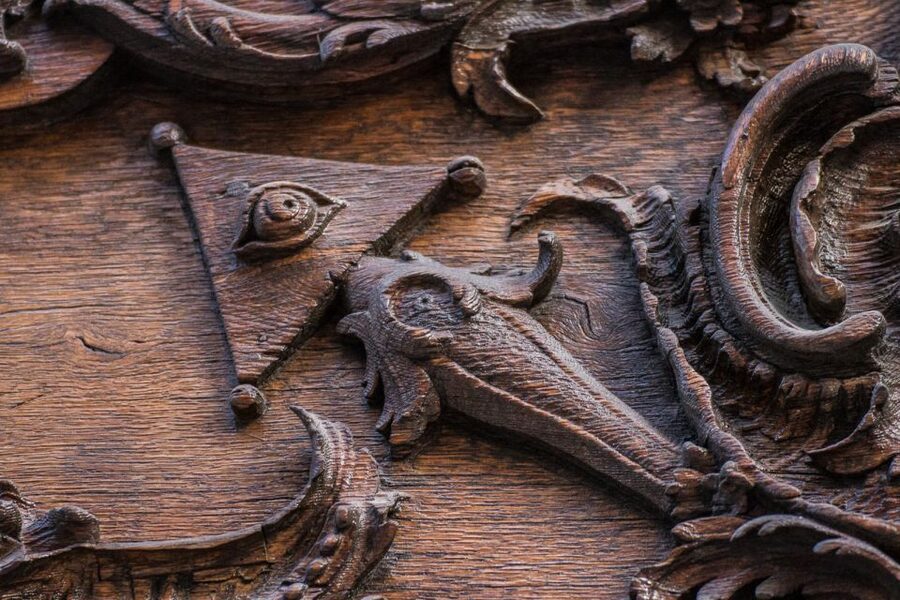
The tour begins with a question that gives the whole walk its shape: how much power did secret societies really hold? Some groups claimed to improve society. Others were accused of using hidden influence to shape politics and social events. The guide does not leave these questions floating in the air. You move through Munich looking for physical signs linked to these claims.
That approach matters. You are not only listening to a lecture about the Illuminati or Freemasonry. You are being asked to look at buildings, emblems, and carved details in a new way. The city center becomes a board covered with clues.
Do not expect a conventional Munich city tour that pauses at every major sight for a broad account of art, architecture, and daily life. The subject controls the route. A familiar church or square matters here because of its connection to a symbol, a group, or a political story.
Other Munich tours people book alongside this one:
- From Munich: Neuschwanstein & Linderhof Castle Full-Day Trip
★ 4.5 · 12,494 reviews - Neuschwanstein & Linderhof Castle-Fairytale Day Tour from Munich
★ 4.5 · 7,275 reviews - Munich: Third Reich & WWII Walking Tour
★ 4.6 · 6,181 reviews
The Old Academy and the city’s coded details
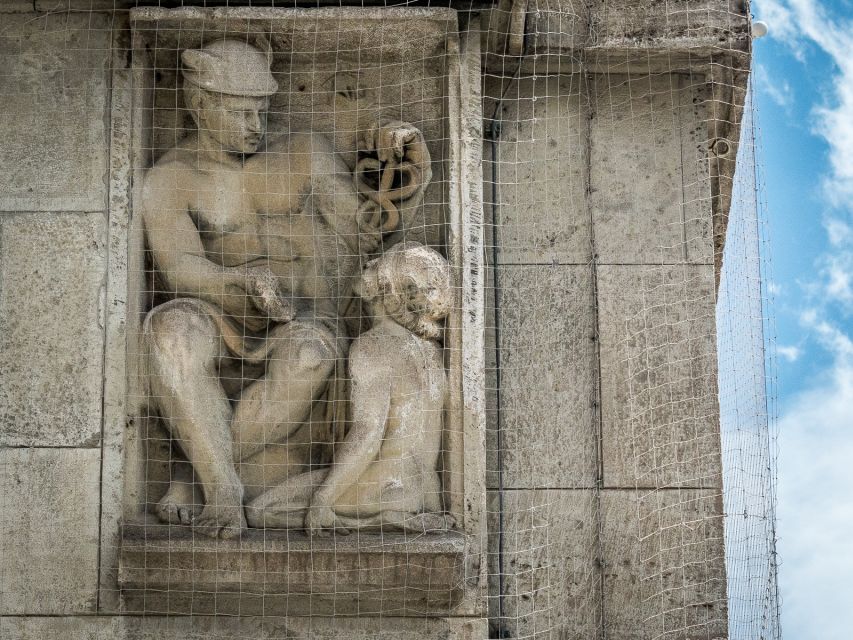
The Old Academy is one of the first important stops. This is where the tour begins to show how buildings can carry several layers of meaning. Your guide points out details that you might otherwise pass without noticing, then explains how they connect to secret orders and their symbols.
The value of this stop comes from the close looking. You are not simply told that a sign is important. You are encouraged to consider why it was placed there and what it may have meant to people who understood the code.
That said, this part requires an open mind. The route deals with groups that have collected legends over centuries, and not every symbol has a single clear meaning. A good guide helps you separate established facts from stories that have grown in the telling. The tour’s focus on questions is part of its appeal, but you should not expect every mystery to receive a final answer.
The group connected most strongly with Bavaria is the Illuminati, founded in the region during the Enlightenment. You hear about the conflict between secret societies and the authorities, including the efforts of a Bavarian Elector to put an end to the Illuminati and Freemason conspiracy. That political story gives the walk more weight than a simple hunt for spooky signs.
St. Michael’s Church and the Freemason story
The route continues to St. Michael’s Church, one of Munich’s most important central landmarks. Here, the focus shifts toward the Freemasons and the long history of builders’ associations.
One of the tour’s most useful ideas is the link between modern Freemasonry and the medieval dombau huts. These were working communities connected with the construction of cathedrals. Their members shared building skills, professional customs, and signs that helped identify their trade and status.
The tour uses this background to explain how practical builders’ groups became associated with a wider system of ritual, membership, and symbolism. That does not mean every modern Masonic claim can be traced in a straight line to a medieval construction site. It does give you a way to understand why architecture, tools, geometry, and coded marks appear so often in Masonic stories.
St. Michael’s is also a good place to think about the difference between public and private power. Churches, courts, rulers, and learned societies all operated in the same city, often using symbols to express authority. The guide’s job is to connect those visible signs with the less visible networks behind them.
A strong feature of this tour is the guide’s willingness to handle questions. Albert, one of the guides associated with the experience, has received especially warm praise for making the subject engaging and responding carefully to questions and comments. That matters here because the topic naturally leads to interruptions and debate.
Frauenkirche and the symbols that surround Munich
At Frauenkirche, the walk brings you to one of Munich’s most recognizable buildings and asks you to see it through the theme of orders and insignia. The Order of the Golden Fleece receives attention because its emblem appears in many places around Munich.
This is one of the moments when the tour can change your experience of the city. You may have walked past the same sort of symbol without knowing what to look for. Once the guide explains the design and its connection to a wider order, ordinary details begin to seem more deliberate.
The tour also covers groups such as the Knights Templar and the Guglmänner, adding to the range of stories attached to Munich. These names do not all belong to the same period or serve the same purpose. That variety is useful because it shows how the term secret society can cover very different things: religious orders, fraternal groups, political clubs, and organizations surrounded by later legends.
The possible drawback is the amount of material packed into two hours. Illuminati, Freemasons, Templars, the Golden Fleece, and the Guglmänner could each fill a separate talk. If you want a detailed study of one group, this walk may move too quickly. If you prefer a broad trail through connected mysteries, the mix keeps the pace lively.
Something different, still within reach of Munich:
- Dachau Concentration Camp Memorial Site Tour from Munich by Train
★ 4.5 · 5,637 reviews - Neuschwanstein Castle Tour from Munich
★ 4.5 · 5,117 reviews - Third Reich Walking Tour Munich
★ 4.5 · 4,291 reviews - Munich Hop-On Hop-Off Tour: 1-Day or 2-Day Ticket
★ 4.3 · 4,161 reviews
Promenade Square and the political story of Bavaria
The final part of the walk reaches Promenade Square. Here, the political side of the subject becomes more important, particularly the role attributed to the Masons in the founding of the Kingdom of Bavaria.
This is where the tour moves beyond symbols on stone. You hear how ideas, networks, and political ambition may have shaped the development of Bavaria. The story places secret societies within the changing political world of the region, rather than treating them as isolated clubs meeting behind locked doors.
The guide also returns to the central question: were these groups mainly radical Enlighteners, or did they seek to control the world around them? The answer depends on the group and the period. The tour gives you the evidence and the competing interpretations, then lets you think about where the boundary lies between real influence and later conspiracy theory.
For me, that is the best reason to book this walk. You are not only collecting unusual facts. You are learning how symbols can support political messages, how rumors grow around closed organizations, and how a city’s buildings can preserve traces of old power struggles.
Still, you should know that the connection to Munich is not equally strong at every point. One German-language assessment found that the guide’s subject knowledge was excellent but that some content felt more general than specifically tied to Munich. I would treat that as a fair warning. The route is based in Munich, but parts of the discussion may range across European history and the general story of secret societies.
What the two-hour format feels like
Two hours is a useful length for this subject. It gives the guide time to establish the main groups, explain several symbols, and connect the four central stops without turning the walk into a full-day academic program.
You will spend the time walking through central Munich and stopping at relevant buildings and public spaces. The activity is listed as wheelchair accessible, which is helpful for visitors who need an accessible city experience. The exact walking pace and group size are not provided, so ask at booking if those details are important for you.
The tour is led live in German. This is not a minor detail. The subject includes names, historical terms, and explanations that can be hard to follow if you are only partly comfortable with German. English is available for a private tour, not the standard group format.
If your German is strong enough for a guided history talk, the language adds a local feel. If you are still learning, you may miss the differences between a documented event, a tradition, and a theory. I would choose the private English option if understanding every part of the argument matters to you.
A small gift is included. It is a pleasant extra, but the value of the tour comes from the guide’s explanations and the route, not from the souvenir.
Is $29 a fair price for this Munich tour?
At $29 per person, the walk is fairly priced for a two-hour, live guided experience in central Munich. You are paying for a specialist theme rather than a general introduction to the city.
The price works best if you already know the basic Munich sights and want a different angle. The tour gives you a reason to revisit places such as Frauenkirche and St. Michael’s Church, this time looking for marks, emblems, and political meaning.
It is less useful as your only Munich tour. You will not get a full overview of the city’s major museums, royal history, food, or everyday culture. The route is narrow by design.
The booking terms also make it fairly flexible. You can reserve and pay later, and cancellation is free up to 24 hours before the start for a full refund. Those policies are useful if your Munich plans are still shifting, though they should not be the deciding factor.
Who will enjoy this walk most?
I would recommend it most strongly to you if you enjoy:
- History that connects ideas with buildings and politics
- The Illuminati, Freemasons, Knights Templar, and related orders
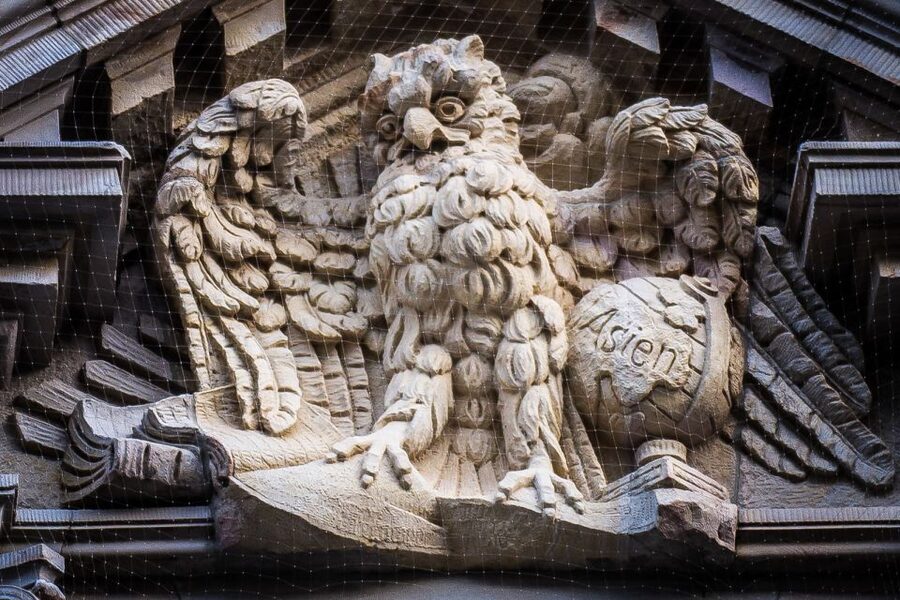
- Looking closely at symbols and architectural details
- German-language guided tours
- A focused walk that raises questions instead of offering only a standard city overview
It may not suit you if you want a relaxed introduction to Munich or a tour built around famous landmarks alone. It is also not the best choice if you need an English group tour, since English is available only through a private booking.
Families with older children may find the conspiracy and secret-society theme entertaining, but the amount of historical explanation will suit adults and older students better than very young children. The available information does not specify a minimum age, so check before booking if age rules affect your plans.
The strongest part of the experience is the guide. Albert has been singled out for being engaging and responsive, and that personal skill matters more here than on a simple sightseeing route. A guide who can handle questions and explain the difference between evidence and legend can turn a crowded topic into a clear story.
My practical verdict on the Illuminati tour
Book this tour if you want to see central Munich as a set of coded messages and political clues. For $29, you get two hours of focused storytelling, four significant stops, and a subject that is far more specific than a standard walking tour.
Go in expecting a themed history walk, not a complete Munich orientation. Some discussion may be general rather than tied tightly to one building or event, and the German-only format limits the audience. But if you understand German and enjoy the uneasy space between documented history and enduring mystery, this is an unusual way to spend an afternoon in the city.
The best preparation is simple: arrive at Karlstor with curiosity, pay attention to the symbols your guide points out, and ask questions. You may leave without proving who controls the world, but you will probably look at Munich’s churches and squares with sharper eyes.
FAQ
Where does the tour meet?
The meeting point is directly under the archway of Karlstor, at Neuhauser Str. 47, 80331 Munich.
How long does the tour last?
The tour lasts two hours.
What language is the tour in?
The regular tour is conducted in German. English is available only for a private tour.
How much does the tour cost?
The listed price is $29 per person.
Which Munich sights are included on the route?
The route includes the Old Academy, St. Michael’s Church, Frauenkirche, and Promenade Square, beginning at Karlstor.
What secret societies and orders are discussed?
The tour covers the Illuminati, Freemasons, Knights Templar, the Order of the Golden Fleece, and the Guglmänner, among others.
Is the tour wheelchair accessible?
Yes, the activity is listed as wheelchair accessible.
Can I cancel the booking?
Yes. You can cancel up to 24 hours in advance for a full refund. You can also reserve now and pay later.
Just added around Munich
- Private Transfer from Munich to Salzburg, English-speaking driver★ 3.5 · 3 reviews
- Private tour from Munich to Rothenburg and Harburg★ 5.0 · 3 reviews
- Scenic Adventure Private Day Tour to The Konigssee Salzburg★ 4.5 · 3 reviews
- Munich: Capture the most Photogenic Spots with a Local★ 5.0 · 3 reviews
- Private Beer Tasting Tour in Munich with Oktoberfest Museum★ 4.3 · 3 reviews
- Munich Photoshoot: A Must-Have Holiday Experience!★ 5.0 · 3 reviews
- Paul’s Private Tour in the Alte Pinakothek Munich★ 5.0 · 3 reviews
- Private Tour to Hallstatt Salt Mine and Skywalk with Lunch★ 5.0 · 3 reviews
Tours, compared.
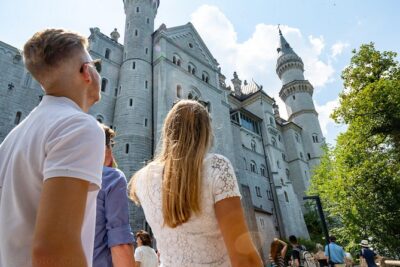
Neuschwanstein & Linderhof Castle-Fairytale Day Tour from Munich
Read our review →
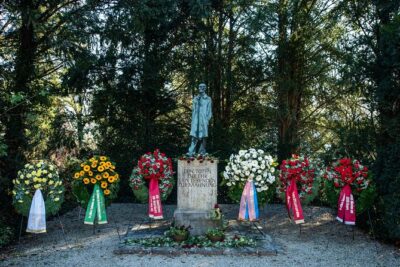
Dachau Concentration Camp Memorial Site Tour from Munich by Train
Read our review →
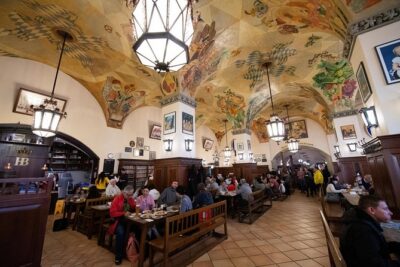
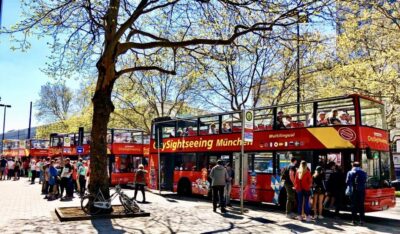
Munich Hop-On Hop-Off Tour: 1-Day or 2-Day Ticket
Read our review →