
Reviewed · THIRD REICH & WWII TOURS
Third Reich Walking Tour Munich
Munich’s Nazi past is not tucked away in a distant museum. It runs through the city center, from Königsplatz, once staged for Nazi rallies, to the beer halls and squares where Hitler’s movement built support. This walking tour connects those places into one difficult but essential story, showing how propaganda, politics, and public spaces helped the Nazis gain power.
I like the route for two clear reasons: the local guides make the subject understandable, and the tour takes you to places you could easily pass without knowing what happened there. Guides including Jake, Michael, Nicola, and Aileen have been praised for clear explanations, useful photographs, honest answers, and a good sense of when the group needs a short break.
The main drawback is that two and a half hours is a tight window for such a large subject. You will walk the whole time, and the tour is conducted outside, so cold or wet weather can affect the experience. If you already know this period well, you may want more time at each stop.
In This Review
- Key points for deciding quickly
- Why this Munich tour matters
- Starting near Munich Central Station
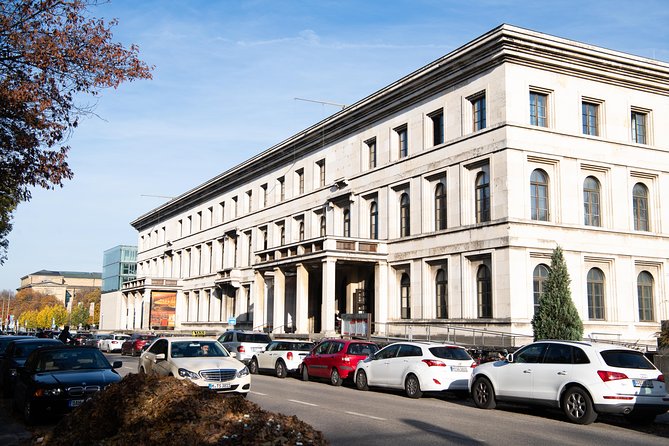
- Königsplatz and the architecture of power
- Odeonsplatz and the march toward dictatorship
- Hofbräuhaus and Munich’s political beer halls
- The Old Town Hall and the city center
- Marienplatz, memorials, and the final perspective
- Guide style: facts, photographs, and room for questions
- Timing, walking, and weather
- Is $45.95 a fair price?
- Who should book this walking tour?
- FAQ
- How long is the Third Reich Walking Tour in Munich?
- What language is the tour offered in?
- Where does the tour begin?
- Where does the tour end?
- Which places are included on the route?
- Is transportation included?
- How many people can join the tour?
- What happens if I need to cancel?
- Should you book it?
Key points for deciding quickly
- Königsplatz reveals the scale of Nazi public spectacle, with time to understand why this square mattered to the party.
- Odeonsplatz connects Munich’s streets to the Nazi rise, including marches and political memorial events.
- The Hofbräuhaus stop shows how beer halls became political meeting places, not simply places for food and drink.
- Guides use photographs and stories to link present-day streets with scenes from the Nazi era.
- The route ends at Marienplatz, putting you in a useful spot for more sightseeing afterward.
- The outdoor format requires sensible clothing, especially on cold Munich days.
Why this Munich tour matters
I find this tour most useful because it explains the Nazi rise through real places rather than isolated dates. You are not only told that Munich was important to Hitler and the Nazi Party. You are shown the streets, squares, buildings, and meeting places where political power was performed and organized.
The focus is broader than Adolf Hitler alone. The guide traces the Nazi Party’s early beginnings, the use of propaganda, the growth of hateful ideology, the move toward dictatorship, and the destruction caused by World War II. That wider view helps you understand that the regime did not appear overnight.
The tour also gives attention to people who opposed Nazism and to those who died under the regime. Memorials and resistance sites add needed balance. The subject is grim, but the tone described by guides such as Jake and Alex is not cold or mechanical. They use humor carefully, answer questions openly, and keep the group engaged without treating the material lightly.
I would take this tour early in a Munich visit if the city’s 20th-century past matters to you. It gives you a clearer frame for later visits to museums, memorials, and places connected with the White Rose resistance.
More Third Reich and wartime history walks in Munich:
- Munich: Third Reich & WWII Walking Tour
★ 4.6 · 6,181 reviews - Munich: Birthplace of the Third Reich Guided Walking Tour
★ 4.6 · 771 reviews - Munich World War II Sites Including Dachau Concentration Camp
★ 4.5 · 570 reviews
Starting near Munich Central Station
The meeting point is Radius Tours at Dachauer Str. 4, close to Munich’s central area and public transportation. You check in there, then begin on foot. The check-in itself takes about five minutes, so you should arrive with enough time to find the office without rushing.
A clear meeting point matters in Munich, especially if you have just arrived and are still getting used to the transport system. Dachauer Strasse is easy to reach, and the tour finishes at Marienplatz, so you do not need to return to the starting point.
The group can contain up to 25 people. That is not a private tour, but it is small enough for a guide to address questions and keep the walking pace together. On quieter dates, a booking may become a very small group. One guest even received a solo tour with Keith during a slow period, though you should treat that as a lucky possibility, not a promise.
Your guide will speak English. The guides vary by departure, but names associated with especially strong presentations include Michael, Jake, Nicola, Nick, Paul, Scott, Steve, Aileen, Sarah, Alex, Michelle, and Daniel. The guide you receive will shape the tone, yet the repeated strengths are clear explanations, personal enthusiasm, and a willingness to discuss difficult questions.
Königsplatz and the architecture of power
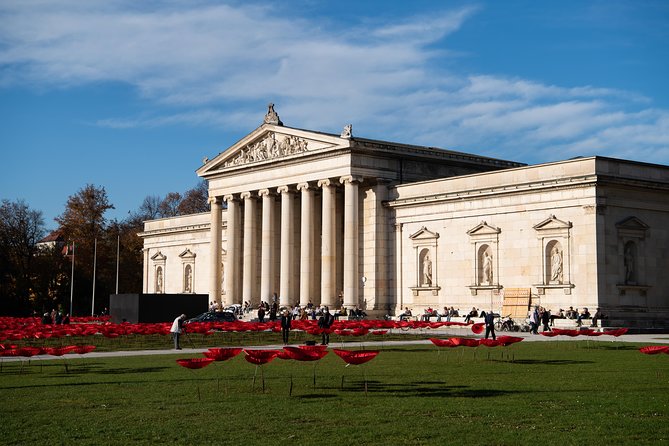
Königsplatz is the first major stop, with about 15 minutes devoted to its role in the Nazi period. The square was an important Nazi landmark and a setting for party events, rallies, and public displays of power.
This is where the tour begins to show how architecture can serve politics. A grand public space can be used to make a movement appear permanent, disciplined, and larger than ordinary civic life. Your guide explains how the Nazi Party used Munich’s existing urban setting for its own ceremonies and message.
Fifteen minutes is enough to grasp the significance of the square, but not enough for a long architectural study. If you are interested in buildings and urban design, take mental notes and return later with your own camera and guidebook. The walking tour’s aim is the political story, not a full treatment of every façade.
The stop is also a useful introduction to the tour’s method. The guide speaks from the present-day street while using photographs to show what the area looked like during the Nazi era. That before-and-after comparison can make the past easier to picture than a lecture in a classroom.
Odeonsplatz and the march toward dictatorship
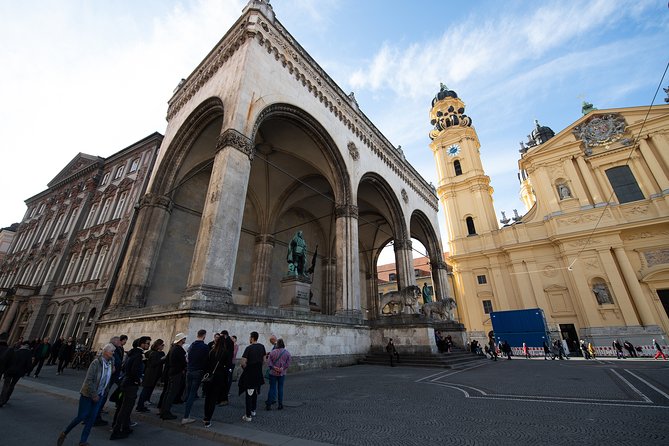
The tour spends roughly 30 minutes at Odeonsplatz, making it one of the most substantial stops. The square was used by the Nazi Party for marches and memorial events, and its place in the story helps explain how political theater worked in public.
Odeonsplatz connects the party’s ideas to physical movement through the city. Marches, ceremonies, uniforms, symbols, and crowds were not minor details. They helped create the appearance of unity and strength, while pushing Nazi ideology into everyday public life.
This stop should suit you if you want more than a list of dates. The guide links what happened in Munich to the social and political conditions that allowed Hitler’s movement to grow. One guide, Scott, was praised for covering political, social, and cultural factors rather than presenting the period as a simple story of one man’s ambition.
The square can also lead to uncomfortable questions about how ordinary institutions and citizens respond when extremist politics gains ground. Guides such as Michael have been singled out for answering hard questions directly and honestly. That openness is valuable here, because the subject needs context rather than slogans.
Expect to remain outdoors. A cold day can make 30 minutes feel long, particularly if you are not dressed for Munich weather. Wear warm layers in winter, and remember that one guide adjusted the route and group position to find sunlight during a bitterly cold tour.
More walking tours in Munich:
- Munich: Old Town & Viktualienmarkt City Walk in German
★ 4.7 · 2,304 reviews - Munich: Night Watchman Walking Tour
★ 4.7 · 2,092 reviews - Munich Ghosts and Spirits Evening Walking Tour
★ 5.0 · 1,900 reviews - Munich Old Town Walking Tour
★ 4.5 · 1,287 reviews
Hofbräuhaus and Munich’s political beer halls
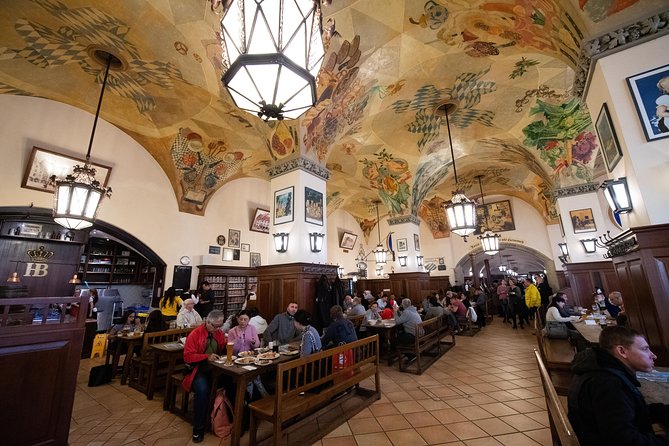
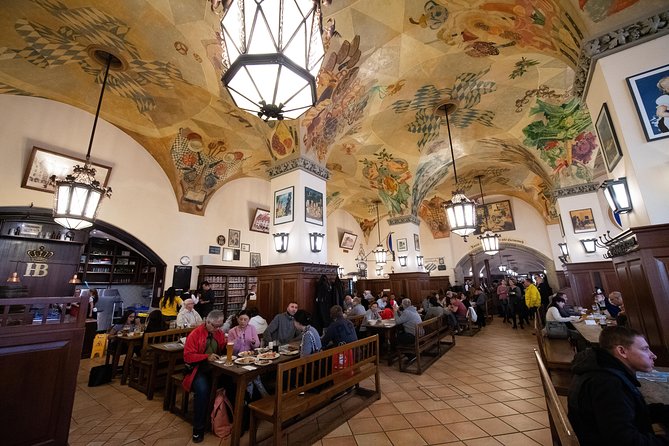
The stop at the Staatliches Hofbräuhaus lasts about 20 minutes. The point is not simply that this is a famous Munich beer hall. The guide explains how beer halls functioned as political gathering places and why the Hofbräuhaus became connected with the Nazi Party.
That context adds a useful local angle. Political movements need places to meet, argue, recruit, and address crowds. In Munich, beer halls could serve that purpose. The stop helps you see how social life and political organizing could overlap.
Do not expect this portion to be a normal beer-hall visit. The tour is a walking history experience, and the listed stop does not include a meal, drink, or separate admission. You are there to understand the building’s political role.
This is one of the places where a guide’s storytelling matters most. A bare statement about a meeting hall would be easy to forget. A clear explanation of how political speeches and group identity worked in such settings gives the building a more serious meaning.
The Old Town Hall and the city center
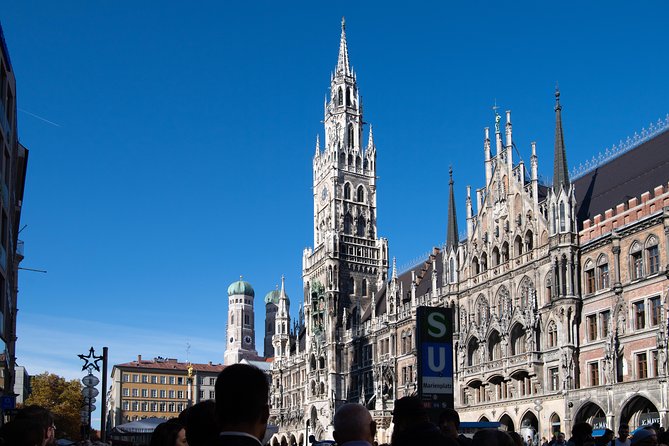
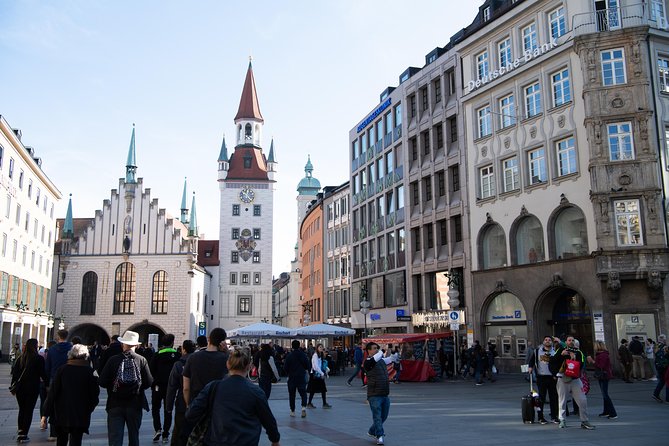
The route continues to Munich’s Old Town Hall for about 15 minutes. The stop adds another layer to the story by placing Nazi-era events near the civic heart of Munich.
You will not simply be looking at an attractive old building. The guide uses the location to explain how the Nazi presence reached into established public institutions and central city life. The contrast between historic civic surroundings and the regime’s ideology is part of what makes this route powerful.
This is also a reminder that Munich’s past is not confined to one memorial or one political square. The tour keeps returning to the ordinary city, the streets you might use for shopping, dining, or sightseeing. That approach can change how you look at the center after the tour ends.
The scheduled time is brief, so listen for the main points rather than expecting a full history of the Old Town Hall. If you want to study the building itself, you will have time to do so after the tour.
Marienplatz, memorials, and the final perspective
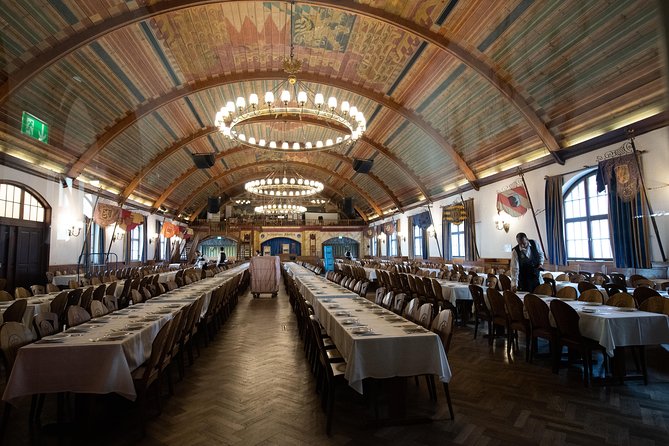
The walk ends at Marienplatz, Munich’s central square, after about 20 minutes there. This is a practical finish because you can continue sightseeing immediately, find a café, or make your way to another part of the city.
Marienplatz also gives the guide a chance to bring the story back to the wider city. You have followed the Nazi rise through political spaces, public gatherings, and central streets. The final perspective includes the destruction of World War II and the people who suffered or died under Nazi rule.
Memorials to opponents of the regime are an important part of the route. They keep the tour from becoming a study of Nazi personalities alone. You are also asked to remember resistance, persecution, and the cost of refusing or being targeted by the ideology.
Some people find the amount of information hard to retain in one afternoon. That is a fair concern. I would jot down a few names and places on your phone, and consider revisiting the route the next day. The walk ends centrally, which makes that easy.
Guide style: facts, photographs, and room for questions
The strongest part of this experience is the guide’s presentation. The guides are expected to know the local history well, but the praise is especially strong for how they communicate it. Michael is described as generous with information and open to uncomfortable questions. Jake is noted for making a heavy subject easier to follow. Aileen used photographs and organized a group vote for a bathroom and coffee break.
Those details matter. A tour about the Third Reich can become a dense stream of names and dates. Good visual aids help you connect the past to the exact place where you are standing. A guide who watches the group can also make the difference between an absorbing walk and a tiring one.
The tone varies by guide. Some bring more humor and energy, while others may deliver a quieter, more solemn presentation. The subject requires care, and the best fit for you depends on how much discussion you want during the walk.
You should feel free to ask questions. The tour is designed to explain causes, political change, and public reaction, not only to point at buildings. Still, the group size and fixed schedule mean the guide cannot follow every question for a long time.
Timing, walking, and weather
The advertised duration is about two hours and 30 minutes. The stop times add up to roughly 105 minutes, leaving the rest for walking, transitions, explanations between locations, and the opening and closing portions.
This is a genuine walking tour, not a coach trip. One piece of feedback appears to confuse it with a transport-based experience, but this Munich route begins at Radius Tours and proceeds on foot through the center. You should be ready to walk between stops and remain outside for the full experience.
Comfort depends heavily on the forecast. The tour may be canceled because of poor weather, with a choice of another date or a full refund. Even when it runs, cold wind or rain can make it harder to concentrate, so check the weather and dress accordingly.
Most people can take part, and service animals are allowed. The tour is near public transportation, but no separate indoor access or transport segment is listed. If you need a specific accommodation, confirm it before booking rather than assuming the route can be changed.
Is $45.95 a fair price?
At $45.95 per person, the tour is not the cheapest way to walk through Munich. You could visit the squares on your own for free. The value comes from the guide’s interpretation, the historic photographs, the connected route, and the explanation of why each place mattered.
I think the price makes sense if you want a structured introduction and do not plan to prepare extensively on your own. In two and a half hours, you get a usable framework for Munich’s Nazi past, plus a list of places to revisit.
The value is lower if you already have a strong command of Munich’s Third Reich history and prefer long museum visits or archival detail. Several guides have been praised for making people wish the tour lasted longer, and that points to the main limit: there is much more material than the schedule can hold.
The 4.7 rating from 4,291 reviews and 93 percent recommendation figure suggest a reliable experience, but I would still book based on your interests and the weather. This is not a light city stroll. It asks you to spend an afternoon with a difficult part of German history.
Who should book this walking tour?
I would recommend it to first-time Munich visitors who want historical context before exploring the city on their own. It also suits history students, teachers, museum fans, and anyone who wants to understand how a modern city became central to the Nazi story.
You do not need to be a history expert. The tour works for beginners because the guides build the story from the ground up. It also has enough political and social context to keep the subject useful for people who have already read about the period.
I would think twice if you dislike outdoor walking, have limited time between indoor attractions, or want to spend a long time at each memorial. Two and a half hours gives you breadth, not exhaustive detail.
Book at least a day ahead if your schedule is fixed. The tour is often booked 29 days in advance, which suggests that popular dates can fill early. You receive confirmation at booking, and cancellation is free up to 24 hours before the start time. Inside that window, there is no refund, except when the operator cancels because of weather or because the minimum group size is not met.
FAQ
How long is the Third Reich Walking Tour in Munich?
The tour lasts approximately two hours and 30 minutes.
What language is the tour offered in?
The tour is offered in English.
Where does the tour begin?
It begins at Radius Tours, Dachauer Str. 4, 80335 München, Germany.
Where does the tour end?
The tour ends at Marienplatz in central Munich.
Which places are included on the route?
The route includes Königsplatz, Odeonsplatz, the Staatliches Hofbräuhaus, Munich’s Old Town Hall, and Marienplatz.
Is transportation included?
No. This is a walking tour, and the route proceeds on foot from the Radius Tours meeting point to Marienplatz.
How many people can join the tour?
The maximum group size is 25 people.
What happens if I need to cancel?
You can cancel at least 24 hours before the start time for a full refund. Cancellations or changes made less than 24 hours before the tour are not refunded or accepted. If poor weather or an insufficient number of participants causes the operator to cancel, you will be offered another date or experience, or a full refund.
Should you book it?
Book this tour if you want Munich’s Nazi-era story explained on the streets where it happened. The route is well chosen, the central finish is convenient, and the guides add the context you would miss by walking between these places alone.
Go in with warm clothes, comfortable shoes, and realistic expectations. You will not learn everything about the Third Reich in 150 minutes, but you will leave with a clearer understanding of Munich’s role, several important locations in mind, and a better sense of where to continue your own reading.
Just added around Munich
- Private tour from Munich to Rothenburg and Harburg★ 5.0 · 3 reviews
- Scenic Adventure Private Day Tour to The Konigssee Salzburg★ 4.5 · 3 reviews
- Private Transfer from Munich to Salzburg, English-speaking driver★ 3.5 · 3 reviews
- Munich: Capture the most Photogenic Spots with a Local★ 5.0 · 3 reviews
- Private Beer Tasting Tour in Munich with Oktoberfest Museum★ 4.3 · 3 reviews
- Munich Photoshoot: A Must-Have Holiday Experience!★ 5.0 · 3 reviews
- Paul’s Private Tour in the Alte Pinakothek Munich★ 5.0 · 3 reviews
- Private Tour to Hallstatt Salt Mine and Skywalk with Lunch★ 5.0 · 3 reviews
Third Reich & WWII Tours, compared.

Birthplace of the Third Reich Guided Walking Tour
Read our review →
Munich World War II Sites Including Dachau Concentration Camp
Read our review →
Munich City Walking Tour, includes Third Reich & Viktualienmarkt
Read our review →
Munich 3-Hour Segway Tour: Nazi Munich & Royal Architecture
Read our review →
Dachau Concentration Camp Memorial Site And Third Reich Day Tour From Munich
Read our review →
Browse the lists this tour appears in