
Reviewed · MUNICH OLD TOWN TOURS
Paul’s Private Tour in Munich old City
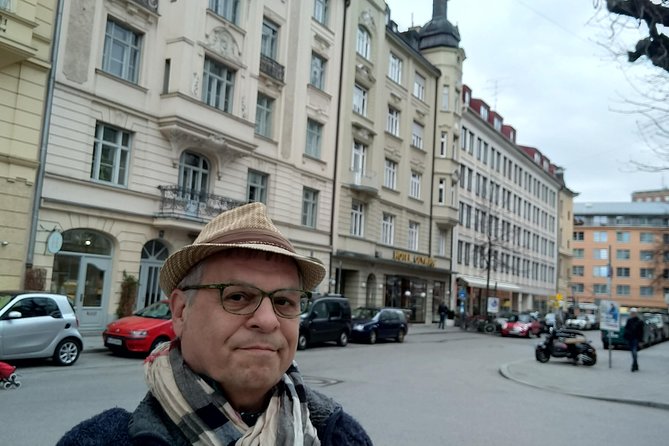
Munich’s Old Town is compact, but its story is not. This private walking tour connects the city’s churches, royal buildings, markets, beer gardens, shopping streets, and difficult 20th-century history in one flexible outing. You may be guided by Paul or by a member of his team, including John, Martin, Genny, Sybille, or Freya.
I like the personal route, since you can shape the walk around your interests instead of following a fixed script. I also like the practical tips on restaurants, shops, cafés, and food stops, plus the included 64-page book, Loving Munich. The main consideration is time: two hours is enough for an orientation, but not for long visits inside the churches or palace.
In This Review
- Key points at a glance
- What this Munich walking tour is really like
- Frauenkirche and the first view of Munich
- Viktualienmarkt, Heilig Geist, and Munich’s oldest church
- Marienplatz and the two town halls
- St. Peter’s, the Mariensäule, and the Thirty Years’ War
- The Residenz, opera house, and royal Munich
- Maximilianstrasse, the Five Courts, and Promenadeplatz
- Platzl and the medieval lanes
- What the private format adds
- What the $127.72 price buys you
- Strengths and limitations to keep in mind
- Who should book this Old Town tour?
- FAQ
- How long is Paul’s Private Tour in Munich Old Town?
- Is the tour private?
- Will Paul personally lead the tour?
- Where does the tour start and end?
- Is hotel pickup available?
- Are entrance tickets included?
- Can the tour be adapted for seniors?
- Should you book it?
Key points at a glance
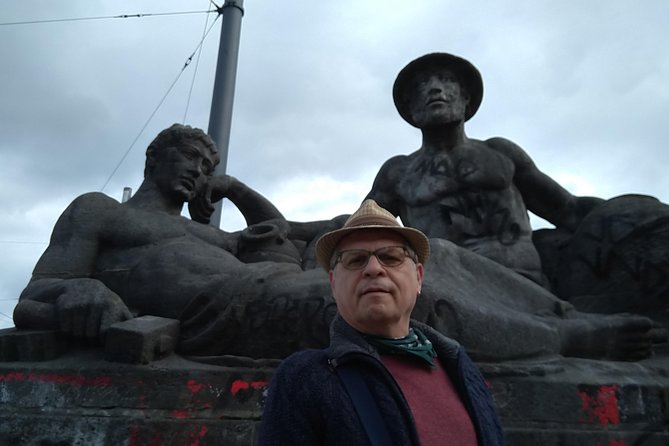
- Flexible private format: Only your group takes part, and the route can be adjusted to your interests.
- Sixteen Old Town stops: The walk links Marienplatz, the Frauenkirche, Viktualienmarkt, the Residenz, Odeonsplatz, and more.
- A serious look at Munich’s past: Expect discussion of kings, the Thirty Years’ War, World War II, Nazi terror, and postwar Munich.
- Guides vary: Paul may lead the tour, but the booking is for a professional guide and may be assigned to John, Martin, Genny, Sybille, Freya, or another team member.
- Useful local advice: You receive suggestions for restaurants, cafés, shops, markets, and places to continue exploring.
- Plan for plenty of walking: One person described reaching 18,000 steps on a similar city-center walk, and good shoes are sensible.
What this Munich walking tour is really like
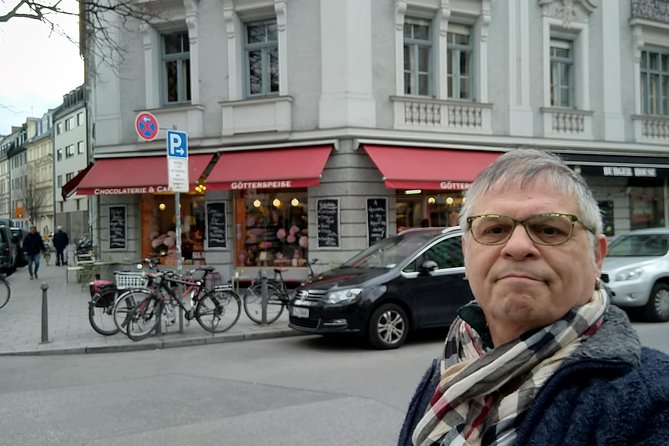
At $127.72 per person, this is not the cheapest way to see Munich’s center. It is a private experience, though, so the price makes more sense for a couple, family, or small group that wants conversation and control over the pace.
The advertised duration is about two hours. That matters because the itinerary contains sixteen stops, many of which deserve far more than five or ten minutes. You will see a great deal from the outside, hear the main stories, and get your bearings. You should not expect a full museum visit or a long church tour during the standard walk.
The route begins near Karlstor on Neuhauser Strasse and finishes at Odeonsplatz. Pickup can be arranged, and several people have used hotel pickup successfully. Private transport is possible for an extra charge, but the core experience is a walking tour through central Munich.
The guide assignment is also worth understanding before you book. The name Paul appears in the tour title, but Paul may send another member of his team. John, Martin, Genny, Sybille, and Freya are all named as guides connected with the experience. If meeting Paul personally is important to you, confirm that before paying.
More old town tours in Munich:
- Munich: Old Town & Viktualienmarkt City Walk in German
★ 4.7 · 2,304 reviews - Munich Old Town Walking Tour
★ 4.5 · 1,287 reviews - Munich: Spooky Tour of Old Town in German
★ 4.6 · 1,112 reviews
Frauenkirche and the first view of Munich
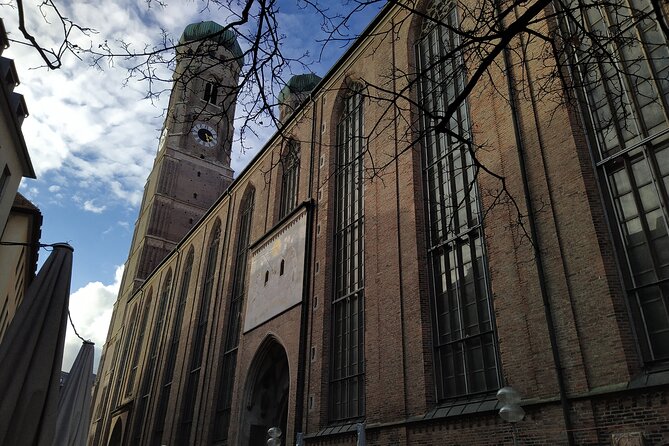
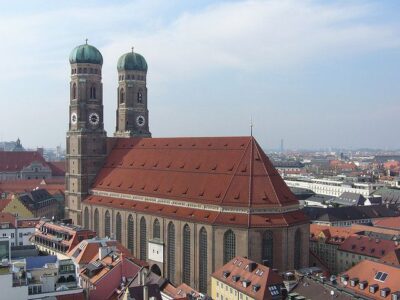
The Frauenkirche is a natural opening stop. Its twin towers dominate the city center, and the guide explains how the church was built before offering an optional visit inside.
The interior visit depends on opening and service times. That means the stop can be brief if a service is underway, so treat the church as an introduction rather than a guaranteed extended visit. You receive the architectural background either way.
From here, the tour moves toward the Viktualienmarkt area. The guide also knows beer garden locations and photo spots, adding a lighter local touch to the formal history. If you want food or drink advice for later, this is a good moment to ask.
Viktualienmarkt, Heilig Geist, and Munich’s oldest church
Heilig Geist provides a useful link between modern market life and older Munich. The guide explains what occupied the site before it became a church, and you may go inside if conditions allow.
The nearby Viktualienmarkt is one of the best places on this route to ask practical questions. You can request suggestions for snacks, market specialties, restaurants, and places for a casual meal. The exact food tasting is not guaranteed, though one guide has added food stops at the local market when suitable.
St. Peter’s Church follows. It is described as Munich’s first church, dating from before Munich existed as a city. The optional interior visit focuses on Baroque decoration and relics, with about ten minutes assigned in the outline. If you want a longer look inside, tell the guide early so the route can be adjusted.
Marienplatz and the two town halls
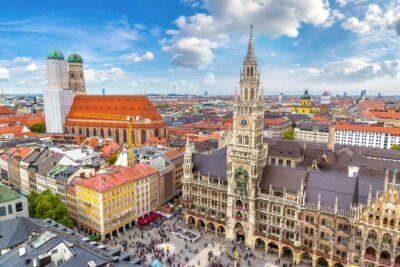
Marienplatz is the city’s central stage. Here the guide explains how Munich grew from a small market into a major town. It is an important orientation point, since many streets and sights radiate from this square.
The New Town Hall is next, with its elaborate façade and carved figures. The guide identifies personalities shown on the building and explains the architecture. The famous Rathaus-Glockenspiel receives its own stop, too.
The glockenspiel is more than a clock that attracts a crowd. The tour focuses on its engineering and the stories shown in its moving figures. Paul says he has visited inside the mechanism, allowing him to offer unusual details, though you should not assume that the standard visit includes an interior tour of the clock.
The Old Town Hall gives the route a darker turn. The guide discusses its role in the Nazi period, including the place where Joseph Goebbels signed the order connected with Kristallnacht, now more commonly called the November Pogrom. This is a short stop, but it adds vital context to an otherwise cheerful square.
A few more Munich tours and experiences worth a look
- Munich Private Tour with a Local – Highlights & Hidden Gems
★ 5.0 · 469 reviews - Mike’s Neuschwanstein & Linderhof Private Tour from Munich
★ 5.0 · 197 reviews - Dachau Concentration Camp Private Tour by Train from Munich
★ 5.0 · 185 reviews - Fall in Love with Munich in a Private Old Town Walking Tour
★ 5.0 · 182 reviews
St. Peter’s, the Mariensäule, and the Thirty Years’ War
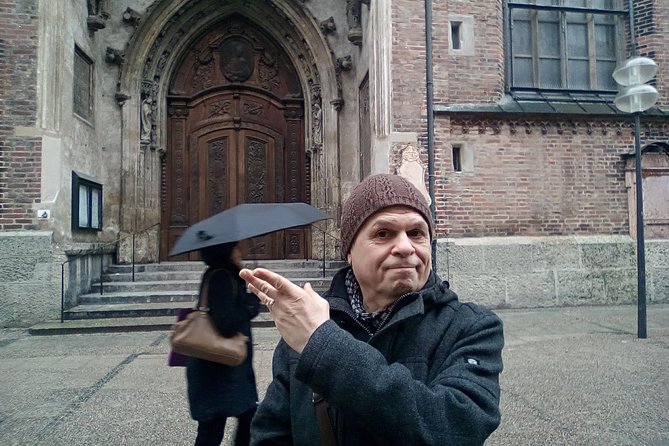
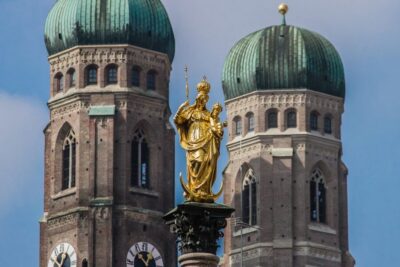
The Mariensäule, or Mary’s Column, is the final listed stop. Its story reaches back to the Thirty Years’ War and the religious meaning attached to the statue of Mary.
This is one reason a private guide can be useful in Munich. A quick photograph gives you the object, but the surrounding story explains why it matters. The stop is also close to Marienplatz, so it works well as a final summary of Munich’s religious and civic identity.
The route contains several churches, but the tour does not charge admission for these listed stops. Optional interiors may still depend on opening hours and current church rules. Keep your expectations practical: this is a guided city walk, not a sequence of full religious-site visits.
The Residenz, opera house, and royal Munich
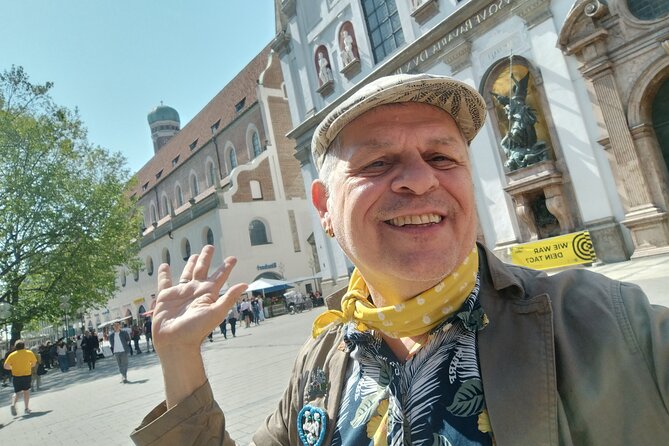
The Residenz is visited from the outside during the standard experience. This former royal palace is one of Munich’s most important architectural sights, but entering the rooms and collections requires a separate visit.
The guide can offer a special interior visit, yet the supplied details do not say that admission is included. If the palace is a priority, ask about the cost, timing, and whether it can replace another part of the two-hour walk.
The Bayerische Staatsoper adds another royal connection. The guide discusses King Ludwig II and Richard Wagner, then links the opera house to Munich’s story from the 18th century through World War II and into the present. This is a good stop for anyone who likes music, royal politics, and the way cultural institutions change over time.
Odeonsplatz is the final meeting point and one of the strongest history stops. Here you hear about Bavarian architecture, the kings, and the effects of the world wars. The tour also includes Viscardigasse, where the guide discusses Hitler’s failed putsch, World War II, and the path through Nazi terror.
That material is handled in short bursts rather than as a full 20th-century history course. Still, it keeps the tour from presenting Munich as only beer halls, palaces, and pretty façades. You get a more honest picture of the city.
Maximilianstrasse, the Five Courts, and Promenadeplatz
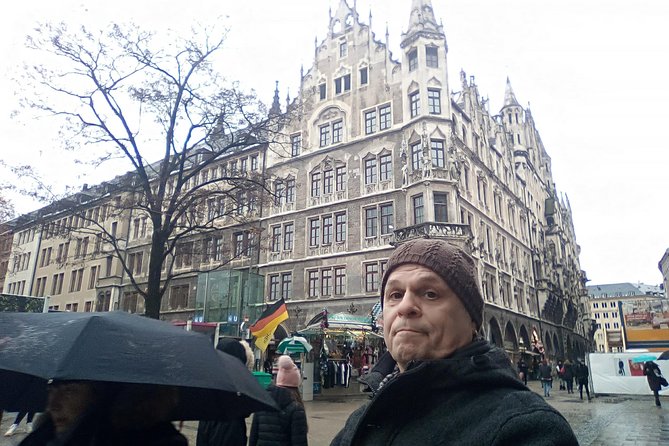
Maximilianstrasse shifts the mood toward grand architecture and high-end shopping. The guide points out monumental buildings and the city’s most expensive retail district.
The stop is useful even if luxury shopping is not on your list. It helps explain modern Munich’s wealth and the contrast between royal avenues, historic lanes, and contemporary commercial life.
At the Five Courts, or Fünf Höfe, you see a modern luxury shopping complex and an Eliasson sculpture. This is a brief stop, but it shows how Munich has inserted modern design into the old center.
Promenadeplatz brings more restaurant and café advice. The stop includes a reference to Michael Jackson’s visits, but the practical value is the guide’s suggestions for places to eat and spend time. You can use this part of the walk to ask for recommendations that suit your budget and the rest of your schedule.
Platzl and the medieval lanes
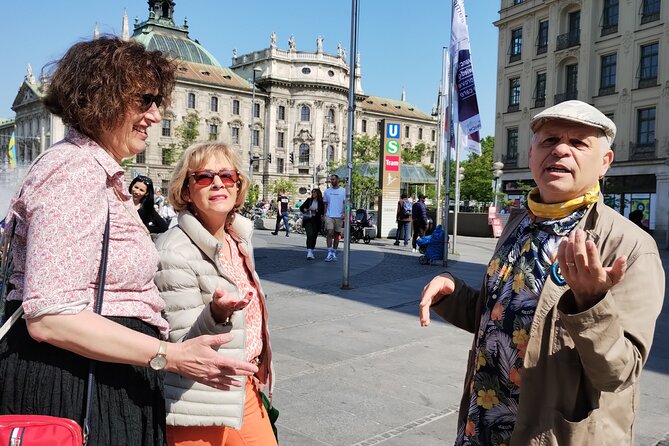
Platzl takes you through a reconstruction of the medieval city. The wording is important: this is not a preserved medieval quarter in the same sense as an untouched old town. It is a rebuilt or reconstructed section that helps you picture the earlier street pattern.
The route makes good use of contrasts. Within a short walk you may move from royal avenues to market stalls, from a rebuilt medieval lane to a modern design mall, and from a famous church to sites tied to Nazi history.
That variety is the strongest reason to take the walk early in your stay. You get a mental map of the center, then can return to the spots that deserve more time. Several people used the tour on arrival day, including after flights from the United States. One family used its guide’s advice to find Christmas markets and prepare for a castle trip the next morning.
What the private format adds
A private tour changes the rhythm. You do not need to wait for a large group, and you can ask about your own interests without holding up strangers. The guide can spend more time on architecture, royal history, food, shopping, religion, or World War II, depending on what matters to you.
The team’s strongest praise centers on personality and flexibility. John is described as funny, personable, and generous with practical help. Martin is praised for humor, broad coverage, and extra food suggestions. Genny and Freya are noted for asking what the group wanted and shaping the walk around those interests. Sybille is described as especially warm and informative.
Those individual styles may matter more than the exact sequence of stops. Paul runs a team, not a single-guide promise. You might receive a highly energetic guide, a more history-focused guide, or someone who puts extra attention on restaurants and local life. Ask for the guide’s name and language ability if that is important to you.
The flexible format also makes the tour useful for families. A family of four found John especially good with both adults and college-age children. Seniors can request an adapted pace, and most people can participate. Still, this is a walking route with many stops, so comfortable shoes are a must.
What the $127.72 price buys you
The fee includes a professional local guide, historical background for the buildings and city, restaurant and shop suggestions, and Paul’s book, Loving Munich. The activity is private, so your group does not share the guide with unrelated participants.
The value is best for people who want conversation and a custom route. A couple splitting the cost receives a very different experience from a solo visitor paying the full per-person rate. Group discounts are offered, and each person above the booked number pays 35 euros to the guide at the start.
The price is harder to justify if you mainly want a quick list of landmarks. Most stops are short, admission is not charged for the listed sights, and the standard two-hour format rarely allows long interior visits. You are paying for a guide’s time, explanation, flexibility, and local suggestions rather than for entry tickets.
Tips are not included. Pickup is offered, and private transport can be added for another charge. Confirmation arrives at booking, and free cancellation is available until 24 hours before the start time. Inside that period, the payment is not refunded, so check your schedule carefully.
Strengths and limitations to keep in mind
I see four clear strengths:
- A fast orientation: The route covers much of central Munich without requiring you to plan streets and stops yourself.
- Personal attention: You can ask questions and change emphasis as you go.
- Useful follow-up advice: The guide can point you toward restaurants, cafés, shops, markets, and later sightseeing.
- Serious historical range: The walk includes royal Munich, religious landmarks, modern architecture, World War II, and Nazi terror.
There are also limits. The route is ambitious for two hours, so several sites are viewed from the outside or explained in passing. The tour title may lead you to expect Paul himself, but another guide may lead the walk. One dissatisfied customer also expected three hours, while the advertised duration is about two, so confirm the length before booking.
The tour’s quality depends heavily on the individual guide. The available comments are especially strong for John, Martin, Genny, Sybille, and Freya, but the experience is not presented as a guaranteed personal tour with one named person. That is not necessarily a problem, but it is an important booking detail.
Who should book this Old Town tour?
I would choose this for a first visit to Munich, especially if you want help getting oriented on day one. It also suits families, couples, and small groups who dislike rigid group walks and want a guide to adjust the route.
It is a good fit if you care about:
- Munich’s royal and religious past
- The city’s Nazi-era history
- Restaurant and market advice
- A private guide who can answer questions
- Seeing many central landmarks in a short time
I would look elsewhere if you want long museum visits, a guaranteed tour led by Paul, or a slow architectural study of each building. In that case, use this walk as an introduction, then book separate admission visits to the Residenz, churches, or other sites that catch your attention.
FAQ
How long is Paul’s Private Tour in Munich Old Town?
The tour lasts approximately two hours.
Is the tour private?
Yes. Only your group participates in the private tour.
Will Paul personally lead the tour?
Not necessarily. Paul may lead the experience, but he can also assign a member of his guide team, including John, Martin, Genny, Sybille, or Freya.
Where does the tour start and end?
The listed start is Karlstor on Neuhauser Strasse in Munich. The listed end is Odeonsplatz.
Is hotel pickup available?
Pickup is offered. Private transport can also be included for an additional charge.
Are entrance tickets included?
The listed stops show free admission. Optional interior visits, such as the Residenz or church interiors, depend on the visit and are not described as included admission packages.
Can the tour be adapted for seniors?
Yes. Seniors can request an adapted version of the tour. Most people can participate, and service animals are allowed.
Should you book it?
Book it if you want a private, flexible introduction to Munich with plenty of background and useful advice for the rest of your stay. The 4.8 rating from 90 reviews and 94 percent recommendation figure support a strong overall record, especially for the guides’ humor, warmth, and ability to adjust the walk.
Before booking, confirm the two-hour length, ask which guide will lead, and say which interiors or topics matter most to you. With those expectations clear, this is a practical way to get your bearings, understand Munich’s complicated past, and leave with a better plan for the days ahead.
Just added around Munich
- Private Transfer from Munich to Salzburg, English-speaking driver★ 3.5 · 3 reviews
- Private tour from Munich to Rothenburg and Harburg★ 5.0 · 3 reviews
- Scenic Adventure Private Day Tour to The Konigssee Salzburg★ 4.5 · 3 reviews
- Munich: Capture the most Photogenic Spots with a Local★ 5.0 · 3 reviews
- Private Beer Tasting Tour in Munich with Oktoberfest Museum★ 4.3 · 3 reviews
- Munich Photoshoot: A Must-Have Holiday Experience!★ 5.0 · 3 reviews
- Paul’s Private Tour in the Alte Pinakothek Munich★ 5.0 · 3 reviews
- Private Tour to Hallstatt Salt Mine and Skywalk with Lunch★ 5.0 · 3 reviews
Munich Old Town Tours, compared.
Old Town & Viktualienmarkt City Walk in German
Read our review →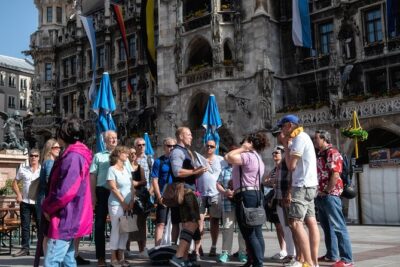
Mystic Munich – Sagas and Legends of the Old Town
Read our review →Munich Old Town Food Tour with 10+ Bavarian Specialties
Read our review →Browse the lists this tour appears in