
Reviewed · DACHAU MEMORIAL TOURS
Dachau Memorial Public Tour
Dachau is not a sightseeing stop in the usual sense. It is a place of forced labor, imprisonment, and mass death, and the five-hour guided visit gives you time to face that history without rushing from one grim room to the next. The former camp opened in 1933 and later held more than 200,000 prisoners from many nations.
I like the small group size, capped at 15, because a guide can explain difficult details without turning the memorial into a moving crowd. I also like the way guides such as Charlotte and Michael bring care to the visit, including a minute of silence near the crematorium area. The main consideration is emotional: this can be a heavy day, and it deserves your full attention.
In This Review
- Key points to know before booking
- Why Dachau deserves a guided visit
- Meeting at Marienplatz at 10:00 a.m.
- Entering through the Jourhaus and Main Gate
- The former Maintenance Building and museum
- The bunker and the mechanics of punishment
- Reconstructed barracks and daily life
- Religious memorials and the International Monument
- Guard towers, walls, and the camp’s physical design
- The crematorium area and the need for silence
- How the five-hour format affects the experience
- Who will get the most from this tour
- Booking, cancellation, and practical value
- Should you book the Dachau Memorial Public Tour?
- FAQ
- Where does the Dachau Memorial Public Tour begin?
- What time does the tour start?
- Where does the tour end?
- How long does the tour last?
- How much does the tour cost?
- How large is the tour group?
- Is a guide included?
- Are food and drinks included?
- What can I see at Dachau Memorial Site?
- Can I cancel for a full refund?
Key points to know before booking
- Five hours from Marienplatz: Meet at Fischbrunnen, Marienplatz 8, at 10:00 a.m., then return to the same meeting point.
- A maximum of 15 people: The public group is small enough for a more personal explanation than a large coach tour.
- A professional local guide included: Guides such as Charlotte and Michael have been praised for clear, serious presentations.
- The camp museum and original structures: You visit the Jourhaus, former Maintenance Building, bunker, reconstructed barracks, guard towers, and memorials.
- A solemn stop at the crematorium area: The tour includes time for reflection, including a minute of silence on some visits.
- Food is not included: Plan around the five-hour schedule, since meals and drinks are your responsibility.
Why Dachau deserves a guided visit
Dachau was the first concentration camp opened by the Nazi government in Germany, beginning in 1933. It was first intended for political prisoners, but its purpose widened into a system of forced labor, punishment, terror, and murder.
More than 200,000 people passed through Dachau during its 12 years of operation. Prisoners came from 34 nations. Around 40,000 people died there, according to the information presented for this experience.
Those numbers matter, but they can feel distant on a page. At the memorial, the structures and layout give them weight. You see how the camp was organized, how prisoners were controlled, and how daily life was reduced to rules, roll calls, confinement, labor, and fear.
I would not choose a self-guided visit if this is your first time at Dachau. You can read the displays on your own, but a guide helps connect the buildings, policies, and timeline. The best part of this tour is not simply reaching the site. It is having someone explain what you are seeing and give the place the seriousness it requires.
More Dachau memorial tours from Munich:
- Dachau Concentration Camp Memorial Site Tour from Munich by Train
★ 4.5 · 5,637 reviews - From Munich: Dachau Memorial Site Day Tour
★ 4.8 · 2,723 reviews - From Munich: Dachau Memorial Site Half-Day Trip
★ 4.7 · 2,526 reviews
Meeting at Marienplatz at 10:00 a.m.
The tour begins at Fischbrunnen, at Marienplatz 8 in central Munich. Your start time is 10:00 a.m., and the activity ends back at the same meeting point after roughly five hours.
That return arrangement is useful if you are planning other Munich activities later in the day. Still, I would keep the afternoon flexible. The site is emotionally demanding, and the full schedule leaves little room for a casual lunch stop or a long break.
The tour is listed as being near public transportation, which makes the central meeting point practical. Your confirmation arrives when you book, and the experience is conducted with a mobile ticket. Since the group can contain up to 15 people, you should be ready to gather promptly at the fountain rather than treating the start time as approximate.
The price is $118.74 per person. That is a serious cost for a half-day outing, especially because food and drinks are not included. The value rests in the guide, the small group, the organized visit, and the time saved figuring out the site by yourself. If you only want to see the grounds quickly, the price may feel high. If you want context and a careful explanation, it is easier to justify.
This tour is booked an average of 36 days ahead, so I would not leave it until the last day of a short Munich visit. The group limit may also make popular dates fill sooner.
Entering through the Jourhaus and Main Gate
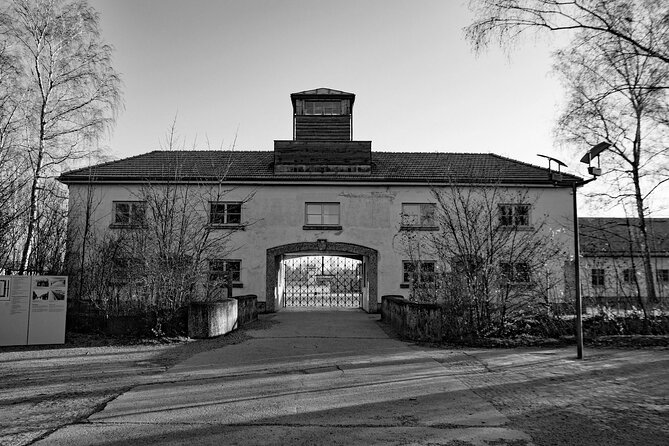
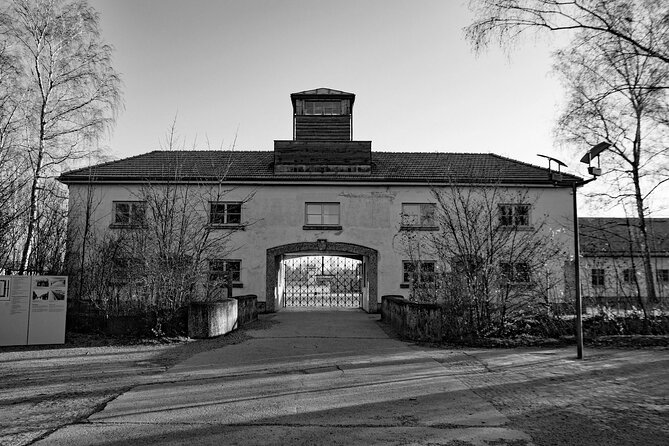
The first major stop is the Main Gate, known as the Jourhaus. This was not merely an entrance. It was part of the camp administration, and passing through it gives you a direct sense of how the site was controlled.
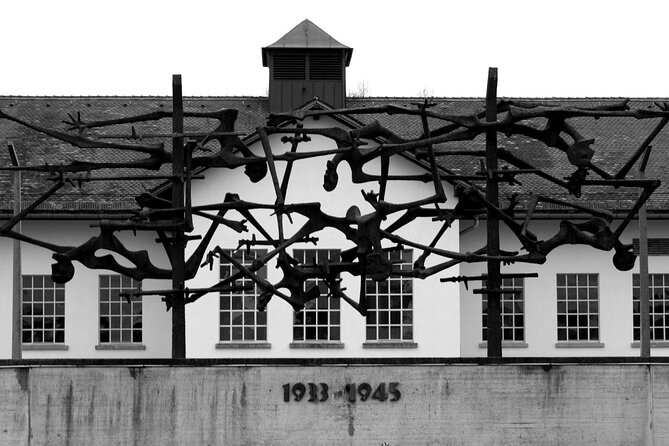
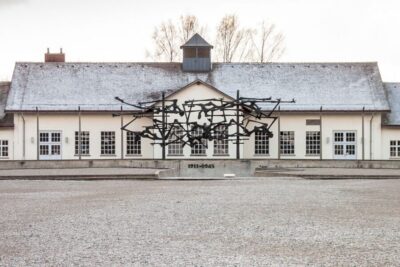
The gate leads toward the former Roll Call Area. Prisoners were gathered there for attendance checks, often under harsh conditions. Today, the area is marked by the International Monument, which honors those who suffered in the camp.
This is an important early stop because it helps you understand the camp as a system. The open space was not designed for comfort or community. It was a place where people were counted, watched, and made to wait.
A guide can also help you avoid treating the entrance as a simple photo opportunity. I recommend putting your camera away for a moment and listening closely. The power of the place comes from its setting and its meaning, not from collecting images.
The former Maintenance Building and museum
The former Maintenance Building now houses the main museum. This is where the visit gains much of its historical structure, moving from the camp’s creation to its changing role and eventual liberation in 1945 by the American army.
The exhibits and documentaries help explain how Dachau became what the tour description calls an Academy of Terror. It served as a model and training ground for brutality, influencing the wider concentration camp system.
You should expect the museum to require concentration. The subject matter is difficult, and the amount of information can feel intense. A professional guide helps you focus on the material that best explains the camp’s operation rather than trying to absorb every display at once.
Charlotte has been singled out for her command of Dachau and the wider Second World War period in Germany and Europe. That wider context matters. Dachau was not an isolated event with no connection to the outside world. Its story belongs to the larger history of Nazi rule, war, persecution, and state-sponsored violence.
Something different, still within reach of Munich:
- From Munich: Neuschwanstein & Linderhof Castle Full-Day Trip
★ 4.5 · 12,494 reviews - Neuschwanstein & Linderhof Castle-Fairytale Day Tour from Munich
★ 4.5 · 7,275 reviews - Munich: Third Reich & WWII Walking Tour
★ 4.6 · 6,181 reviews - Neuschwanstein Castle Tour from Munich
★ 4.5 · 5,117 reviews
The bunker and the mechanics of punishment
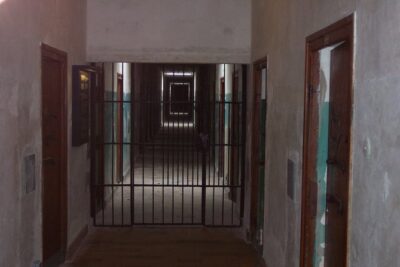
The Bunker was the camp prison. It shows another layer of control beyond the main prisoner compound. Concentration camp imprisonment was not only about confinement within the camp. The internal prison system could bring further punishment and isolation.
This part of the site is stark. The building does not need theatrical effects to make its point. The plain rooms and controlled spaces show how authority was enforced through architecture as well as guards and regulations.
I find this stop valuable because it prevents an overly simple picture of camp life. The camp was not just rows of barracks and forced labor. It contained several levels of punishment, surveillance, and deprivation.
Your guide’s role is especially important here. The Bunker can be quiet and visually spare, so without explanation you might pass through quickly. Give it time. The absence of decoration is part of what makes it difficult.
Reconstructed barracks and daily life
Two reconstructed barracks offer a picture of prisoner accommodation and daily routine. They are reconstructions, so you are not looking at every original building exactly as it was. Even so, they help you understand the cramped and controlled conditions in which prisoners were forced to live.
This is one of the clearest sections for understanding the ordinary rhythm of the camp. The museum gives you documents, films, and historical explanation. The barracks give you space and scale. You can see how a place intended for large numbers of prisoners was organized around efficiency and control rather than personal dignity.
The reconstructed nature of the buildings is worth keeping in mind. A memorial site has to preserve evidence, teach the public, and mark what was lost. Reconstruction can make the layout easier to understand, but it also means you should listen to the guide’s explanation of what is original, restored, or rebuilt.
The camp held people from 34 nations, so the barracks also represent a wider international story. You are not looking at one community or one national experience. The site connects political prisoners, forced laborers, and many other victims of Nazi persecution.
Religious memorials and the International Monument
Dachau includes several religious memorials. They reflect different faith traditions and offer places for remembrance within the former camp grounds.
I appreciate this part of the visit because it adds a human and spiritual dimension without turning the site into a single, simplified story. The memorials show how remembrance can take different forms while sharing the same concern for dignity and loss.
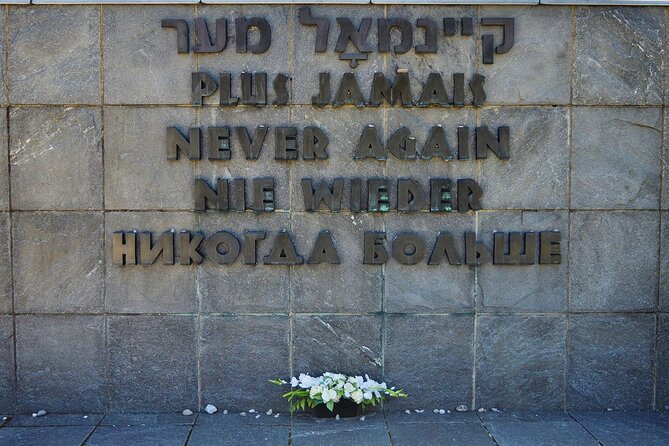
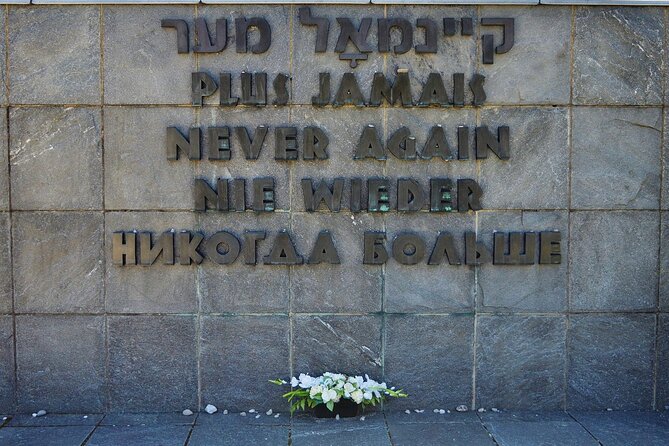
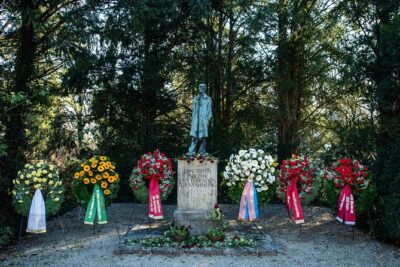
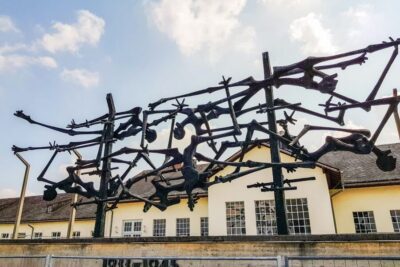
The International Monument near the Roll Call Area carries a similar purpose on a broader scale. It is a central symbol for those who endured the camp. Your guide can place these memorials within the larger story of the people imprisoned there and the nations represented among them.
This is also a section where you may want a quieter pace. The tour covers a lot in five hours, but not every stop needs a long lecture. Some spaces are best understood with a little silence.
Guard towers, walls, and the camp’s physical design
Security installations include guard towers, parts of the outer walls, and other features that show how the camp was sealed and monitored.
These structures help you read Dachau as a planned environment of control. The towers and walls were not background scenery. They defined movement, separation, and the constant threat of force.
Seeing the security system after the barracks and museum also helps the camp’s design make sense. You move from administration to prisoner housing, punishment, and surveillance. The buildings are different, but together they reveal one organized system.
You should wear something suitable for a five-hour outing, though the supplied information does not specify a dress code or walking distance. The memorial is an outdoor historical site as well as a museum, so you will spend time moving between structures and open areas.
The crematorium area and the need for silence
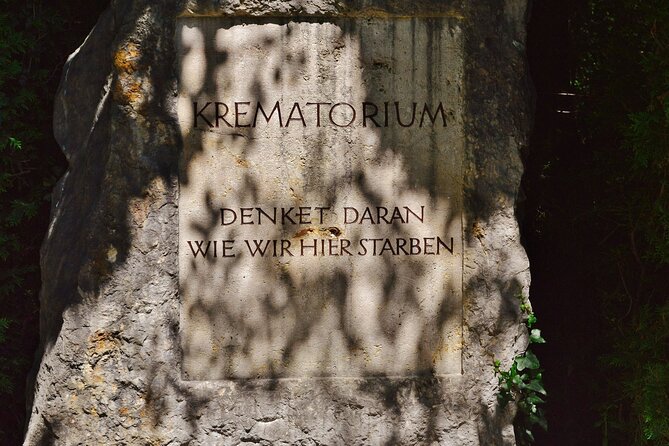
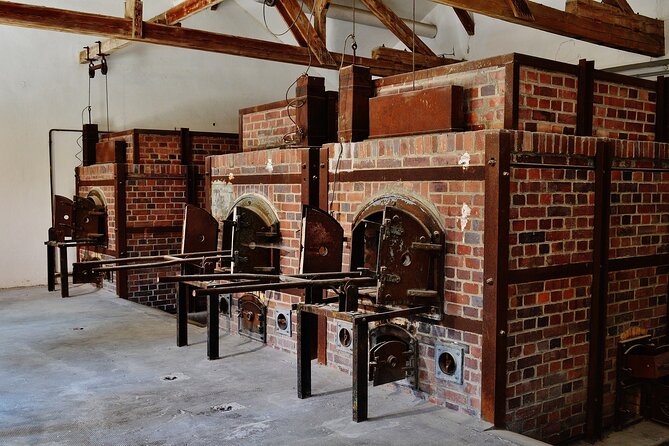
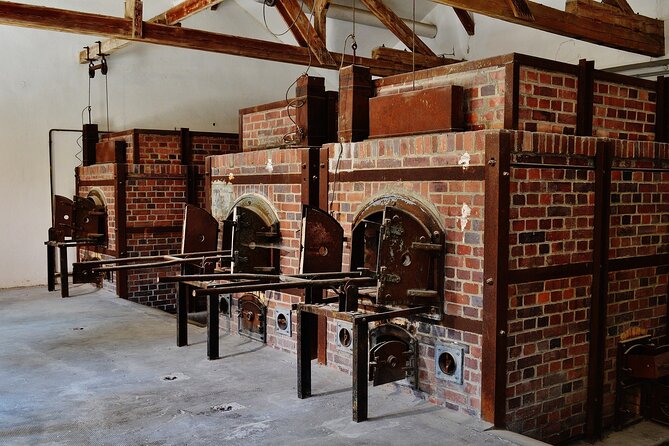
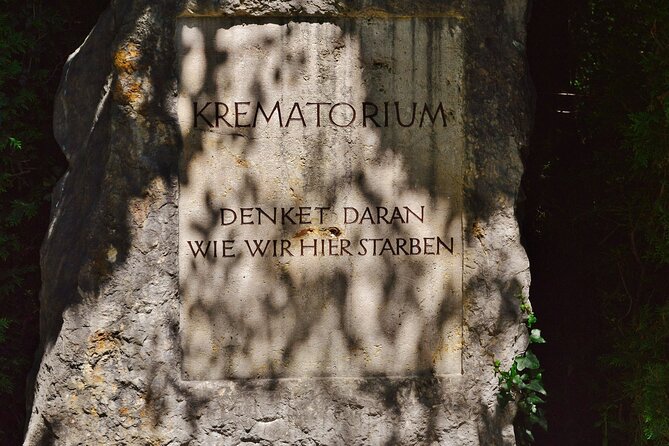
The crematorium area is among the most difficult parts of the visit. The tour information identifies this as a key part of the site, and one group observed a minute of silence outside the crematorium to remember those who died.
That moment is not a performance. It is a simple act of respect. If your guide offers a similar pause, accept it in the spirit intended. You do not need a speech or a photograph. Quiet attention is enough.
The crematorium area also changes the scale of the visit. Earlier stops show administration, imprisonment, and living conditions. Here, the evidence points directly to death. The transition can be hard, which is one reason a guided visit is useful. A careful guide can explain the site without sensationalizing it.
Michael has been praised for an informative and passionate presentation, and for creating space for that minute of silence. His approach reflects what I want from a Dachau visit: clear facts, moral seriousness, and no attempt to make the day entertaining.
How the five-hour format affects the experience
Five hours is long enough to visit the major sections without treating Dachau as a quick stop. You have time for the museum, former camp buildings, memorials, security structures, and crematorium area.
The tradeoff is that this is not an easy half-day. The subject matter can wear you down. I would avoid scheduling a second major museum or a packed evening immediately afterward.
The small group limit helps. With no more than 15 people, the guide can usually keep the group together and respond to questions without the feel of a large organized procession. It also means you should remain aware of the group’s pace, especially during quiet sections.
There is no food or beverage included. Since the activity lasts about five hours, eat before the meeting time or plan for food after returning to Marienplatz. Do not count on the tour itself to provide a meal break.
Who will get the most from this tour
I would recommend this tour to you if you want historical explanation, a structured visit, and a guide who treats Dachau as a memorial rather than a routine attraction. It suits first-time visitors who want help understanding the site’s purpose and development.
It is also a good fit if you prefer a smaller public group. A maximum of 15 people is a useful middle ground: more social and affordable than a private tour, but more personal than a large group.
You may prefer another arrangement if you want to explore alone, read every exhibit at your own pace, or leave whenever you choose. The five-hour schedule and fixed meeting point create structure, which is helpful for some people and limiting for others.
This is not a family entertainment activity, and the supplied information does not give a minimum age or detailed accessibility guidance. Most people can participate, but you should consider your own comfort with difficult historical material and extended time at a memorial site.
Booking, cancellation, and practical value
Free cancellation is available if you cancel at least 24 hours before the local start time. Changes or cancellations made less than 24 hours before the experience are not accepted for a refund.
The booking confirmation is issued at the time of booking, and you use a mobile ticket. The activity is near public transportation, though no specific route is supplied, so check your route to Fischbrunnen before the morning of the tour.
At $118.74, this is not the cheapest way to reach Dachau. You are paying for the professional local guide, the organized round trip from Munich, the small group, and the interpretation that ties the site together.
I would judge the price by your priorities. If the guide’s expertise and a careful pace matter to you, the cost can be worthwhile. If you are mainly looking for transportation or a short visit, it may not be the best value.
Should you book the Dachau Memorial Public Tour?
Book it if you want a serious, well-structured introduction to Dachau with a group capped at 15 people. The strongest reasons are the five-hour schedule, the local professional guide, and the thoughtful tone shown by guides such as Charlotte and Michael.
I would especially choose it for a first visit from Munich. You see the Jourhaus, Roll Call Area, museum, Bunker, reconstructed barracks, religious memorials, security installations, and crematorium area in one organized morning and afternoon.
Skip it if you want a casual outing, dislike fixed schedules, or would rather study the museum alone. Dachau demands attention, and the $118.74 price makes most sense when you value explanation and respectful guidance. Book early if your Munich dates are fixed, then arrive ready for a quiet, difficult, and important visit.
FAQ
Where does the Dachau Memorial Public Tour begin?
The tour begins at Fischbrunnen, Marienplatz 8, 80331 Munich, Germany.
What time does the tour start?
The start time is 10:00 a.m.
Where does the tour end?
The activity ends back at the meeting point in Munich.
How long does the tour last?
The tour lasts approximately five hours.
How much does the tour cost?
The listed price is $118.74 per person.
How large is the tour group?
The group has a maximum of 15 participants.
Is a guide included?
Yes. A local professional guide is included on the public guided tour.
Are food and drinks included?
No. Food and beverages are not included.
What can I see at Dachau Memorial Site?
The visit includes the Jourhaus and Main Gate, Roll Call Area, former Maintenance Building museum, Bunker, two reconstructed barracks, religious memorials, security installations, and crematorium area.
Can I cancel for a full refund?
Yes. You can cancel at least 24 hours before the experience start time for a full refund. Changes or cancellations made less than 24 hours before the start time are not accepted for a refund.
Just added around Munich
- Private Transfer from Munich to Salzburg, English-speaking driver★ 3.5 · 3 reviews
- Private tour from Munich to Rothenburg and Harburg★ 5.0 · 3 reviews
- Scenic Adventure Private Day Tour to The Konigssee Salzburg★ 4.5 · 3 reviews
- Munich: Capture the most Photogenic Spots with a Local★ 5.0 · 3 reviews
- Private Beer Tasting Tour in Munich with Oktoberfest Museum★ 4.3 · 3 reviews
- Munich Photoshoot: A Must-Have Holiday Experience!★ 5.0 · 3 reviews
- Paul’s Private Tour in the Alte Pinakothek Munich★ 5.0 · 3 reviews
- Private Tour to Hallstatt Salt Mine and Skywalk with Lunch★ 5.0 · 3 reviews
Dachau Memorial Tours, compared.
Dachau Concentration Camp Memorial Site Tour from Munich by Train
Read our review →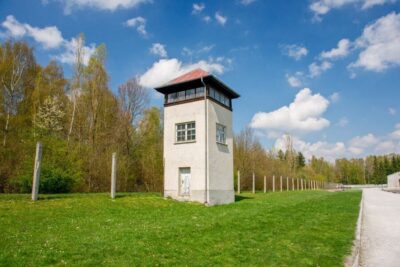
Dachau Concentration Camp Memorial Tour with Train from Munich
Read our review →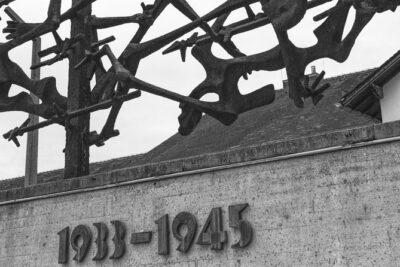
Early-Start Dachau Memorial Half-Day Tour from Munich
Read our review →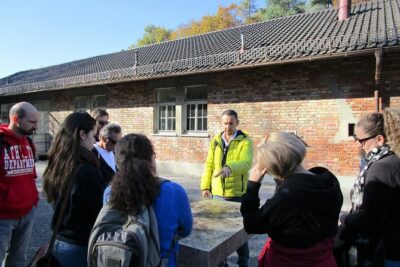
Guided Dachau Concentration Camp Memorial Site Tour with Train from Munich
Read our review →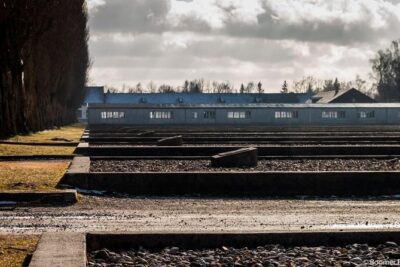
Full-Day Dachau Concentration Camp Memorial Site Tour from Munich
Read our review →Browse the lists this tour appears in