
Reviewed · MUNICH OLD TOWN TOURS
Munich: Old Town Walking Tour in Spanish
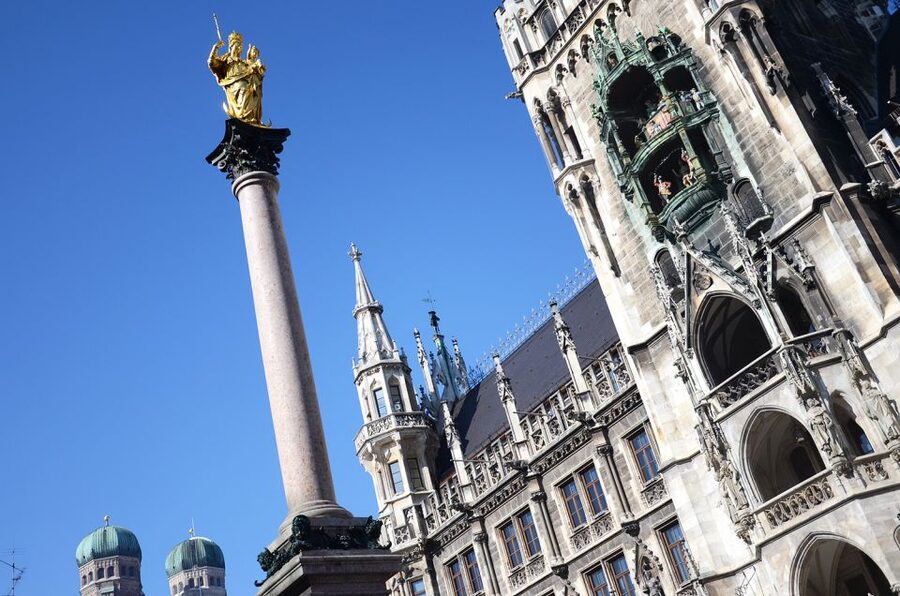
Munich’s old town is compact, but its story is not. This three-hour Spanish walking tour links the city’s grand churches, royal buildings, market stalls, and beer halls in one steady route. You begin beneath Karlstor at Karlsplatz and finish there, with Marienplatz, Frauenkirche, Viktualienmarkt, Hofbräuhaus, the National Theater, and the Residenz along the way.
I like the way the tour mixes major sights with everyday Munich. Viktualienmarkt gives you a look at local food and beer-garden culture, while Hofbräuhaus opens the door to the city’s famous beer traditions and more recent history. I also like that guides such as Oscar keep the walk lively with stories, anecdotes, and close attention to small details.
The main consideration is simple: you walk a lot. The tour is not recommended for people with limited mobility, and it may feel tiring if you have already spent the morning on your feet. It is also strictly for Spanish speakers, so choose another tour if you need English or another language.
In This Review
- Key points at a glance
- Why this three-hour Munich walk works
- Starting beneath Karlstor at Karlsplatz
- St. Michael’s Church and Munich’s Catholic story
- Frauenkirche, Munich’s unmistakable landmark
- Marienplatz and the Town Hall chimes
- Viktualienmarkt and the taste of Munich
- Hofbräuhaus and Munich beer culture
- The National Theater and the Residenz
- What the guide adds in Spanish
- Price, pace, and practical value
- Who should book this Spanish walking tour
- Should you book it?
- FAQ
- How long does the Munich old town walking tour last?
- Where does the tour start?
- Where does the tour end?
- Is the tour conducted in Spanish?
- Are food and drinks included?
- What should I bring, and is the route accessible?
Key points at a glance
- Karlstor is the starting point: Meet under the old city gate at Karlsplatz 10 minutes before departure.
- St. Michael’s Church comes first: See one of Munich’s most important and attractive churches before reaching the cathedral.
- Marienplatz brings the city center to life: Learn about the Town Hall and hear its famous chimes.
- Viktualienmarkt adds local flavor: Explore Munich’s food traditions and its typical beer garden.
- Hofbräuhaus explains beer culture: The stop covers both Munich’s brewing traditions and contemporary history.
- Spanish is the only tour language: A minimum of three participants is required for the tour to operate.
Why this three-hour Munich walk works
A first visit to Munich can feel easy at street level, yet the city center contains layers that are easy to miss. Churches, royal buildings, war damage, beer customs, and civic traditions all sit within a short walk of one another. A guide gives you a useful thread through it all.
I see this tour as a good orientation walk rather than a museum-heavy outing. You are not spending long periods inside each sight. Instead, you move through the old town, stop at important buildings, and hear the stories that help you understand why each place matters.
That format suits you if you want to get your bearings on your first day. It also works well if you prefer history in manageable portions, with a little food culture and local humor along the way. The route covers many of Munich’s best-known sights without requiring public transport between stops.
The pace matters. Three hours is long enough to cover a lot, but not so long that the walk takes over your whole day. You should still leave room for your own visits inside the churches, the market, or other attractions afterward. The tour fee is $23 per person, which is fair for a guided walk of this length, especially if you value explanations rather than simply collecting photographs.
More old town tours in Munich:
- Munich: Old Town & Viktualienmarkt City Walk in German
★ 4.7 · 2,304 reviews - Munich Old Town Walking Tour
★ 4.5 · 1,287 reviews - Munich: Spooky Tour of Old Town in German
★ 4.6 · 1,112 reviews
Starting beneath Karlstor at Karlsplatz
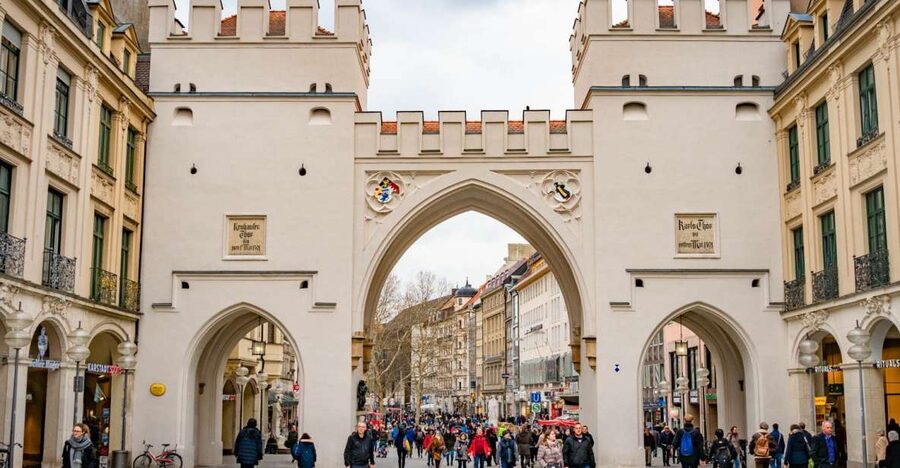
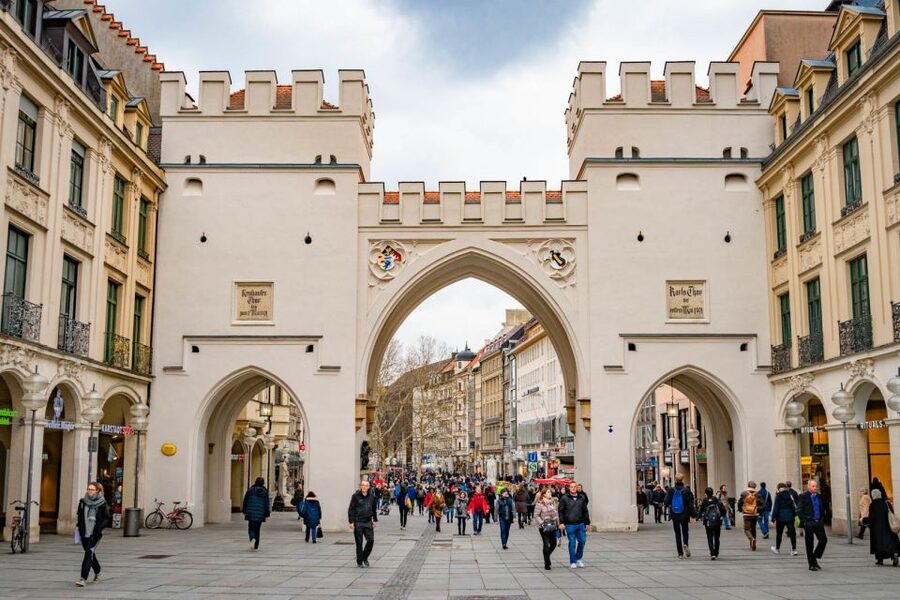
The meeting point is under Karlstor Gate, one of Munich’s old city gates, at Karlsplatz. Arrive 10 minutes before the scheduled start. This is a practical meeting place because it puts you right at the edge of the historic center and gives the group an obvious landmark to find.
Beginning here also gives the guide a natural way to introduce Munich’s old town. You start with the sense that you are passing from the modern city into its historic core, even though the center remains active and full of daily city life.
There is no hotel pickup or drop-off, so you need to make your own way to Karlsplatz. The tour also ends back at the meeting point, which makes it easy to plan lunch, shopping, or another activity afterward. Since the start and finish are the same, you do not need to worry about finding your way back across town.
St. Michael’s Church and Munich’s Catholic story
The first major stop is St. Michael’s Church, described here as Sant Michael. It is one of the city’s most beautiful churches and a strong opening to the walk. The guide uses the church to explain Munich’s religious and civic past, along with the people connected to the city.
This stop is more useful than a quick exterior photograph. A guide can direct your attention to details that you might otherwise pass without noticing. The tour promises historical facts, stories about important local figures, and amusing anecdotes, so you get context rather than a bare list of dates.
I would pay attention to the guide’s storytelling here. One of the strongest features of the experience is the way the guide directs attention to details and keeps the explanations interesting. Oscar, one of the named guides associated with the tour, is specifically noted for making the route enjoyable and informative.
The exact amount of time inside the church is not stated, so you should not assume this is a full church tour. Think of it as one carefully chosen stop within a wider walk through the old town.
Frauenkirche, Munich’s unmistakable landmark
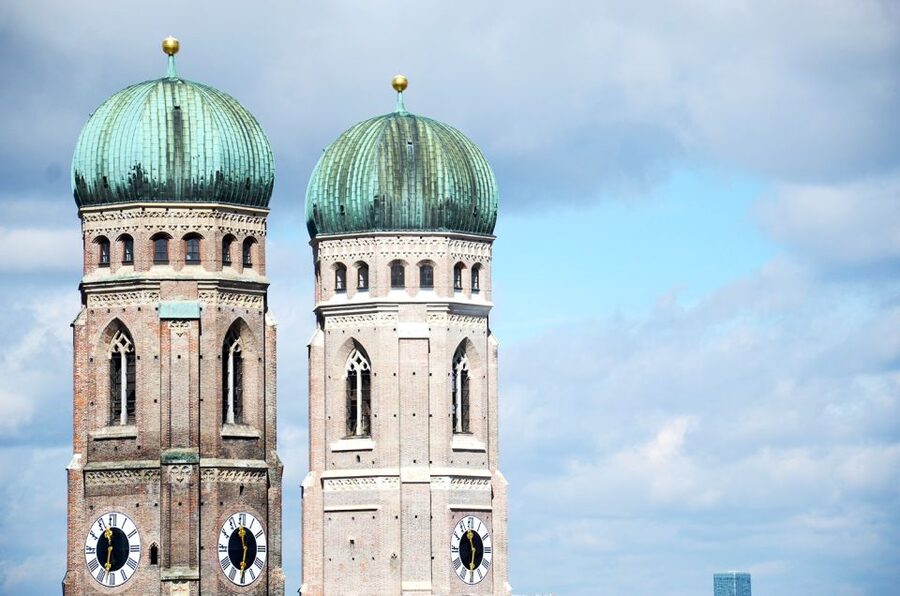
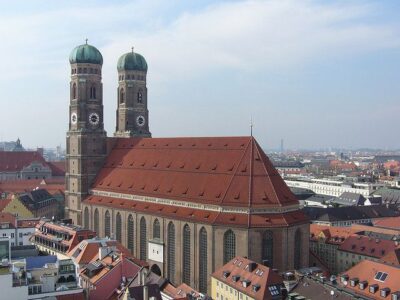
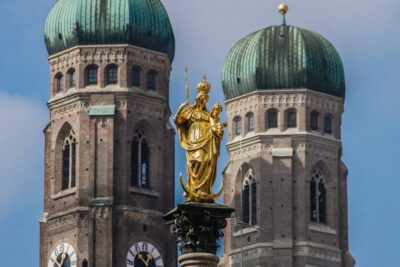
From St. Michael’s, the route continues to Frauenkirche, Munich’s cathedral. Its twin towers are among the clearest signs that you have reached the historic center, and the cathedral gives the tour another chance to explore the city’s religious identity and architectural character.
This part of the walk is especially useful if you have limited time in Munich. You see the cathedral in context, alongside the surrounding old-town streets, instead of treating it as an isolated sight. The guide can explain why it matters to Munich and connect it to the city’s wider story.
Again, the focus is on guided discovery rather than an extended indoor visit. If the cathedral is a personal priority, check how much independent time you want to spend there after the tour. The walking route gives you a strong introduction, but it does not promise a detailed examination of every interior feature.
Wear shoes you can trust. Cobblestones and long periods of standing can make a stylish but stiff pair feel like a bad decision before the second half of the walk.
More walking tours in Munich:
- Munich: Third Reich & WWII Walking Tour
★ 4.6 · 6,181 reviews - Third Reich Walking Tour Munich
★ 4.5 · 4,291 reviews - Munich: Night Watchman Walking Tour
★ 4.7 · 2,092 reviews - Munich Ghosts and Spirits Evening Walking Tour
★ 5.0 · 1,900 reviews
Marienplatz and the Town Hall chimes
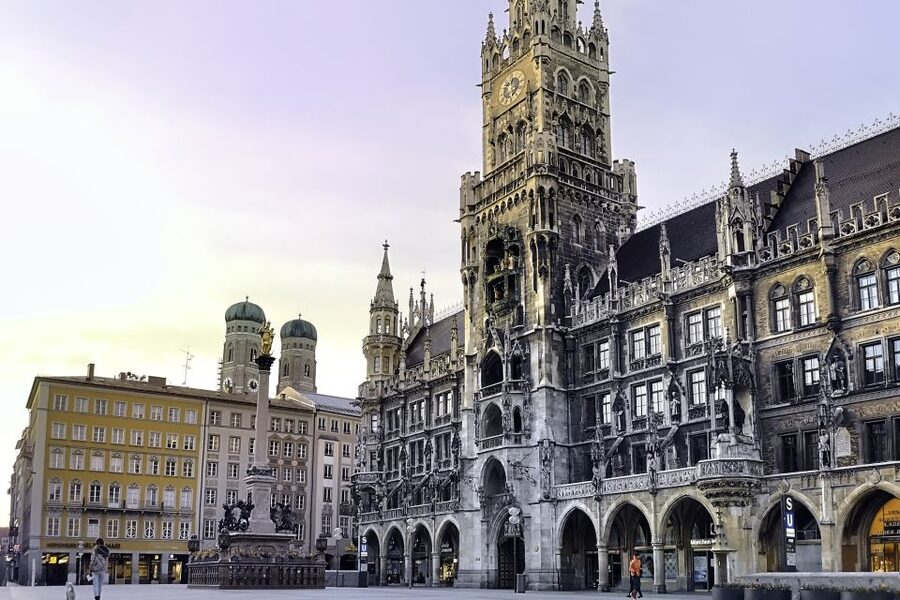
Marienplatz is the natural center of Munich’s old town, and the tour pauses here to explain the square, the Town Hall, and its famous chimes. This is likely to be one of the most memorable points on the route because the square gathers architecture, public life, and daily city movement in one place.
The chimes are a useful example of why timing can matter. The tour description promises that you can enjoy them, but it does not give a precise start time or guarantee exactly when the performance will occur. Check the available departure times when booking if hearing the chimes is especially important to you.
A good guide makes Marienplatz more than a photo stop. You learn how the square fits into Munich’s civic life and hear stories tied to the people and events that shaped the city. The guide’s anecdotes also help keep the stop from becoming a dry lecture about buildings.
You will probably want a few minutes to look around on your own. Marienplatz is one of those places where a short pause pays off. Take in the Town Hall, watch the flow of people, and notice how the square functions as a real city center rather than a preserved stage set.
Viktualienmarkt and the taste of Munich
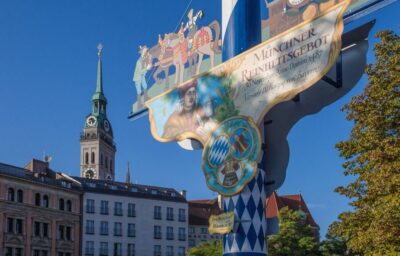
The move to Viktualienmarkt changes the mood. Here, the focus turns from churches and public buildings to food, drink, and the daily habits of Munich residents. The market is presented as a place to learn about local culinary culture, with a typical beer garden as part of the experience.
Food is not included in the $23 price, so budget separately if you want to buy something. The tour does not promise a tasting, meal, or drink. That may disappoint you if you expect a food tour, but it keeps the cost modest and gives you freedom to choose what interests you.
The market stop is valuable even if you do not purchase anything. It shows how Munich’s beer culture sits alongside ordinary food traditions. You get a more grounded view of the city than you would from visiting only grand churches and royal residences.
I would treat this as a place to make notes for a later meal. The group’s schedule may not allow time for a leisurely market lunch, and the tour must continue to Hofbräuhaus and the final sights. If you find something appealing, return after the walk when you can take your time.
Hofbräuhaus and Munich beer culture
At Hofbräuhaus, the guide turns to one of Munich’s most famous brewing institutions. The stop is not just about beer as a drink. It also covers beer culture and contemporary history, giving you a chance to see how a familiar symbol of Munich connects with the city’s changing identity.
You should be clear about what is and is not included. Food and drinks are not part of the tour price, so any beer or meal you order will cost extra. The itinerary describes Hofbräuhaus as the place to talk about beer, not as a reserved tasting or included dining experience.
That distinction makes the visit more flexible. If you want to sit down and eat, you can return later or plan another visit. During the tour, you get the cultural explanation without having to commit to a meal.
Hofbräuhaus can be an easy place to reduce Munich to a cliché: beer, oversized halls, and cheerful noise. The guide’s contemporary-history discussion gives the stop more substance. You learn to look at the building as part of Munich’s public story, not only as a place to order a drink.
The National Theater and the Residenz
The final stretch brings you to the National Theater and the Residenz, the former royal residence of the Wittelsbach family. These stops broaden the tour again, moving from public squares and beer culture to monarchy, the arts, and Munich’s political past.
The Residenz is particularly useful for understanding the influence of the Wittelsbach family. You are not promised a full interior visit, so the guide’s explanation is likely to focus on the residence’s role and appearance from the route. If royal interiors are high on your list, plan a separate visit rather than assuming this walk replaces it.
The National Theater adds another side of the city’s identity. Together, the theater and royal residence show that Munich is more than a beer destination. The route gives you a rounded first look at the city’s religious, civic, culinary, royal, and cultural life.
The tour then returns to Karlstor. Ending where you began is convenient, especially if you want to continue exploring on foot or pause at the market after the group has finished.
What the guide adds in Spanish
The tour is conducted in Spanish, and it is not open to people who do not speak Spanish. That rule is important. The experience depends on following spoken explanations, jokes, historical connections, and details from stop to stop.
The guide is expected to share facts, stories about important people, and amusing anecdotes. The strongest praise centers on guides who are friendly, competent, and able to focus the group’s attention on details. Oscar is named as an excellent guide who makes the route entertaining while offering interesting explanations.
You should not expect a scripted audio-guide experience. The format is live and conversational, so the quality depends in part on the person leading your departure. The information available does not specify group size, headphones, or private-tour arrangements. If those details matter to you, confirm them before booking.
A minimum of three participants is required for the tour to operate. If that number is not met, the local partner will contact you with an alternative. This is worth keeping in mind if your schedule is tight.
Price, pace, and practical value
At $23 per person, the tour offers a low-cost way to cover a large portion of central Munich with a Spanish-speaking guide. You are paying for three hours of route planning, local explanation, and company between major sights, not for admission tickets, meals, or transport.
That is good value if you want orientation and context. A self-guided walk can show you the same buildings, but it may not explain the links between the cathedral, the market, Hofbräuhaus, the royal residence, and Munich’s public life. The guide helps turn separate stops into one story.
The price is less compelling if you want long indoor visits or included food. This is a walking introduction, not an all-inclusive sightseeing package. You may still need separate tickets for attractions you want to explore in depth.
Bring comfortable shoes. The route involves substantial walking, and the tour is not suitable for people with mobility impairments. You should also bring whatever you need to stay comfortable outdoors, since the experience is primarily on foot and no hotel transportation is provided.
Free cancellation is available up to 24 hours before the activity for a full refund. You can also reserve now and pay later, which helps if you are arranging several days of sightseeing and want to keep your plans flexible.
Who should book this Spanish walking tour
I would recommend it most strongly to Spanish-speaking visitors making a first visit to Munich. You get the essential old-town sights, clear historical framing, and a look at beer and food culture without spending a full day on a single attraction.
It is also a good fit for you if you prefer a guide who mixes serious history with lighter anecdotes. The route covers important people and major events, but it is not presented as a formal academic lecture.
You may want a different option if you need a slow pace, an accessible route, or extensive time inside each building. The amount of walking is a real part of the experience, not a footnote. The same applies if you are looking for a food tasting, included beer, or hotel pickup.
The perfect day for this tour is one when you want to understand Munich before exploring it on your own. Afterward, you will know which sights deserve a longer visit and where you might return for food, beer, or more time in the old town.
Should you book it?
Book this tour if you speak Spanish, enjoy walking, and want a friendly introduction to Munich’s historic center for $23. The route covers the city’s main landmarks while adding the useful local subjects of market life, beer customs, royal power, and contemporary history.
Skip it if mobility is a concern, if you want included food or drinks, or if you need a language other than Spanish. For the right audience, this is a practical first look at Munich, with enough detail to make the rest of your stay easier to plan.
FAQ
How long does the Munich old town walking tour last?
The tour lasts three hours. Check availability for the specific starting times offered on your chosen date.
Where does the tour start?
Meet under Karlstor Gate at Karlsplatz, 10 minutes before the activity begins.
Where does the tour end?
The walk ends back at the Karlstor meeting point.
Is the tour conducted in Spanish?
Yes. A live Spanish-speaking guide leads the tour, and it is not open to people who do not speak Spanish.
Are food and drinks included?
No. Food and drinks are not included in the tour price. This includes anything you may choose to order at Viktualienmarkt or Hofbräuhaus.
What should I bring, and is the route accessible?
Bring comfortable shoes because the tour involves substantial walking. It is not recommended for people with limited mobility or mobility impairments.
Just added around Munich
- Private Transfer from Munich to Salzburg, English-speaking driver★ 3.5 · 3 reviews
- Private tour from Munich to Rothenburg and Harburg★ 5.0 · 3 reviews
- Scenic Adventure Private Day Tour to The Konigssee Salzburg★ 4.5 · 3 reviews
- Munich: Capture the most Photogenic Spots with a Local★ 5.0 · 3 reviews
- Private Beer Tasting Tour in Munich with Oktoberfest Museum★ 4.3 · 3 reviews
- Munich Photoshoot: A Must-Have Holiday Experience!★ 5.0 · 3 reviews
- Paul’s Private Tour in the Alte Pinakothek Munich★ 5.0 · 3 reviews
- Private Tour to Hallstatt Salt Mine and Skywalk with Lunch★ 5.0 · 3 reviews
Munich Old Town Tours, compared.
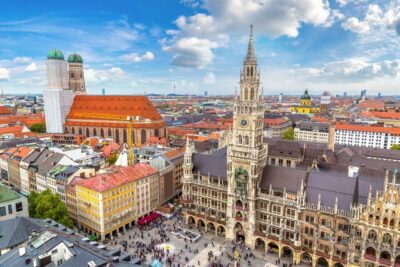
Old Town & Viktualienmarkt City Walk in German
Read our review →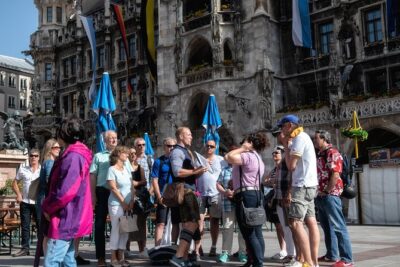
Mystic Munich – Sagas and Legends of the Old Town
Read our review →Munich Old Town Food Tour with 10+ Bavarian Specialties
Read our review →Browse the lists this tour appears in