
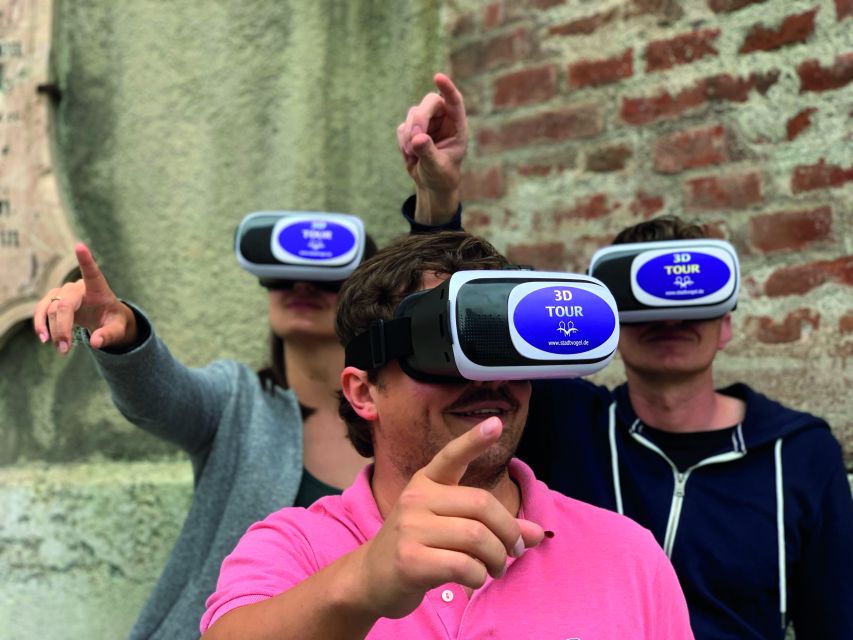
Reviewed · MUNICH OLD TOWN TOURS
Munich: Walking Tour Old Town 3D VR Tour in GERMAN
Munich’s Old Town changes character when you can compare it with the city of centuries past. This two-hour walk uses 3D images at four historic points, including Marienplatz in 1570 and the square around 1870, then moves to Platzl in 1895 near the Hofbräuhaus. It is a clever way to connect today’s streets with scenes that have vanished.
I like the mix of a regular walking tour and visual storytelling. I also like that the German-speaking guide supplies the human side: stories, context, and small details that the images alone cannot explain. The main consideration is the technology. The glasses use your own smartphone, and the images are still pictures rather than moving virtual scenes. Some people find the phone screen clearer.
Key points
- Marienplatz is split into two time periods: See the western side in 1570 and the eastern side about 300 years later.
- The medieval square was more than a photo stop: The old grain market, special execution gallows, and disgraceful donkey reveal a harsher side of public life.
- Platzl in 1895 offers a strong before-and-after comparison: Learn how the area became the familiar Munich gathering place you see today.
- The tour is conducted in German: You need enough German to follow the guide’s stories and explanations.
- The VR glasses depend on your smartphone: Download the app at the meeting point and bring a charged phone with internet access.
- The guide is the reliable part of the experience: The strongest praise goes to the friendly, lively, well-informed presentation, not the equipment.
In This Review
- What the 3D walk adds to Munich’s Old Town
- Meeting at Platzl with the blue bag
- Marienplatz in 1570: grain, punishment, and public life
- Marienplatz around 1870: a city in transition
- Platzl in 1895 and the changing Hofbräuhaus
- The guide matters more than the headset
- What the technology is really like
- Timing, walking, and access
- Is $37 a fair price?
- Who should book this Munich walk?
- FAQ
- Where does the Munich 3D VR tour meet?
- How long does the tour last?
- What language is the tour in?
- What places does the tour visit?
- Which historical periods do the 3D images show?
- Do I need to bring my own phone?
- Are the VR scenes moving videos?
- Are food and drinks included?
- Is the tour wheelchair accessible?
- Should you book it?
What the 3D walk adds to Munich’s Old Town
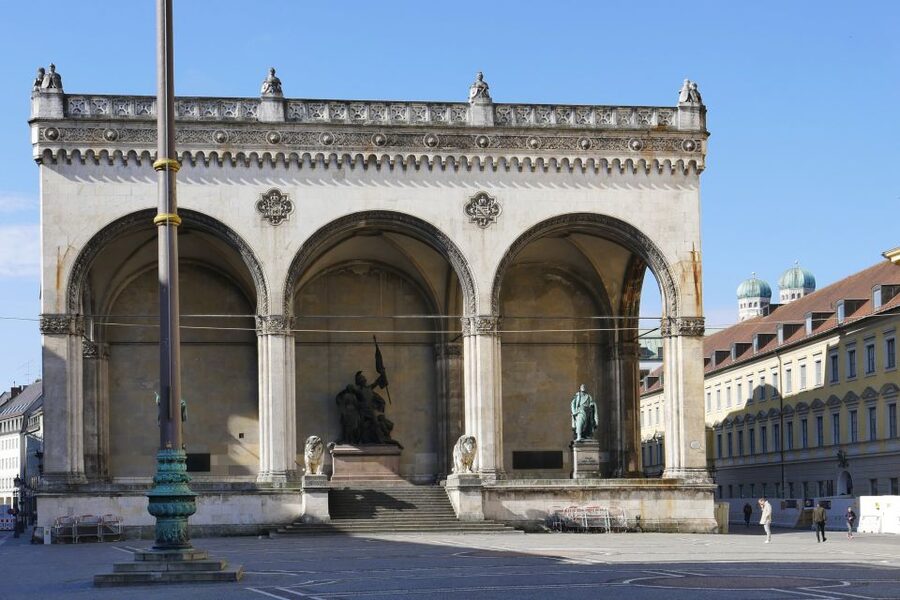
A normal walk through central Munich gives you handsome façades, broad squares, and famous beer halls. This tour asks you to pause and compare the same places with earlier versions of themselves.
That idea works best when the modern street remains visible around you. You are not taken into a theater or museum. You walk through the actual Old Town, then use the glasses to view a reconstruction tied to the spot where you are standing.
The tour focuses on four locations with 3D renderings. That limited number is useful. You are not rushed through a long list of stops, and the guide has time to explain what you are seeing. The experience is less about covering every corner of Munich and more about making a few familiar places feel strange and new.
You should think of the VR as a visual aid, not as a full computer-generated world. The images are still photographs or rendered views, not moving scenes. If you expect a large-scale virtual reality adventure, the $37 price may feel high. If you want a guided Old Town walk with unusual historical comparisons, the cost makes more sense.
Meeting at Platzl with the blue bag
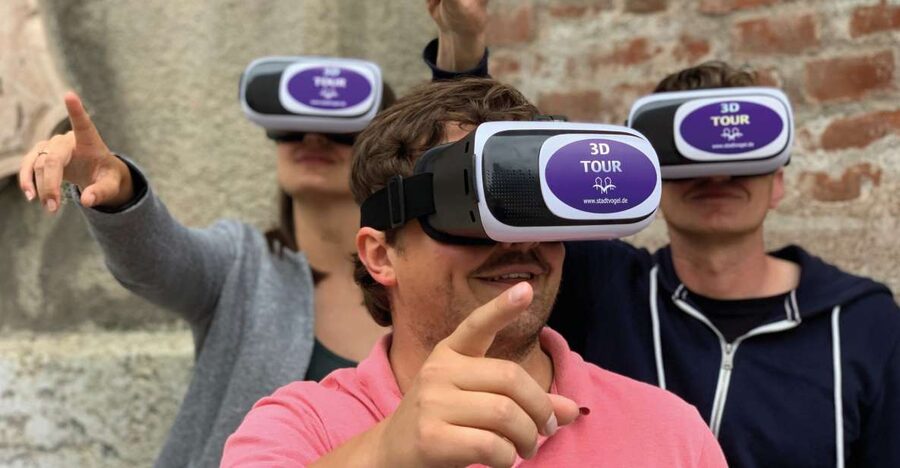
Your meeting point is directly in front of Orlandohaus at Platzl 4. Look for a guide carrying a large blue bag marked Weis(s)er Stadtvogel and a 3D Tour sign.
That detail matters because Platzl is a busy central spot, and a clear marker saves time. Arrive ready to begin the walk rather than expecting hotel pickup. Transportation to the meeting point is not included, and neither are food or drinks.
At the start, every participant downloads an app onto a smartphone. The phone is then placed into the VR glasses. Bring a charged smartphone and internet access. This is not optional preparation. If your battery is low or your connection fails, the visual part of the tour may be difficult to use.
The equipment has a simple advantage: you do not need to carry a separate headset around Munich. It also has a clear weakness: the quality of your experience depends partly on your own phone and on whether the glasses work properly with it.
More old town tours in Munich:
- Munich: Old Town & Viktualienmarkt City Walk in German
★ 4.7 · 2,304 reviews - Munich Old Town Walking Tour
★ 4.5 · 1,287 reviews - Munich: Spooky Tour of Old Town in German
★ 4.6 · 1,112 reviews
Marienplatz in 1570: grain, punishment, and public life
The western side of Marienplatz takes you back to 1570. The square was not simply a grand civic space for ceremonies and photographs. It also served as a medieval grain market, a reminder that central squares once handled everyday trade as well as public business.
The 3D view helps you picture the square before modern traffic, shopfronts, and crowds shaped its appearance. Your guide fills in the social meaning behind the scene. That spoken explanation is important because an image of an old market can otherwise become a quick visual novelty.
The darker details give this stop its bite. You hear about gallows used for special executions and the so-called disgraceful donkey. These details show how public spaces were used for punishment and humiliation as well as commerce.
I find this kind of material more useful than a long list of dates. It lets you ask what the square was for, who used it, and how public authority was displayed. The stop should appeal to you if you like social history, not just grand buildings.
The technology may not create a perfect illusion of walking through 1570. Instead, it gives you a visual comparison while the present-day square remains around you. That contrast is the point. You can look at the old scene, then glance back at modern Marienplatz and measure the change for yourself.
Marienplatz around 1870: a city in transition
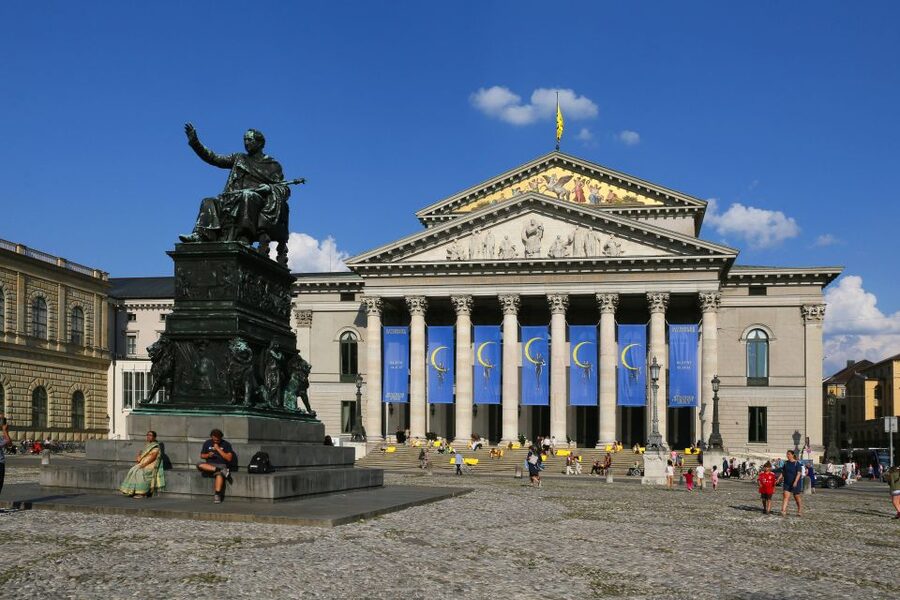
On the eastern side of Marienplatz, the time setting moves about three centuries forward to around 1870. Here you see what the old town hall looked like, including the first completed part of the hall.
This stop shifts the focus from medieval trade and punishment to a Munich changing under new urban pressures. Carriages and old professions help make the scene more active. The guide explains what you are looking at, so you are not left to guess which details matter.
The value of this section comes from the comparison with the 1570 view. You are looking at one square through two historical windows. The tour uses that structure well: first, an earlier market town, then a later city with different buildings, transport, and work.
Do not expect the 3D image to show an animated street scene. The visual content is static, and some people find that the picture looks better directly on the phone than through the glasses. Still, the guide can point out features that you might miss while walking through the square on your own.
For families, this may be one of the easier ways to make urban history concrete. Children can look at carriages, professions, and old buildings instead of listening to an abstract lecture. The German language requirement remains important, so the format works best for children who can follow spoken German.
Platzl in 1895 and the changing Hofbräuhaus
The tour then turns to Platzl, where the time frame is 1895. You learn how the area developed and how it changed into the familiar Munich place seen today.
Platzl is a strong choice for this kind of comparison because it connects several layers of Munich life in one compact area. The guide explains the setting, then uses the 3D view to show an earlier form of the square and the buildings around it.
The Hofbräuhaus receives special attention. You see the famous beer hall in past and present forms, which gives you a better sense of what has changed and what has endured. The stop does not include food or drinks, so treat the beer hall as a historical subject rather than part of the tour’s services.
The 1895 setting also supplies some surprises. The exact nature of those surprises is best experienced during the walk, but the point is clear: the tour is not only about famous monuments. It looks at how a local Munich area became the Urmünchner place associated with the city today.
This is likely the most appealing stop for first-time visitors who already plan to see the Hofbräuhaus. Instead of simply taking a picture outside, you gain a visual comparison that adds context to the visit. If you have already spent days walking the Old Town, the stop can still refresh a familiar route.
More walking tours in Munich:
- Munich: Third Reich & WWII Walking Tour
★ 4.6 · 6,181 reviews - Third Reich Walking Tour Munich
★ 4.5 · 4,291 reviews - Munich: Night Watchman Walking Tour
★ 4.7 · 2,092 reviews - Munich Ghosts and Spirits Evening Walking Tour
★ 5.0 · 1,900 reviews
The guide matters more than the headset
The guide is the heart of this experience. The strongest praise is aimed at the presentation: friendly, engaged, lively, and full of useful information.
That distinction is worth making before you book. The VR glasses are a tool. They do not replace a person who can explain why a square mattered, connect one time period to another, or answer a question in the moment. If the equipment is imperfect, a good guide can still keep the walk worthwhile.
The tour is offered in German only. You should have enough German to follow a live explanation for two hours. The supplied information does not identify individual guides by name, so you should not book expecting a particular person.
The format also suits a group of friends or family members who enjoy trying new technology together. There is a playful side to putting on the glasses and comparing the view. Just keep expectations realistic. This is not a high-end virtual reality attraction with moving images and a fully simulated world.
What the technology is really like
The app is downloaded at the meeting point, then placed into the supplied glasses. You need your own smartphone, a charged battery, and internet access.
The system is easy in concept, but it introduces several points of failure. A phone may not fit or function as expected, the connection may be weak, or the lenses may not give a clear view. At least two pieces of equipment have been reported as not working properly during a tour, and some participants felt the phone displayed the pictures more clearly than the headset.
The images are not moving videos. They are still 3D renderings and photographs that show how a place looked in another period. That makes the tour closer to an interactive historical overlay than a full VR ride.
You can still get value from the visual material if you treat it as a reference image. Look at the older scene, listen to the guide, then compare the image with the buildings and streets around you. The more actively you make that comparison, the more the technology earns its place.
A useful tip is to charge your phone fully before arriving. Also make sure you have internet access before the app download begins. The tour information specifically asks you to bring both. A dead battery would affect the main feature of the walk.
Timing, walking, and access
The experience lasts two hours. That gives you enough time for four 3D locations and the explanations at each one, without turning the tour into a full-day commitment.
You should expect an outdoor walking experience in Munich’s Old Town. Wear shoes suitable for walking and dress for the weather, since the supplied information does not describe indoor alternatives or hotel transportation.
The tour is wheelchair accessible. You should still keep in mind that the activity moves between Old Town locations, so practical comfort will depend on the route and current street conditions. The available information confirms accessibility but does not provide a detailed route description.
Because food and drinks are not included, plan those separately. Platzl and Marienplatz are central locations, so you can arrange a meal before or after the tour, but the activity itself is focused on walking, guiding, and the 3D images.
Is $37 a fair price?
At $37 per person, this is not the cheapest way to walk around Munich. You can see Marienplatz and Platzl without paying an admission fee. The price needs to be justified by the guide’s explanations and by how much you value the historical 3D comparisons.
I think the value is reasonable for three types of visitors. First, it suits someone who wants a structured introduction to the Old Town rather than a self-guided walk. Second, it works for families or friends who enjoy a shared technology-based activity. Third, it fits repeat visitors who have seen the main sights but want a different way to read them.
The value is weaker if you are mainly paying for advanced VR. The equipment does not show moving scenes, and the supplied phone-based glasses may not look as sharp as you expect. If the visual effect is your main reason for booking, $37 may feel steep.
The flexible booking terms help reduce the risk. You can cancel up to 24 hours before the start for a full refund, and you can reserve now and pay later. Those options are useful when your Munich schedule is still changing, but they do not change the basic question: are you paying for a history walk with a visual extra, or for a major VR attraction? It is firmly the first.
Who should book this Munich walk?
I would recommend it to you if you enjoy city history but want more than dates and building names. The four selected viewpoints let you compare real streets with earlier versions, and the German guide provides the meaning behind the images.
It is also a good pick for families and small groups who want a light, social activity. The glasses add a playful element, while the stories give the walk enough substance for adults.
You should think twice if you need an English tour, since the live guide speaks German. You should also reconsider if you expect animated virtual reality, flawless equipment, or a long list of locations across Munich.
The experience works best when you arrive with modest technology expectations and strong interest in the city itself. The guide, the Old Town setting, and the time comparisons do most of the work.
FAQ
Where does the Munich 3D VR tour meet?
Meet directly in front of Orlandohaus at Platzl 4. The guide carries a large blue bag with the white words Weis(s)er Stadtvogel and a 3D Tour sign.
How long does the tour last?
The walking tour lasts two hours.
What language is the tour in?
The live tour guide speaks German, and the activity information lists German as the available language.
What places does the tour visit?
The tour focuses on four places with 3D renderings in Munich’s Old Town. The described locations include two parts of Marienplatz and locations around Platzl and the Hofbräuhaus.
Which historical periods do the 3D images show?
The western side of Marienplatz shows the square in 1570. The eastern side shows the area around 1870. Platzl is shown in 1895, and the Hofbräuhaus is presented in past and present forms.
Do I need to bring my own phone?
Yes. Bring a charged smartphone and internet access. You download an app at the meeting point and place the phone into the VR glasses.
Are the VR scenes moving videos?
No. The images are still 3D renderings or photographs rather than moving images.
Are food and drinks included?
No. Food and drinks are not included in the price.
Is the tour wheelchair accessible?
Yes, the activity is listed as wheelchair accessible.
Should you book it?
Book this tour if you want a German-language Old Town walk with a fresh visual angle on Marienplatz, Platzl, and the Hofbräuhaus. The history and guide are the dependable strengths.
Skip it if you are seeking polished, animated VR or need an English guide. Bring a charged phone, expect still images, and judge the $37 price as payment for a guided history walk with a fun but imperfect technology feature.
Just added around Munich
- Private Transfer from Munich to Salzburg, English-speaking driver★ 3.5 · 3 reviews
- Private tour from Munich to Rothenburg and Harburg★ 5.0 · 3 reviews
- Scenic Adventure Private Day Tour to The Konigssee Salzburg★ 4.5 · 3 reviews
- Munich: Capture the most Photogenic Spots with a Local★ 5.0 · 3 reviews
- Private Beer Tasting Tour in Munich with Oktoberfest Museum★ 4.3 · 3 reviews
- Munich Photoshoot: A Must-Have Holiday Experience!★ 5.0 · 3 reviews
- Paul’s Private Tour in the Alte Pinakothek Munich★ 5.0 · 3 reviews
- Private Tour to Hallstatt Salt Mine and Skywalk with Lunch★ 5.0 · 3 reviews
Munich Old Town Tours, compared.
Old Town & Viktualienmarkt City Walk in German
Read our review →
Mystic Munich – Sagas and Legends of the Old Town
Read our review →Munich Old Town Food Tour with 10+ Bavarian Specialties
Read our review →Browse the lists this tour appears in