
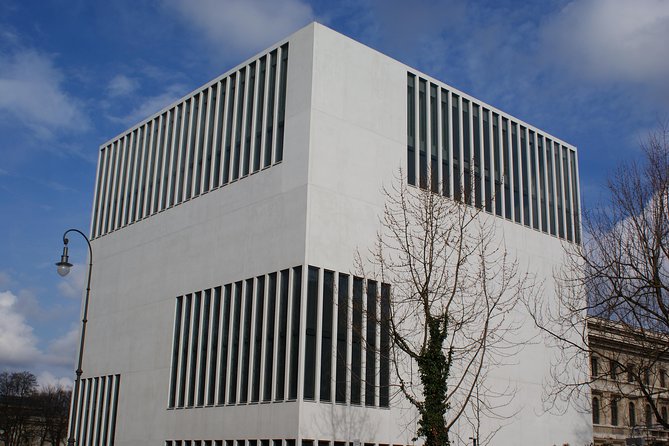
Reviewed · DACHAU MEMORIAL TOURS
Dachau Concentration Camp Memorial Site And Third Reich Day Tour From Munich
Dachau is not a casual sightseeing stop. It is a place of murder, forced labor, and suffering, and this eight-hour tour gives you the historical guidance needed to face it with care. You begin at Marienplatz, take the train north, and spend about five hours at the memorial before returning to Munich for a Third Reich walking tour.
I like two things here: the small group, capped at 15, makes it easier to hear, ask questions, and move through the site thoughtfully. I also like the full historical arc, from Dachau’s prisoner barracks and crematorium to Munich locations linked to Hitler’s rise.
The main drawback is the pace. You will walk a great deal, cover emotionally difficult material, and spend most of the day on your feet. Lunch is not included, and children under 14 cannot join.
In This Review
- Key points to know before booking
- Why this Dachau and Munich combination works
- Meeting at Marienplatz and taking the train north
- Entering Dachau Memorial Site
- The museum and your time to reflect
- Returning to Munich for lunch
- Walking through Munich’s Nazi-era sites
- Alun Evans and the value of a small group
- Price, age rules, and physical demands
- Who should book this day?
- Should you book the Dachau and Third Reich tour?
- FAQ
- Where does the tour start and end?
- How long does the experience last?
- How do I get to Dachau?
- Is lunch included?
- Are children allowed on the tour?
- Can I cancel for a full refund?
Key points to know before booking
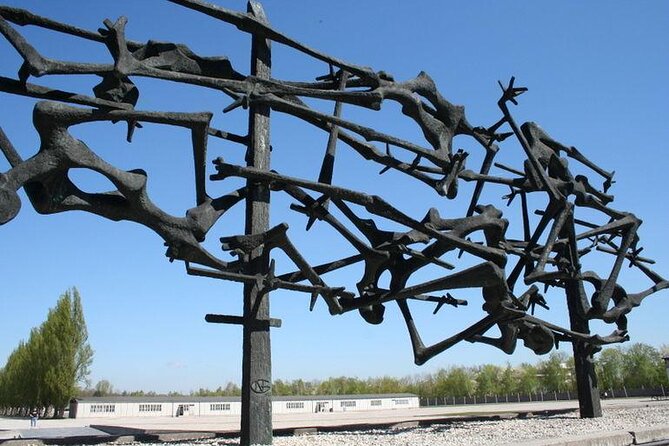
- Dachau gets the time it deserves: About five hours covers the memorial grounds, museum, reconstructed cell blocks, photographs, documents, crematorium, and other key areas.
- Alun Evans leads the experience: His approach combines clear explanation, respectful storytelling, and time for questions and private reflection.
- The train ride is part of the plan: You meet at Marienplatz and travel to Dachau by public transport, with the guide handling the route.
- Munich adds political context: The afternoon walk connects places such as the Old Town Hall, Hofbräuhaus, Odeonsplatz, and Königsplatz to the Nazi period.
- The group remains personal: A maximum of 15 people is useful at a memorial where quiet explanation matters.
- Plan for a serious, active day: Expect substantial walking, changing weather, and no hotel pickup or included meal.
Why this Dachau and Munich combination works
Many people visit Dachau and then leave Munich without understanding how the Nazi movement grew in the city. This tour links those two pieces. In the morning, you confront the machinery of persecution at the memorial. In the afternoon, you see the streets and buildings tied to the political movement that helped create it.
That connection gives the day a useful shape. Dachau shows the outcome: imprisonment, brutality, starvation, forced labor, and death. Munich shows more of the setting in which the Nazi Party gathered support, staged ceremonies, and built its public image.
I also appreciate that the day does not treat the memorial as a quick photo stop. The schedule allows about five hours there, including dedicated time in the museum. That matters because Dachau is spread across a large site, and the museum contains photographs, documents, and explanations that require quiet attention.
The tour is offered in English and starts at 9:00 a.m. at Marienplatz, Munich’s central square. It ends back at the same meeting point. The listed price is $145.18 per person, which is not the cheapest way to reach Dachau, but it includes the professional guide and transportation costs. For a small group and a full day of instruction, I see the price as reasonable if you want interpretation rather than simply admission and directions.
More Dachau memorial tours from Munich:
- Dachau Concentration Camp Memorial Site Tour from Munich by Train
★ 4.5 · 5,637 reviews - From Munich: Dachau Memorial Site Day Tour
★ 4.8 · 2,723 reviews - From Munich: Dachau Memorial Site Half-Day Trip
★ 4.7 · 2,526 reviews
Meeting at Marienplatz and taking the train north
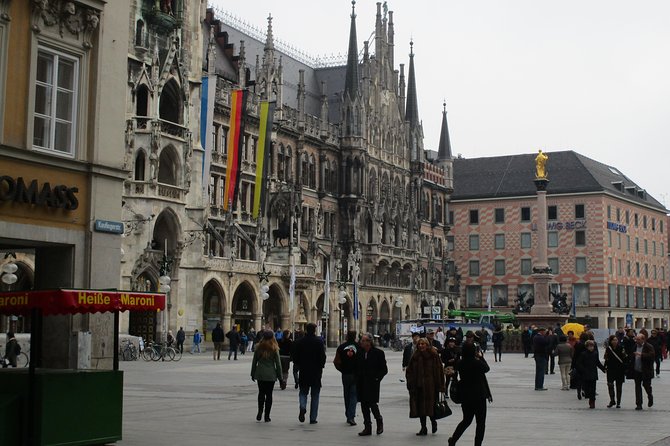
The morning begins with a guide meet and greet at Marienplatz. This is a practical meeting point in central Munich, close to public transportation and easy to build into a day of sightseeing.
From there, you board a train for the roughly 20-minute journey north to Dachau. The train is not a private coach, so you should be comfortable using public transport and following the guide through the station system. One useful benefit is that the guide takes responsibility for the route, timing, and any changes needed along the way.
The rail journey also keeps the morning grounded in ordinary Munich life. You leave the city center, pass through its modern transport network, and arrive at a place whose name carries enormous historical weight. That contrast can be striking, though the tour does not turn the journey into a sightseeing segment.
Wear shoes suited to extended walking. The day includes the memorial grounds, museum spaces, city streets, and public transport connections. Dress for the weather, since the tour operates in all conditions.
Entering Dachau Memorial Site
Dachau was the first Nazi concentration camp in Germany and became a model for the camp system that followed. The memorial is not simply a preserved prison. It is an educational site that explains how imprisonment, forced labor, punishment, and mass death became organized under the Nazi regime.
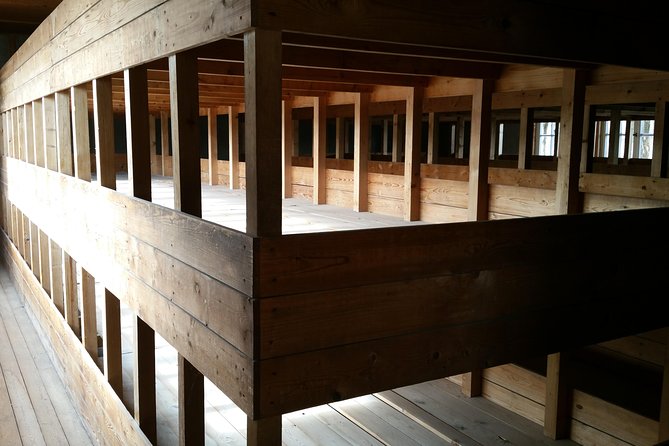
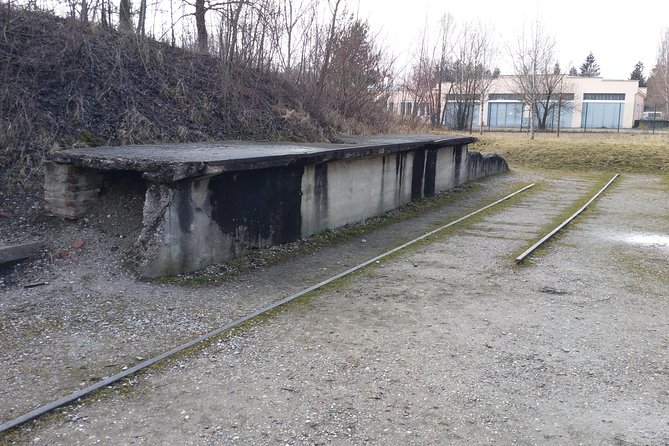
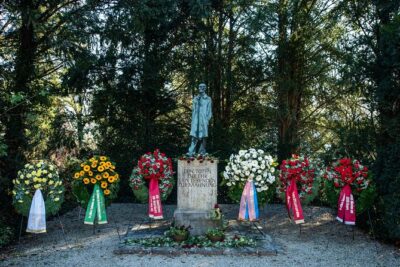
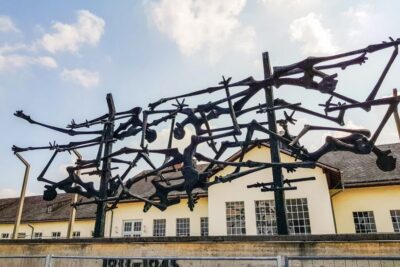
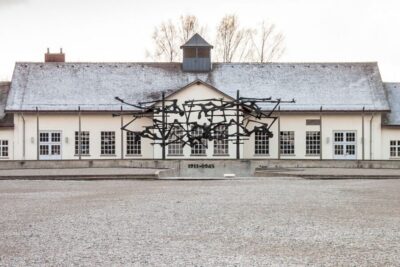
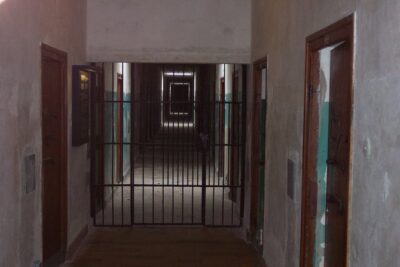
Your guide leads you through the former camp area and explains what you are seeing. The tour includes the reconstructed cell blocks, administration headquarters, photographs, documents, the crematorium area, and other memorial features.
The word reconstructed is important. Not every building visible today is original, so a guide helps you understand what has been preserved, what has been rebuilt, and what the site is trying to communicate. Without that context, the grounds can seem stark and confusing. With it, the layout begins to show how control operated, from administration to prisoner housing and punishment.
The memorial’s story includes roughly 200,000 prisoners. They came from many groups targeted by the Nazi state, including communists, German dissidents, gay men, Jehovah’s Witnesses, Jewish prisoners, and Polish men and women. The tour places individual suffering within that wider system without reducing Dachau to a list of dates.
This is difficult material. You will encounter photographs and accounts of torture, slavery, disease, deprivation, and death. A good guide must explain the facts without turning the site into a performance. Alun Evans is repeatedly praised for handling the subject with restraint, answering questions carefully, and knowing when to let people spend time alone.
That balance is one of the strongest reasons to consider a guided visit. You receive preparation before difficult sections, explanations of the camp’s function, and an opportunity to ask about details that may not be clear from the displays.
The museum and your time to reflect
The museum exhibit is an important part of the visit, not an optional extra to rush through. It supplies documents and personal stories that show how the camp developed and how prisoners experienced it.
You are also given allocated time to explore the museum and memorial areas at your own pace. That private time is valuable. A guide can give you the framework, but you may want to pause at a particular photograph, read a prisoner account, or visit a memorial without listening to a running explanation.
The experience can feel emotionally heavy, and that is not a flaw. Dachau should not be packaged as entertainment. The useful question is whether the tour helps you understand the evidence and gives you enough room to process it. This one appears designed to do both.
Do not plan another demanding attraction immediately afterward. The schedule includes a break for lunch before the Munich walking tour, but you may still want a little quiet time. The material is serious, and five hours at the memorial can leave you mentally tired even if you are physically prepared.
More Third Reich and wartime history walks in Munich:
- Munich: Third Reich & WWII Walking Tour
★ 4.6 · 6,181 reviews - Third Reich Walking Tour Munich
★ 4.5 · 4,291 reviews - Munich: Birthplace of the Third Reich Guided Walking Tour
★ 4.6 · 771 reviews - Munich World War II Sites Including Dachau Concentration Camp
★ 4.5 · 570 reviews
Returning to Munich for lunch
After the Dachau visit, you return to Munich by train with the guide. Lunch is at your own expense, and the supplied details do not specify a restaurant or fixed meal stop.
That gives you some freedom, but it also means you should budget for food and avoid assuming lunch is included in the $145.18 price. The break separates the two parts of the day. You can eat, collect yourself, and prepare for a city walk that changes from camp history to the rise and public life of the Nazi Party.
The transition may feel abrupt. Dachau is a memorial and former concentration camp, while the afternoon takes place among Munich’s everyday streets and historic buildings. Still, that contrast is useful. It shows that the Nazi regime was not an isolated force operating somewhere far away. Its politics developed in a recognizable city, using public places, speeches, ceremonies, and organized violence.
Walking through Munich’s Nazi-era sites
The afternoon city tour begins around Marienplatz and lasts about two hours. The guide points out locations connected to Adolf Hitler and the Nazi Party, explaining what happened there and how each place fits into the wider story.
At the Old Town Hall, you learn about the decision taken in 1938 to carry out a pogrom against Germany’s Jewish population. This stop is brief, about 10 minutes, but its importance is large. It connects Nazi policy to a specific civic building in the center of Munich.
You then pass the Staatliches Hofbräuhaus, where Hitler regularly gave speeches. This is not a museum visit or an indoor tour of the building. You view it from the walking route and hear how public speaking spaces helped the movement gather attention and support.
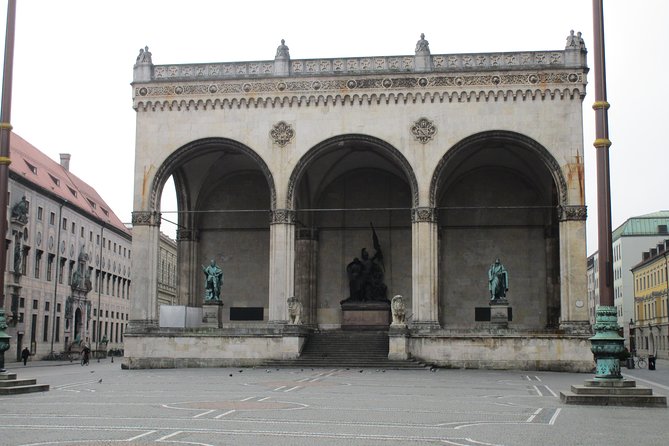
At Odeonsplatz, the guide discusses the Beer Hall Putsch of 1923. This failed attempt to seize political power became a major part of Nazi mythology and helped shape Hitler’s public profile. Seeing the location makes the event less abstract, especially when the guide explains how political theater and later propaganda gave it lasting importance.
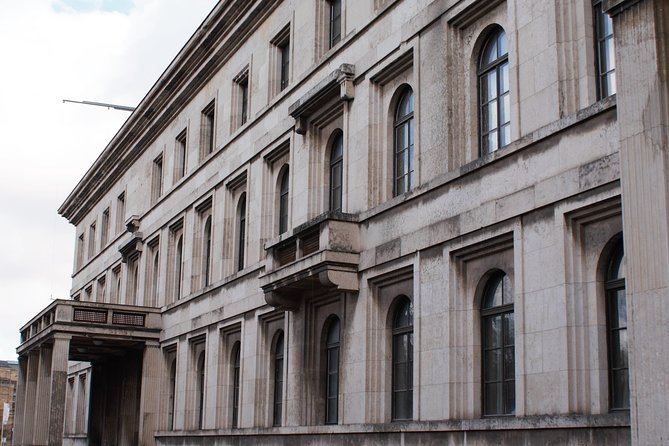
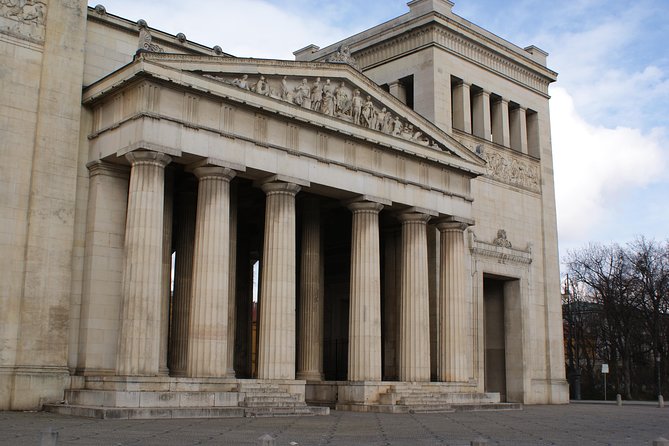
Königsplatz is another major stop. The square was used for Nazi ceremonies, and the tour also connects it with the Munich Agreement of 1938. The space helps show how architecture and public gatherings were used to project authority and stage political messages.
The city walk is best for people who want political background, not just camp history. It covers Hitler’s early Munich years, the German Workers Party, the beginning of the German SS, and locations tied to the movement’s growth. The information can be dense, but the guide’s job is to connect the events rather than simply point at buildings.
Alun Evans and the value of a small group
The guide makes a large difference on this particular experience. Alun Evans is identified as the guide, and the feedback supplied about his work is unusually consistent: clear speaking, strong preparation, careful answers, good timing, and a respectful manner at Dachau.
He has reportedly guided at the memorial for many years and knows how to move through the site efficiently. That can help you avoid spending too much time in one crowded area and still leave room for the museum and memorials.
The group maximum is 15 people. Some departures may be smaller, and a group of five has been specifically described as easy to hear and comfortable for questions. A small group also makes it less awkward to ask about difficult subjects or request clarification.
This is not the kind of tour where you should expect nonstop entertainment. The best parts are the clear structure, one-on-one conversations, historical context, and space to listen. Alun’s approach appears suited to people with very different levels of background, from serious Second World War students to visitors who know only the broad outline.
The guide also has to manage public transport, train delays, weather, and a long schedule. The information provided indicates that backup plans have been used when trains were delayed. That practical management is easy to overlook, but it can prevent a serious day from becoming stressful.
Price, age rules, and physical demands
At $145.18 per person, this is a premium-priced public transport tour. You pay for the guide’s time, the small-group format, and transportation costs, while food, drinks, and hotel transfers remain separate.
I would compare it with the cost of reaching Dachau independently, then ask what kind of day you want. If you only need transport and entry information, you may not need this tour. If you want the camp explained in context, the city connected to it, and a guide who can handle questions and timing, the added cost is easier to justify.
The tour involves a high amount of walking. You need a moderate level of physical fitness and should dress properly for all weather conditions. There is no hotel pickup or drop-off, so you must reach Marienplatz for the 9:00 a.m. start and return there at the end.
Children under 14 are not permitted. Service animals are allowed. The activity is near public transportation, which makes the central meeting point practical, but you should still allow time to arrive before the group leaves.
Free cancellation is available if you cancel at least 24 hours before the start time. Changes or cancellations made within 24 hours are not accepted for a refund.
Who should book this day?
I would choose this tour if you want a guided, serious introduction to Dachau and the Nazi period in Munich. It suits first-time visitors, history-focused visitors, families with older teenagers, and anyone who prefers asking questions rather than reading every display alone.
It is also a good fit if you want to connect the memorial with Munich’s political past. The afternoon walk gives you places and events to remember after the morning visit, including the Beer Hall Putsch, Nazi ceremonies at Königsplatz, and speeches at the Hofbräuhaus.
I would think twice if you dislike long walking days, public transport, emotionally difficult sites, or structured group touring. Dachau is not something to squeeze between lighter attractions, and the afternoon adds more information after an already demanding morning.
Should you book the Dachau and Third Reich tour?
Book it if you want depth, context, and a small group rather than the cheapest possible route to Dachau. The strongest features are the five-hour memorial visit, time for the museum, the linked Munich walking tour, and Alun Evans’s careful handling of painful material.
Skip it if you only want a short visit or prefer exploring entirely alone. For most people who want to understand both what happened at Dachau and how Munich became a center of Nazi power, this is a well-planned and worthwhile full day.
FAQ
Where does the tour start and end?
The tour starts at Marienplatz in central Munich at 9:00 a.m. It ends back at the same meeting point.
How long does the experience last?
The full excursion lasts approximately eight hours. About five hours are allocated to Dachau Memorial Site, followed by a lunch break and roughly two hours of walking in Munich.
How do I get to Dachau?
You travel with the guide by train from Marienplatz. The journey takes approximately 20 minutes, and transportation costs are included.
Is lunch included?
No. Lunch, food, and drinks are not included, so you pay for your own meal during the break between the Dachau visit and the Munich walking tour.
Are children allowed on the tour?
Children under 14 are not permitted. The activity also requires a moderate level of physical fitness because substantial walking is involved.
Can I cancel for a full refund?
Yes, if you cancel at least 24 hours before the experience start time. Cancellations or changes made less than 24 hours before the start are not refunded.
Just added around Munich
- Private Transfer from Munich to Salzburg, English-speaking driver★ 3.5 · 3 reviews
- Private tour from Munich to Rothenburg and Harburg★ 5.0 · 3 reviews
- Scenic Adventure Private Day Tour to The Konigssee Salzburg★ 4.5 · 3 reviews
- Munich: Capture the most Photogenic Spots with a Local★ 5.0 · 3 reviews
- Private Beer Tasting Tour in Munich with Oktoberfest Museum★ 4.3 · 3 reviews
- Munich Photoshoot: A Must-Have Holiday Experience!★ 5.0 · 3 reviews
- Paul’s Private Tour in the Alte Pinakothek Munich★ 5.0 · 3 reviews
- Private Tour to Hallstatt Salt Mine and Skywalk with Lunch★ 5.0 · 3 reviews
Dachau Memorial Tours, compared.
Dachau Concentration Camp Memorial Site Tour from Munich by Train
Read our review →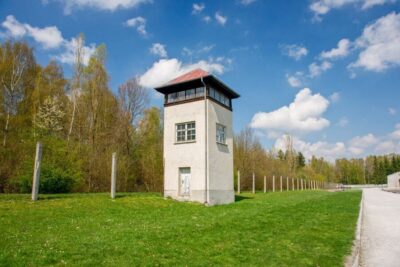
Dachau Concentration Camp Memorial Tour with Train from Munich
Read our review →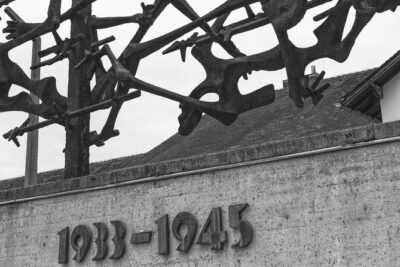
Early-Start Dachau Memorial Half-Day Tour from Munich
Read our review →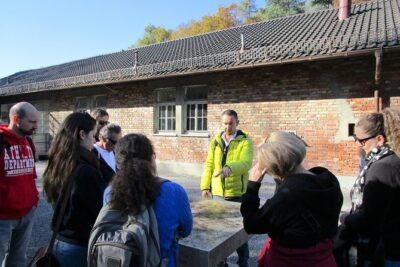
Guided Dachau Concentration Camp Memorial Site Tour with Train from Munich
Read our review →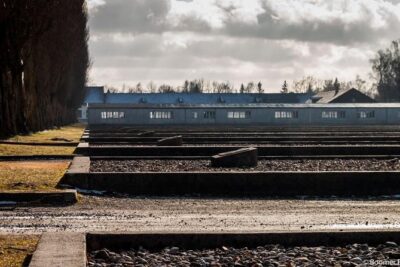
Full-Day Dachau Concentration Camp Memorial Site Tour from Munich
Read our review →Browse the lists this tour appears in