
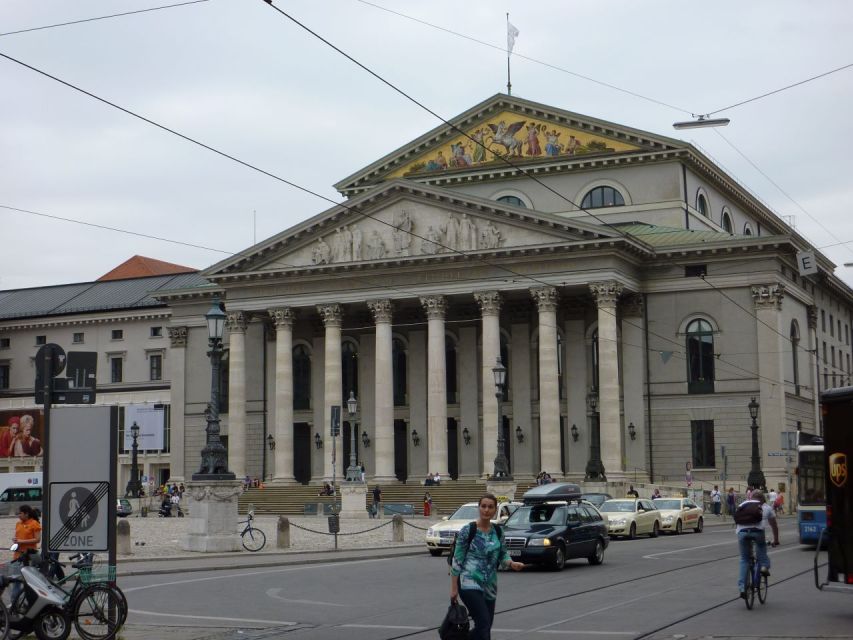
Reviewed · HISTORICAL TOURS
Munich: Private Walking Tour of the Historical City Center
Munich’s old center is a history lesson you can walk through, with major events unfolding along the same streets you see today. This private tour connects Marienplatz, the Rathaus-Glockenspiel, the Frauenkirche, Odeonsplatz, Hofbräuhaus, and Viktualienmarkt with stories about kings, monks, Nazi power, and one carpenter’s attempt to stop Hitler.
I like the private format, since your guide can adjust the pace and explain the topics that interest you most. I also like the choice of adding the Residenz Museum, which gives you a chance to move beyond street views and see the former royal residence. The main caution is value: $288 is a sensible group price for several people, but it is a lot for only two.
In This Review
- Key points to know before booking
- Starting beneath Munich’s Rathaus-Glockenspiel
- Following Munich back to its monastic beginnings
- The human stories behind Munich’s wartime past
- Choosing the Residenz Museum option
- Beer gardens, Hofbräuhaus, and the city’s social life
- Finishing at Viktualienmarkt
- What the private format is really worth
- Timing, walking, and practical limits
- Who will get the most from this Munich walk
- Should you book this private Munich tour?
- FAQ
- Where does the Munich walking tour begin?
- How long does the tour last?
- Is the tour private?
- What languages are available?
- Is the Residenz Museum included?
- Are food and drinks included?
- What places are covered on the walk?
- Is the tour suitable for wheelchair users?
- Can I cancel the booking?
Key points to know before booking
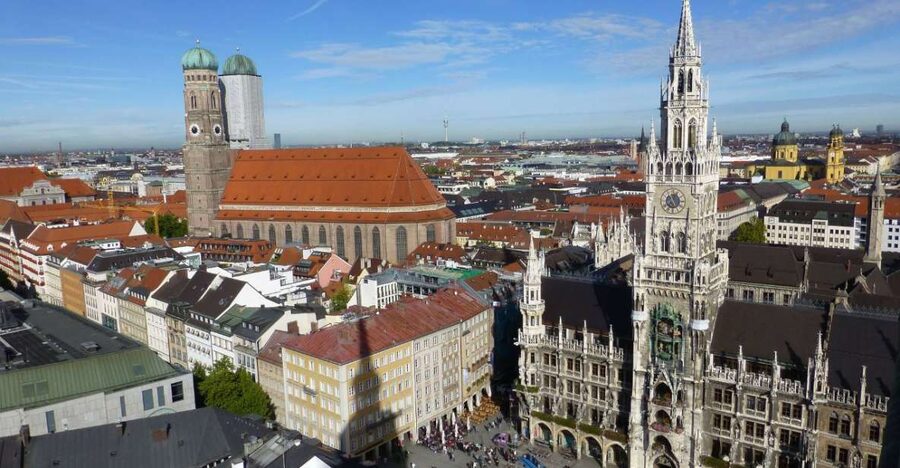
- Marienplatz is the starting stage: Meet at the fish fountain in front of the Town Hall, then begin among Munich’s Old and New Town Halls.
- The stories go beyond royal monuments: You hear about Eva Braun, Georg Elser’s assassination plan, and the Beer Hall Putsch.
- The Residenz is optional: Choose that version if you want an indoor museum visit, but entrance fees are not included.
- Beer culture is part of the history: The walk includes Hofbräuhaus, founded in 1589, older beer gardens, and Viktualienmarkt.
- The private price favors groups: One fee covers up to 15 people, making the cost easier to justify for a family or small group.
- This is a walking tour with limits: It lasts three hours and is not suitable for wheelchair users.
Starting beneath Munich’s Rathaus-Glockenspiel
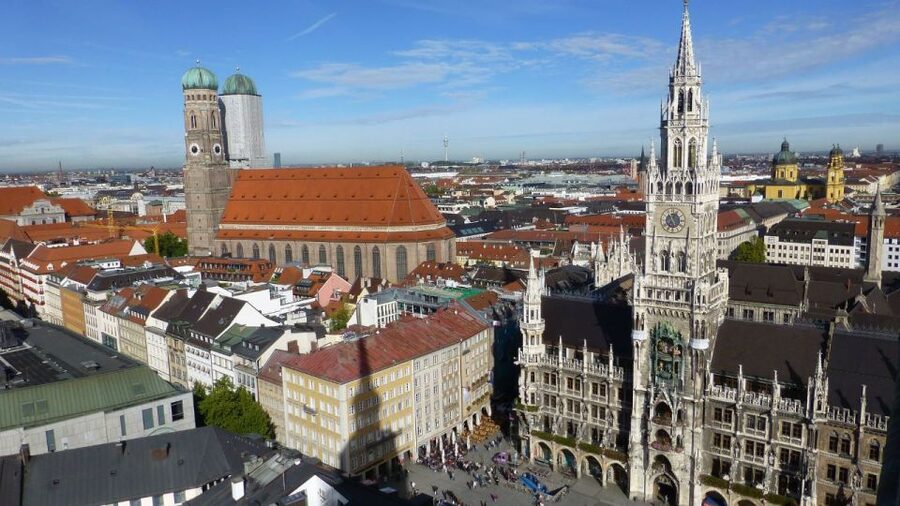
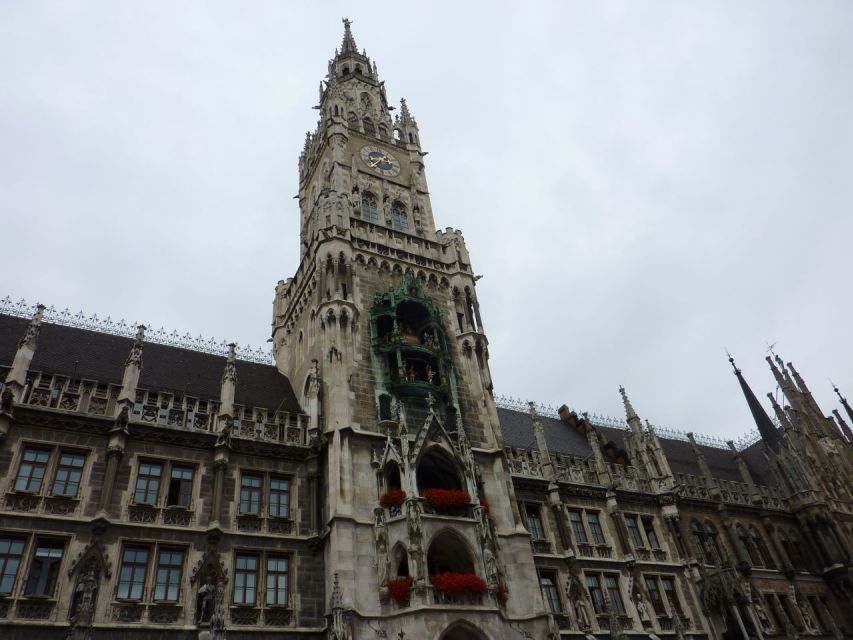
You meet your guide at the fish fountain in front of the Town Hall at Marienplatz 8. This is a useful starting point because Marienplatz sits at the center of Munich’s old town, surrounded by some of the city’s best-known buildings.
The square takes its name from Mary’s Column, a prominent monument that gives the place its religious identity. From here, your guide introduces both the Old Town Hall and the New Town Hall, helping you sort out which building is which before the clock tower steals your attention.
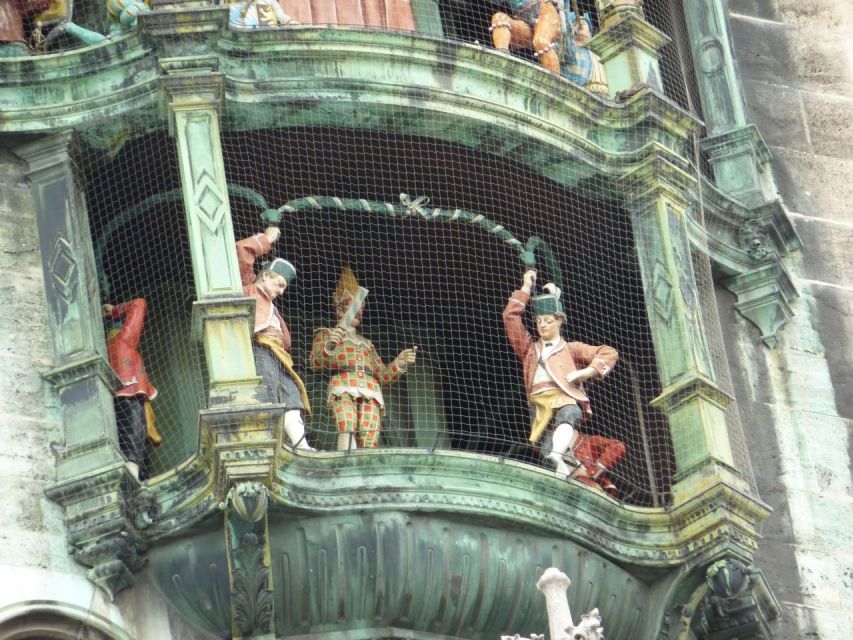
The Rathaus-Glockenspiel is more than decoration. Your guide explains the meaning behind the figures and movements in the clock tower, giving you a better sense of why this Munich landmark matters. If you simply stop for a photograph, you see an attractive clock. With the story, you understand what the scene represents.
The fish fountain is a clear meeting point, but Marienplatz can be crowded. I would arrive a little early and keep your guide’s contact details available. The tour is private, so an earlier start may sometimes be possible if you request it, but that depends on the guide.
More walking tours in Munich:
- Munich: Third Reich & WWII Walking Tour
★ 4.6 · 6,181 reviews - Third Reich Walking Tour Munich
★ 4.5 · 4,291 reviews - Munich: Old Town & Viktualienmarkt City Walk in German
★ 4.7 · 2,304 reviews
Following Munich back to its monastic beginnings
The tour then reaches St. Peter, described as Munich’s oldest Catholic church. This stop puts the city’s name and early growth into religious context. Monks helped give rise to Munich, and that background explains why the settlement developed around institutions that were both spiritual and practical.
You will not just be ticking off another church facade. The point is to see how Munich began before it became a royal capital and a major center of beer, trade, and politics. Your guide adds local stories and legends, which can make the early chapters easier to remember.
The tour also includes the Frauenkirche, recognizable by its two large towers and described as the largest church in Munich. Your guide explains the famous devil’s footprint inside the cathedral and the legend connected with it.
This is a good example of the tour’s approach. You get a real building, a piece of local belief, and a story that has stayed attached to the place. Just keep in mind that the tour description does not promise a long interior visit at every church. Much of the experience is built around seeing the sites and hearing their meaning as you walk.
The human stories behind Munich’s wartime past
The most serious section covers Munich’s role in the Nazi period and World War II. Your guide discusses Eva Braun, a young German woman from Munich who later became Hitler’s wife. That detail adds a personal connection to a city often presented only through grand political events.
You also hear about Georg Elser, a Munich carpenter who planned an assassination attempt on Hitler. His goal was to prevent the outbreak of World War II, and his plan was remarkably daring. This story is especially important because it shows that opposition existed before the war fully unfolded, even though the attempt failed.
At Odeonsplatz, the focus shifts to the Beer Hall Putsch. In this first Nazi attempt to seize power, about two thousand men led by Adolf Hitler marched toward central Munich. The location is not just a handsome square. It was a real setting for a dangerous political confrontation.
I value this part of the walk because it links ordinary city streets with decisions that changed Europe. You are not only hearing dates and names. You are standing in places connected with failed resistance, political violence, and the rise of the Nazi movement.
The subject matter is heavy, so this tour may not suit you if you want a light introduction built mainly around food and pretty buildings. For anyone who wants Munich’s past presented plainly, this section gives the walk more weight than a standard sightseeing circuit.
Choosing the Residenz Museum option
The Residenz Museum is an optional addition. If you select that version, your guide leads you through the former royal residence and helps explain what you are seeing.
The advantage is clear: the outdoor walk gives you Munich’s public face, while the Residenz shows how Bavaria’s rulers lived and displayed power indoors. You can compare busy public squares with royal rooms, collections, and formal interiors.
Entrance fees are not included, so check the total cost before selecting this option. The added visit also makes the three-hour schedule more demanding. If you are most interested in royal art and architecture, the Residenz is likely worth the extra time. If your priority is Munich’s political history and old-town streets, you may prefer to keep the tour focused on the outdoor route.
The supplied information does not specify the exact number of rooms or the length of the museum portion. That means you should treat the Residenz as an added component rather than assume it is a full museum tour with unlimited time.
A few more Munich tours and experiences worth a look
- Munich: Guided Tour of the historic Town Hall on Marienplatz
★ 4.8 · 63 reviews - Munich Craft Beer & Cultural Tour With Snack
★ 5.0 · 46 reviews - Munich History Tour: Private & Personalized with a Local Guide
★ 4.5 · 33 reviews - Munich and Nazi History Combination Day Tour Small Group
★ 5.0 · 31 reviews
Beer gardens, Hofbräuhaus, and the city’s social life
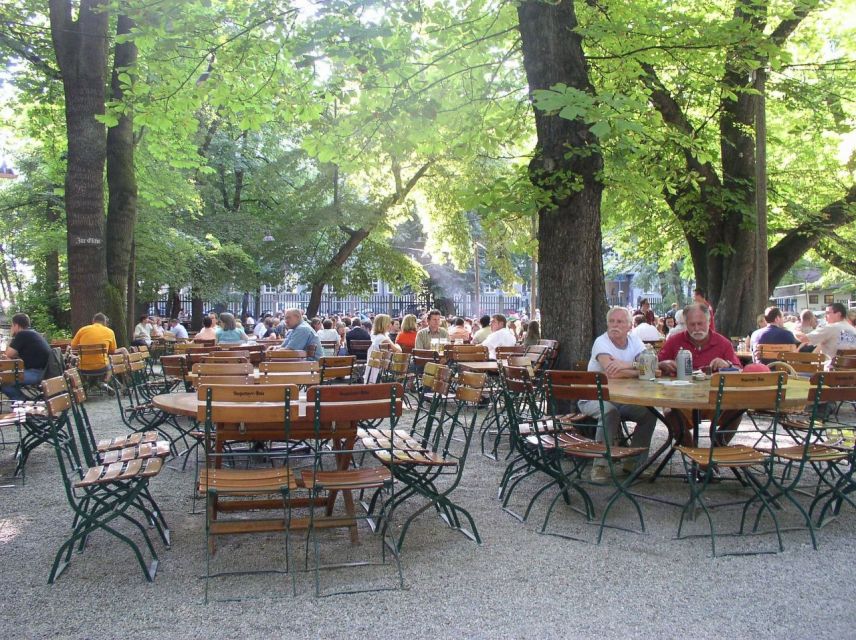
Munich’s beer culture gets its own place in the walk. You pass famous beer gardens, some with traditions reaching back nearly 450 years. Your guide also explains Hofbräuhaus, the royal brewery established in 1589.
That historical detail matters because beer in Munich is not simply a drink sold to visitors. It is part of the city’s public life and old civic identity. A beer garden can be a place for food, conversation, shade, and local custom, not just a stop for a large mug.
You should not expect food or drinks to be included. The guide introduces the places and their history, but any meal or beer is your own expense. That can be a benefit, since you are free to return later and choose what you actually want.
Hofbräuhaus is famous, and that fame brings crowds. Your guide can give you context for the building and brewery, but this is not a promise of a quiet tasting or reserved table. If you want to eat there afterward, plan that separately.
Finishing at Viktualienmarkt
The tour ends by passing Viktualienmarkt, Munich’s central public food market. It offers fresh produce, local delicatessen, and one of the city’s most central beer gardens.
This is a practical finish. After three hours of history and walking, you are left near food and drink rather than dropped at an isolated monument. You can continue browsing the stalls, stop for something to eat, or use the market as a starting point for more time in the old center.
I especially like this final stop because it shifts the tour from formal history to daily city life. Churches, royal buildings, and political squares tell you what Munich became. A food market shows how the center still works for people who live there.
The market is also useful if you are planning the rest of your day. You can ask your guide for help choosing between a snack, a beer garden, or another nearby sight, although the included service is the guiding itself, not food or drinks.
What the private format is really worth
The tour costs $288 per group of up to 15 people. That is not a per-person price, so the value changes sharply with your group size.
For 10 to 15 people, the cost works out to roughly $19 to $29 per person before any entrance fees. For six people, it is $48 each. For two people, it is $144 each, which makes the tour feel expensive for a three-hour walk.
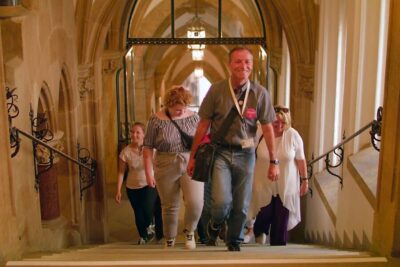
The private setup gives you more control than a large public tour. You can ask questions freely, request a different pace, and focus more on churches, Nazi history, royal Munich, or beer culture. You also avoid being tied to strangers’ interests.
But private does not automatically mean better guiding. One account described a guide who spoke quietly and was difficult to understand, even with only two people. That is a useful warning: ask your guide to speak up if needed, and do not hesitate to say when you cannot hear.
Another guide, Tom, received especially strong praise for his knowledge of Munich and natural storytelling. Since guide quality can shape the whole experience, it is worth confirming the language and any preferences when you book. English and German are available.
Timing, walking, and practical limits
The tour lasts three hours. That is enough time for a meaningful look at central Munich, but not enough for long visits inside every landmark. Think of it as a guided orientation with selected stops, not a full museum program.
You will be on foot through the historical center. Comfortable shoes are the sensible choice, especially if you select the Residenz option and spend additional time indoors. The activity is not suitable for wheelchair users, so check that limitation carefully before booking.
The meeting point is in front of the Town Hall at the fish fountain, Marienplatz 8, 80331 München. The guide leads the tour in English or German, and the group is private.
You can cancel up to 24 hours before the start for a full refund. The reserve-now, pay-later option also helps if your Munich plans are still moving around. These policies do not change the experience itself, but they reduce the risk of booking a private tour too early.
Who will get the most from this Munich walk
I would choose this tour if you want a personal introduction to Munich and care about the stories behind the monuments. It suits families, couples, and small groups who want to ask questions without joining a large public group.
It is also a good fit if you have only a short time in Munich. The route gathers many central sights into one session, and the final stop at Viktualienmarkt gives you an easy place to continue exploring.
History-focused visitors should pay close attention to the Georg Elser and Beer Hall Putsch sections. Those subjects add context that you may miss if you only follow the usual route from church to palace to beer hall.
You may want a different activity if your main goal is a long museum visit, a food tasting, or a relaxed beer tour. Food and drinks are not included, and the Residenz entrance fee is extra. Also, with only two people, the group price is harder to justify unless personalized guiding is important to you.
Should you book this private Munich tour?
Book it if you want Munich’s central sights explained through politics, religion, royal life, and beer culture rather than seen as isolated photo stops. The private format is most worthwhile for a larger group, and the option to add the Residenz gives you useful flexibility.
I would be more cautious if you are a pair watching every euro, or if you need guaranteed access to every church and museum interior. For a group of friends or family members, though, $288 can be fair for three hours with a dedicated guide, especially if you value questions, a custom pace, and a strong storyteller such as Tom.
FAQ
Where does the Munich walking tour begin?
It begins at the fish fountain in front of the Town Hall at Marienplatz 8, 80331 München.
How long does the tour last?
The walking tour lasts three hours.
Is the tour private?
Yes. It is a private group tour for up to 15 people.
What languages are available?
The live guide can conduct the tour in English or German.
Is the Residenz Museum included?
The Residenz Museum is included only if you choose that tour option. Entrance fees are not included in the price.
Are food and drinks included?
No. Food and drinks are not included.
What places are covered on the walk?
The route includes Marienplatz, the Old and New Town Halls, St. Peter, the Frauenkirche, Odeonsplatz, Hofbräuhaus, and Viktualienmarkt. It also covers Munich’s beer gardens and the Rathaus-Glockenspiel.
Is the tour suitable for wheelchair users?
No. The activity is not suitable for wheelchair users.
Can I cancel the booking?
Yes. You can cancel up to 24 hours in advance for a full refund. You can also reserve now and pay later.
Just added around Munich
- Private Transfer from Munich to Salzburg, English-speaking driver★ 3.5 · 3 reviews
- Private tour from Munich to Rothenburg and Harburg★ 5.0 · 3 reviews
- Scenic Adventure Private Day Tour to The Konigssee Salzburg★ 4.5 · 3 reviews
- Munich Photoshoot: A Must-Have Holiday Experience!★ 5.0 · 3 reviews
- Munich: Capture the most Photogenic Spots with a Local★ 5.0 · 3 reviews
- Private Beer Tasting Tour in Munich with Oktoberfest Museum★ 4.3 · 3 reviews
- Paul’s Private Tour in the Alte Pinakothek Munich★ 5.0 · 3 reviews
- Private Tour to Hallstatt Salt Mine and Skywalk with Lunch★ 5.0 · 3 reviews
Historical Tours, compared.
Guided Tour of the historic Town Hall on Marienplatz
Read our review →
Munich History Tour: Private & Personalized with a Local Guide
Read our review →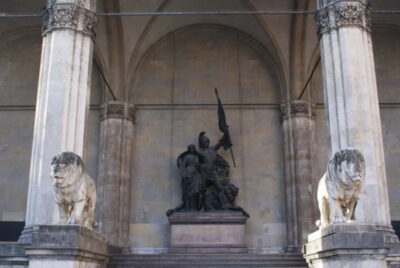
Munich and Nazi History Combination Day Tour Small Group
Read our review →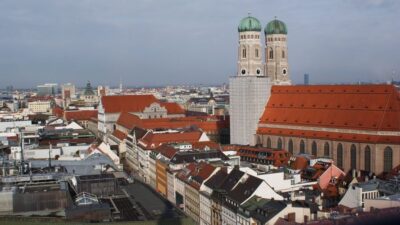

Private Sound-of-Music and Historic Salzburg Tour from Munich
Read our review →
Salzburg History & Food Private Tour with Munich train add-on
Read our review →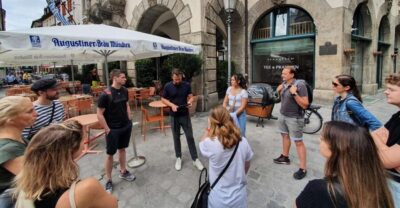
Browse the lists this tour appears in