
Reviewed · THIRD REICH & WWII TOURS
Munich: Historical Walking Tour on the Rise of Hitler
Munich’s elegant squares and art-filled streets hide a grim truth: this was the city where Hitler’s political career took shape. This walking tour follows that story through the places where he spoke, the Nazis staged parades, and propaganda buildings changed the city’s face. Alex, a Munich native, keeps the route chronological, which makes a difficult subject easier to follow.
I like the clear historical structure and Alex’s personal connection to Munich. I also like that the tour treats the subject seriously without becoming stiff or joyless. The main consideration is language: the live guide speaks German, so you need a good command of German to get the full value from the commentary.
In This Review
- Key points
- Starting at Marienplatz, where Munich’s story turns dark
- Understanding why Munich became the Nazi movement’s center
- Following the places where speeches and parades shaped public life
- Seeing propaganda buildings that survived the war
- Connecting political power with Munich’s bombing war
- What Alex adds as a Munich-born guide
- How the 2.5-hour pace feels
- Is $30 a fair price?
- Who should book this Munich history walk?
- Practical advice before you meet at the Marian Column
- Should you book it?
- FAQ
- Where does the tour meet?
- How long does the walking tour last?
- What language is the tour in?
- Who leads the tour?
- What is the tour about?
- Is the tour wheelchair accessible?
- What should I bring?
- Is hotel pickup included?
- Can I cancel for a full refund?
- Do I have to pay when I reserve?
Key points
- Meet at Marienplatz: Start beside the Marian Column, the large central column with its small golden statue.
- Follow Hitler’s rise in order: The route connects Munich places to the wider political story instead of presenting isolated facts.
- See surviving Nazi-era buildings: Many propaganda structures escaped wartime destruction and still shape the city center.
- Visit places of speeches and parades: The walk links public squares and buildings to rallies, worship, and Nazi ceremony.
- Learn from a local guide: Alex was born and raised in Munich and brings a personal interest in understanding how National Socialism grew there.
- Plan for any weather: The walk lasts 2.5 hours, takes place rain or shine, and calls for comfortable shoes.
Starting at Marienplatz, where Munich’s story turns dark
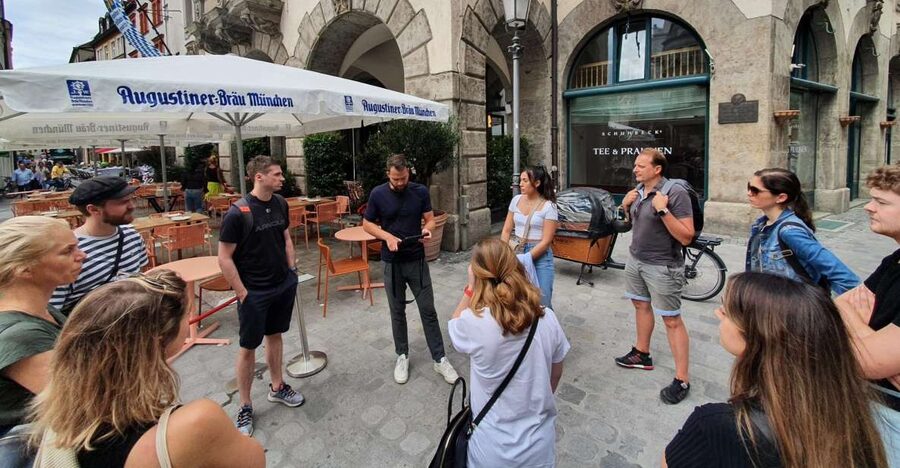
The meeting point is easy to find: Marienplatz, beside the Marian Column. Look for the large column with the small golden statue at its center. This central location is useful if you are already exploring Munich, and it gives the tour a familiar starting point before the subject turns to the city’s darker past.
The tour does not treat National Socialism as a remote chapter that happened somewhere else. It shows how the movement developed in Munich, a city known for art and culture that became the center of Nazi political activity. That contrast is one of the strongest reasons to take the walk early in your stay.
Alex presents the material in chronological order. I find that approach especially helpful with a subject full of dates, groups, speeches, and political changes. Instead of jumping from one famous site to another, you can follow the progression from Hitler’s early presence in Munich to the growth of the Nazi movement and the city’s later role under the dictatorship.
More Third Reich and wartime history walks in Munich:
- Munich: Third Reich & WWII Walking Tour
★ 4.6 · 6,181 reviews - Third Reich Walking Tour Munich
★ 4.5 · 4,291 reviews - Munich: Birthplace of the Third Reich Guided Walking Tour
★ 4.6 · 771 reviews
Understanding why Munich became the Nazi movement’s center
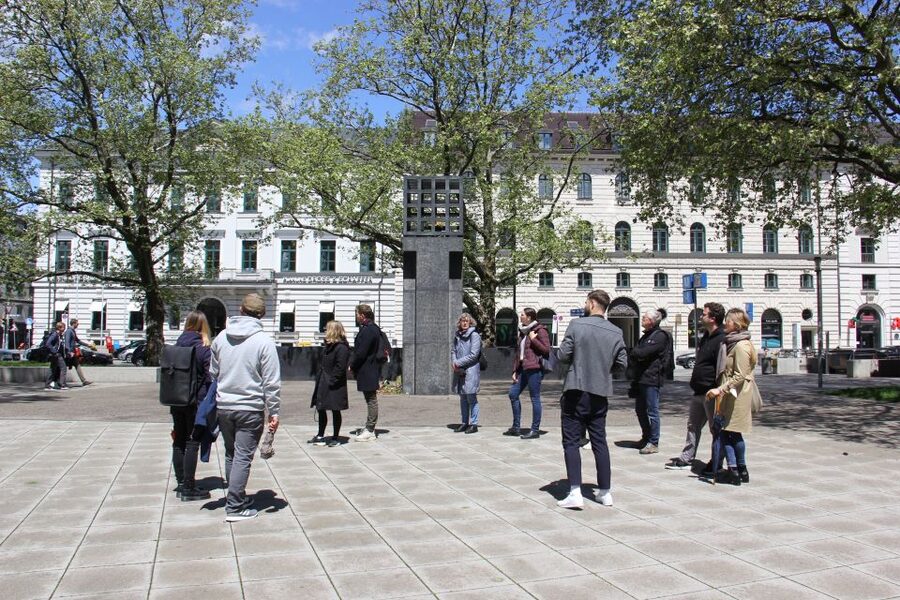
The tour’s central question is not simply where Hitler went. It asks how a flourishing European city became the birthplace of National Socialism. That shift in focus matters.
You will learn about Munich as the setting where an unknown Austrian soldier became the leader of the Third Reich. The city later received Hitler’s honorary title of capital of the movement, a label that reflected its importance to Nazi propaganda and political identity.
Alex’s stated reason for leading this tour is also useful. He has been interested in the subject since his youth, not as a collector of Nazi trivia, but as someone trying to understand how such an inhuman dictatorship could rise in Germany and destroy much of Europe within a few years. That framing helps keep the walk focused on causes and consequences rather than on fascination with Hitler.
The subject can be uncomfortable, and that is appropriate. At the same time, Alex believes a guided walk should be engaging and accessible. The tone is described as serious but not humorless, with room for questions and short pauses. That balance is important because a two-and-a-half-hour discussion of political terror can become exhausting if the guide only recites dates and names.
Following the places where speeches and parades shaped public life
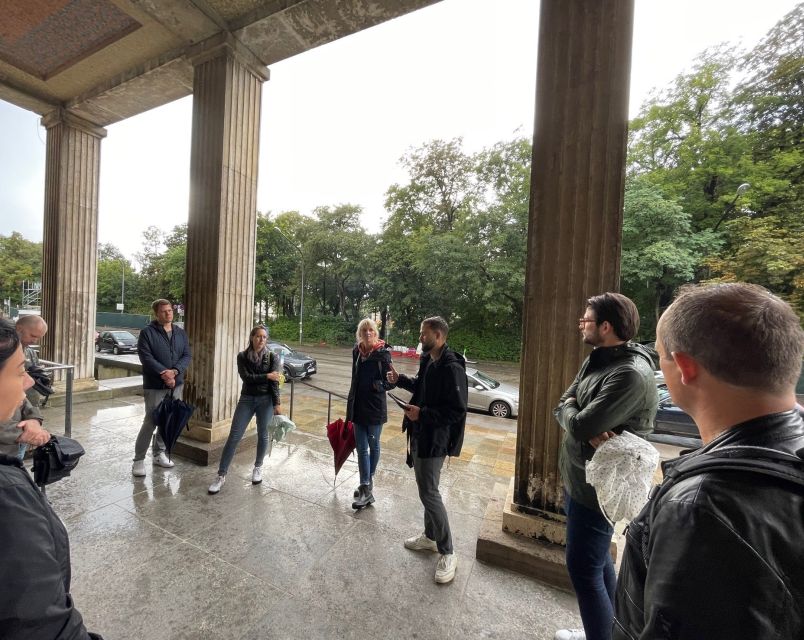
A major strength of the walk is its attention to public space. The tour visits places where Hitler gave speeches, where the Nazis held parades, and where Munich residents experienced the movement as a highly visible force in daily life.
A square or monumental building can look ordinary when you pass it alone. With historical explanation, its purpose becomes clearer. You begin to see how architecture, ceremony, speeches, and crowds were used to turn politics into a public spectacle.
The exact sequence of stops can vary with the guide and city conditions, but the plan is to visit the most important buildings and squares built by the National Socialists or used by them as places of political worship. The word worship is telling here. Nazi ceremony often borrowed the visual language of religion, using ritual, symbols, memorials, and carefully staged gatherings to create loyalty.
This is also why the tour is more useful than a simple list of Nazi landmarks. Alex connects buildings to what happened in front of them. You are not only looking at masonry. You are considering the speeches, parades, political theater, and pressure that gave those places their meaning.
Seeing propaganda buildings that survived the war
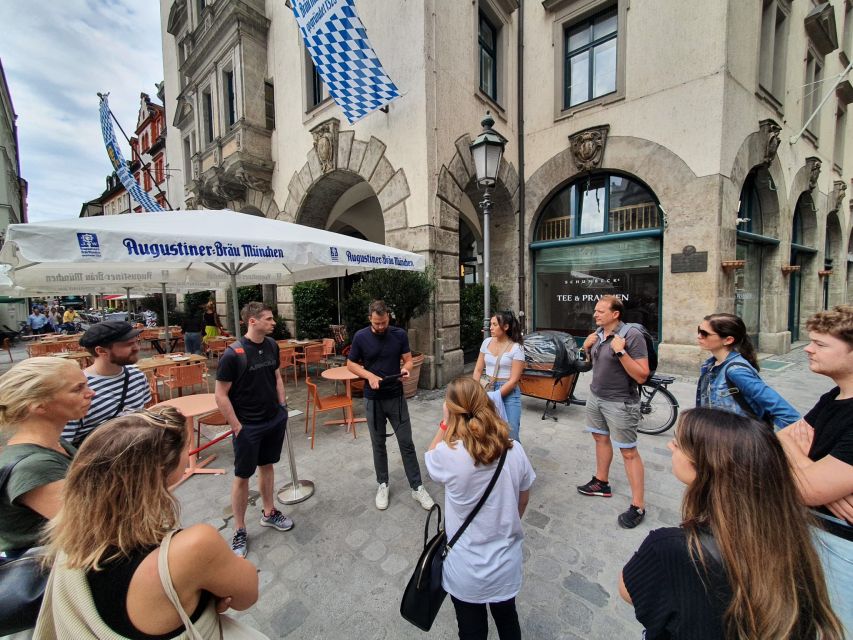
Munich’s Nazi-era building program produced many propaganda structures. A surprising number survived the Second World War with little damage, so they remain part of the city’s present-day appearance.
That creates one of the walk’s most powerful tensions. Modern Munich is open and outward-looking, yet some of its buildings were designed to project authoritarian power. The tour encourages you to recognize those structures without turning them into monuments of admiration.
I appreciate this focus on surviving buildings because it makes the past harder to keep at a safe distance. You may have read about Nazi propaganda in a book, but standing before a building created to support that propaganda gives the subject a physical scale. You can see how the regime wanted to occupy the city and shape the way people moved through it.
The tour also helps you think about what it means for a city to live with difficult architecture. These buildings are not simply museum objects. They remain part of Munich’s streets and public spaces. Understanding their original purpose gives you a more careful view of the city as you continue exploring after the walk.
More walking tours in Munich:
- Munich: Old Town & Viktualienmarkt City Walk in German
★ 4.7 · 2,304 reviews - Munich: Night Watchman Walking Tour
★ 4.7 · 2,092 reviews - Munich Ghosts and Spirits Evening Walking Tour
★ 5.0 · 1,900 reviews - Munich Old Town Walking Tour
★ 4.5 · 1,287 reviews
Connecting political power with Munich’s bombing war
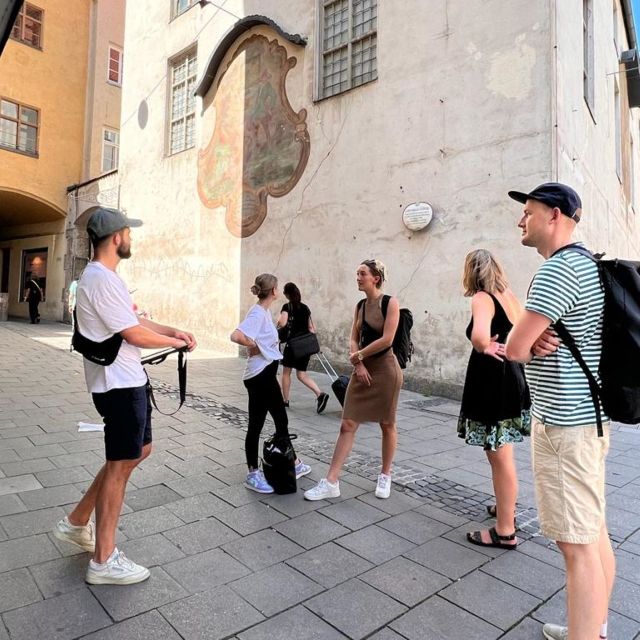
The route also deals with the bombing war that Munich endured. This adds an important second layer to the story.
The city was not only a place where Nazi power was built and displayed. It also became a target during the war that the Nazi regime helped create. By placing political events, propaganda buildings, military ambition, and wartime destruction in the same city, Alex can show how the story moved from public spectacle to devastating consequences.
Do not expect this to be a light sightseeing loop with a few dramatic anecdotes. The material includes dictatorship, war, and the destruction of Europe. Still, the walk is designed for people who are curious rather than formally trained in history. You do not need to arrive as a specialist. You need enough interest to listen, ask questions, and spend 2.5 hours thinking carefully about what you are seeing.
What Alex adds as a Munich-born guide
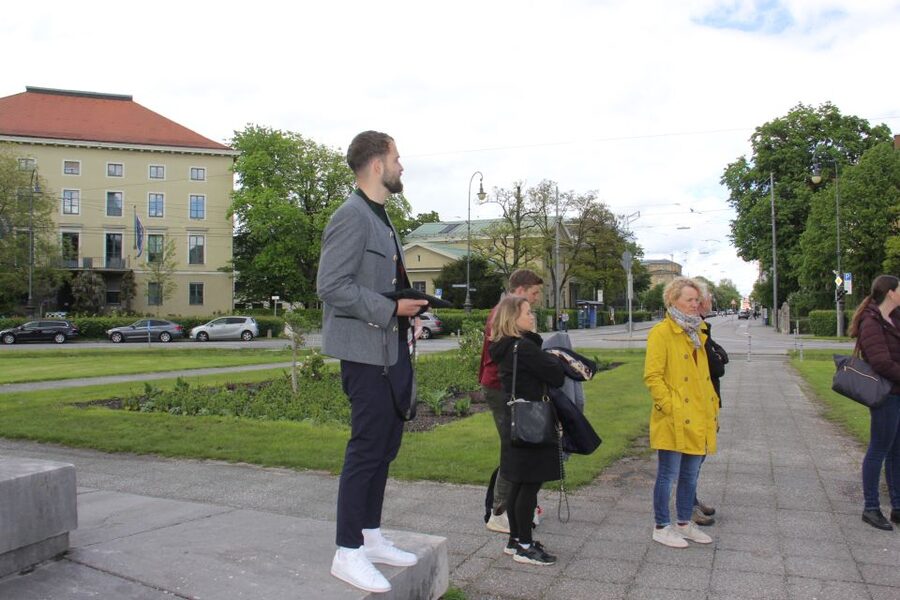
Alex is 32 and was born and raised in Munich. That local connection matters because he is not presenting the city as a backdrop that can be separated from its past.
He also offers personal recommendations for exploring Munich like a local. That is a pleasant extra, particularly if you take the tour near the beginning of your visit. You can use the walk to get your bearings, then ask Alex about other parts of the city that interest you.
The strongest feature of his guiding style is the balance between expertise and approachability. He is described as engaging, sympathetic, and good-humored while never treating the subject superficially. He makes room for questions and can include short breaks along the route.
That flexibility is valuable. One person may want more political context, while another may be trying to understand how a specific building was used. A guide who responds to questions can make the walk feel more like a conversation than a lecture.
The experience is open to both visitors and Munich residents. That is worth noting. You do not need to assume that living in Munich means you already understand the city’s Nazi past. The historical meaning of familiar streets is often easy to miss until someone explains what took place there.
How the 2.5-hour pace feels
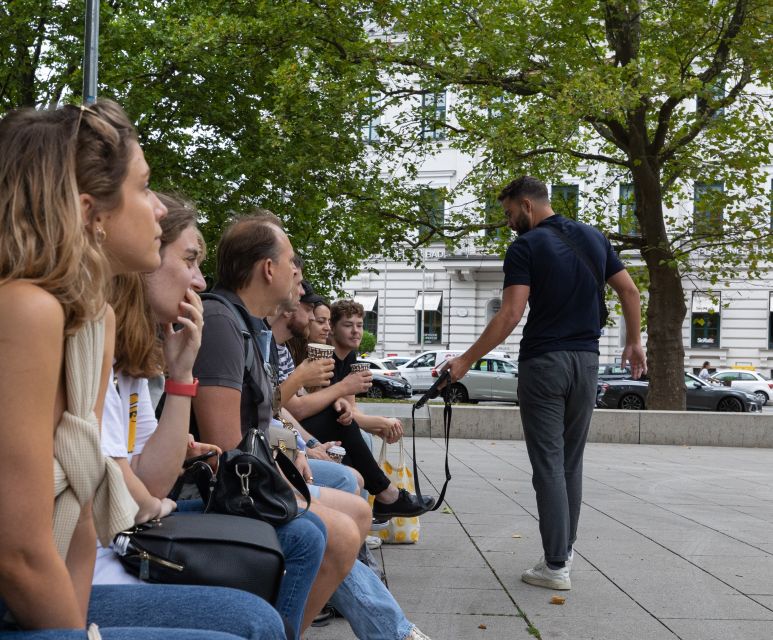
The advertised duration is 2.5 hours, though one reported outing lasted close to three hours because there was so much to explain. That suggests you should keep some time free afterward rather than scheduling a tight connection or a major attraction immediately after the walk.
The pace appears designed for listening and looking, not rushing from one photo stop to the next. Short pauses help, especially when the subject becomes dense. Comfortable shoes are essential because this is a walking tour, and it operates rain or shine.
The rain-or-shine policy is practical but important. Check the forecast and dress sensibly. The experience is wheelchair accessible, which makes it more usable for people who need an accessible route, though you may still want to confirm any personal mobility concerns before booking.
The tour is in German. This is not a minor detail. Historical explanation depends on nuance, and you will lose much of the value if you only understand occasional words. German-speaking visitors, Munich residents, and people studying German are the best fit.
Is $30 a fair price?
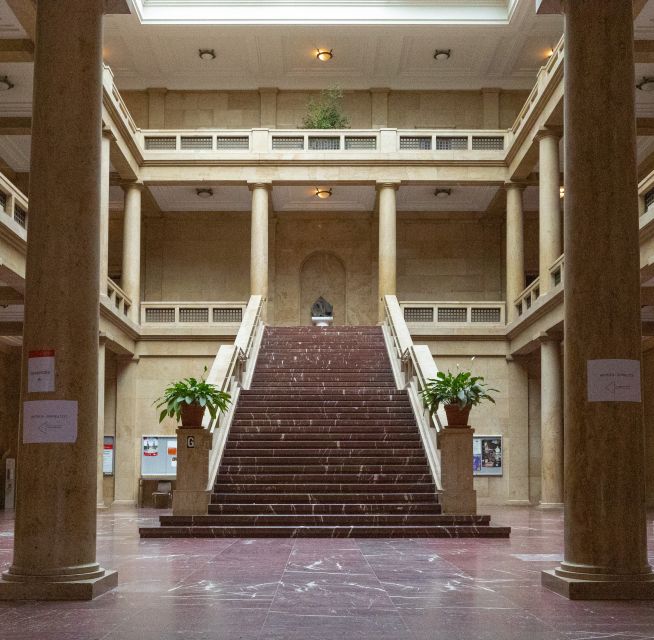
At $30 per person, the tour is priced reasonably for a fully guided 2.5-hour city walk with a specialist focus. You are paying for more than a route between buildings. The value comes from the connections Alex makes between Munich’s public spaces and the political events that took place there.
A self-guided walk can show you the same general streets, but it is unlikely to explain the chronology, the role of propaganda architecture, and the way Hitler’s rise was tied to Munich. You would also miss the chance to ask questions in the moment.
The price is especially fair if you are interested in German history, politics, architecture, or the way cities remember painful events. It is less suitable if you want a general introduction to Munich or a tour centered on royal palaces, food, or cheerful city legends.
There is no hotel pickup, so you must reach Marienplatz on your own. That is not much of a drawback because the meeting point is centrally located. The reserve-now, pay-later option and free cancellation up to 24 hours before the tour also make it easier to fit into a changing itinerary.
Who should book this Munich history walk?
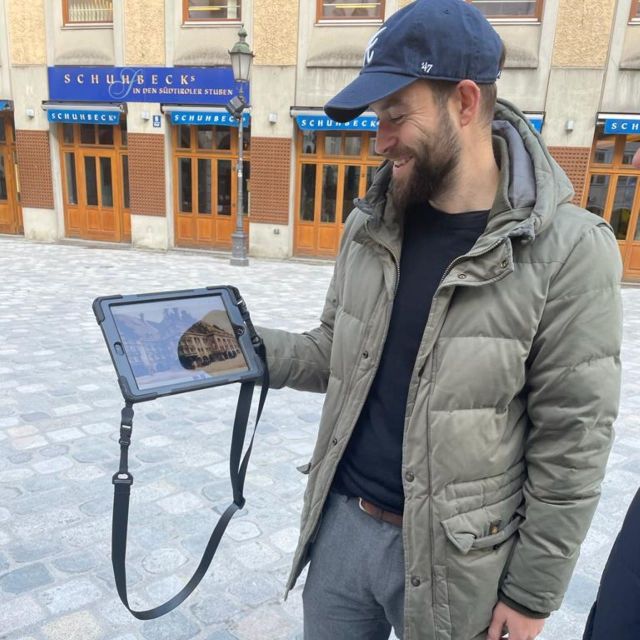
I would choose this tour if you want historical context tied to real places. It suits adults, older students, German speakers, and anyone interested in how political movements gain power through speeches, architecture, ceremony, and public space.
It can also work well for Munich residents who want to see familiar streets differently. One local participant described the route as suitable for Munich residents as well as visitors, and Alex offers other themed walks, including one focused on resistance during the Third Reich.
I would think twice if you are looking for a relaxed sightseeing stroll. The topic is dark, and the walk asks you to pay attention. It is engaging, but it is not designed to entertain you with a string of amusing city tales.
Families with older children may find it useful, but the supplied information does not specify a minimum age. If you are bringing young children, consider whether they are ready for material about dictatorship, war, and persecution.
Practical advice before you meet at the Marian Column
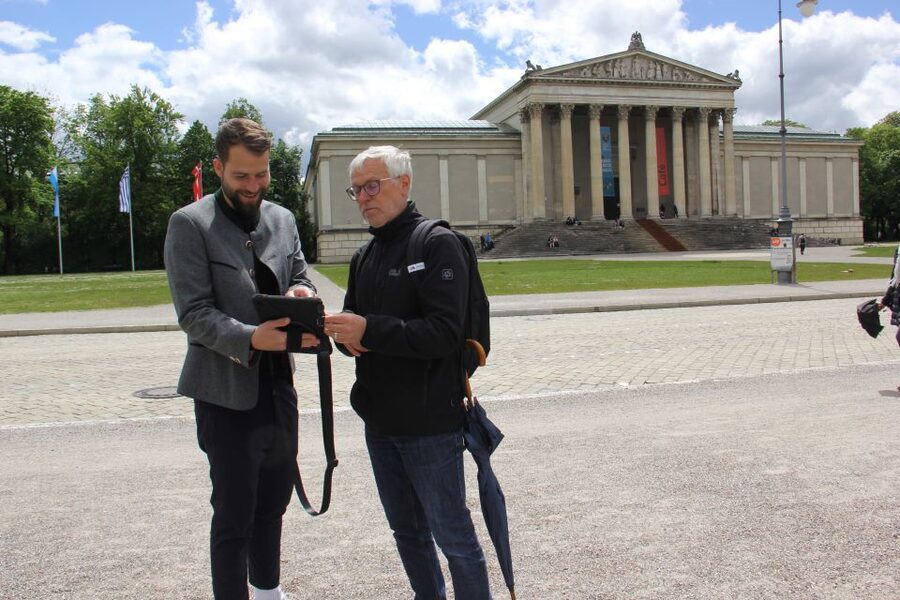
Wear comfortable shoes and prepare for the full 2.5 hours outdoors. Since the tour runs in all weather, bring suitable clothing rather than counting on a cancellation for rain.
Arrive at Marienplatz with enough time to locate the Marian Column. The description identifies it clearly as the large column with the small golden statue in the middle of the square.
If German is not your strong language, this is probably not the right booking. The live tour guide language is German, and the value lies in understanding the explanations and historical connections.
If you are visiting Munich for several days, I would schedule this walk early. Alex’s local recommendations may help shape the rest of your stay, and the tour can give you a better sense of what you are seeing as you explore the city afterward.
Should you book it?
Book this tour if you want a serious, place-based explanation of Munich’s role in the rise of Hitler and the Nazi movement. Alex brings local roots, a clear chronological method, and an approachable manner to a subject that needs both care and clarity.
Skip it if you do not understand German or if you want a broad, upbeat introduction to Munich. For German-speaking visitors who want to understand the city beyond its postcard image, $30 is a sensible price for two and a half hours of focused historical guidance.
FAQ
Where does the tour meet?
Meet Alex at Marienplatz beside the Marian Column, the large column with the small golden statue in the center of the square.
How long does the walking tour last?
The scheduled duration is 2.5 hours. One outing lasted close to three hours because there was a great deal to explain.
What language is the tour in?
The live tour guide language is German.
Who leads the tour?
The guide is Alex, a 32-year-old professional tour guide born and raised in Munich.
What is the tour about?
The walk explores Hitler’s rise, the development of National Socialism in Munich, Nazi propaganda buildings, public squares, speeches, parades, political ceremonies, and the city’s experience of wartime bombing.
Is the tour wheelchair accessible?
Yes, the activity is listed as wheelchair accessible.
What should I bring?
Bring comfortable shoes. The walk takes place outdoors and runs rain or shine.
Is hotel pickup included?
No. Hotel pickup is not included, so you need to reach the Marienplatz meeting point yourself.
Can I cancel for a full refund?
Yes. You can cancel up to 24 hours in advance for a full refund.
Do I have to pay when I reserve?
No. The reserve-now, pay-later option lets you book while keeping your travel plans flexible.
More Historical Tours in Munich
- Munich: Guided Tour of the historic Town Hall on Marienplatz
★ 4.8 · 63 reviews - Munich Craft Beer & Cultural Tour With Snack
★ 5.0 · 46 reviews - Munich History Tour: Private & Personalized with a Local Guide
★ 4.5 · 33 reviews - Munich and Nazi History Combination Day Tour Small Group
★ 5.0 · 31 reviews
Just added around Munich
- Private Transfer from Munich to Salzburg, English-speaking driver★ 3.5 · 3 reviews
- Private tour from Munich to Rothenburg and Harburg★ 5.0 · 3 reviews
- Scenic Adventure Private Day Tour to The Konigssee Salzburg★ 4.5 · 3 reviews
- Munich: Capture the most Photogenic Spots with a Local★ 5.0 · 3 reviews
- Private Beer Tasting Tour in Munich with Oktoberfest Museum★ 4.3 · 3 reviews
- Munich Photoshoot: A Must-Have Holiday Experience!★ 5.0 · 3 reviews
- Paul’s Private Tour in the Alte Pinakothek Munich★ 5.0 · 3 reviews
- Private Tour to Hallstatt Salt Mine and Skywalk with Lunch★ 5.0 · 3 reviews
Third Reich & WWII Tours, compared.

Birthplace of the Third Reich Guided Walking Tour
Read our review →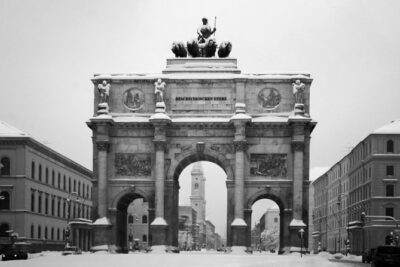
Munich World War II Sites Including Dachau Concentration Camp
Read our review →
Munich City Walking Tour, includes Third Reich & Viktualienmarkt
Read our review →
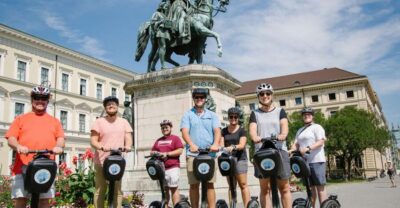
Munich 3-Hour Segway Tour: Nazi Munich & Royal Architecture
Read our review →
Dachau Concentration Camp Memorial Site And Third Reich Day Tour From Munich
Read our review →Browse the lists this tour appears in