
Reviewed · THIRD REICH & WWII TOURS
Munich and Nazi History Combination Day Tour Small Group
Dachau and Nazi-era Munich are two parts of the same difficult story, and this eight-hour small-group tour connects them in a useful way. You begin at Marienplatz, travel with your guide to the Dachau Concentration Camp Memorial Site, then return for a walking tour of Munich locations tied to Hitler and the Nazi Party.
I like two things here. First, transport is handled for you, including the trains and bus, so you can focus on the subject rather than ticket machines and connections. Second, the group is capped at 15, which gives you room to ask questions and hear a guide such as Alun Evans explain the setting with care. The main drawback is the length and seriousness of the day. You will walk, ride public transport, and spend many hours with painful material, so this is not a light sightseeing outing.
In This Review
- Key points at a glance
- Why this pairing works in Munich
- Starting at Marienplatz at 9:00 a.m.
- Three hours at the Dachau Memorial Site
- What changing memorial rules may mean
- Returning to Marienplatz for lunch
- Munich’s Nazi story begins in ordinary streets
- Hofbräuhaus and the older Munich around it
- Königsplatz and the final Nazi-era sites
- A guide-led day with public transport
- Is $109 a good value?
- Who should book this tour?
- My booking advice
- FAQ
- Where does the tour start?
- What time does the tour begin?
- Is transportation included?
- How long do you spend at Dachau?
- Are meals included?
- Can children join the tour?
Key points at a glance
- Dachau comes first: Spend about three hours at the memorial, with time for the museum exhibit and questions.
- Munich’s Nazi past is easy to miss: The afternoon reveals sites that can look like ordinary city streets without historical context.
- Small groups matter: A maximum of 15 people makes train travel and discussion more manageable.
- Public transport is part of the experience: You travel with the guide rather than using a private coach or hotel pickup.
- The day has a built-in break: You return to Marienplatz for about an hour to buy lunch before the city walk.
- The tour is for ages 14 and up: Comfortable shoes and weather-ready clothing are important.
Why this pairing works in Munich
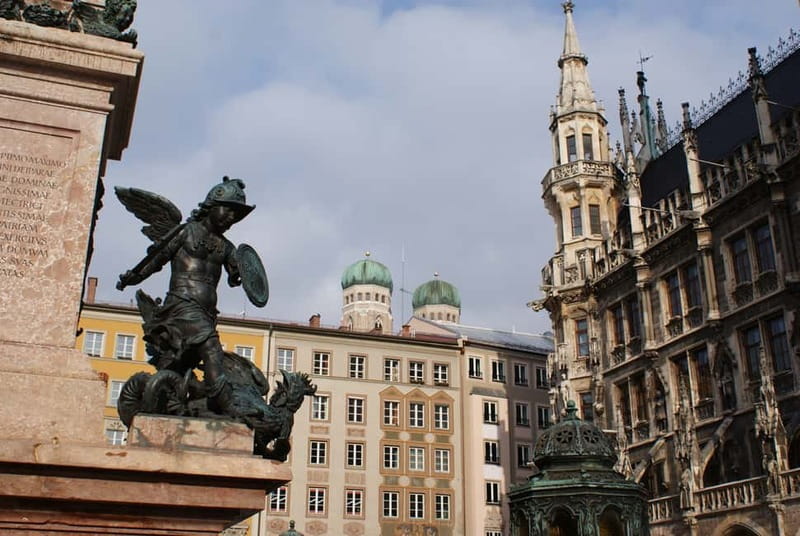
Many people visit Munich for palaces, beer halls, churches, and handsome squares. The Nazi period is less obvious. A café terrace or grand public building may look like just another stop on a city walk, even when important decisions were made there.
This tour helps you connect those two views of Munich. At Dachau, you confront the machinery and human cost of Nazi persecution at a memorial site. Back in the city, you trace the political beginnings, public ceremonies, and official buildings that helped turn an extremist movement into a dictatorship.
I find that order useful. Dachau gives the day its moral weight. Munich then supplies the political setting. You are not simply collecting addresses on a map. You are seeing how a movement developed in a real city, and how its symbols were built into familiar streets and squares.
The subject requires a serious tone, and the format suits it. The guide is there for explanation, not entertainment. Questions are welcome, and the small group should make it easier to pause when a point needs clarification.
More Third Reich and wartime history walks in Munich:
- Munich: Third Reich & WWII Walking Tour
★ 4.6 · 6,181 reviews - Third Reich Walking Tour Munich
★ 4.5 · 4,291 reviews - Munich: Birthplace of the Third Reich Guided Walking Tour
★ 4.6 · 771 reviews
Starting at Marienplatz at 9:00 a.m.
Your meeting point is in front of the Tourist Information Center at Marienplatz in central Munich. Look for the guide holding a placard marked Dachau Memorial Tour. The central location is convenient if you are staying in Munich, but there is no hotel pickup, so you need to reach Marienplatz on your own.
The morning begins at about 9:00 a.m. The first part of the outing uses Munich’s public transportation system, with roughly 45 minutes listed for the journey to Dachau. That travel time is not wasted. Your guide stays with the group, handles the transportation process, and gives you the background needed for the memorial visit.
This is one of the tour’s practical strengths. If you have not used Munich’s trains and buses before, moving as a group removes much of the guesswork. Several people can also make public transport slower than a private vehicle, especially when everyone is gathering and boarding, so expect a shared city journey rather than a door-to-door ride.
Do not bring luggage or large bags. A small day bag is the sensible choice, along with water and anything you need for several hours outdoors and on foot.
Three hours at the Dachau Memorial Site
Dachau is the emotional center of the day. The visit lasts about three hours and includes a guided tour of the memorial grounds, followed by time to explore the museum exhibit independently.
That division is important. A guide can explain the site’s meaning, point out key areas, and place what you are seeing into historical context. Your independent museum time then lets you move at your own pace and stop with displays that demand more attention. One hour in the museum is described as a typical allocation, though the full exhibit may leave you wishing for longer.
The memorial is a place for remembrance, reflection, and education. You should expect the guide to treat it with restraint and accuracy. This is not a performance, and the value comes from making connections between documented events, physical spaces, and the choices made by people and institutions.
I would not rush this section. The afternoon city walk is useful, but Dachau needs mental space. If you know you process difficult material slowly, use the independent museum period to take a quiet pause rather than trying to see every display.
The amount of walking and the weather also matter. Wear comfortable shoes and dress for current conditions. The tour runs in rain or changing weather unless conditions or memorial rules require an adjustment, and you will spend part of the day outside.
What changing memorial rules may mean
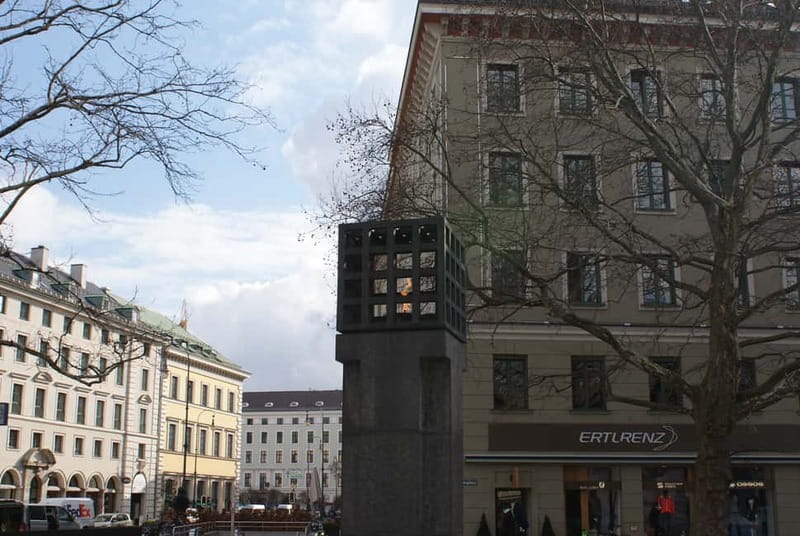
The memorial’s current regulations can affect how the visit is delivered. The historical information may sometimes be presented away from parts of the grounds, with more independent time for you on site.
That means the precise flow is not guaranteed. It does not cancel the purpose of the visit, but it does mean you should arrive ready for a tour that may adapt to current rules. The guide can still provide historical explanation, while your self-guided time gives you a chance to read and reflect on the grounds and museum.
This flexibility is worth accepting. A memorial site has responsibilities beyond sightseeing, and access rules can change. The important point is that the experience remains focused on education and remembrance.
A few more Munich tours and experiences worth a look
- Munich: Guided Tour of the historic Town Hall on Marienplatz
★ 4.8 · 63 reviews - Munich Craft Beer & Cultural Tour With Snack
★ 5.0 · 46 reviews - Munich History Tour: Private & Personalized with a Local Guide
★ 4.5 · 33 reviews - Munich: Nazi History 2-Hour Small Group Walking Tour
★ 5.0 · 30 reviews
Returning to Marienplatz for lunch
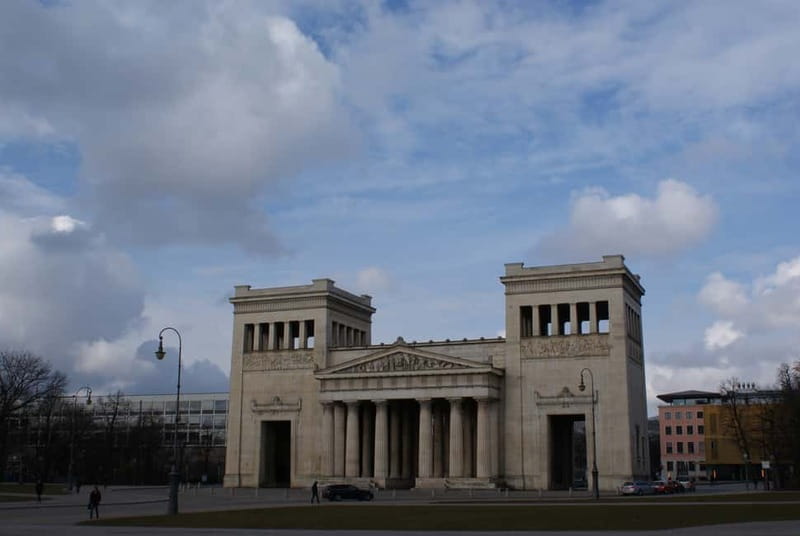
After Dachau, you travel back with the guide, again using public transport. The return journey is listed at about 45 minutes, followed by a one-hour break at Marienplatz.
Lunch is not included, so budget for your own food and drinks. The guide can suggest places to eat, which is helpful when you have only an hour and want to avoid wandering around looking for a table.
This pause also gives you a chance to reset. The first half is demanding, and the second half returns to the city’s streets, buildings, and public spaces. You may want a proper meal, a coffee, or simply a quiet break before beginning the walking tour at around 3:00 p.m.
Keep an eye on the clock. The afternoon starts again from Marienplatz, not from wherever you happen to find lunch.
Munich’s Nazi story begins in ordinary streets
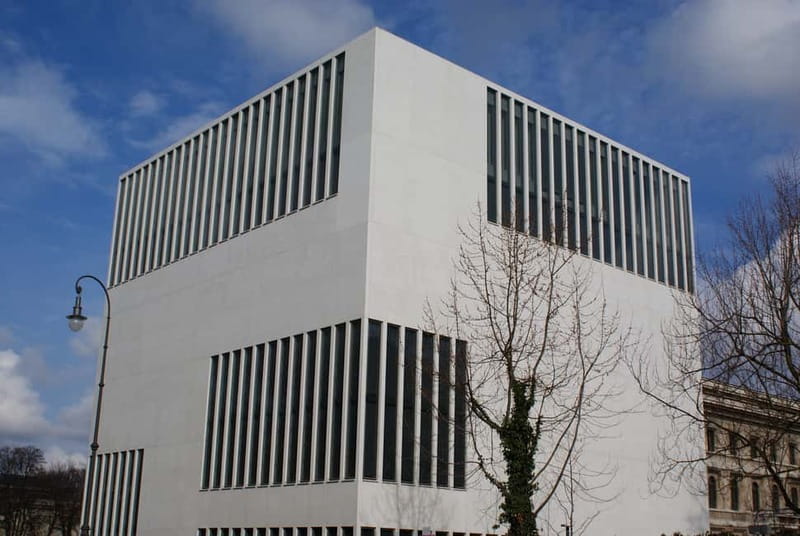
The second part is a walking tour through central Munich. It focuses on places linked to Hitler and the Nazi Party, while also including some of the city’s older and more familiar sights.
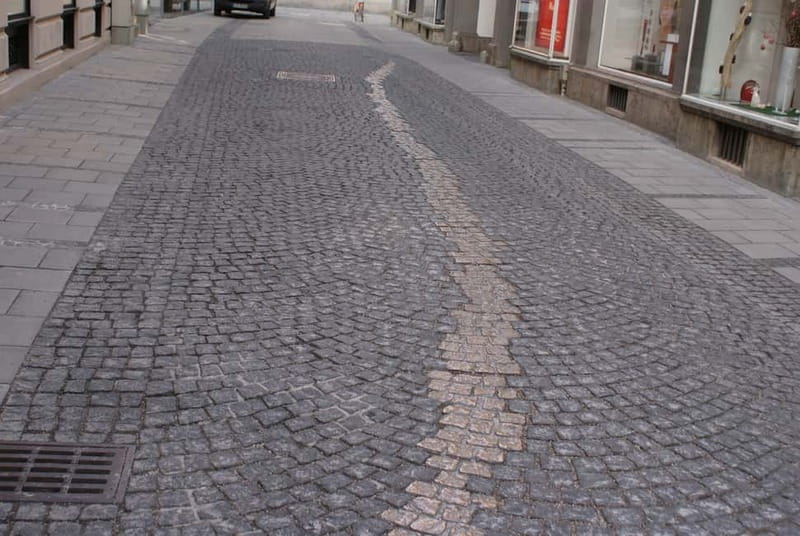
One key stop marks where Hitler joined the German Workers Party. That detail helps frame the movement before it became the ruling Nazi Party. You are looking at the early political setting, not only the later years of dictatorship and war.
Another location is connected with the decision to carry out the November 1938 pogrom against German Jews. The tour also includes the place where the Munich Agreement was signed in 1938. These stops show how local decisions, public policy, and international diplomacy fit into the wider story.
The value of walking between sites is that Munich remains a living city around you. People shop, eat, cross streets, and meet friends in the same broad urban setting where major events unfolded. That contrast can be uncomfortable, but it also makes the history harder to treat as something distant and sealed away.
A guide is especially useful here because plaques and buildings do not always explain their own significance. Without context, you could pass several of these locations without realizing what happened there.
Hofbräuhaus and the older Munich around it
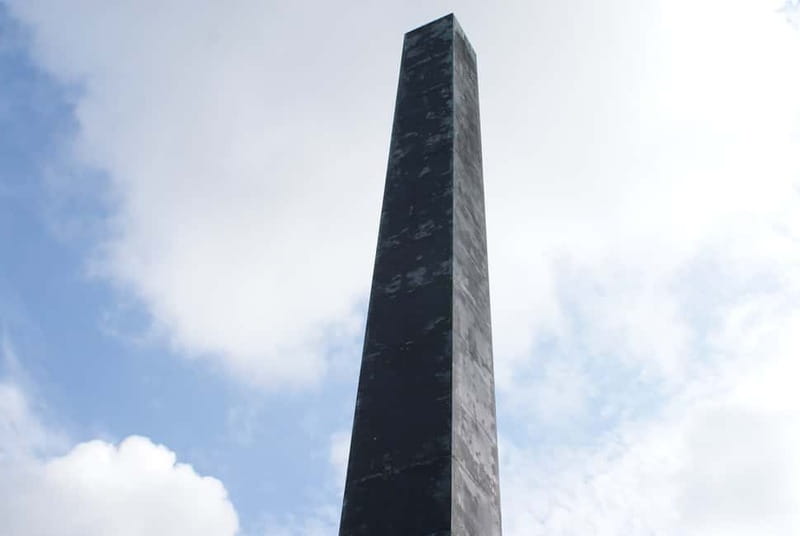
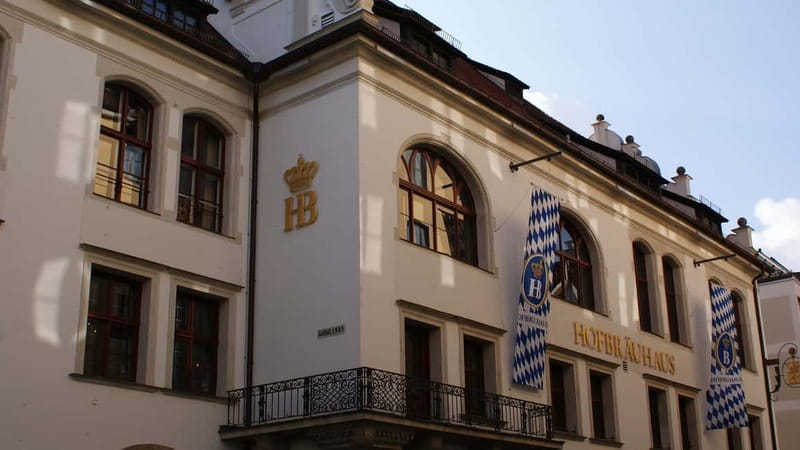
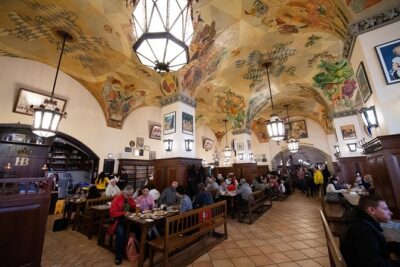
The afternoon is not limited to Nazi sites. You also see the Hofbräuhaus, one of Munich’s best-known beer halls, and the city’s oldest parish church. A quaint beer garden is included as another point of local interest.
These stops provide a change of pace and help you see Munich beyond its 20th-century politics. They also show why this tour works best as a history walk rather than a memorial visit alone. You get a sense of the old city, then learn how political movements used familiar public spaces and well-known institutions.
The Hofbräuhaus stop is brief, listed at about 10 minutes. Do not expect a full meal, beer tasting, or extended visit inside. It is a historical and city-orientation stop within a larger route.
The same applies to the parish church and beer garden. They add local color and useful geography, but the tour’s purpose is not to cover every major Munich attraction. If you want a long church visit, a relaxed beer hall lunch, or time to browse shops, plan those separately.
Königsplatz and the final Nazi-era sites
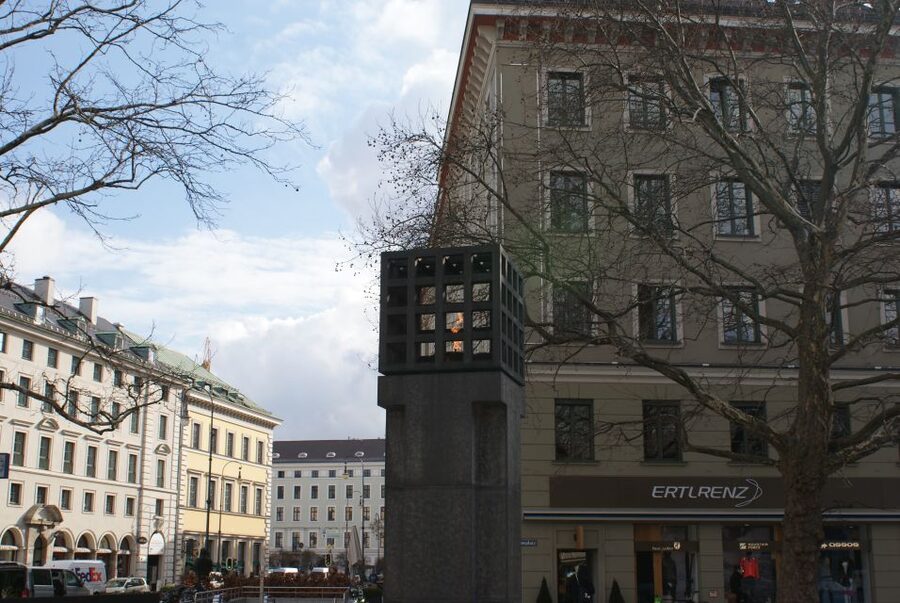
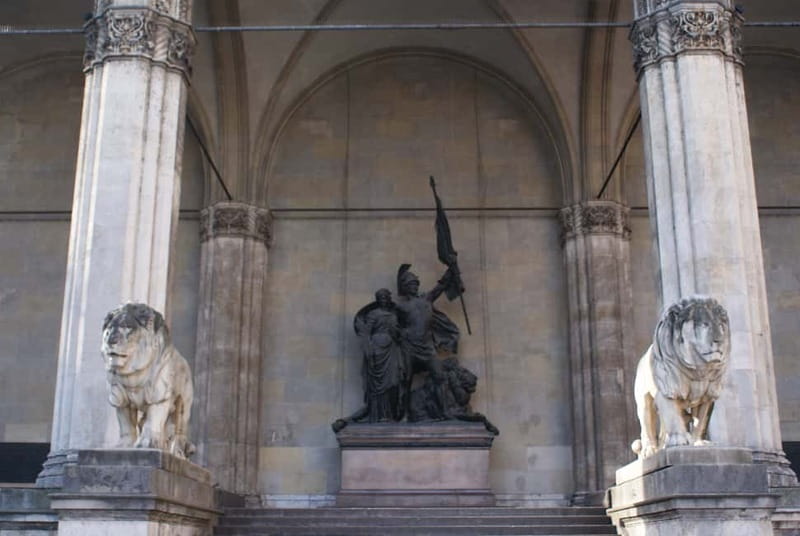
The walk finishes at Königsplatz, a grand square associated with Nazi rallies. The area also includes the former Führerbau and the new Documentation Center of National Socialism.
Königsplatz is a powerful final setting because its scale helps explain how architecture and public space could be used for mass political display. The visit is not just about the buildings themselves. It is about how a government presented power, organized crowds, and made ideology visible.
The Führerbau stop is listed at around 10 minutes, while Königsplatz receives about 15 minutes of guided attention. The timings are short, so this is an overview rather than a complete visit to every exhibition. If the Documentation Center is a priority for you, check whether you have time to return independently after the tour.
The route ends at Königsplatz, but you have two choices. You can return to Marienplatz by train with your guide, or you can continue with your own plans. The guide can help with directions and restaurant suggestions.
A guide-led day with public transport
This is not a private car tour. You travel by Munich’s regular trains and buses, and that shapes the day in both good and less convenient ways.
The advantage is cost and realism. You learn the transportation system while reaching Dachau, and the $109 price includes transportation costs during the tour. You also avoid the confusion of buying separate tickets and working out the route yourself.
The tradeoff is that you need to keep up with the group. Stations and vehicles can be crowded, and there may be standing or brisk movement between connections. One reason the small group matters is that the guide can move 15 people more effectively than a large coach group.
The maximum group size is 15 participants. Actual groups can be smaller, with one group described as having 11 people and another as having 13. That is small enough for personal questions without the price of a fully private guide.
Alun Evans is the named guide associated with this experience. The guide is memorial-accredited and English-speaking. The strongest qualities to look for are clear explanation, careful handling of difficult material, and the ability to answer questions without losing the group’s pace. Alun’s background as a history major is also specifically noted, and his skill with public transport is a real practical benefit.
Is $109 a good value?
At $109 per person, this is a fair price if you want both Dachau and Nazi Munich explained in one day. The cost includes an experienced memorial-accredited guide and transportation for the tour’s duration. Meals, drinks, hotel pickup, and any transportation after the tour are extra.
The value comes from the structure. You could visit Dachau independently, take public transport, read the museum material, and later seek out Munich’s Nazi-era sites on your own. That approach costs less in guiding fees, but it requires research, navigation, and a clear plan for connecting the locations.
Here, the guide gives you a historical thread from morning to afternoon. You also get museum time, a lunch break, and suggestions for what to do afterward. For a first visit to Munich, that efficiency can be worth paying for, especially if you have limited time.
I would not book it only because the price looks low. The day is long, the theme is heavy, and the city portion is a walking overview rather than a full museum program. Book it because you want structure, context, and an English-speaking guide who can answer questions.
Who should book this tour?
This experience suits adults and older teenagers who want a serious introduction to Dachau and Munich’s connection with the Nazi Party. It is also a good match if you are comfortable with public transport and prefer a small group to a large coach.
I would choose it if you have one full day available and want to combine the memorial with the city sites. The morning and afternoon reinforce each other, and you do not need to arrange separate tours or work out the train route to Dachau.
It may not suit young children, since those under 14 are not permitted. It may also feel too intense if your main goal in Munich is food, architecture, or relaxed sightseeing. You can explore those subjects on another day, but this particular outing keeps its attention on a dark and important chapter.
Bring comfortable walking shoes, weather-appropriate clothing, and a small bag. Leave large luggage behind. The tour is conducted in English, so you should be ready to follow detailed spoken explanation for much of the day.
My booking advice
I would book this tour if you want a clear, guided connection between Dachau and the places in Munich where Nazi politics began, gained support, and was displayed in public. The combination is more useful than treating the memorial and city walk as unrelated stops.
I would skip it if you want a private vehicle, hotel pickup, a flexible lunch, or long independent visits at every location. The schedule is fixed, the group uses public transport, and the subject requires sustained attention.
For the right visitor, the small group, memorial-accredited guide, included transportation, and two-part structure make $109 sensible. You leave with more than a list of sites. You gain a framework for understanding why Munich looks the way it does, and why parts of its past are deliberately presented with care.
FAQ
Where does the tour start?
The tour starts at Marienplatz in central Munich, in front of the Tourist Information Center. The guide carries a placard marked Dachau Memorial Tour.
What time does the tour begin?
The tour starts at about 9:00 a.m. Check availability when booking because starting times can vary.
Is transportation included?
Yes. Transportation costs during the tour are included, and the group travels using Munich’s public transportation system. Transportation outside the tour duration is not included.
How long do you spend at Dachau?
The guided visit to Dachau lasts about three hours. You also receive independent time to explore the museum exhibit, usually about one hour.
Are meals included?
No. Meals and drinks are not included. You have about one hour at Marienplatz for lunch, and the guide can suggest places to eat.
Can children join the tour?
Children under 14 are not permitted. The tour is conducted in English and is limited to a maximum of 15 participants.
Just added around Munich
- Private Transfer from Munich to Salzburg, English-speaking driver★ 3.5 · 3 reviews
- Private tour from Munich to Rothenburg and Harburg★ 5.0 · 3 reviews
- Scenic Adventure Private Day Tour to The Konigssee Salzburg★ 4.5 · 3 reviews
- Munich: Capture the most Photogenic Spots with a Local★ 5.0 · 3 reviews
- Private Beer Tasting Tour in Munich with Oktoberfest Museum★ 4.3 · 3 reviews
- Munich Photoshoot: A Must-Have Holiday Experience!★ 5.0 · 3 reviews
- Paul’s Private Tour in the Alte Pinakothek Munich★ 5.0 · 3 reviews
- Private Tour to Hallstatt Salt Mine and Skywalk with Lunch★ 5.0 · 3 reviews
Third Reich & WWII Tours, compared.

Birthplace of the Third Reich Guided Walking Tour
Read our review →
Munich World War II Sites Including Dachau Concentration Camp
Read our review →
Munich City Walking Tour, includes Third Reich & Viktualienmarkt
Read our review →
Munich 3-Hour Segway Tour: Nazi Munich & Royal Architecture
Read our review →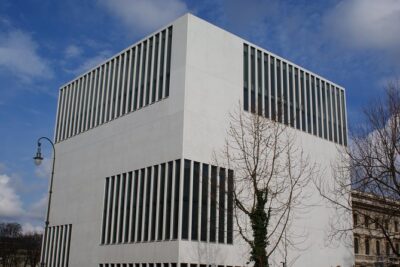
Dachau Concentration Camp Memorial Site And Third Reich Day Tour From Munich
Read our review →Browse the lists this tour appears in