
Reviewed · DACHAU MEMORIAL TOURS
Munich WWII and Dachau Concentration Camp Private Tour with Licensed Guide
Munich’s Nazi past is spread across the city, and this private tour connects the scattered sites before taking you to Dachau Concentration Camp Memorial. You’ll begin in the old town, follow the rise and crimes of the Nazi regime through streets and buildings, then face the subject directly at Dachau.
I like the private vehicle and hotel pickup, since a long day with many city stops is far easier when you are not working out tram routes. I also like the way the tour includes the White Rose memorial at Ludwig Maximilian University and the Nazi power center around Königsplatz, not just the famous beer hall. The drawback is the price: at $804.18 per person, this makes the most sense for a small group that values a dedicated guide.
In This Review
- Key points worth knowing
- A long day that puts Munich’s past in context
- Marienplatz and the old town’s Nazi transformation
- Nazi power around the Residenz and Feldherrnhalle
- Resistance, Schwabing, and a lunch option at Hofbräuhaus
- Monumental Nazi buildings and the Eisbachwelle
- Hitler’s Munich, from Bogenhausen to Ramersdorf
- The White Rose executions and the Nazi center at Königsplatz
- Dachau Memorial: the day’s most difficult visit
- What the private format and price really mean
- Who should book this Munich and Dachau tour
- Final decision
- FAQ
- How long does the private Munich and Dachau tour last?
- Is hotel pickup included in Munich?
- What type of transportation is provided?
- Is lunch included?
- How much time is spent at Dachau Memorial?
- Is Dachau suitable for children?
Key points worth knowing
- A full 9.5 hour private day covers Munich’s Nazi-era sites and Dachau Memorial.
- Hotel or address pickup in Munich is offered, with a chauffeur-driven VW or Mercedes minivan.
- The itinerary includes both Nazi power sites and resistance history, including the White Rose group.
- Dachau usually takes 1.5 to 2.5 hours, with coarse pebble paths that call for sturdy shoes.
- Lunch is not included, but the Hofbräuhaus is built into the schedule as a possible stop.
- The tour is best for adults and older teenagers, since Dachau is not recommended for children under 12.
A long day that puts Munich’s past in context
This is not a quick city tour with a brief stop at Dachau. You spend roughly an hour in central Munich, continue through the city’s former Nazi power districts and personal sites linked to Hitler, then travel to the memorial outside the city.
That structure matters. Dachau can feel disconnected if you reach it without understanding Munich’s role in the Nazi movement. Here, the guide first shows you the political center, the propaganda sites, the resistance memorials, and the buildings that survived the war.
The day lasts about nine and a half hours. That is a lot of history, walking, driving, and emotional weight, so I would not schedule a demanding evening afterward. The private format gives your group more control, but it does not make the subject light.
Your guide meets you at a Munich hotel or another address at a chosen morning time, listed as 8:00, 9:00, or 9:30. Another pickup time can be requested. A chauffeur drives while the licensed guide explains the sites, a practical arrangement when the route moves from the old town to Schwabing, Bogenhausen, Ramersdorf, and Königsplatz before Dachau.
More Dachau memorial tours from Munich:
- Dachau Concentration Camp Memorial Site Tour from Munich by Train
★ 4.5 · 5,637 reviews - From Munich: Dachau Memorial Site Day Tour
★ 4.8 · 2,723 reviews - From Munich: Dachau Memorial Site Half-Day Trip
★ 4.7 · 2,526 reviews
Marienplatz and the old town’s Nazi transformation
The tour begins at Marienplatz, Munich’s civic center since the city’s foundation in the 12th century. The square was once called Schrannenplatz, and its role changed again under the Nazis, when swastika flags were hung from the neo Gothic New Town Hall.
The Old Town Hall also gained an extra wide passage during the Nazi period to handle increasing traffic. Details like this help you see how ideology occupied ordinary civic spaces. The stop is short, but it gives the day a clear starting point.
At the Frauenkirche, the guide uses historical images to explain the damage caused by Allied bombing and the changes made during reconstruction. The late Gothic church was built in only about 20 years at the end of the 15th century, which makes the contrast between its original form and wartime damage especially striking.
St. Michael’s Church provides another comparison. Its Mannerist design dates from about a century after the Frauenkirche, and it contains the world’s second largest barrel vault. Again, old photographs help explain what bombing destroyed and what reconstruction altered.
These church stops are not mainly about Nazi ideology. They are about seeing how the war changed Munich’s older fabric. If you expect long interior visits, note that the scheduled stops are brief, about 15 minutes at each church.
Nazi power around the Residenz and Feldherrnhalle
At the Residenz, you view the vast royal complex from outside, including its seven courtyards. The guide explains the building’s different architectural periods and points out its connection to SS Brigade Leader Christian Weber, who established a residence here in 1933.
You also hear the story behind the lions at the side entrances. Touching one is a Munich custom, and the guide uses the small tradition as a lighter detail within a serious route. It is a quick stop, not a full palace visit.
Nearby Viscardigasse is a very short but meaningful stop. Its nickname, Drückebergergäßchen, refers to people who used the lane to avoid giving the Nazi salute at the Feldherrnhalle. You will not spend long here, but the location shows how resistance could take the form of a small daily refusal.
At the Feldherrnhalle, the attempted Hitler putsch of 1923 ended in bloodshed. This southern viewpoint on Ludwigstrasse became a symbolic Nazi site, and the guide explains its place in the movement’s rise.
The chauffeur then meets you nearby, allowing the rest of the route to be covered by vehicle. That change saves time and energy. Still, the frequent short stops can feel hurried if you want to linger at every location.
Resistance, Schwabing, and a lunch option at Hofbräuhaus
The Platz der Opfer des Nationalsozialismus is a memorial to those persecuted and killed by the Nazi regime. An eternal flame burns in a symbolic dungeon, representing freedom. The visit lasts only a few minutes, but it adds a solemn pause between the political sites.
At Ludwig Maximilian University, the focus changes from Nazi power to resistance. The White Rose group formed here, with Hans and Sophie Scholl, Christoph Probst, Alexander Schmorell, Willi Graf, and Professor Kurt Huber among its members. The guide takes you to the memorial connected with their resistance and execution in 1943.
This is one of the tour’s strongest sections. Munich’s Nazi story is not only about Hitler, party offices, and grand buildings. The White Rose memorial gives you a clear reminder that some people opposed the regime despite the danger.
In Schwabing, the route moves through a district once known for artists and still popular today. Sites connected with Hitler, Eva Braun, the Völkischer Beobachter newspaper, and Heinrich Hoffmann’s publishing work are pointed out, including the Osteria Italiana, where Hitler liked to stop.
The Hofbräuhaus is scheduled for about an hour, making it the natural lunch break. Hitler and his circle used a first floor niche for meetings, while the ground floor Schwemme and the courtyard offer places to eat today.
Lunch is not included in the tour cost, so plan for that extra expense. You can also skip the meal and simply look around the famous inn. The stop adds welcome breathing room, though anyone who wants a quick day may find an hour here longer than needed.
More Third Reich and wartime history walks in Munich:
- Munich: Third Reich & WWII Walking Tour
★ 4.6 · 6,181 reviews - Third Reich Walking Tour Munich
★ 4.5 · 4,291 reviews - Munich: Birthplace of the Third Reich Guided Walking Tour
★ 4.6 · 771 reviews - Munich World War II Sites Including Dachau Concentration Camp
★ 4.5 · 570 reviews
Monumental Nazi buildings and the Eisbachwelle
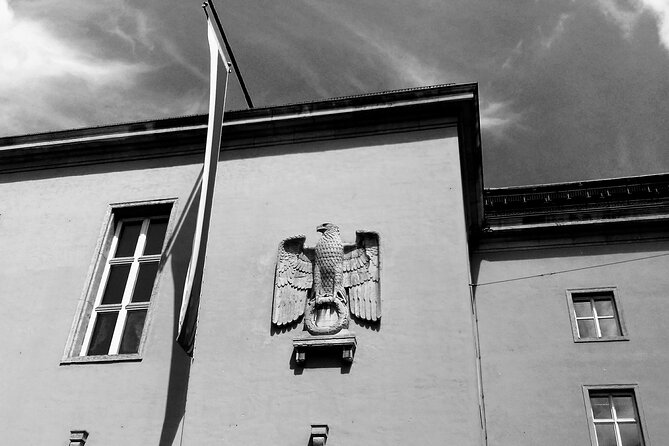
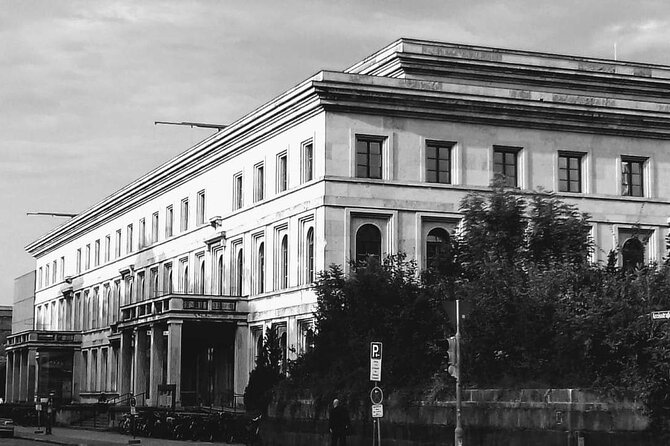
The route continues to Altstadt Lehel, where a huge building erected in 1937 for the Reich Aviation Ministry remains one of Munich’s most imposing Nazi era structures. Its 225 meter main front, window grilles, and steel helmet details make the building’s original purpose hard to miss.
At Haus der Kunst, you see the first representative Nazi building in Munich. In Hitler’s time it was called the House of German Art and displayed art approved by the regime. The broad granite colonnade earned it the mocking nickname Weißwurst Allee.
The guide points out surviving swastika decoration. This is a useful place to discuss how architecture and art were used to project authority, rather than treating the building as just another grand facade.
Then comes a brief change of tone at the Eisbachwelle. The famous standing wave draws surfers in the middle of the city, and watching them offers ten minutes away from the day’s darker material. It is an unusual inclusion, but a sensible one during such an intense tour.
You should expect a great deal of viewing from the vehicle at some stops. The tour covers a wide area, and the short visits are designed to connect the sites rather than provide long museum sessions.
Hitler’s Munich, from Bogenhausen to Ramersdorf
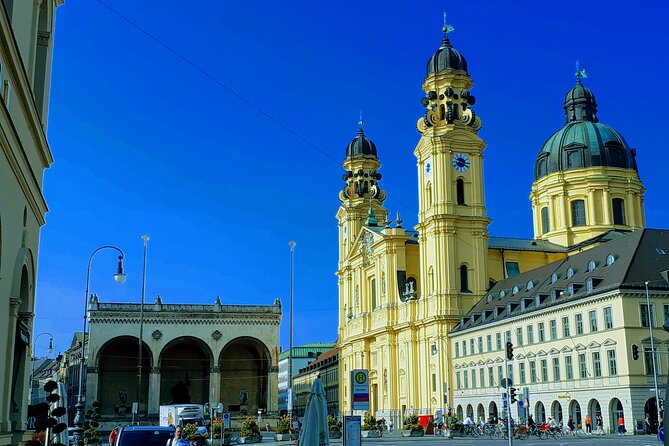
In Bogenhausen, the guide points out the house where Hitler lived in a large nine room apartment from 1929. The building is now a police station and can only be viewed from outside.
You also see the property where Eva Braun lived in a villa from 1936. The villa itself was demolished several years ago, so this is a location based stop rather than a chance to enter a preserved building.
Prinzregentenstraße contains an unusual apartment block designed with air raid shelters beside it. It was built for the National Socialist upper class and intended as a model for similar housing, but the war prevented other examples from being completed.
At Ramersdorf, the guide shows a Nazi model settlement of almost 200 houses, each with a garden, built in 1934 for people described by the regime as German national comrades. The settlement is now protected as a listed building.
These stops are useful if you want to understand how Nazi ideas reached beyond party offices and ceremonial spaces. They also require realistic expectations. Since most are viewed from the outside, you are paying for interpretation and transport, not interior access.
The White Rose executions and the Nazi center at Königsplatz
At Stadelheimer Straße, the guide explains that Hans and Sophie Scholl, Christoph Probst, Alexander Schmorell, Willi Graf, and Kurt Huber were guillotined at the Stadelheim prison in 1943. Their graves are in a nearby cemetery in the Perlacher Forest.
This stop reinforces the White Rose story introduced at the university. Seeing the execution site and then the burial place adds physical geography to names that can otherwise remain abstract.
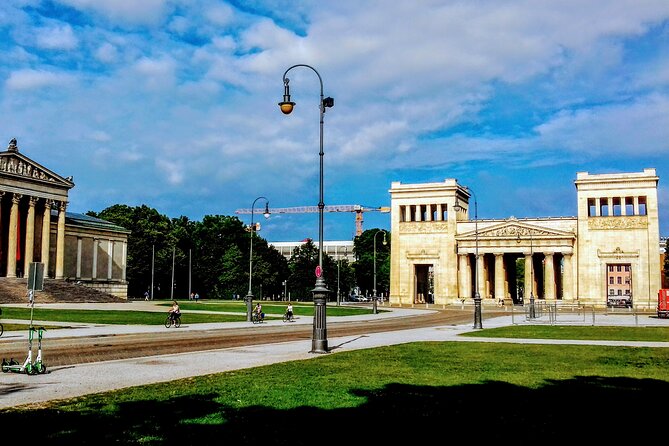
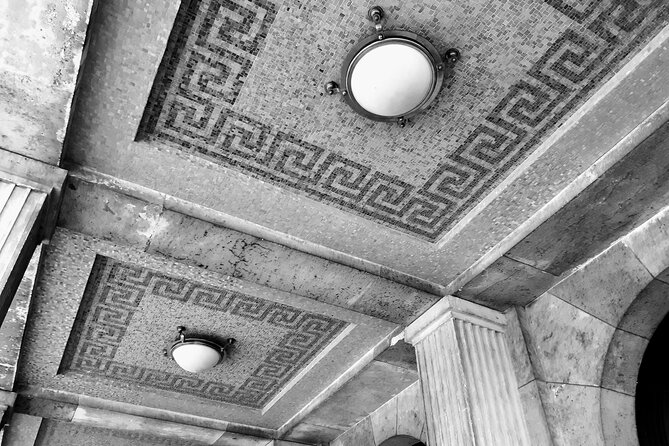
Königsplatz and Karolinenplatz form the main political heart of the Munich route. The area became the NSDAP’s party center, with administrative offices and the Führerbau among the important buildings.
Many of these structures survived wartime bombing relatively intact. The nearby Nazi Documentation Center, opened in 2015 on the site of the destroyed Brown House, helps mark the former party headquarters, although the tour details here focus on the surrounding historic area.
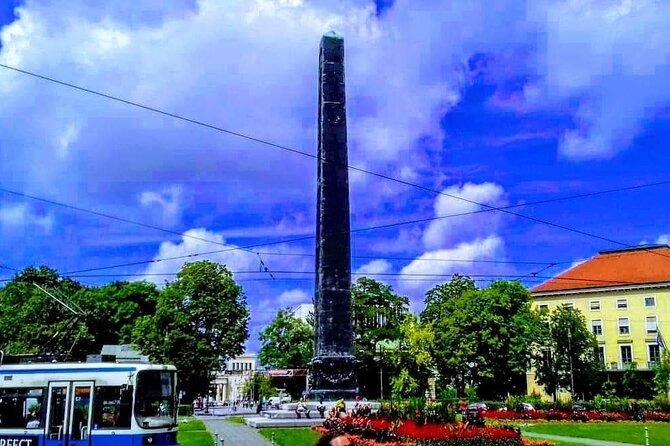
Karolinenplatz retains its 19th century obelisk, built in 1833 by order of King Ludwig I. The guide explains how the Nazi center of power later grew around this older monument.
In Maxvorstadt, you see the apartment building where Hitler rented a shabby room after moving from Vienna to Munich in 1913. The guide also points out the location planned for a mausoleum and an adjoining Hall of the Party, projects inspired in part by Hitler’s visit to Napoleon’s tomb in Paris.
This final Munich section brings together personal ambition, political theater, and architectural planning. It also shows why a guide is important: many of the sites have no dramatic sign explaining what happened there.
Dachau Memorial: the day’s most difficult visit
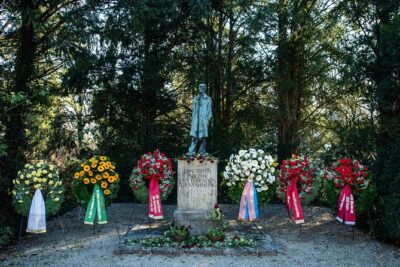
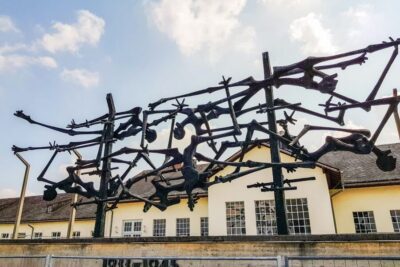
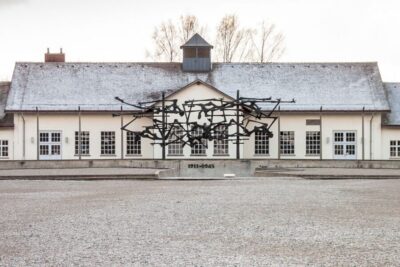
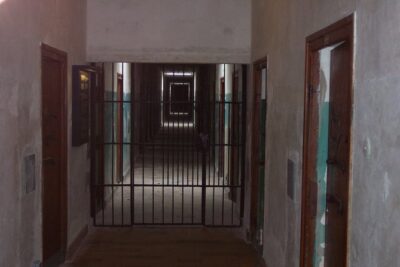
After the Munich route, you continue to Dachau Concentration Camp Memorial. The camp opened only six weeks after Hitler became Chancellor and operated for 12 years. More than 200,000 people were imprisoned there, and 41,500 were murdered, according to the figures provided for the tour.
A licensed guide accompanies you through the memorial. Before entering the main memorial area, the route includes a look at some luxurious villas on the former SS grounds, a disturbing contrast that helps show how close comfort and cruelty existed within the same system.
Plan on about 1.5 to 2.5 hours at Dachau. The supplied schedule allows two hours, but the exact pace may depend on your group, the guide, and how much time you need at each part of the memorial.
The visit is emotionally serious and not recommended for children under 12. I would also avoid booking it on a day when you need to rush to another major activity. You need time afterward to process what you have seen.
Some paths are covered with coarse pebbles. Wear supportive shoes, and do not treat this as a casual walk around a historic site. The guide’s role is especially important here, since the memorial’s meaning depends on accurate explanation and respectful pacing.
What the private format and price really mean
The price is listed at $804.18 per person. That is a premium rate, especially for a solo booking or a pair. The value improves as your group grows because the guide, vehicle, chauffeur, mineral water, and private service are shared across your party.
A new air conditioned VW or Mercedes minivan is used for smaller groups. Groups larger than seven use a small coach with a driver. Only your group participates, so you are not joining a large bus tour with strangers.
Pickup and return at a Munich hotel or address are included. Pickup outside Munich, including Munich Airport, can be arranged but may cost extra. Confirmation is sent within 48 hours, subject to availability.
The tour includes the Munich guide, the Dachau guide, transport, mineral water, and no hidden costs. It does not include lunch or tips. Free cancellation is available until 24 hours before the start time, while later cancellations and changes are not accepted.
The one published rating is five out of five from three reviews, and one response specifically praises a guide named Max for making sure the group saw everything it wanted and more. That is a useful sign of attentive service, but you should not assume Max will be assigned to every departure.
Who should book this Munich and Dachau tour
I would recommend this for a small group with a serious interest in 20th century history, especially if you want Munich and Dachau handled as one connected story. It is also a good fit if you value door to door transport and do not want to manage the city route, regional travel, and memorial visit yourself.
The tour suits adults and older teenagers who can manage a long, difficult day. It is less suitable for young children, casual sightseers, or anyone hoping for a relaxed Munich highlights tour with only a brief historical aside.
You should also consider your preferred pace. The itinerary contains more than 20 stops, but many last only five to 15 minutes. That gives you wide coverage, though not much unstructured time. If you prefer long museum visits, you may find the schedule too broad.
Final decision
Book this tour if you want a private, guided history day that links Marienplatz, the White Rose memorial, Nazi party sites, personal addresses, and Dachau. The chauffeur and hotel pickup are real advantages, and the guide’s interpretation gives meaning to places that are easy to miss on your own.
Skip it if the price is too high for your group or if you want a slower, less intense day. For the right party, this is a carefully packed way to understand Munich’s Nazi past and confront the reality of Dachau with a licensed guide beside you.
FAQ
How long does the private Munich and Dachau tour last?
The tour lasts approximately 9 hours and 30 minutes, including the Munich sites and the visit to Dachau Concentration Camp Memorial.
Is hotel pickup included in Munich?
Yes. Pickup is offered from any hotel or address in Munich. The listed pickup times are 8:00 a.m., 9:00 a.m., or 9:30 a.m., and another time can be requested.
What type of transportation is provided?
Smaller groups travel in a new air conditioned VW or Mercedes minivan with a chauffeur. Groups of more than seven people use a small coach with a driver.
Is lunch included?
No. Lunch is not included. The schedule allows about one hour at the Hofbräuhaus, where you can choose to eat in the Schwemme or courtyard.
How much time is spent at Dachau Memorial?
The usual visit lasts about 1.5 to 2.5 hours. The schedule lists approximately two hours at the memorial.
Is Dachau suitable for children?
Visiting Dachau Concentration Camp Memorial is not recommended for people under 12 years old. The site is also emotionally difficult, so you should consider your group’s readiness before booking.
Just added around Munich
- Private Transfer from Munich to Salzburg, English-speaking driver★ 3.5 · 3 reviews
- Private tour from Munich to Rothenburg and Harburg★ 5.0 · 3 reviews
- Scenic Adventure Private Day Tour to The Konigssee Salzburg★ 4.5 · 3 reviews
- Munich: Capture the most Photogenic Spots with a Local★ 5.0 · 3 reviews
- Private Beer Tasting Tour in Munich with Oktoberfest Museum★ 4.3 · 3 reviews
- Munich Photoshoot: A Must-Have Holiday Experience!★ 5.0 · 3 reviews
- Paul’s Private Tour in the Alte Pinakothek Munich★ 5.0 · 3 reviews
- Private Tour to Hallstatt Salt Mine and Skywalk with Lunch★ 5.0 · 3 reviews
Dachau Memorial Tours, compared.
Dachau Concentration Camp Memorial Site Tour from Munich by Train
Read our review →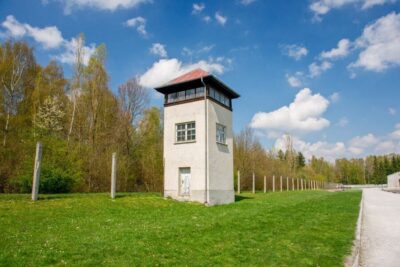
Dachau Concentration Camp Memorial Tour with Train from Munich
Read our review →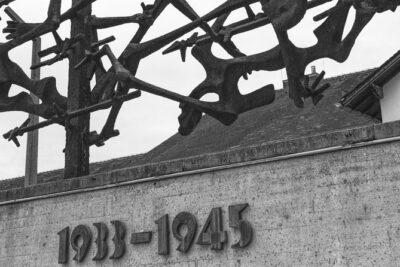
Early-Start Dachau Memorial Half-Day Tour from Munich
Read our review →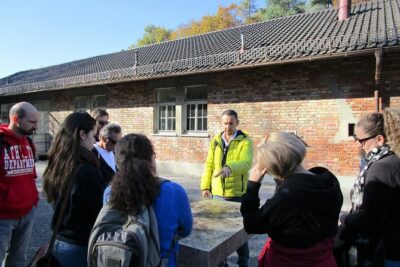
Guided Dachau Concentration Camp Memorial Site Tour with Train from Munich
Read our review →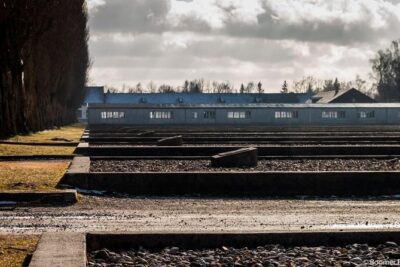
Full-Day Dachau Concentration Camp Memorial Site Tour from Munich
Read our review →Browse the lists this tour appears in