
Reviewed · THIRD REICH & WWII TOURS
Munich in the 3rd Reich and WW2 private walking tour
Munich’s pretty streets hide a sobering story. This private walk follows the city’s role as the Nazi movement’s spiritual home, from the political chaos after World War I to the fall of Munich in 1945. You’ll connect grand squares, beer halls, and ordinary city corners with the rise of Hitler and the machinery of terror.
I like the private format, which gives your group room to ask questions and steer the conversation. I also like the guides’ use of old photographs, props, and even occasional dramatic acting, all of which help you compare the Munich you see with the city of the 1920s and 1930s.
The main drawback is simple: this is a long walk about grim material, with no vehicle between stops. The tour lasts roughly three and a half to four and a half hours, so wear good shoes and be ready for rain, cold, or heat.
In This Review
- Key points to know before booking
- Why Munich matters to the Nazi story
- From Isartor into the city center
- The Great War, Versailles, and Munich’s political fever
- The Nazi Party and the Beer Hall Putsch
- The SS, Kristallnacht, and the road to persecution
- Nazi headquarters and the Munich Pact
- Bombing, surrender, and Munich in 1945
- Why the private group format is worth the price
- How guides bring the material to life
- Who should book this Munich history tour?
- Should you book it?
- FAQ
- How long does the tour last?
- How many people can join the private tour?
- Where does the tour start and finish?
- What historical subjects does the tour cover?
- Is food or drink included?
- Can I cancel for a full refund?
Key points to know before booking
- Munich’s Nazi origins: Follow the story from postwar unrest and the short-lived Soviet Republic to the formation of the Nazi Party.
- A genuinely private experience: Your group of up to six has the guide’s full attention, with time for questions and special interests.
- Visual history aids: Guides such as Taff use photographs and historical objects to show how key places looked during the period.
- Important sites and events: The route covers the Beer Hall Putsch, the SS, Kristallnacht, the Munich Pact, Allied bombing, and the American takeover in 1945.
- A flexible break: The tour usually pauses at a beer hall linked to the story, though you can request a cafe instead.
- A walk through central Munich: The route begins near Isartor and ends at Odeonsplatz, close to the Residenz and Marienplatz.
Why Munich matters to the Nazi story
It is easy to think of Munich first as a city of churches, palaces, pretzels, and Oktoberfest. That beauty can make the city’s political past feel even more unsettling. After the First World War, Germany faced defeat, inflation, social anger, and political violence. Munich became fertile ground for competing revolutionary movements, including a short-lived Soviet Republic.
The tour uses this troubled period to explain how extremism gained room to grow. That context matters. Hitler did not appear in a vacuum, and the walk is designed to show how economic distress, political fear, nationalism, and organized propaganda helped the Nazi Party gain a foothold.
Munich was later called Hauptstadt der Bewegung, or Capital of the Movement. That title reflected the city’s role in the party’s early years and its symbolic importance to Nazi leaders. You are not simply looking at places where famous speeches happened. You are tracing how a local political movement gained confidence, followers, and power.
I find this approach more useful than a tour that jumps straight to wartime atrocities. Understanding the early stages helps you see how a society can move from instability to dictatorship, and how familiar public spaces can be used to build political loyalty.
More Third Reich and wartime history walks in Munich:
- Munich: Third Reich & WWII Walking Tour
★ 4.6 · 6,181 reviews - Third Reich Walking Tour Munich
★ 4.5 · 4,291 reviews - Munich: Birthplace of the Third Reich Guided Walking Tour
★ 4.6 · 771 reviews
From Isartor into the city center
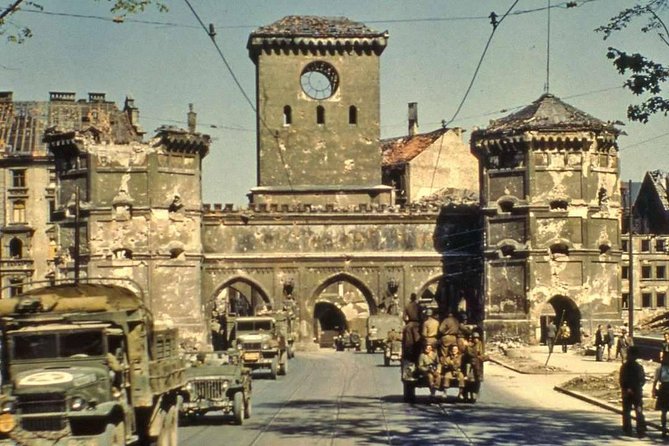
The stated starting point is Isar Gate, at Tal 50. The tour can also arrange pickup at Munich’s main train station or Marienplatz, so confirm the exact meeting point when you book. This is practical if you are arriving by train or already sightseeing in the old town.
Starting near Isartor places you in central Munich, where the modern city carries on around the historical subject. You will walk rather than ride in a bus or car. That gives the guide time to point out details at street level, but it also means the pace depends on your group, weather, and questions.
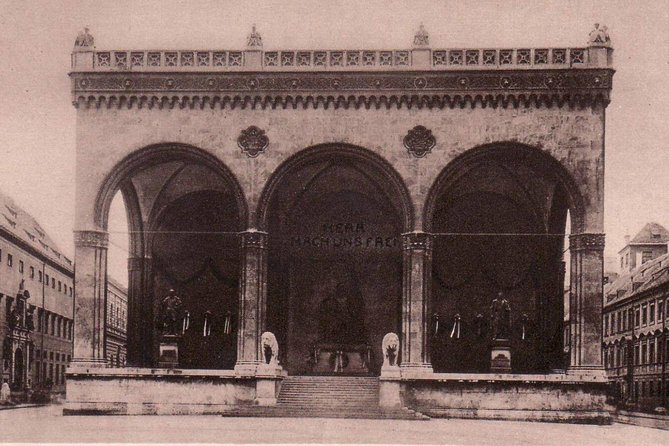
The route finishes at Odeonsplatz, a large square beside the Residenz palace and only a few minutes from Marienplatz. This is a useful ending point. You can continue sightseeing, find a cafe, or connect with public transport without making a long return journey.
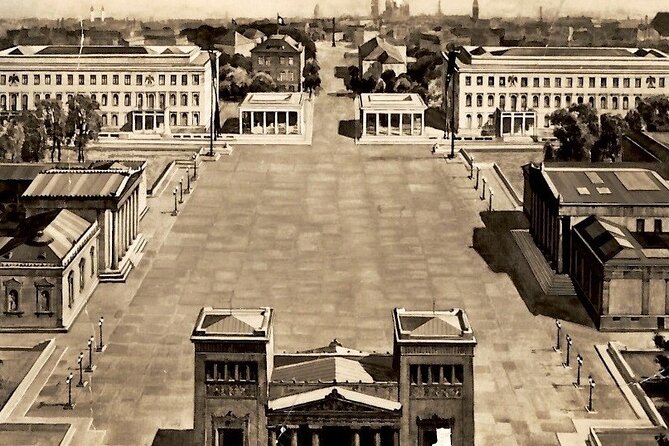
Do not expect every stop to look exactly as it did during the Nazi period. Munich suffered heavy Allied bombing, and many buildings were repaired or rebuilt. The guide’s photographs are especially useful here, allowing you to see the difference between the present-day streetscape and the wartime city.
The Great War, Versailles, and Munich’s political fever
The first part of the story places Munich and Germany after 1918. The Great War had ended, but peace did not bring calm. The Treaty of Versailles became a source of anger and humiliation for many Germans, while economic hardship and political violence damaged trust in the new democratic government.
A good guide will connect the broad national story to Munich itself. The city’s unrest was not an abstract textbook problem. Political groups competed in public, revolutionary ideas gained attention, and people searched for simple answers during a confusing period.
This part of the tour is valuable for families and younger visitors because it supplies the basic framework needed for everything that follows. If you already study the period, you may want to ask for more detail about the political groups and events that shaped Munich before the Nazi rise.
The private setting helps here. You can pause over a question instead of waiting for a large group to catch up, and the guide can adjust the level of background information to suit your party.
The Nazi Party and the Beer Hall Putsch
Munich was central to the Nazi Party’s early development. The walk explains how Hitler rose within the movement and how the party used speeches, organization, symbols, and public gatherings to build support.
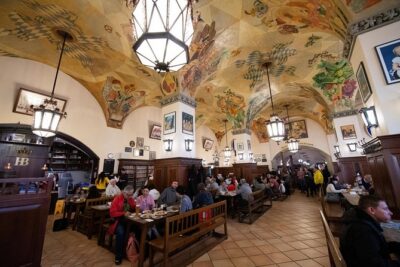
One major episode is the Beer Hall Putsch, the failed 1923 attempt to seize power in Bavaria. Beer halls were important political meeting places in Munich, and the setting helps explain how social life and political agitation could overlap. The tour generally includes a break at a beer hall connected with this history.
That pause is not included as a meal or drink, so budget separately for refreshments. If a beer hall does not suit your group, you can ask for a cafe break instead. This small choice matters on a long tour, especially if one person in your group needs warmth, coffee, or a quieter rest.
Several guides are associated with this experience, including Taff Simon, Kevin, and Joanne. Taff is noted for bringing photographs and historical objects, while Kevin has been particularly effective with families that include children. Joanne has also led the walk as a substitute guide and has used photos and stories to make the subject accessible.
Guide assignments can vary, so you should not assume a particular person is guaranteed unless the operator confirms it. The consistent strength of the experience is the private arrangement, which gives any assigned guide time to respond to your interests.
More walking tours in Munich:
- Munich: Old Town & Viktualienmarkt City Walk in German
★ 4.7 · 2,304 reviews - Munich: Night Watchman Walking Tour
★ 4.7 · 2,092 reviews - Munich Ghosts and Spirits Evening Walking Tour
★ 5.0 · 1,900 reviews - Munich Old Town Walking Tour
★ 4.5 · 1,287 reviews
The SS, Kristallnacht, and the road to persecution
The tour also covers the birthplace of the SS and the origins of Kristallnacht. These are difficult subjects, and the walk is not light entertainment. The value lies in seeing how persecution developed through institutions, public actions, and escalating policy rather than appearing all at once.
Kristallnacht, the November 1938 pogrom against Jewish people and Jewish property, is presented as a key step toward the Holocaust. A responsible explanation should make clear that this was organized and encouraged violence, not a spontaneous outburst of public anger.
Because you are moving through a real city, the subject can feel close at hand. You may be standing beside a familiar square or building while learning what happened there or nearby. That contrast between daily modern life and historical cruelty is one reason this kind of walking tour can stay with you.
If you are traveling with children or teenagers, use your judgment. The tour is suitable for many families, and one guide received praise for holding the attention of a 13-year-old, but the content concerns dictatorship, antisemitism, war, and mass murder. Ask the guide to adjust the level of detail if needed.
Nazi headquarters and the Munich Pact
The itinerary includes the former Nazi Party headquarters and the signing of the Munich Pact. These subjects shift the focus from the party’s local origins to its control of the city and its growing influence across Europe.
The headquarters story helps you consider how a political movement becomes a governing structure. The Munich Pact, signed in 1938, points to the international choices that allowed Hitler’s expansion to proceed without immediate war with the major European powers.
This section works best when you ask questions. A private guide can explain the difference between party power, government authority, propaganda, and diplomacy without reducing the period to a string of dates. You can also ask how Munich’s public spaces were used for rallies, ceremonies, and displays of loyalty.
Some guides add related subjects when time permits, including the White Rose resistance movement. This is not presented as a separate guaranteed stop, but it can be a worthwhile request if your group wants to learn about German opposition to Nazi rule.
Bombing, surrender, and Munich in 1945
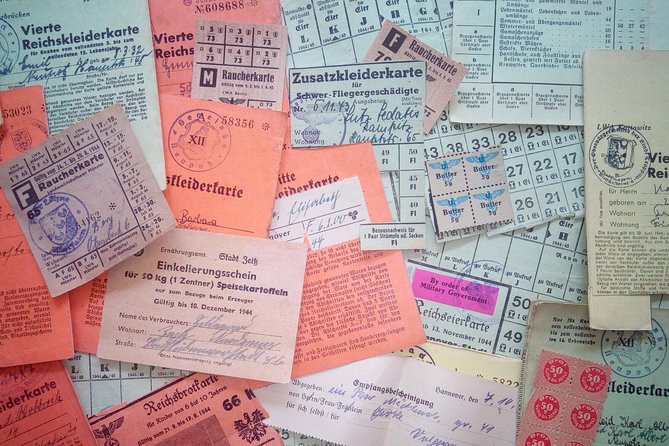
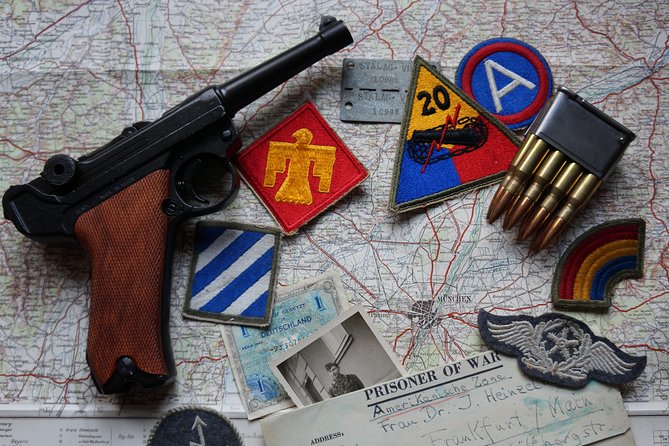
The final part deals with the Allied bombing campaign and the city’s fall to American forces in 1945. Here the tour returns to the physical city around you. Bomb damage, reconstruction, and surviving buildings all affect how you read central Munich.
The end of the war was not a neat closing chapter. The city had to cope with destruction, defeat, and the collapse of the Nazi system. Looking at the surrender of Munich through local streets gives the broader military story a more concrete setting.
The walk ends at Odeonsplatz, near the Residenz. This location is convenient, but remember that the exact time can vary. The advertised duration is approximately three hours and 30 minutes to four hours and 30 minutes, depending on questions, walking speed, weather, and the chosen route.
Why the private group format is worth the price
The cost is $423.44 per group of up to six people, not per person. For one or two people, that is a significant expense. For a full group of six, the cost works out to about $71 per person, which is more reasonable for a private four-hour history lesson in central Munich.
The key value is not a ticket or an attraction admission. It is the guide’s time. You are paying for a tailored conversation, historical interpretation, visual aids, and the freedom to stop and ask about subjects that interest you.
I would choose this format for a family, a group of friends, or serious history fans who want to control the pace. It is less compelling if you prefer a quick introduction, dislike long walks, or want a broad tour of Munich’s art and architecture.
The tour is offered in English. It operates in all weather, and a moderate amount of walking is involved. Wear sturdy shoes and dress for the forecast. There is no included food or drink, and the usual break is optional rather than a meal stop.
How guides bring the material to life
The strongest feedback about this experience centers on presentation. Taff Simon is described as friendly, prepared, and able to use photos and memorabilia at the right moment. He also sometimes acts out parts of the story, adding energy without losing the historical focus.
Kevin has been praised for humor, punctuality, and his ability to connect with an 11-year-old. Joanne has led the tour in place of another guide and has used images and personal storytelling to keep a family engaged.
Those details tell you what kind of guide-led experience to expect: not a silent march from plaque to plaque, but a spoken account shaped by questions and visual comparison. The tone can be informal, and guides may add local tips or unrelated points of interest when time allows.
That flexibility is useful, but it also means your experience can vary with the person leading the walk. If a particular guide matters to you, ask about availability before confirming.
Who should book this Munich history tour?
I recommend it most strongly to people who want the origins of Nazism explained in place, not just a list of wartime facts. It suits history fans, curious first-time visitors, and families with older children or teenagers who can handle serious material.
It is also a good choice if you have limited time in Munich but want more than a general city walk. The route begins and ends in central locations, and the private format lets you focus on the Nazi period rather than spending time on attractions you have already seen.
You should think twice if your main interest is the Holocaust outside Munich, military museums, or concentration camp history. This tour focuses on Munich’s role in the rise of the Nazi Party, its local institutions, major political events, bombing, and surrender. It is not described as a visit to a concentration camp or a museum tour.
The walk can be adapted to a shorter schedule. In severe cold, one group asked to shorten the tour, and the guide reduced the route while keeping the main substance. That is encouraging, but you should still plan for the full time and request changes as early as possible.
Should you book it?
Book this private Munich in the 3rd Reich and WW2 walking tour if you want a serious, personal account of how Munich became the Nazi movement’s center. The visual aids, flexible discussion, central route, and optional beer hall pause give the experience more character than a standard lecture.
The price makes the most sense for up to six people. Choose comfortable shoes, allow four hours, and prepare for difficult subject matter. If those conditions suit you, this is a strong way to understand Munich’s darkest chapter while seeing the modern city around it.
FAQ
How long does the tour last?
The tour lasts approximately three hours and 30 minutes to four hours and 30 minutes.
How many people can join the private tour?
The price covers one private group of up to six people. Only your group participates.
Where does the tour start and finish?
The stated start point is Isar Gate at Tal 50. Pickup can also be arranged at Munich Hauptbahnhof or Marienplatz. The tour ends at Odeonsplatz beside the Residenz palace.
What historical subjects does the tour cover?
It covers the First World War and Treaty of Versailles, the origins of the Nazi Party, the birthplace of the SS, the Beer Hall Putsch, Kristallnacht, the Nazi Party headquarters, the Munich Pact, Allied bombing, and Munich’s fall to American forces in 1945.
Is food or drink included?
No. The tour generally pauses at a beer hall associated with this history, but refreshments are not included. You can ask for a cafe break instead.
Can I cancel for a full refund?
Yes, if you cancel at least 24 hours before the experience start time. Cancellations or changes made less than 24 hours before the start time are not accepted for a refund.
Just added around Munich
- Private Transfer from Munich to Salzburg, English-speaking driver★ 3.5 · 3 reviews
- Private tour from Munich to Rothenburg and Harburg★ 5.0 · 3 reviews
- Scenic Adventure Private Day Tour to The Konigssee Salzburg★ 4.5 · 3 reviews
- Munich: Capture the most Photogenic Spots with a Local★ 5.0 · 3 reviews
- Private Beer Tasting Tour in Munich with Oktoberfest Museum★ 4.3 · 3 reviews
- Munich Photoshoot: A Must-Have Holiday Experience!★ 5.0 · 3 reviews
- Private Tour to Hallstatt Salt Mine and Skywalk with Lunch★ 5.0 · 3 reviews
- Paul’s Private Tour in the Alte Pinakothek Munich★ 5.0 · 3 reviews
Third Reich & WWII Tours, compared.

Birthplace of the Third Reich Guided Walking Tour
Read our review →
Munich World War II Sites Including Dachau Concentration Camp
Read our review →
Munich City Walking Tour, includes Third Reich & Viktualienmarkt
Read our review →
Munich 3-Hour Segway Tour: Nazi Munich & Royal Architecture
Read our review →
Dachau Concentration Camp Memorial Site And Third Reich Day Tour From Munich
Read our review →Browse the lists this tour appears in