
Reviewed · THIRD REICH & WWII TOURS
Third Reich & WWII Walking Tour
Munich’s Nazi past is not tucked away in a single museum. It is spread across ordinary streets, grand squares, beer halls, and government buildings. This 2-hour-45-minute walking tour connects those places into a clear story, from postwar turmoil and Hitler’s early political rise to mass rallies, resistance, and the destruction of the city in 1945.
I especially like the route’s focus on Königsplatz, where Nazi party spectacles once filled a monumental public square, and the stop at the Hofgarten for the White Rose resistance movement. I also like the way guides such as Josh, Alex, Michael, and Ulrich use questions, historical images, and quiet moments to handle a painful subject with care. The main drawback is physical: you walk and stand for most of the tour, with little time for a snack or proper rest.
In This Review
- Key points before you book
- Why Munich is the right place for this history
- Starting at Marienplatz
- The Hofbräuhaus and the early Nazi movement
- Feldherrnhalle and the failed attempt to seize power
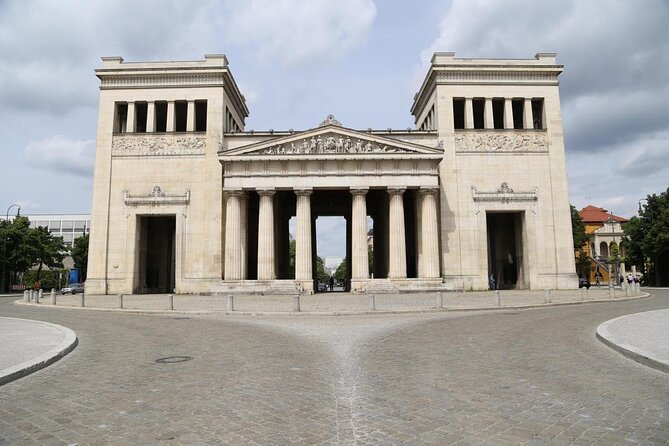
- Königsplatz and the machinery of spectacle
- The Hofgarten and the White Rose resistance
- Guides, group size, and the feel of the walk
- Walking conditions, weather, and what to bring
- Is $35.09 a fair price?
- Who should book this Munich history tour?
- Should you book it?
- FAQ
- Where does the Third Reich and WWII Walking Tour begin?
- Where does the tour end?
- How long does the tour last?
- What places are covered?
- Is museum admission included?
- Is food or drink included?
- Is the tour suitable for children?
- Can I cancel for a refund?
Key points before you book
- Munich’s Nazi story in one continuous walk: Connect the Hofbräuhaus, Feldherrnhalle, Königsplatz, Hofgarten, and the former headquarters site.
- A serious but approachable presentation: Guides explain the political setting, local events, resistance, and wartime damage without turning the subject into spectacle.
- Expect nearly three hours outdoors: Wear comfortable shoes, bring water and a snack, and prepare for cold or wet weather.
- A strong choice for first-time learners: The tour gives you a useful framework even if you know little about German history.
- Small-group details need checking: The tour is promoted as limited to 10 people, while the booking information also lists a maximum of 30.
- Good value at $35.09: You pay for a professional guide and a focused historical route, not museum admission, food, or transportation.
Why Munich is the right place for this history
Munich was not simply a backdrop to the Third Reich. It was the birthplace of the Nazi movement and the city where Hitler’s political career took shape. The tour begins in the center of town and uses real locations to explain how a defeated Germany, political violence, revolution, assassination, and economic misery created an opening for radical movements.
That local focus is the tour’s greatest strength. You are not hearing a general account of World War II from a classroom or a distant memorial. You are standing in the places where speeches were made, power was challenged, resistance was organized, and Nazi propaganda was displayed.
I find this useful because the route links cause and effect. The guide can explain how Munich’s post-World War I unrest shaped the early Nazi movement, then show you where that movement gathered support and attempted to seize control. The result is more than a list of dates. You see how political ideas entered public life and how familiar city spaces were used to build power.
The subject is heavy, and this is not a sightseeing stroll with a few dramatic stories added for flavor. The tour is not recommended for children under 12. For older children and teenagers, the decision depends on their interest and maturity, but parents should expect discussion of dictatorship, war, persecution, resistance, and mass death.
More Third Reich and wartime history walks in Munich:
- Munich: Third Reich & WWII Walking Tour
★ 4.6 · 6,181 reviews - Third Reich Walking Tour Munich
★ 4.5 · 4,291 reviews - Munich: Birthplace of the Third Reich Guided Walking Tour
★ 4.6 · 771 reviews
Starting at Marienplatz
The walk begins at Marienplatz, Munich’s central square. This is a convenient meeting place near public transportation, but it can be crowded, especially during the Christmas market season. One practical issue deserves attention: the detailed meeting instructions have caused confusion for some people, and the map pin has reportedly not always been accurate.
I would check the exact meeting directions before leaving your hotel and look for the Munich Tourist Office area rather than relying only on the first map marker. Arrive early enough to locate the guide without rushing through the crowds.
Starting at Marienplatz also gives the guide a useful place to set the scene. You are in the heart of modern Munich, surrounded by busy streets and impressive buildings, while the talk turns to the city’s political turmoil after World War I. That contrast is effective. It makes clear that the Nazi era grew within a living city, not in some remote historical vacuum.
The tour then moves through central Munich toward locations tied to the Nazi rise. The order may feel slightly less intuitive than beginning at Königsplatz and working back toward Marienplatz, but the central start is convenient for most sightseeing schedules.
The Hofbräuhaus and the early Nazi movement
The Hofbräuhaus is one of Munich’s best-known beer halls, and it also carries an important political association. The tour explains its place in the Nazi movement, including the first mass meeting connected with the party’s rise.
This stop is valuable because it shows how political organizing took place in ordinary public venues. The Nazi movement did not begin with control of ministries and armies. It first needed rooms, audiences, speeches, and a message that could attract people frustrated by Germany’s defeat, economic collapse, and political disorder.
You will hear how the movement developed in Munich before it gained control of Germany. A good guide uses this stop to separate early Nazi history from the later machinery of dictatorship. That distinction matters. It helps you understand the gradual steps by which a fringe movement could turn public anger into political power.
The Hofbräuhaus itself remains an active attraction, so do not expect a quiet memorial setting. You are discussing serious history in a busy part of town. That can feel jarring, but it also makes the lesson more immediate. The past is being examined in a place that continues to function as part of everyday Munich.
Feldherrnhalle and the failed attempt to seize power
Feldherrnhalle is tied to Hitler’s failed attempt to seize power in the Beer Hall Putsch of 1923. The tour uses the site to explain the danger and ambition of the early Nazi movement, along with the consequences of its failed challenge to the Bavarian and German authorities.
I consider this one of the most important stops because it shows that Nazi power was not inevitable. Hitler and his supporters tried to force a political takeover and failed. The later path to control came through a mixture of propaganda, electoral politics, intimidation, legal maneuvering, and public fear.
Your guide can also explain how the site was later used in Nazi symbolism and public memory. The meaning of a place can change depending on who controls the government and how official ceremonies are staged. That is one reason a guided visit helps. A quick photograph of the monument tells you very little on its own.
The area is part of a working city, so you will likely be sharing the space with other pedestrians. Listen closely when the guide gathers the group. One person specifically noted that amplification would have helped, and hearing can be difficult in busy streets. Staying near the guide is sensible.
More walking tours in Munich:
- Munich: Old Town & Viktualienmarkt City Walk in German
★ 4.7 · 2,304 reviews - Munich: Night Watchman Walking Tour
★ 4.7 · 2,092 reviews - Munich Ghosts and Spirits Evening Walking Tour
★ 5.0 · 1,900 reviews - Munich Old Town Walking Tour
★ 4.5 · 1,287 reviews
Königsplatz and the machinery of spectacle
Königsplatz is the route’s major architectural and political setting. Under the Nazis, it was used for mass party rallies and public displays of power. The wide open space and monumental buildings helped create the visual language of the regime.
Here, I like the way the tour shifts from individual political events to mass participation. A dictatorship needs more than a leader and a party office. It needs ceremonies, symbols, crowds, uniforms, and carefully staged public spaces. Königsplatz lets you see how architecture and political theater worked together.
The guide also explains the darker end of this story. Munich, once central to the Nazi movement, was left heavily damaged by the end of World War II. The contrast between the city’s present-day beauty and the destruction of 1945 is a recurring theme of the walk.
The tour ends at Königsplatz 1, described as Hitler’s former headquarters. This gives the walk a logical final stop, bringing the story from the movement’s early meetings to the center of its power. It also puts you close to Munich’s documentation and memorial sites, which can be useful for further study after the walk.
The Hofgarten and the White Rose resistance
The Hofgarten section gives the tour a needed change of focus. Instead of looking only at Nazi growth and official power, the guide discusses the White Rose resistance movement.
This is an especially valuable part of the route because it reminds you that German society was not politically uniform. Resistance was dangerous, limited, and often crushed, but it existed. The White Rose story helps place individual moral choices beside the larger story of institutions, propaganda, and fear.
Expect the guide to pause here and allow time for reflection. Several descriptions of the tour’s style emphasize factual presentation, sensitivity, and space for quiet remembrance. That approach suits the subject. A guide who rushes from one dramatic fact to the next can make the history feel flat or theatrical.
The Hofgarten stop also offers a chance to think about how Germans today remember the Nazi era. The tour does not treat the past as a closed chapter. It connects historical events with the continuing need to question group pressure, political slogans, and the abuse of public trust.
Guides, group size, and the feel of the walk
The guide can make a major difference on a tour like this. The roster varies, but guides praised in the supplied information include Josh, Alex, Michael, Danielle, Joel, Ulrich, and Bridget. Josh is repeatedly described as passionate, clear, and good at explaining the subject to both beginners and people with a strong interest in modern German history. Alex is noted for welcoming questions and adding suggestions for museums and sights to visit later. Michael is described as easy to follow and able to handle detailed questions.
Ulrich is particularly useful if you want advice after the walk, including a suggestion to visit the documentation museum near the ending area. Bridget has also been noted for adding personal context about Munich and offering ideas for places to eat, relax, and explore.
I would not book based on one specific guide, since assignments can change. Still, the range of guide names and consistently strong comments point to a tour built around live explanation rather than a fixed audio script.
The experience is advertised as a small-group tour limited to 10 people, which would be ideal for a subject that benefits from questions and discussion. However, the additional booking information lists a maximum of 30 participants. I would clarify the expected group size at booking if that detail matters to you.
Walking conditions, weather, and what to bring
The official duration is about 2 hours 45 minutes. Some descriptions of the day felt closer to three hours or more because of the amount of walking and standing. Plan your schedule around the full stated duration, not a quick two-hour outing.
Bring water and a small snack. There is no food or drink included, and the pace may leave little time to stop. You should also wear shoes suited to steady city walking. One description calls the route tiring because of the limited sitting, while another says there was only a short indoor break.
Weather matters. Guides have continued in freezing conditions and kept the presentation moving, but cold weather can make a serious tour physically harder. In winter, wear warm layers and gloves. In rain or strong sun, the lack of extended indoor shelter will be more noticeable.
Most people who can walk and stand for nearly three hours should manage the activity. Service animals are allowed, and the tour is near public transportation. Hotel pickup and drop-off are not included, so you make your own way to Marienplatz and arrange your onward route from Königsplatz.
Is $35.09 a fair price?
At $35.09 per person, I consider this a good value if you want context rather than just photographs. The price pays for a professional guide, a carefully connected route, and the chance to ask questions at the actual sites. That is a reasonable cost for almost three hours of focused instruction in central Munich.
The value is lower if you prefer to move independently, dislike long historical explanations, or want substantial time inside museums. Admission tickets are not included, and this is an outdoor walking experience rather than a museum tour.
I would pair it with a separate visit to a documentation center or memorial site if you have time. The walking tour explains how locations fit together. A museum can then give you photographs, documents, films, and personal accounts at a slower pace. The two formats serve different purposes.
Free cancellation is available if you cancel at least 24 hours before the local start time. Changes or cancellations made later are not accepted for a refund, so keep that rule in mind when arranging your Munich schedule.
Who should book this Munich history tour?
I would choose this tour if you want a clear introduction to Munich’s role in the Nazi era, especially if you are visiting the city for the first time. It suits adults, history students, and anyone who wants to understand the political meaning behind places they might otherwise pass without noticing.
It is also a good fit for people who value discussion. The guides encourage questions, explain related subjects, and can suggest museums or landmarks for the rest of your stay. That makes the walk useful beyond its formal ending.
I would think twice if you have limited mobility, need frequent rest breaks, or are traveling with young children. The subject is not recommended for children under 12, and the long periods of standing can be tiring even in good weather.
Should you book it?
Yes, if you want a serious, locally focused account of Munich’s Nazi past and can handle nearly three hours on foot. The route covers the Hofbräuhaus, Feldherrnhalle, Königsplatz, the Hofgarten and White Rose resistance, then ends near Hitler’s former headquarters. Its strongest feature is the connection between places and events.
Book with realistic expectations: this is not light sightseeing, there is no meal break, and the group size may need clarification. Bring water, a snack, good shoes, and weather protection. If those conditions suit you, $35.09 buys one of the more useful ways to understand how Munich became the birthplace of Nazism and how the city remembers that burden today.
FAQ
Where does the Third Reich and WWII Walking Tour begin?
The tour begins at Marienplatz in central Munich, at 80331 München, Germany.
Where does the tour end?
It ends at Königsplatz 1, 80333 München, Germany, near the site described as Hitler’s former headquarters.
How long does the tour last?
The stated duration is approximately 2 hours 45 minutes. You should plan for close to three hours because the tour involves walking and standing at several locations.
What places are covered?
The route includes Marienplatz, the Hofbräuhaus, Feldherrnhalle, Königsplatz, and the Hofgarten, where the White Rose resistance movement is discussed.
Is museum admission included?
No. Admission tickets are not included in the tour price.
Is food or drink included?
No. Food and drinks are not included, so bringing water and a small snack is practical.
Is the tour suitable for children?
The tour is not recommended for children under 12 because of the serious subject matter.
Can I cancel for a refund?
Yes. You can cancel at least 24 hours before the experience start time for a full refund. Cancellations or changes made less than 24 hours before the start time are not accepted for a refund.
Just added around Munich
- Private Transfer from Munich to Salzburg, English-speaking driver★ 3.5 · 3 reviews
- Private tour from Munich to Rothenburg and Harburg★ 5.0 · 3 reviews
- Scenic Adventure Private Day Tour to The Konigssee Salzburg★ 4.5 · 3 reviews
- Munich: Capture the most Photogenic Spots with a Local★ 5.0 · 3 reviews
- Private Beer Tasting Tour in Munich with Oktoberfest Museum★ 4.3 · 3 reviews
- Munich Photoshoot: A Must-Have Holiday Experience!★ 5.0 · 3 reviews
- Paul’s Private Tour in the Alte Pinakothek Munich★ 5.0 · 3 reviews
- Private Tour to Hallstatt Salt Mine and Skywalk with Lunch★ 5.0 · 3 reviews
Third Reich & WWII Tours, compared.

Birthplace of the Third Reich Guided Walking Tour
Read our review →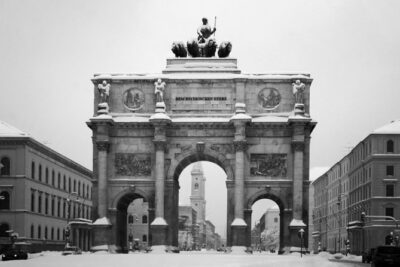
Munich World War II Sites Including Dachau Concentration Camp
Read our review →
Munich City Walking Tour, includes Third Reich & Viktualienmarkt
Read our review →
Munich 3-Hour Segway Tour: Nazi Munich & Royal Architecture
Read our review →
Dachau Concentration Camp Memorial Site And Third Reich Day Tour From Munich
Read our review →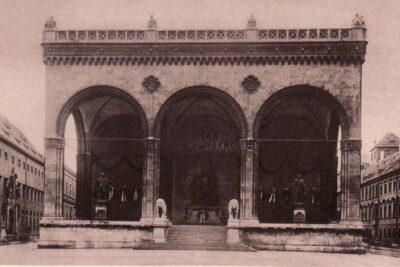
Browse the lists this tour appears in