
Reviewed · THIRD REICH & WWII TOURS
Third Reich Tour Munich
Munich’s Third Reich story unfolds on ordinary streets, in famous beer halls, and across grand squares built for political theater. This 2-hour-30-minute walk links the early Nazi meeting place at Sterneckerbräu with Hofbräuhaus, the Beer Hall Putsch site, and the Führerbau, giving you a clear sense of how a local movement grew into a criminal regime. I like the route’s strong narrative arc, and I like that it ends at Königsplatz, where the scale of Nazi ambition becomes easy to grasp.
The small maximum group of 20 should make it easier to hear and ask questions. Guides including Jamie Buckley and Kaevan are praised for clear storytelling, detailed context, and a pace that leaves room for extra questions. The main drawback is that this is an outdoor walking tour, so cold weather can make the final stops less comfortable, and the subject itself is grim rather than light sightseeing.
In This Review
- Key points to know before booking
- Why this Munich walking tour matters
- Starting at Isartor and walking into the past
- Sterneckerbräu and the movement’s early meeting place
- Hofbräuhaus and the power of a public speech
- Feldherrnhalle and the failed Beer Hall Putsch
- A pause at the victims’ memorial
- The Führerbau and the Munich Agreement
- Königsplatz and the architecture of control
- How the guide shapes the experience
- Price, timing, and practical value
- Who should book this walk
- Should you book the Third Reich Tour Munich?
- FAQ
- Where does the Third Reich Tour Munich begin?
- Where does the tour end?
- How long does the tour last?
- What sites are included?
- What is the price?
- How large is the group?
- Is the tour available with a mobile ticket?
- Can I cancel for a full refund?
Key points to know before booking
- The route connects seven important sites: You walk from Isartor through Munich’s early Nazi meeting places and political monuments to Königsplatz.
- Sterneckerbräu gives the tour an unusual starting point: This former beer hall is linked to the formation of the prototype Nazi Party.
- Hofbräuhaus adds the public-speaking angle: You learn how Hitler used a famous Munich venue to reach larger crowds.
- The Feldherrnhalle explains the 1923 turning point: The failed Beer Hall Putsch became a tool of Nazi martyr propaganda.
- The tour includes a memorial to Nazi victims: The stop at Platz der Opfer des Nationalsozialismus keeps attention on those persecuted by the regime.
- The ending is easy for onward travel: Königsplatz U-Bahn station connects with Munich Central Station in one stop.
Why this Munich walking tour matters
I find this tour most useful because it treats Nazi history as a local story before treating it as a national one. Munich was not just a backdrop. The route shows where meetings took place, where speeches drew crowds, where an attempted coup failed, and how public spaces were reshaped to project power.
That approach helps you connect names and dates with real places. At Sterneckerbräu, you are not simply told that the Nazi movement began in Munich. You hear about the beer hall setting and the early followers who gathered there. At Königsplatz, you can better understand how architecture and mass ceremony were used to make political power look permanent.
The subject deserves a serious tone. This is not a tour that treats the Nazi period as a collection of dramatic anecdotes about Hitler. Its strongest purpose is to explain how propaganda, public gatherings, political violence, and official buildings worked together.
More Third Reich and wartime history walks in Munich:
- Munich: Third Reich & WWII Walking Tour
★ 4.6 · 6,181 reviews - Third Reich Walking Tour Munich
★ 4.5 · 4,291 reviews - Munich: Birthplace of the Third Reich Guided Walking Tour
★ 4.6 · 771 reviews
Starting at Isartor and walking into the past
The meeting point is Isartor Gate, at Tal 50. This is a practical place to begin because it gives you a clear landmark in central Munich and puts you near the old city streets.
The tour then moves toward the former beer halls and political locations tied to the Nazi movement. You should expect regular walking between stops rather than a series of indoor visits. The information provided does not promise entry into every building, so think of this as a street-level history walk with guided explanation at each location.
That format has a real advantage. You see the city as a working place, not as a sealed museum display. You also need to stay aware of traffic, weather, and the pace of the group.
Sterneckerbräu and the movement’s early meeting place
The first major stop is Sterneckerbräu, a former beer hall connected with the founding of the prototype Nazi Party. The tour spends about 15 minutes here.
This stop gives the story an important local scale. Political movements do not begin with monumental government buildings. They often form in ordinary meeting rooms where people gather, argue, recruit, and refine their message. Here, your guide explains the role of the beer hall as an early meeting place for Adolf Hitler and his followers.
I like this part of the route because it avoids beginning with the most famous Nazi landmarks. You start with organization and recruitment, then follow the movement as it gains a wider audience. That makes later stops easier to understand.
Do not expect a preserved Nazi-era interior as part of the listed experience. The value is in the location and the explanation, not in a grand display of objects. A good guide is especially important here, and Kaevan is praised for answering questions and making the story easy to follow.
Hofbräuhaus and the power of a public speech
The walk continues to Staatliches Hofbräuhaus, with about 25 minutes here. The beer hall is one of Munich’s best-known landmarks, but this visit looks at a darker part of its history.
Adolf Hitler held early Nazi Party meetings here, and the venue helped him reach larger crowds as the movement grew. Your guide explains how speeches, public gatherings, and familiar social settings helped turn political ideas into a mass campaign.
This is a useful reminder that propaganda was not limited to official posters or government ceremonies. A well-known beer hall could provide a large audience and a ready-made public setting. The surroundings also help explain why Munich matters so much to this story.
Hofbräuhaus remains a functioning attraction in Munich, so the area can feel very different from the history being discussed. That contrast may be uncomfortable, but it is also instructive. You are looking at a place with a long public life, not a site frozen in 1920s political history.
The 25-minute stop should give the guide enough time to explain the location without turning the tour into a long lecture. If you want to ask about how Nazi speeches worked or how the movement attracted support, this is a good point to do so.
Something different, still within reach of Munich:
- From Munich: Neuschwanstein & Linderhof Castle Full-Day Trip
★ 4.5 · 12,494 reviews - Neuschwanstein & Linderhof Castle-Fairytale Day Tour from Munich
★ 4.5 · 7,275 reviews - Dachau Concentration Camp Memorial Site Tour from Munich by Train
★ 4.5 · 5,637 reviews - Neuschwanstein Castle Tour from Munich
★ 4.5 · 5,117 reviews
Feldherrnhalle and the failed Beer Hall Putsch
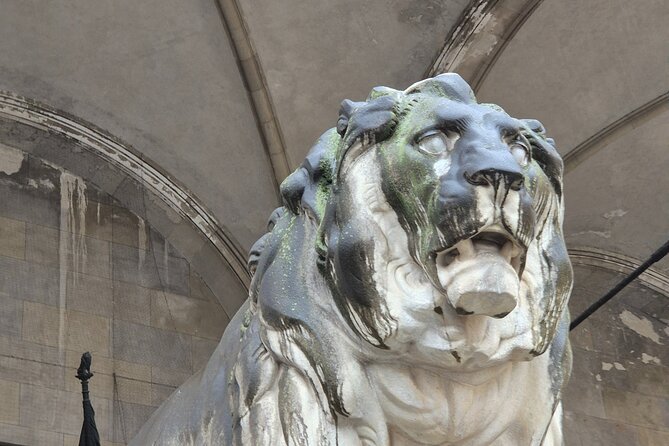
At Feldherrnhalle, the tour focuses on the Beer Hall Putsch of 1923, with approximately 25 minutes at the site. Hitler and his followers attempted to seize power, but the effort failed after a clash with Bavarian police.
This event is central to understanding Hitler’s later rise. The failed coup did not end his political career. Instead, Nazi propaganda turned those who died in the confrontation into symbols of sacrifice. The tour explains how the regime later used the site and the memory of the event to create a story of martyrdom.
I consider this one of the most valuable stops because it shows that Nazi power was not inevitable. There were failures, opposition, and moments when the movement could have been stopped. The later political success came through a mix of propaganda, organization, intimidation, and changing political conditions, not from one straight march to power.
Feldherrnhalle is also a good place to ask your guide about the difference between an event itself and the story a regime creates around it. That distinction is vital in any tour about dictatorship. The monument’s meaning changed as Nazi leaders attached political symbolism to it.
A pause at the victims’ memorial
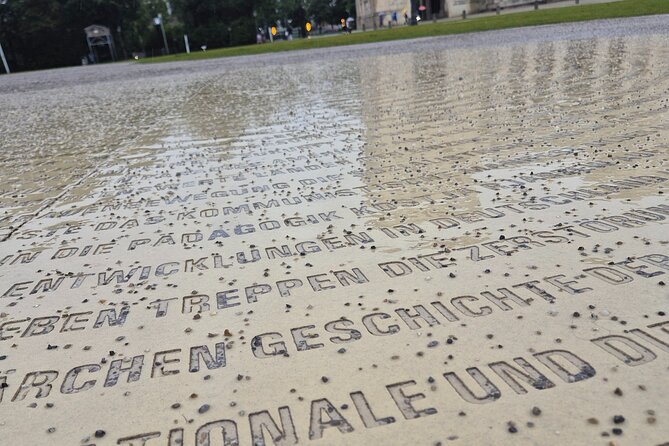
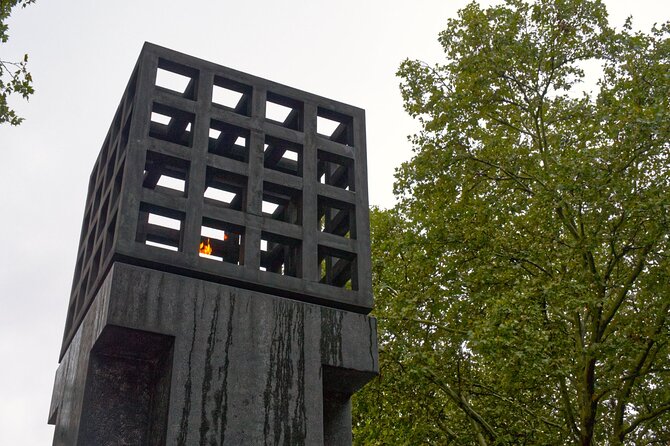
Platz der Opfer des Nationalsozialismus provides the tour’s clearest memorial stop. You spend about 20 minutes at the Square for the Victims of National Socialism, which honors people persecuted by the regime.
The eternal flame gives the site a quiet, solemn focus. After stops centered on Nazi organization and power, this memorial shifts attention to the people who suffered under that rule. That change in emphasis matters. A tour about the Third Reich should not leave you with only stories about leaders, speeches, and buildings.
This stop also shows how Munich confronts its past in the present. The city’s historical identity includes both its role as an early center of the Nazi movement and its effort to remember those targeted by it.
You may find this part less visually dramatic than Königsplatz or Feldherrnhalle, but its purpose is different. Give it time. The guide’s explanation can help place persecution within the wider story rather than treating the memorial as a brief pause between major landmarks.
The Führerbau and the Munich Agreement
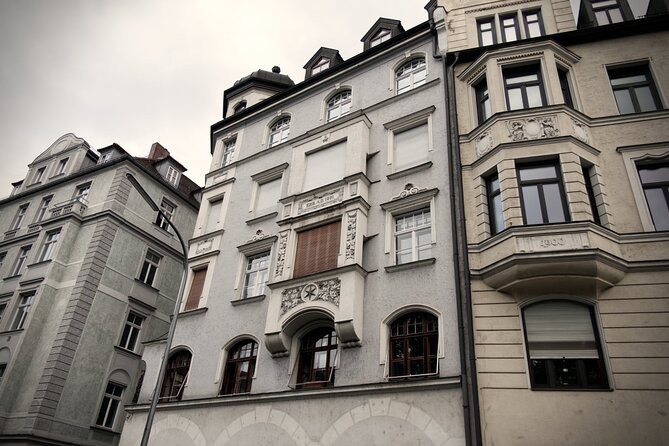
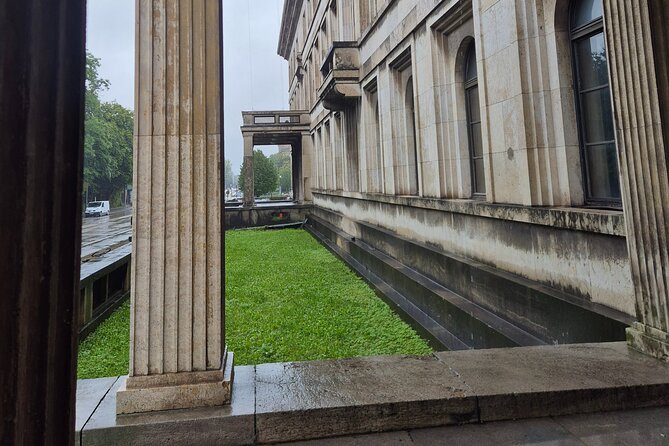
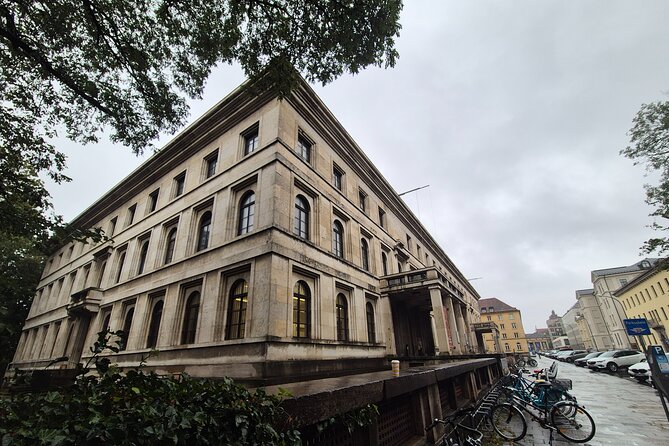
The route then reaches the Führerbau, Hitler’s official Munich offices, for about 20 minutes. The building is on Königsplatz and was used for meetings with senior officials and other major political work.
The most notable event connected with the building is the signing of the Munich Agreement in 1938. Your guide explains the role of the Führerbau in the operations of the Third Reich and the decisions made there.
This stop works best when you pay attention to the contrast between office space and political consequence. A building can look restrained from the outside, yet decisions made inside can affect countries and millions of people. The Führerbau helps move the story from street-level organizing to government power.
The information provided does not list an interior visit. You should plan to view the building from the outside while listening to the guide. That is not a weakness by itself, but anyone hoping for museum rooms or original exhibits should choose a different activity for that part of the day.
Königsplatz and the architecture of control
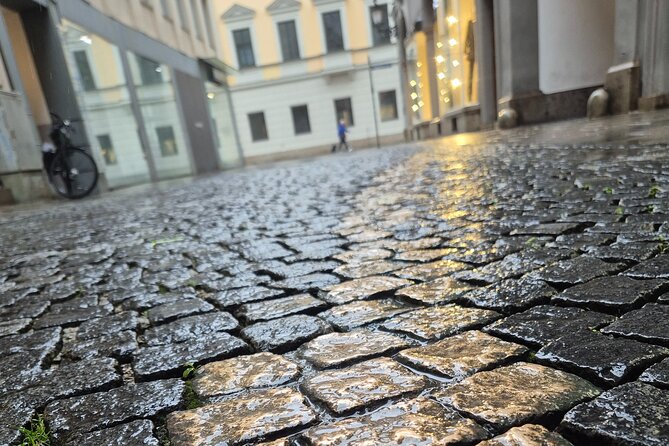
The tour ends at Königsplatz, with about 20 minutes devoted to the square. The Nazis transformed this grand public space into a setting for rallies, military parades, ceremonies, and book-burnings.
Here, the physical setting becomes part of the lesson. Large open spaces, formal architecture, and carefully planned public events can make a political movement appear more powerful and organized than it may actually be. The Nazis understood the visual force of crowds, ceremony, uniforms, and stone.
Königsplatz is the route’s strongest finish because it gathers several themes in one place. You have followed the movement from a beer hall to a major propaganda setting. You have seen how meetings became speeches, speeches became mass politics, and mass politics used public space to project control.
The square is also a place where a guide can help you read the city beyond its postcard image. Without context, it is simply an impressive urban space. With context, you see how its design and use were tied to political messaging.
How the guide shapes the experience
This tour depends heavily on the guide. Much of what you gain comes through explanation, not through entry to rooms or displays.
Jamie Buckley is praised for putting the sites together as one unfolding story and for answering questions along the way. Kaevan is also praised for strong subject knowledge and for making a small group feel connected. Those details matter because a walking tour can feel rushed or flat if the guide simply recites dates.
The pace appears designed to cover the listed sites while allowing some extra explanation. You should still expect the group to keep moving. The maximum of 20 people is not private-tour size, but it is small enough to make questions more practical than on a large coach excursion.
I would book this tour if you prefer discussion and context over a quick photo stop. If you want a polished indoor museum visit, this walk may feel limited. It is best understood as a guided route through Munich’s streets, with the guide supplying the historical framework.
Price, timing, and practical value
The price is $34.73 per person, and the tour runs for about two and a half hours. For a central Munich walking experience with seven significant stops and an expert guide, I consider that a fair price, especially if this is your first visit and you want a clear introduction to Munich’s Nazi-era role.
The value comes from the links between locations. You could walk past some of these sites on your own, but you would miss much of the reason they matter. The guide explains how the places connect, which is more useful than collecting isolated facts.
The tour is booked an average of seven days ahead, so you should not assume that a preferred date will remain open. Confirmation arrives at booking, and the activity uses a mobile ticket.
Wear comfortable shoes and check the forecast. The tour is outdoors, and one recent description notes that cold weather affected the experience. There is no need to overpack, but a warm layer can make the final section at Königsplatz much more pleasant.
The walk ends at Königsplatz 1. From there, you can take the U2 U-Bahn one stop to Central Station, use nearby buses or trams, or walk to Munich’s Old City in less than 15 minutes.
Free cancellation is available if you cancel at least 24 hours before the start time. Cancellations or changes made inside that window are not accepted for a refund.
Who should book this walk
I would recommend it to history-focused visitors, students, and anyone who wants to understand why Munich features so prominently in the story of the Third Reich. It also suits curious first-time visitors who want a guided route through central Munich rather than a general city tour.
The tour is open to most participants, is near public transportation, and allows service animals. The maximum group size is 20. Since the route lasts 2 hours and 30 minutes and centers on a serious subject, it may not suit young children looking for entertainment or anyone who prefers a relaxed sightseeing walk with little political content.
You should also consider pairing it with another Munich activity that explores the city’s art, food, or royal history. This tour is focused. That focus is its strength, but it means the experience will not provide a broad introduction to all of Munich.
Should you book the Third Reich Tour Munich?
Book it if you want a clear, carefully connected account of how Munich helped launch and promote the Nazi movement. The route is strong because it includes early meeting places, a major beer hall, the Beer Hall Putsch site, a victims’ memorial, the Führerbau, and Königsplatz.
I especially like the balance between political history and physical place. You learn where power was organized, where it was performed, and who suffered under it. Jamie Buckley and Kaevan appear to bring the kind of direct, question-friendly guiding this subject needs.
Skip it if you want extensive interior access, museum collections, or a light city walk. Otherwise, the $34.73 price, manageable group size, central route, and two-and-a-half-hour length make this a useful and serious addition to a Munich visit.
FAQ
Where does the Third Reich Tour Munich begin?
The tour begins at Isartor Gate, at Tal 50, 80331 München, Germany.
Where does the tour end?
It ends at Königsplatz 1, 80333 München, Germany.
How long does the tour last?
The tour lasts approximately 2 hours and 30 minutes.
What sites are included?
The route includes Isartor, Sterneckerbräu, Staatliches Hofbräuhaus, Feldherrnhalle, Platz der Opfer des Nationalsozialismus, the Führerbau, and Königsplatz.
What is the price?
The listed price is $34.73 per person.
How large is the group?
The tour has a maximum of 20 participants.
Is the tour available with a mobile ticket?
Yes. A mobile ticket is provided for the experience.
Can I cancel for a full refund?
Yes, if you cancel at least 24 hours before the experience start time. Cancellations or changes made less than 24 hours before the start time are not accepted for a refund.
Just added around Munich
- Private Transfer from Munich to Salzburg, English-speaking driver★ 3.5 · 3 reviews
- Private tour from Munich to Rothenburg and Harburg★ 5.0 · 3 reviews
- Scenic Adventure Private Day Tour to The Konigssee Salzburg★ 4.5 · 3 reviews
- Munich: Capture the most Photogenic Spots with a Local★ 5.0 · 3 reviews
- Private Beer Tasting Tour in Munich with Oktoberfest Museum★ 4.3 · 3 reviews
- Munich Photoshoot: A Must-Have Holiday Experience!★ 5.0 · 3 reviews
- Paul’s Private Tour in the Alte Pinakothek Munich★ 5.0 · 3 reviews
- Private Tour to Hallstatt Salt Mine and Skywalk with Lunch★ 5.0 · 3 reviews
Third Reich & WWII Tours, compared.

Birthplace of the Third Reich Guided Walking Tour
Read our review →
Munich World War II Sites Including Dachau Concentration Camp
Read our review →
Munich City Walking Tour, includes Third Reich & Viktualienmarkt
Read our review →
Munich 3-Hour Segway Tour: Nazi Munich & Royal Architecture
Read our review →
Dachau Concentration Camp Memorial Site And Third Reich Day Tour From Munich
Read our review →Browse the lists this tour appears in