
Reviewed · THIRD REICH & WWII TOURS
Walking Tour on Resistance to Nazism in Munich
Munich’s Nazi past is often told through Hitler’s rise, but this 2.5-hour walking tour puts its focus elsewhere: on the people who refused to obey. You’ll move from royal Munich to the White Rose memorial, learning how soldiers, clergy, artists, political groups, and lone plotters challenged the dictatorship.
I like the route for two clear reasons. First, it links familiar city sights to difficult history, so you are not just reading dates in a museum. Second, the tour gives proper space to several kinds of resistance, including the Valkyrie plot, the church’s opposition to the T4 killing program, and Georg Elser’s remarkable assassination attempt.
The main consideration is pace. Eight stops at roughly 20 minutes each make for a full afternoon, and some subjects deserve far longer than a short outdoor explanation. The tour also begins at 3:00 pm and ends in Maxvorstadt, so plan your route home before you set out.
In This Review
- Key points to know before booking
- Why Munich’s resistance deserves its own walking tour
- Hofgarten: royal life under the dictatorship
- The Bavarian State Chancellery and political opposition
- Prinzregentenstraße and resistance inside the military
- The Bavarian National Museum and Valkyrie Operation
- Haus der Kunst and the machinery of cultural control
- Ludwigskirche and the moral challenge of T4
- DenkStätte Weiße Rose: Munich’s best-known student resistance group
- Türkenstraße and Georg Elser’s lone attempt
- Price, group size, and the afternoon schedule
- Who will get the most from this walk
- Should you book it?
- FAQ
- Where does the walking tour begin?
- Where does the tour end?
- What time does the tour start?
- How long does the tour last?
- How many stops are included?
- Is admission to the stops included?
- How large is the group?
- Can I cancel for a full refund?
Key points to know before booking
- Eight Munich locations connect resistance stories to real places, from Hofgarten and the Bavarian State Chancellery to Ludwigskirche and Türkenstraße.
- The White Rose receives a dedicated stop at DenkStätte Weiße Rose, making this a strong choice if Sophie and Hans Scholl’s group is high on your list.
- The tour covers more than student resistance, including political opposition, military plots, religious resistance, art censorship, propaganda, and Georg Elser.
- Guides named Laura, Maca, Javier, Jaime, and Julieta have led this experience, with particular praise for clear, warm, engaging explanations.
- The $19.49 price is fair for a small-group walking tour, especially with a maximum of 25 people and no separate admission fees listed.
- You need to walk between eight stops, and the advertised duration is approximately two and a half hours, so comfortable shoes are sensible.
Why Munich’s resistance deserves its own walking tour
Munich is closely tied to the Nazi movement, yet that is only half the story. The city also saw acts of resistance from students, soldiers, church figures, political organizations, artists, and individuals acting alone. This tour is built around that tension.
I like this approach because it avoids presenting resistance as one neat, united campaign. The people you meet along the route had different motives, methods, and chances of success. Some worked inside official institutions. Others wrote leaflets, challenged propaganda, protected moral principles, or planned violence against Hitler.
The outdoor format also helps you understand how power operated in the city. Government buildings, military offices, churches, museums, and university-area sites become part of the story. You are not simply hearing that the regime controlled politics and culture. You are seeing the kinds of places where that control was exercised.
The route is led in English or another language depending on the guide assigned, based on the information available from the experience. Names connected with this tour include Laura, Maca, Javier, Jaime, and Julieta. Laura is especially associated with a friendly, clear style, while Javier is noted for making history engaging and Jaime for bringing strong personal energy to the subject. If you have already taken a city tour with Laura, this offers a more focused follow-up.
More Third Reich and wartime history walks in Munich:
- Munich: Third Reich & WWII Walking Tour
★ 4.6 · 6,181 reviews - Third Reich Walking Tour Munich
★ 4.5 · 4,291 reviews - Munich: Birthplace of the Third Reich Guided Walking Tour
★ 4.6 · 771 reviews
Hofgarten: royal life under the dictatorship
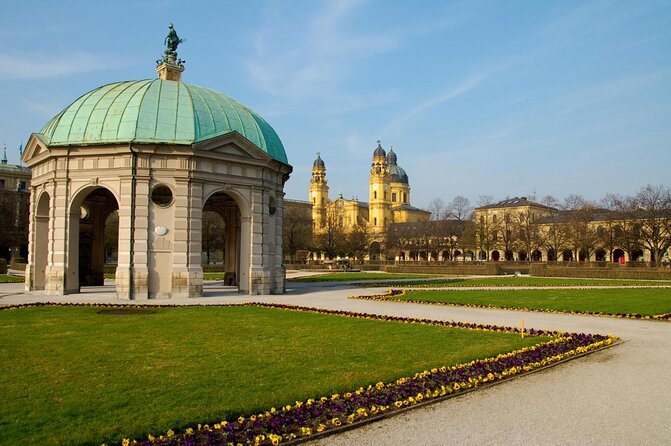
The tour begins at Odeonsplatz and moves to Hofgarten, where the first 20-minute stop sets the political scene. Here you learn how the royal family lived during the Nazi period and what Munich’s political situation looked like under the regime.
This is a useful opening because it gives you a wider frame before the tour moves to individual resistance stories. The Nazi dictatorship did not erase the city’s older identity overnight. Royal associations, civic traditions, and established institutions remained part of daily life, even as political freedom disappeared.
The stop should help you understand that dictatorship can operate beside familiar buildings and old symbols. That contrast matters. Munich was not a city transformed into a single-purpose military camp. It continued to function as a place where people worked, worshipped, studied, and visited public gardens, while repression shaped every part of public life.
Because the stop lasts about 20 minutes, expect an introduction rather than a detailed account of royal history. If you want a full political timeline, take notes and ask questions as the tour moves along.
The Bavarian State Chancellery and political opposition
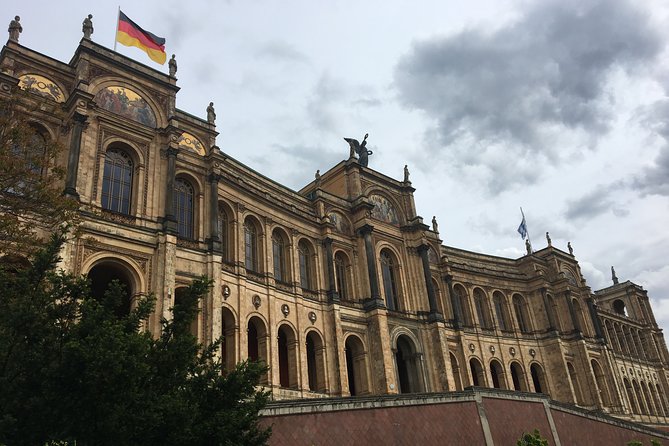
At the Bayerische Staatskanzlei, the guide turns to political parties that resisted the Nazi regime and to Sopade. This is one of the route’s more important shifts. Instead of focusing on famous individuals, the discussion looks at organized political opposition.
The location adds weight to the subject. You are hearing about resistance near a major seat of government, not in an abstract classroom. The story raises practical questions about how political groups reacted when the normal rules of elections, debate, and public criticism were destroyed.
This stop should appeal to you if you want more than the familiar story of the White Rose. Political resistance is often harder to explain because it involves organizations, exile, communication, and shifting tactics. A 20-minute presentation cannot cover every detail, but it can show how opposition existed beyond the people whose names appear most often in tourist guides.
The route also benefits from placing this stop early. Once you understand the political machinery, later examples of military, religious, and cultural resistance make more sense.
Prinzregentenstraße and resistance inside the military
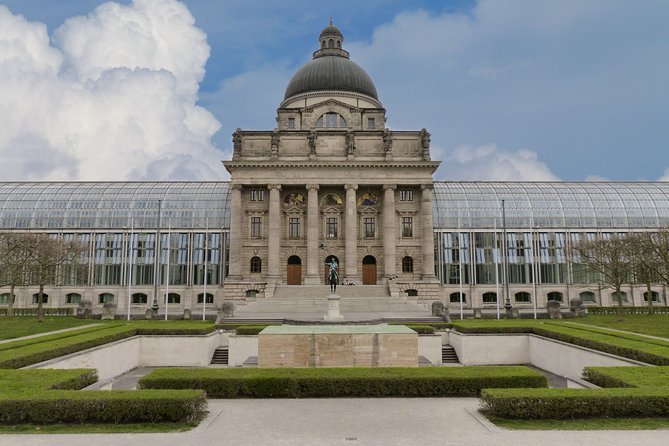
On Prinzregentenstraße, the group examines the former Luftwaffe Command Center and resistance within the militia itself. This part of the tour deals with a difficult question: what happened when people inside the state’s own armed structures turned against the regime?
The subject is not simple hero worship. Military opposition could involve loyalty to Germany, opposition to Hitler’s leadership, moral objections, or a mix of motives. The stop gives you a chance to consider why someone inside the system might resist, and why organized opposition was so dangerous.
The former Luftwaffe command building provides a concrete setting for that conversation. You are looking at a place connected to military authority while learning about people who challenged the dictatorship from within that world.
If military history is your main interest, this may be one of the strongest stops. If it is not, the guide’s role becomes especially important. The available feedback points to guides who explain the material in an approachable way, with Laura, Javier, and Jaime repeatedly singled out by name for clarity and enthusiasm.
More walking tours in Munich:
- Munich: Old Town & Viktualienmarkt City Walk in German
★ 4.7 · 2,304 reviews - Munich: Night Watchman Walking Tour
★ 4.7 · 2,092 reviews - Munich Ghosts and Spirits Evening Walking Tour
★ 5.0 · 1,900 reviews - Munich Old Town Walking Tour
★ 4.5 · 1,287 reviews
The Bavarian National Museum and Valkyrie Operation
The Bavarian National Museum stop focuses on the Valkyrie Operation. The subject is familiar to many people through films and books, but seeing it placed within Munich’s civic setting gives it a different feel.
You will learn about the plan connected with members of the military who sought to use an emergency operation as a way to take control and move against the Nazi leadership. The tour’s value here is not simply naming the plot. It connects the operation to the broader question of resistance within official institutions.
A 20-minute stop is enough to establish the main events and explain why the plan mattered. It is not enough for every participant, failed step, and later consequence. If this is the topic you most want to study, consider the tour an introduction rather than a final account.
The stop also keeps the route varied. After political opposition and military resistance, the tour continues to show that opposition could take many forms and emerge from different parts of German society.
Haus der Kunst and the machinery of cultural control
At Haus der Kunst, the tour examines Nazi censorship of art, the Degenerate Art exhibition, and the way propaganda shaped the press. This is one of the most visually suggestive stops, even though the experience is a walking tour rather than a museum visit.
The regime did not treat art as a private matter. It tried to define which styles, artists, and ideas were acceptable, while using exhibitions and media to promote its own message. The story of Degenerate Art shows how cultural control worked through public ridicule, exclusion, and official power.
The discussion of the press adds another layer. Propaganda did not rely only on speeches or rallies. It also depended on managing the information people received each day. That helps you see why censorship belongs in a tour about resistance. Artists, journalists, and audiences all faced pressure when the state attempted to control public thought.
Do not expect admission to an exhibition as part of the tour. The stop is an outdoor explanation connected with the building and its role in Nazi cultural policy. Its strength is context, not an extended gallery visit.
Ludwigskirche and the moral challenge of T4
At Ludwigskirche, the guide explains the relationship between the Church and Nazism, the T4 program, and religious resistance. This section adds a moral and institutional dimension to the tour.
The T4 program involved the systematic killing of people with disabilities. The subject is painful, and its inclusion makes clear that resistance was not limited to opposition over political power or military strategy. It also concerned the defense of human life and basic moral principles.
The church’s relationship with the Nazi regime was complicated, and the tour’s wording points to both the relationship and the religious figures who resisted. That complexity is important. You should not expect a simple story in which every church leader opposed the dictatorship, or in which every religious institution acted in the same way.
Ludwigskirche is a fitting place for this discussion because the setting encourages reflection rather than treating the topic as a list of facts. The 20-minute format keeps the group moving, but it may leave you wanting more detail about individual clergy and specific acts of opposition.
DenkStätte Weiße Rose: Munich’s best-known student resistance group
The stop at DenkStätte Weiße Rose is likely to be the emotional center of the tour. Here you learn about the White Rose, Munich’s best-known resistance group.
The White Rose is often the first resistance story people associate with Munich, and this dedicated stop gives it the attention it deserves. The group’s student identity also makes the story immediate for many people. These were not generals or government officials. They were young people who chose to speak against the dictatorship.
The site allows the guide to explain how their opposition worked and why their actions mattered. You may find this part especially memorable if you have already seen the memorial at the Ludwig Maximilian University area, though the supplied route identifies the stop as DenkStätte Weiße Rose.
The guide quality matters greatly here. Laura is repeatedly praised for answering questions and explaining the subject in an easy, engaging way. Maca is described as presenting the material with feeling and detail. Those qualities suit a story that requires both factual care and human sensitivity.
Give yourself room to pause after this stop. The schedule moves on, but the White Rose story can stay with you for the rest of the afternoon.
Türkenstraße and Georg Elser’s lone attempt
The final stop is at Türkenstraße, where the tour visits the Georg Elser Memorial and discusses Elser’s attempt to kill Hitler. This provides a striking contrast with the White Rose and the military plots.
Elser acted alone, making his story a powerful reminder that resistance did not always depend on a large network. His attempt against Hitler also raises difficult questions about timing, risk, and the chances one person had against the Nazi state.
Ending at the Georg Elser Memorial gives the tour a strong final image. The route finishes at Georg-Elser-Platz in Maxvorstadt, rather than returning to Odeonsplatz. That is practical if you plan to continue exploring the district, but it means you should check your onward route before booking an afternoon appointment elsewhere.
The final stop also broadens your understanding of resistance. By the end, you have heard about political groups, soldiers, clergy, students, artists, journalists, and a lone plotter. No single story is asked to represent them all.
Price, group size, and the afternoon schedule
At $19.49 per person, this is a reasonably priced guided walk. The cost is especially fair because the route covers eight locations and includes a focused subject rather than a general introduction to Munich.
The group can include up to 25 people. That is not an intimate private walk, but it is still small enough for a guide to keep the route together and handle questions. The strongest feedback centers on guides who are friendly, attentive, and willing to explain points clearly, so asking questions should be part of the experience.
The stated duration is approximately two hours and 30 minutes. Each of the eight stops is listed at about 20 minutes, which adds up to slightly more than two and a half hours before walking time. Treat the duration as an estimate, not a hard finish time.
The tour starts at 3:00 pm from Odeonsplatz, near public transportation, and ends at Georg-Elser-Platz. You receive a mobile ticket, and no admission charge is listed for the stops. Wear shoes suited to city walking, and allow extra time if you need to reach another booking afterward.
Free cancellation is available if you cancel at least 24 hours before the start time. Changes or cancellations inside that window are not refunded, and the activity requires a minimum number of people to operate.
Who will get the most from this walk
I would choose this tour if you want a serious look at Munich under Nazism without spending the whole afternoon inside a museum. It suits you especially well if the White Rose, Georg Elser, military opposition, or Nazi control of art and media interests you.
It also works as a second Munich tour. Several named guides, including Laura, have led both general city walks and this more specific route. If you enjoy a guide’s style on one tour, booking this subject-focused walk with the same guide may be a smart choice when scheduling allows.
Families with older children or teenagers may find the route useful, though the topics are grim and require attention. Most people can participate, service animals are allowed, and the route is near public transportation. The experience does not list a special accessibility format, so contact the provider if you need specific route information.
You may want something else if you prefer long indoor visits, a slower academic lecture, or a tour focused only on Hitler and the major Nazi buildings. This experience gives each stop about 20 minutes and keeps moving.
Should you book it?
Book this walk if you want Munich’s Nazi-era story told through acts of resistance, not only through the regime’s leaders and institutions. The range of subjects is its greatest strength, and the price makes it an easy addition to a Munich itinerary.
Go in ready to walk, listen, and think. The short stops cannot answer every question, but a strong guide can give you a clear framework and point you toward the stories worth studying further. Names such as Laura, Maca, Javier, Jaime, and Julieta are associated with the experience, with Laura receiving the most repeated praise for warmth, detail, and answers to questions.
FAQ
Where does the walking tour begin?
The tour begins at Odeonsplatz, Odeonsplatz, 80333 Munich, Germany.
Where does the tour end?
The tour ends at Georg-Elser-Platz in Munich’s Maxvorstadt district.
What time does the tour start?
The tour starts at 3:00 pm.
How long does the tour last?
The stated duration is approximately two hours and 30 minutes.
How many stops are included?
The route includes eight stops: Hofgarten, Bayerische Staatskanzlei, Prinzregentenstraße, Bavarian National Museum, Haus der Kunst, Ludwigskirche, DenkStätte Weiße Rose, and Türkenstraße.
Is admission to the stops included?
Each listed stop has free admission. The tour is presented as a walking experience with explanations at each location.
How large is the group?
The maximum group size is 25 people.
Can I cancel for a full refund?
Yes. You can cancel for a full refund at least 24 hours before the experience begins. Cancellations or changes made less than 24 hours before the start time are not refunded.
Just added around Munich
- Scenic Adventure Private Day Tour to The Konigssee Salzburg★ 4.5 · 3 reviews
- Private Transfer from Munich to Salzburg, English-speaking driver★ 3.5 · 3 reviews
- Private tour from Munich to Rothenburg and Harburg★ 5.0 · 3 reviews
- Munich: Capture the most Photogenic Spots with a Local★ 5.0 · 3 reviews
- Private Beer Tasting Tour in Munich with Oktoberfest Museum★ 4.3 · 3 reviews
- Munich Photoshoot: A Must-Have Holiday Experience!★ 5.0 · 3 reviews
- Paul’s Private Tour in the Alte Pinakothek Munich★ 5.0 · 3 reviews
- Private Tour to Hallstatt Salt Mine and Skywalk with Lunch★ 5.0 · 3 reviews
Third Reich & WWII Tours, compared.

Birthplace of the Third Reich Guided Walking Tour
Read our review →
Munich World War II Sites Including Dachau Concentration Camp
Read our review →
Munich City Walking Tour, includes Third Reich & Viktualienmarkt
Read our review →
Munich 3-Hour Segway Tour: Nazi Munich & Royal Architecture
Read our review →
Dachau Concentration Camp Memorial Site And Third Reich Day Tour From Munich
Read our review →Browse the lists this tour appears in