
Reviewed · THIRD REICH & WWII TOURS
Inside the Third Reich (Private Tour)
Munich’s Nazi past is not confined to a museum. It appears in beer halls, grand squares, damaged façades, memorials, and buildings that survived the war. This private walk with Curt Milburn connects those places into a clear story of Hitler’s rise, the Third Reich’s crimes, and its eventual collapse.
I like the one-group format, which gives you room to stop and ask questions instead of following a fixed script. I also like the use of an iPad loaded with old films and photographs, a useful way to compare Munich as it looks today with the city Hitler knew. The main drawback is time: nine stops in two to three hours means some subjects receive only a short introduction.
- Private guiding for up to 15 people, with the discussion shaped around your questions and prior knowledge.
- Historic films and images on an iPad help reveal buildings and streets that can otherwise look ordinary.
- Nine Munich locations cover Nazi beginnings, propaganda, resistance, war damage, and remembrance.
- Free admission at every listed stop keeps the price focused on the guide rather than tickets.
- A sober look at Nazi history, including Kristallnacht, the SA purge, persecution, and resistance.
- Central meeting point at Marienplatz, with the tour returning there at the end.
In This Review
- Why Munich is the right place to study the Third Reich
- Isartor and Platzl: where the movement took shape
- The Old Town Hall and the beginning of Kristallnacht
- Platzl again: spotting war damage in plain sight
- Odeonsplatz and the cost of Nazi power
- A pause for remembrance at Platz der Opfer des Nationalsozialismus
- The Glyptothek and the surviving Nazi buildings
- Alter Botanischer Garten and the largest public Nazi eagle
- The Residenz and Hitler’s failed putsch
- Curt Milburn’s teaching style and the iPad
- Price, timing, and who gets the best value
- Should you book this Munich history walk?
- FAQ
- How long does the Inside the Third Reich private tour last?
- Where does the tour begin?
- Where does the tour end?
- How many people can join the private tour?
- Does the tour include admission tickets?
- Can I cancel for a full refund?
Why Munich is the right place to study the Third Reich
Munich was not merely a backdrop to Nazi history. It was where Hitler built his political career, where the Nazi movement gained early support, and where public spaces became stages for speeches, rallies, and intimidation.
That makes this experience different from a general city walk that happens to mention the Nazis. The route focuses on the physical places tied to the movement. You see where events unfolded, then use photographs and films to understand how the same streets looked and functioned at the time.
I find that approach useful because modern Munich can hide its past in plain sight. A handsome square may now hold cafés and shoppers, yet its earlier role may have involved political violence, propaganda, or public mourning. A damaged building may look fully repaired until someone points out the surviving scars.
Curt’s role is especially important here. The tour information describes more than seven years of guiding in Munich, and his style, based on the available details, is conversational rather than purely lecture-based. You can ask about major figures, ordinary people, resistance, military events, or the city’s postwar appearance. If your group already knows the basics, you can spend more time on lesser-known details instead of hearing a beginner’s script.
Isartor and Platzl: where the movement took shape
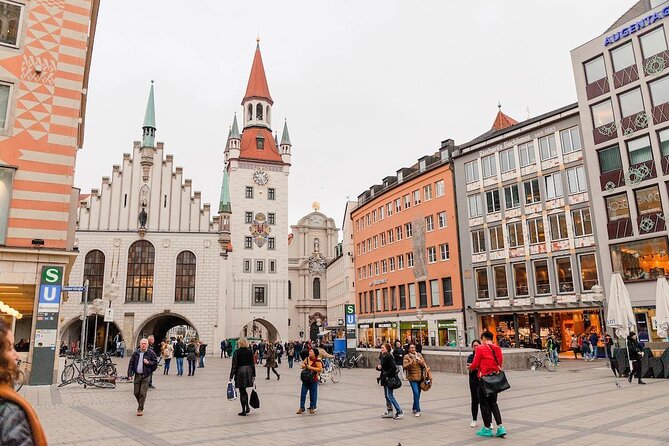
The first stop is Isartor, connected with the original beer hall where Hitler met members of the Nazi movement. Munich’s beer halls mattered because they offered large indoor spaces for speeches, arguments, recruitment, and political organizing.
I would pay close attention here to the setting rather than expecting a preserved Nazi interior. The value is in understanding how political movements can use familiar social spaces. The site helps explain the early stage of Hitler’s career, before the party became the force that reshaped Germany and Europe.
The route then reaches Platzl, where Hitler gave an early speech and began building a following. This stop covers his rise to success, so it is a good point to ask how a fringe political figure gained an audience and how public speaking helped turn anger and grievance into organized support.
The available tour details do not promise a museum entrance or a display of original objects at either stop. You are mainly reading the city itself while Curt supplies the context. The iPad matters here, since historic photographs can show how crowds, signs, and buildings were arranged in ways that are not obvious today.
More Third Reich and wartime history walks in Munich:
- Munich: Third Reich & WWII Walking Tour
★ 4.6 · 6,181 reviews - Third Reich Walking Tour Munich
★ 4.5 · 4,291 reviews - Munich: Birthplace of the Third Reich Guided Walking Tour
★ 4.6 · 771 reviews
The Old Town Hall and the beginning of Kristallnacht
The Old Town Hall is tied to the beginning of Kristallnacht, the coordinated anti-Jewish violence of November 1938. It is also linked to an assassination attempt on Hitler’s life.
Those two subjects place political violence and persecution side by side. The stop can help you see that Nazi terror was not one single event that appeared fully formed. It developed through speeches, laws, threats, attacks, and public acts that made cruelty seem normal or unavoidable.
This is one of the places where a private guide earns his fee. You can ask for the sequence of events, the people involved, and the effect on Munich’s Jewish community. The subject is grim, and the best guiding here requires care rather than theatrical storytelling. The supplied details point to an approach that combines broad political history with individual stories and the effect on ordinary people.
The Old Town Hall stop lasts about 20 minutes. That is enough for a focused explanation, though not enough to cover every aspect of Kristallnacht or the assassination attempt. If either topic matters especially to you, say so early in the tour so Curt can shape the discussion around it.
Platzl again: spotting war damage in plain sight
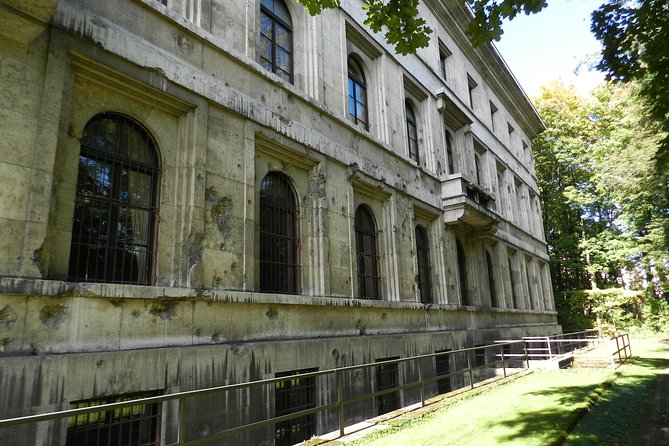
The itinerary returns to Platzl for a look at war damage on Munich’s beautiful buildings. This may sound like a small detail, but it is one of the most useful parts of the walk.
Munich has many attractive historic façades. Without help, you might assume that every building survived intact. A guide who points out repaired masonry, altered surfaces, or signs of reconstruction can change the way you read the old city for the rest of your visit.
This is also where the photographs on the iPad can do real work. Comparing a current view with a wartime or postwar image makes destruction and rebuilding easier to grasp than a list of dates. You are not just hearing that Munich suffered damage. You are looking at the same architectural setting across different periods.
The stop is listed at about 15 minutes, so expect a sharp visual lesson rather than a full account of the air war or reconstruction. I would treat it as an introduction and keep an eye out for similar evidence as you continue exploring Munich on your own.
Odeonsplatz and the cost of Nazi power
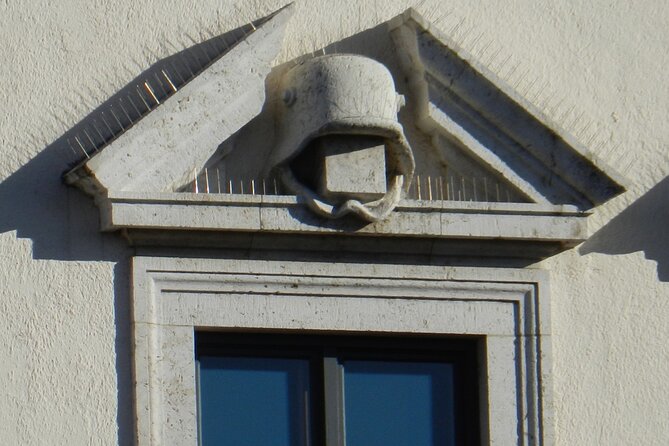
At Odeonsplatz, the focus turns to Hitler’s purge of the SA and the square’s use for speeches. This stop connects the Nazi movement’s public image with its internal violence.
The SA, or Sturmabteilung, had helped give the Nazi movement muscle and street presence. Its purge showed that Hitler was willing to destroy former allies when they threatened his control. A grand public square, meanwhile, provided a stage for speeches and official displays of power.
Odeonsplatz is a useful place to discuss the difference between popularity, intimidation, and political control. Large crowds and dramatic public events can make a regime appear permanent. The story behind the square reminds you that the Nazi system also relied on betrayal, fear, and force.
The scheduled time is about 10 minutes, the shortest stop on the route. That keeps the walk moving, but it also means you may need to ask direct questions if you want more detail about the SA purge or the speeches held there.
A few more Munich tours and experiences worth a look
- Munich Private Tour with a Local – Highlights & Hidden Gems
★ 5.0 · 469 reviews - Mike’s Neuschwanstein & Linderhof Private Tour from Munich
★ 5.0 · 197 reviews - Dachau Concentration Camp Private Tour by Train from Munich
★ 5.0 · 185 reviews - Fall in Love with Munich in a Private Old Town Walking Tour
★ 5.0 · 182 reviews
A pause for remembrance at Platz der Opfer des Nationalsozialismus
Platz der Opfer des Nationalsozialismus, or Square of the Victims of National Socialism, shifts the focus away from Nazi leaders and toward those who suffered and died under the regime.
That change is important. Tours about Hitler can accidentally make the dictator the center of every story. A memorial stop helps restore the people who were persecuted, imprisoned, murdered, or otherwise harmed by Nazi rule to their proper place in the account.
You can expect a quieter and more reflective section here. The stop lasts around 15 minutes, enough to explain the memorial’s purpose and connect it with the wider story of Munich under the Third Reich.
I appreciate that this location is included alongside political sites and rally grounds. It gives the tour a moral center without turning the experience into a vague lesson. The route shows how power was built, then asks you to remember what that power did.
The Glyptothek and the surviving Nazi buildings
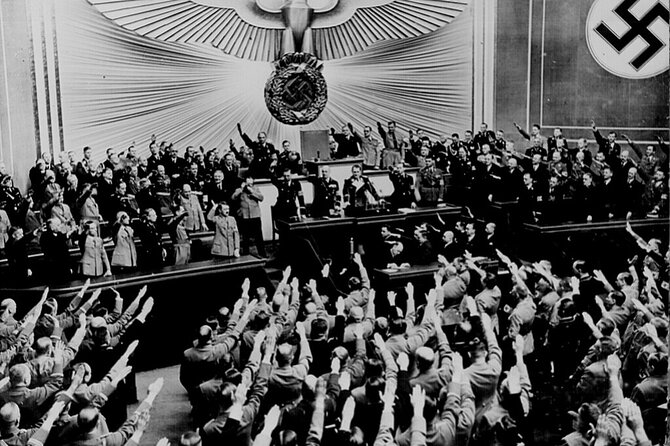
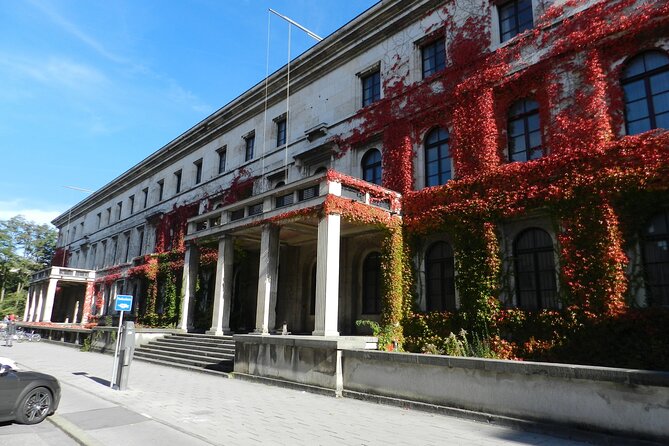
The Glyptothek stop covers Munich’s rally grounds and fascist buildings associated with Hitler. It also offers a chance to consider how architecture can be used to project authority.
Monumental buildings and open spaces can make a political movement seem larger than individual people. Their scale, order, and formal design help create a public image of strength. Seeing these structures in person makes that point more immediate than seeing them in a book.
The description also notes that some fascist buildings connected with Hitler still survive. That creates a practical question for you: what should a city do with structures tied to dictatorship? The tour can give you the historical setting needed to consider that issue, even though the experience is not presented as a specialized architecture tour.
The stop is planned for about 20 minutes. That should allow time to examine the setting and discuss the rally grounds, but not every building or design decision connected with Nazi architecture. Curt’s images can help show how the spaces were used when crowds and banners transformed them into political theatre.
Alter Botanischer Garten and the largest public Nazi eagle
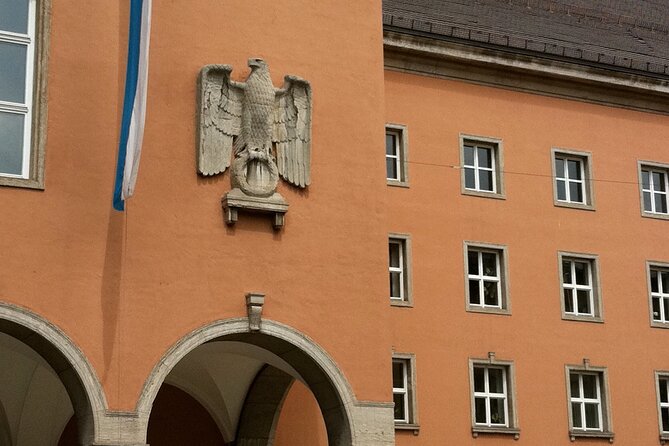
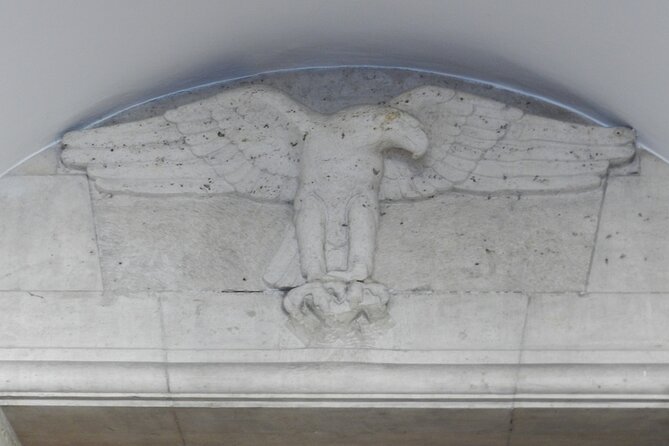
At Alter Botanischer Garten, the tour points out what is described as the largest Nazi eagle still on public display in Germany. It also covers Nazi architecture and art.
This is a striking reminder that symbols can survive long after the system that created them has fallen. The eagle is not presented as decoration. Its importance lies in what it reveals about propaganda, state power, and the way public art can carry a political message.
The stop should appeal to you if you are interested in how ideology appears in stone, metal, scale, and design. It also gives Curt a chance to explain details you might miss while simply passing through the garden area.
The planned time is about 15 minutes. As with the other outdoor stops, the tour does not list an admission charge. Since the eagle is a public feature rather than a separate museum exhibit, the guide’s explanation is the main reason to include it in your day.
The Residenz and Hitler’s failed putsch
The final major stop is the Residenz München, tied to Hitler’s failed putsch and to resistance during the Third Reich.
The failed putsch was a turning point in Hitler’s early career. Its failure showed that the movement could not simply seize power by force at that moment. The consequences helped shape Hitler’s later strategy, making this a useful place to connect street politics with the eventual legal and electoral path to dictatorship.
The Residenz stop also covers resistance to the Nazis. That is essential. It prevents the story from becoming a simple account of Nazi success and reminds you that opposition existed, even when it was dangerous, divided, or unsuccessful.
The stop is scheduled for about 20 minutes. The tour information does not say that you enter the Residenz or receive an interior admission ticket, so expect the focus to remain on the location and its connection to events. If you want to visit the palace rooms separately, plan that as its own activity.
Curt Milburn’s teaching style and the iPad
Curt Milburn is the named guide for this private experience. His method includes an iPad with hundreds of films and images covering more than 1,000 years of European history, with the Third Reich material forming the center of this tour.
That device is more than a prop if used well. Historic images can show faces, uniforms, crowds, signs, damaged streets, and altered buildings. You can hold the present view in your mind while looking at the earlier one, which makes the connection between place and event much clearer.
The personal format also lets Curt adjust the level. If you know little about Munich’s Nazi past, he can explain the basic sequence. If you have read widely, you can ask about specific figures, resistance, the public, or the relationship between Munich and Berlin.
The tone appears to be engaging and patient. Curt is described as willing to answer questions and able to bring in lesser-known facts. That does not mean every question will receive a long answer in a short tour, but the private setup gives you a fair chance to guide the conversation.
Price, timing, and who gets the best value
The price is $180.72 for a group of up to 15 people. That is a strong value for a full group, since the cost is shared rather than charged per person. For one or two people, it is a more serious expense, but the private format and direct access to Curt make it different from a standard group walk.
The experience lasts about two to three hours and begins at 10:30 a.m. at Marienplatz 18. It ends back at the meeting point. The listed stop times add up to about 150 minutes, so the longer version allows for movement between places and questions along the way.
You should wear comfortable shoes and expect a walking-focused morning, though the available details do not give a total distance or a full mobility assessment. The meeting point is near public transportation, and service animals are allowed. Most people can participate.
The tour is booked an average of 66 days ahead, so I would not leave it until the last minute if your Munich dates are fixed. Confirmation arrives when you book, and cancellation is free up to 24 hours before the start time. Changes or cancellations inside that window are not accepted for a refund.
Should you book this Munich history walk?
I would book it if you want a serious, place-based introduction to Munich’s Third Reich past and prefer conversation over a large group lecture. It is especially well suited to couples, families, or small groups with different levels of background knowledge, since Curt can adapt the discussion and answer questions throughout.
The tour is less suitable if you want long museum visits, indoor exhibits, or a detailed study of every Nazi site in Munich. Several stops are brief, and the experience moves across many subjects in a limited time.
For a full group, the price is appealing. For a small party, decide how much you value a private guide, historic images, and the freedom to set the pace. If those matter to you, this is a thoughtful way to understand Munich’s difficult past without reducing it to a checklist of famous names.
FAQ
How long does the Inside the Third Reich private tour last?
The tour lasts approximately two to three hours.
Where does the tour begin?
It begins at Marienplatz 18, 80331 München, Germany, at 10:30 a.m.
Where does the tour end?
The activity ends back at the meeting point.
How many people can join the private tour?
The price covers one private group of up to 15 people. Only your group participates.
Does the tour include admission tickets?
All nine listed stops show free admission. The experience focuses on outdoor locations and does not state that interior admission to the Residenz or another museum is included.
Can I cancel for a full refund?
Yes. You can cancel at least 24 hours before the local start time for a full refund. Cancellations or changes made less than 24 hours in advance are not accepted for a refund.
Just added around Munich
- Private tour from Munich to Rothenburg and Harburg★ 5.0 · 3 reviews
- Scenic Adventure Private Day Tour to The Konigssee Salzburg★ 4.5 · 3 reviews
- Private Transfer from Munich to Salzburg, English-speaking driver★ 3.5 · 3 reviews
- Munich: Capture the most Photogenic Spots with a Local★ 5.0 · 3 reviews
- Private Beer Tasting Tour in Munich with Oktoberfest Museum★ 4.3 · 3 reviews
- Munich Photoshoot: A Must-Have Holiday Experience!★ 5.0 · 3 reviews
- Paul’s Private Tour in the Alte Pinakothek Munich★ 5.0 · 3 reviews
- Private Tour to Hallstatt Salt Mine and Skywalk with Lunch★ 5.0 · 3 reviews
Third Reich & WWII Tours, compared.

Birthplace of the Third Reich Guided Walking Tour
Read our review →
Munich World War II Sites Including Dachau Concentration Camp
Read our review →
Munich City Walking Tour, includes Third Reich & Viktualienmarkt
Read our review →
Munich 3-Hour Segway Tour: Nazi Munich & Royal Architecture
Read our review →
Dachau Concentration Camp Memorial Site And Third Reich Day Tour From Munich
Read our review →Browse the lists this tour appears in