
Reviewed · THIRD REICH & WWII TOURS
Munich: National Socialism Historical Tour in GERMAN
Munich’s Nazi past is not tucked away in a museum. It sits in plain view along grand streets and public squares. This two-hour walk follows that story from Königsplatz, where Nazi power was staged in stone, to Feldherrnhalle, linked to Hitler’s failed Beer Hall Putsch.
I like the route’s clear shape and the guide’s use of black-and-white photographs. Seeing an old image against the same street or building can make a dry history lesson suddenly concrete. The German-language format is another plus for native speakers and strong German learners.
The main drawback is that this is a serious, outdoor walking tour with no included indoor admissions. The activity is listed as wheelchair accessible, yet it is also marked not suitable for people with mobility impairments, so you should confirm the route conditions before booking.
In This Review
- Key points to know
- Why Munich needs a Nazi history walking tour
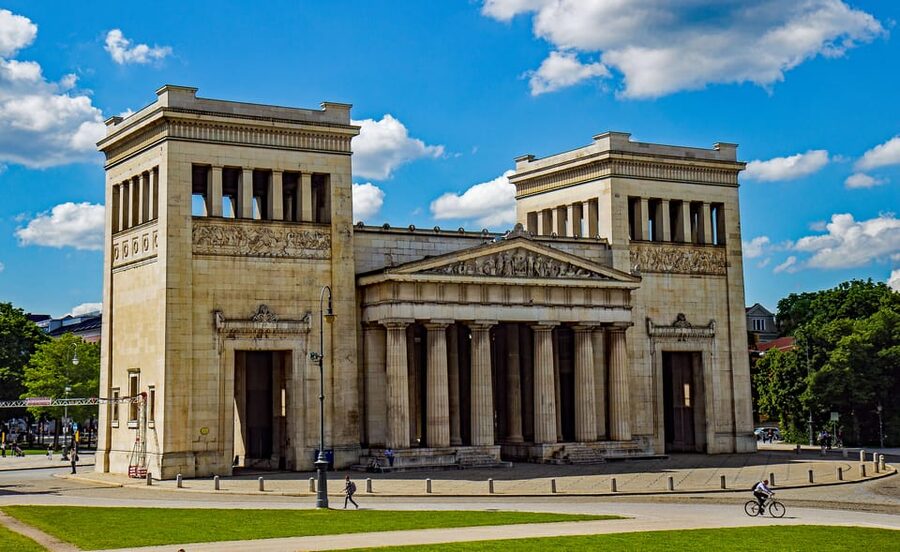
- Starting at Königsplatz
- The former Führerbau and the 1938 Munich Agreement
- Walking along Briennerstrasse
- Passing the former Gestapo headquarters
- Feldherrnhalle and the Beer Hall Putsch
- How the photographs improve the tour
- Private or group tour?
- Is $34 a fair price?
- Who should book this Munich history walk?
- Practical advice before you go
- Final verdict: book it for context, not admission access
- FAQ
- How long is the Munich National Socialism Historical Tour?
- What language is the tour conducted in?
- Where does the tour meet?
- How will I recognize the guide?
- Which locations does the tour visit?
- Does the tour include admission to the Munich Documentation Centre?
- Are food and drinks included?
- Does the tour operate in bad weather?
- Can I cancel the tour?
Key points to know
- The route begins at Königsplatz, a major ceremonial site in Munich’s Nazi-era story.
- Historic photographs bring the 1920s and 1930s into view, linking past events to present-day streets.
- The former Führerbau is connected with the 1938 Munich Agreement and now sits near the Munich Documentation Centre for the History of National Socialism.
- Briennerstrasse and the former Gestapo headquarters help explain how power and repression occupied central Munich.
- The tour ends at Feldherrnhalle, the site tied to the Beer Hall Putsch and the events of November 9, 1923.
- You can choose a private or group format, with the tour conducted in German.
Why Munich needs a Nazi history walking tour
Munich was called the City of the Movement because it played a central role in the rise of National Socialism. This walk helps you understand that the movement was not only a Berlin story. Its early political activity, public demonstrations, party offices, and later monuments were closely tied to Munich.
That makes a walking tour useful. You are not just hearing names and dates in a classroom. You are moving between actual addresses and squares, seeing how the city’s layout connected political theater with government power and police control.
The subject is grim, and the tour should not be treated as light sightseeing. Still, a careful guide can make the material easier to follow by placing events in order: the early growth of the NSDAP, the failed attempt to seize power, the later rise to government, and the use of Munich as a symbolic center.
The tour is conducted in German. You will get the most from it if you can follow spoken German at a history-lecture level, especially when the guide explains political groups, official titles, and the sequence of events.
More Third Reich and wartime history walks in Munich:
- Munich: Third Reich & WWII Walking Tour
★ 4.6 · 6,181 reviews - Third Reich Walking Tour Munich
★ 4.5 · 4,291 reviews - Munich: Birthplace of the Third Reich Guided Walking Tour
★ 4.6 · 771 reviews
Starting at Königsplatz
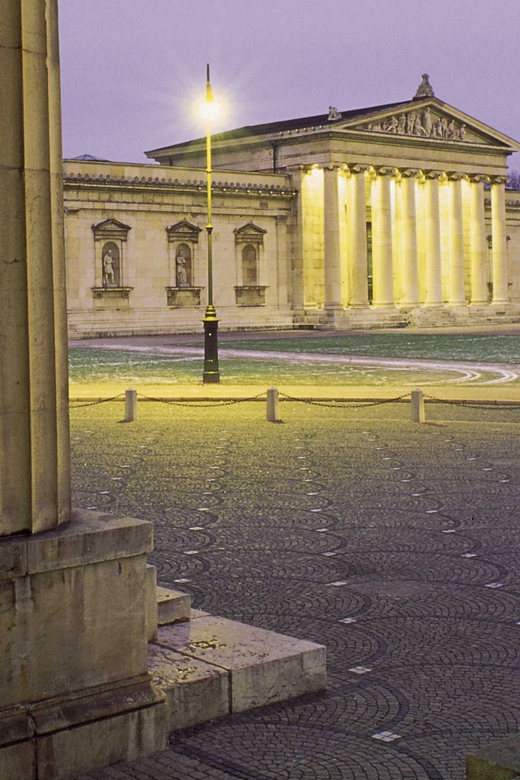
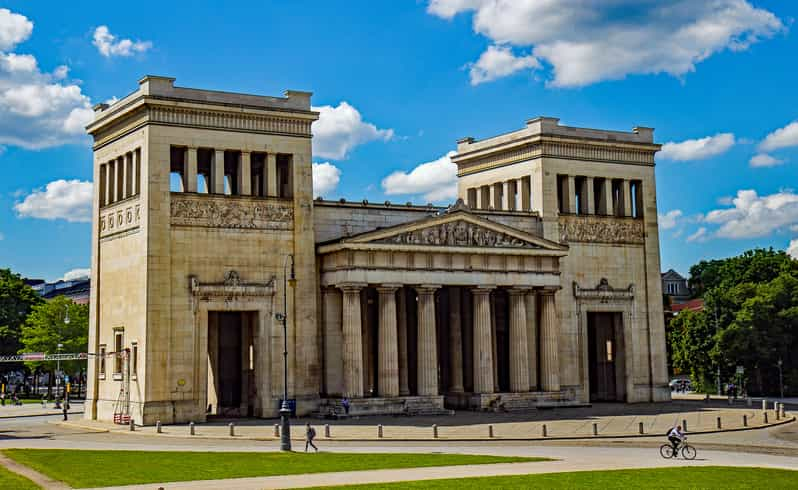
The meeting point is in front of the main entrance of the Staatliche Antikensammlungen at Königsplatz. Look for the guide carrying a large blue bag marked Weis(s)er Stadtvogel in white lettering. That detail matters because a busy square can have several tour groups gathering at once.
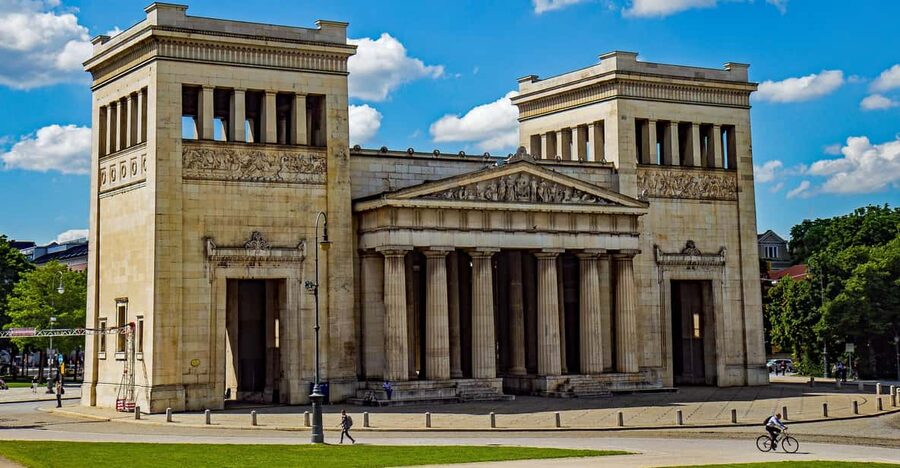
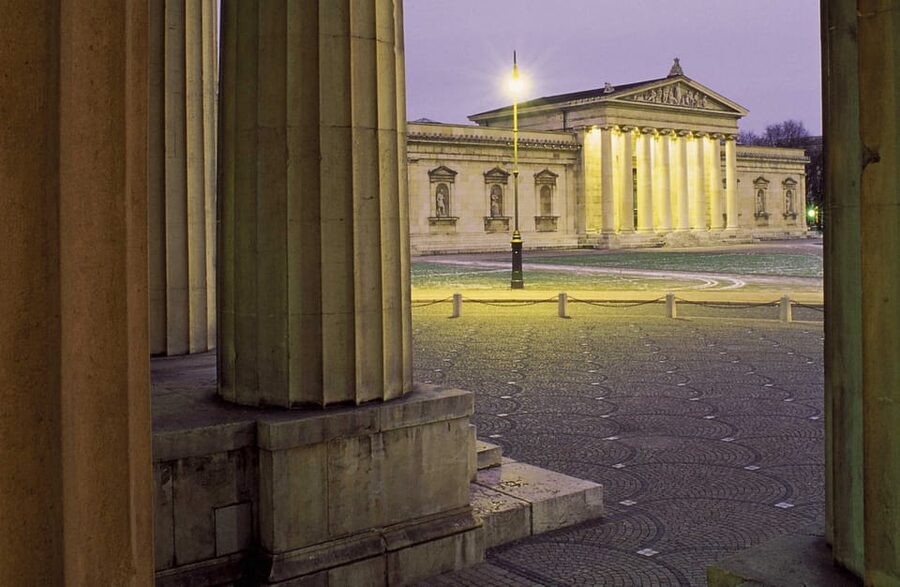
Königsplatz is a fitting place to begin. Its formal design and monumental buildings made it useful for large public gatherings and political display. On this tour, the square provides the first lesson in how architecture and open space can be used to project authority.
Your guide will set the scene for Munich in the 1920s and 1930s, then connect the city’s existing public spaces with the National Socialist movement. The point is not simply that important people passed through here. The point is how the setting could be used to shape public behavior and political memory.
Expect to spend part of the opening standing outdoors while the guide explains the background. Comfortable shoes are essential, and a raincoat is sensible because the walk operates in all weather.
The former Führerbau and the 1938 Munich Agreement
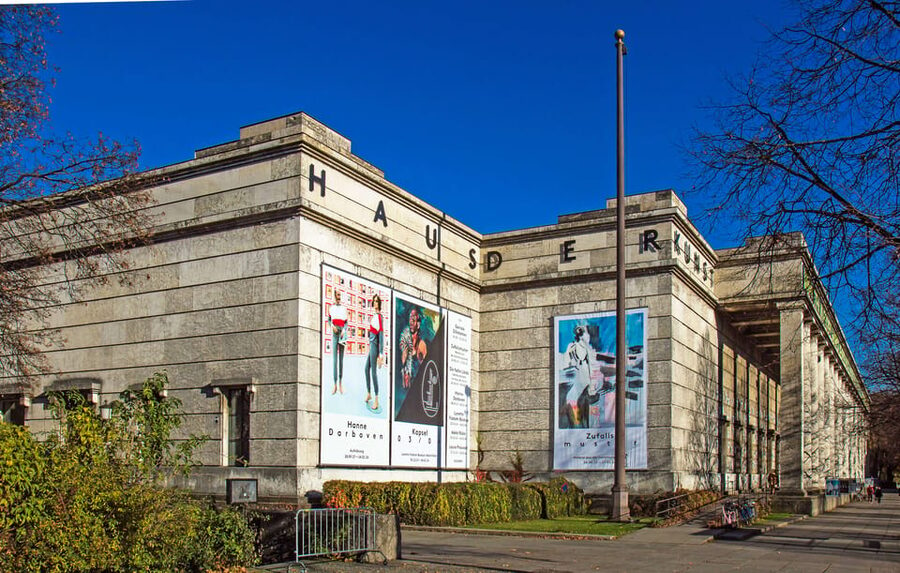
From Königsplatz, the route continues to the former Führerbau, or Führer’s building. The building is tied to the Munich Agreement of 1938, an event that belongs to the wider story of appeasement and the expansion of Nazi Germany.
Today, the area also includes the Munich Documentation Centre for the History of National Socialism. The tour does not include entrance fees, so do not assume that the walking route includes an indoor visit to the center. Instead, the guide discusses the location as part of the outdoor route.
This stop is useful because it shows the difference between a building’s original political role and its present-day purpose. A site once linked to Nazi leadership can later become part of public education about that period. The change invites a practical question: how should a city explain a difficult past without turning former power sites into attractions?
You may want to visit the documentation center separately if you have time and want displays beyond the two-hour walk. This tour gives you orientation and historical context, but it is not a substitute for a full museum visit.
Walking along Briennerstrasse
The route then follows Briennerstrasse. This stretch helps connect the major sites rather than treating them as isolated points on a map.
As you walk, the guide explains how the NSDAP rose to power and what Germany was like under National Socialism. The street becomes a moving classroom, with the guide using historic photographs to show how Munich looked during the period.
The photographs are one of the strongest features of this experience. Old images can show uniforms, flags, crowds, buildings, and political events in ways that spoken description alone cannot. You will also have a direct visual comparison between the modern street and its earlier appearance.
Do not expect a long stop at every address. Two hours is enough for a focused route, but not enough for a detailed examination of every building or political development. The value comes from the overall sequence and from asking the guide questions as you go.
A few more Munich tours and experiences worth a look
- Munich: Guided Tour of the historic Town Hall on Marienplatz
★ 4.8 · 63 reviews - Munich Craft Beer & Cultural Tour With Snack
★ 5.0 · 46 reviews - Munich History Tour: Private & Personalized with a Local Guide
★ 4.5 · 33 reviews - Munich and Nazi History Combination Day Tour Small Group
★ 5.0 · 31 reviews
Passing the former Gestapo headquarters
The route passes the site of the former Gestapo headquarters. This part of the walk shifts the focus from public political theater to repression.
The Gestapo was a central tool of Nazi police control. Discussing its former headquarters makes the point that persecution was organized through offices, records, interrogations, and orders, not only through speeches and mass rallies.
The site also helps you see how closely political power and ordinary city life existed beside one another. Central Munich was not separated from the machinery of dictatorship. Government offices and security agencies operated within the same urban setting that residents used for work, shopping, and daily errands.
Because the tour is conducted outside, the guide’s explanation carries much of the weight here. The historic photographs can help, but you should listen closely to the spoken context. If your German is basic, this may be one of the harder sections to follow.
Feldherrnhalle and the Beer Hall Putsch
The walk finishes at Feldherrnhalle on Odeonsplatz. This is the key endpoint because it is linked to Hitler’s failed Beer Hall Putsch, the attempted seizure of power associated with November 9, 1923.
The supplied tour information refers to November 9, 1923 in the highlights, while one route description gives 1933. That date should be clarified with the guide at the start. The route’s historical focus is clearly the Beer Hall Putsch and its role in the later rise of National Socialism.
Feldherrnhalle matters because the failed coup did not end Hitler’s political ambitions. The event became part of the movement’s mythology and was later used for ceremony and propaganda. At the site, you can better understand how a political defeat could be reshaped into a symbolic story for supporters.
This final stop gives the tour a strong ending. You begin with Munich’s role as a center of Nazi power and finish with an event that shows the movement before it controlled Germany. The connection between failure, propaganda, and later political success is one of the most important ideas on the route.
How the photographs improve the tour
The guide brings black-and-white photographs to illustrate selected events and topics. This is more useful than a simple list of dates because Munich has changed, while many street lines and building locations remain familiar.
A photograph can show you the scale of a crowd, the arrangement of a ceremony, or the way political symbols once appeared in public. It can also make the guide’s explanation more precise. You can see what the area looked like at the time instead of trying to picture it from words alone.
The photographs are not a replacement for a museum display. They are a practical tool for a street tour. Their value depends on how the guide explains them, so listen for the connections between the image, the location, and the political event being discussed.
Private or group tour?
You can choose between a private tour and a group tour. The private option should suit you if you want to ask more questions or shape the discussion around a particular interest, such as the NSDAP’s rise, Munich during the dictatorship, or the city’s treatment of historic sites.
A group tour may be the better value if you want a structured introduction at the listed price of $34 per person. The information provided does not specify group size, so check the booking details if crowd size matters to you.
Either way, the guide is the main source of detail. This is not an audio guide or a self-guided route. You are paying for a live city guide who can explain events in German and respond to questions along the way.
Is $34 a fair price?
At $34 per person, the tour is reasonably priced for a two-hour guided walk, especially if you value live interpretation and a clear route through several important sites. You are paying for the guide, the planning, and the historic photographs rather than for admission to a museum.
The value is strongest if you are new to Munich’s Nazi history and want a compact introduction early in your visit. It can also help you decide which locations deserve more time later.
The value is weaker if you expect long indoor visits, entry to the Munich Documentation Centre, food, drinks, or hotel transportation. None of those are included. You should also allow for the fact that the tour takes place rain or shine.
Free cancellation up to 24 hours before the start gives you some room to adjust plans, and the reserve-now, pay-later option can help you keep your schedule flexible. Those policies are useful, but the main booking decision is still about the German-language format and the outdoor walking route.
Who should book this Munich history walk?
I would recommend it to German speakers, serious history students, and visitors who want to understand Munich’s role in National Socialism through real locations. It is also a good choice for you if you prefer a short, focused tour instead of spending half a day in a museum.
You should think twice if you want a casual city stroll. The subject is political violence, dictatorship, and persecution, and the guide will spend the time on those topics.
The walk may also be a poor fit if you have mobility limitations. The activity is described as wheelchair accessible, but it is separately marked as unsuitable for people with mobility impairments. Since no detailed route information is provided, contact the operator before booking and ask about pavement, walking distance, rest opportunities, and access at each stop.
Practical advice before you go
Wear comfortable shoes. The route runs from Königsplatz through Briennerstrasse to Odeonsplatz, with several outdoor stops and explanations along the way.
Bring weather protection because the tour runs in rain or shine. There is no included food or drink, so plan those separately before or after the walk.
Arrive at the Staatliche Antikensammlungen entrance with enough time to identify the guide’s large blue bag. The tour is in German, and the guide’s pace may leave little time to translate mentally if you only have beginner-level German.
Final verdict: book it for context, not admission access
Book this tour if you want a well-defined introduction to Munich’s Nazi past, presented at the places where the story unfolded. The route, historic photographs, and final stop at Feldherrnhalle give the two hours a sensible arc.
Skip it if you need an English-language tour, a full museum experience, or a route designed specifically around mobility access. For the right visitor, $34 buys useful historical orientation and a more thoughtful understanding of Munich than a standard sightseeing walk can provide.
FAQ
How long is the Munich National Socialism Historical Tour?
The tour lasts two hours.
What language is the tour conducted in?
The live tour guide conducts the experience in German.
Where does the tour meet?
Meet in front of the main entrance of the Staatliche Antikensammlungen at Königsplatz.
How will I recognize the guide?
The guide will carry a large blue bag with the words Weis(s)er Stadtvogel written in white.
Which locations does the tour visit?
The route begins at Königsplatz, continues to the former Führerbau, follows Briennerstrasse, passes the former Gestapo headquarters, and ends at Feldherrnhalle on Odeonsplatz.
Does the tour include admission to the Munich Documentation Centre?
No entrance fees are included. The route discusses the area around the Munich Documentation Centre, but indoor admission is not part of the included service.
Are food and drinks included?
No. Food and drinks are not included.
Does the tour operate in bad weather?
Yes. The activity takes place rain or shine, so bring suitable weather protection.
Can I cancel the tour?
Yes. You can cancel up to 24 hours in advance for a full refund. You can also reserve now and pay later.
Just added around Munich
- Private Transfer from Munich to Salzburg, English-speaking driver★ 3.5 · 3 reviews
- Private tour from Munich to Rothenburg and Harburg★ 5.0 · 3 reviews
- Scenic Adventure Private Day Tour to The Konigssee Salzburg★ 4.5 · 3 reviews
- Munich: Capture the most Photogenic Spots with a Local★ 5.0 · 3 reviews
- Private Beer Tasting Tour in Munich with Oktoberfest Museum★ 4.3 · 3 reviews
- Munich Photoshoot: A Must-Have Holiday Experience!★ 5.0 · 3 reviews
- Paul’s Private Tour in the Alte Pinakothek Munich★ 5.0 · 3 reviews
- Private Tour to Hallstatt Salt Mine and Skywalk with Lunch★ 5.0 · 3 reviews
Third Reich & WWII Tours, compared.

Birthplace of the Third Reich Guided Walking Tour
Read our review →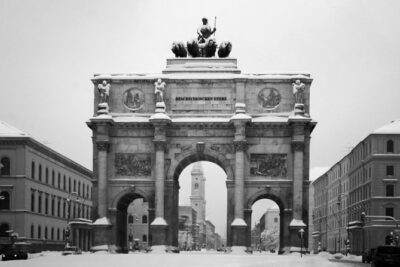
Munich World War II Sites Including Dachau Concentration Camp
Read our review →
Munich City Walking Tour, includes Third Reich & Viktualienmarkt
Read our review →
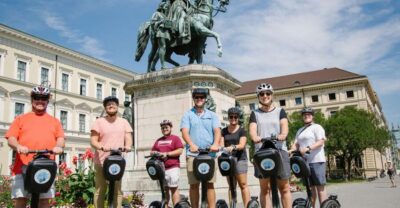
Munich 3-Hour Segway Tour: Nazi Munich & Royal Architecture
Read our review →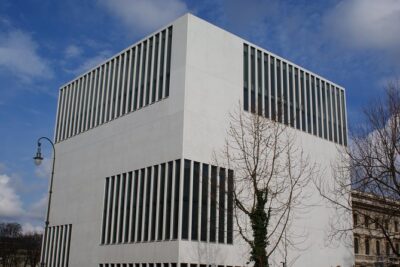
Dachau Concentration Camp Memorial Site And Third Reich Day Tour From Munich
Read our review →Browse the lists this tour appears in