
Reviewed · THIRD REICH & WWII TOURS
Munich: Third Reich and World War II Private Guided Tour
Munich’s Nazi past begins right in the postcard center of town. This private walking tour follows the early Nazi movement from Marienplatz and Hofbräuhaus to the Beer Hall Putsch route, Nazi Party offices, and Königsplatz, where mass rallies and book burnings took place. I like the clear focus on places you can still see, rather than a lecture detached from the city.
I also like the private format and the option to add the NS Documentation Center. You can ask direct questions about Hitler, Nazi supporters, the White Rose resistance group, and Munich’s role in the regime. Guide Mireya received specific praise, and the available guide languages make this a useful choice for international groups.
The main drawback is the price: $311 per person is a serious spend for a walking tour, especially if you choose the three-hour version without the museum. The subject is also grim, so this suits you best if you want serious historical context, not a light sightseeing stroll.
In This Review
- Key points at a glance
- What this Munich history tour is really about
- Marienplatz and the memory of wartime Munich
- Hofbräuhaus and the Nazi Party’s early public face
- Feldherrnhalle and the Beer Hall Putsch route
- Resistance, remembrance, and the Monument to the Victims
- Führerbau and the Munich Agreement
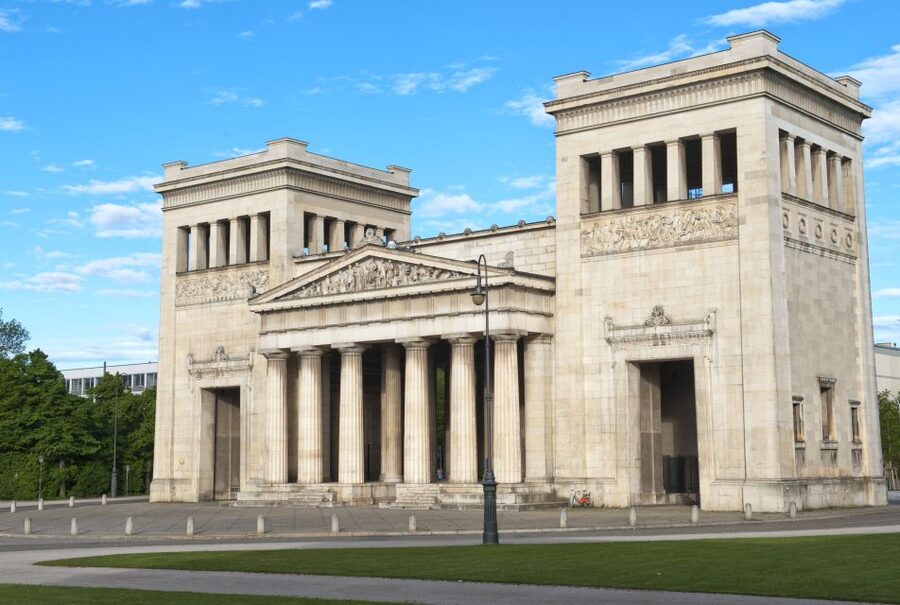
- Königsplatz, book burning, and the end of the three-hour route
- What the 4.5-hour museum option adds
- How the private guide affects the experience
- Walking conditions, timing, and access
- Is $311 per person a fair price?
- Who should book this Munich tour?
- My booking advice
- Should you book it?
- FAQ
- Where does the tour meet?
- How long does the tour last?
- What does the three-hour tour include?
- Does every option include the NS Documentation Center?
- What can I see at the NS Documentation Center?
- Is this a private group tour?
- Which languages are available?
- Is the tour wheelchair accessible?
- Can I cancel for a full refund?
- Can I reserve now and pay later?
Key points at a glance
- The route starts at Marienplatz: See the center of Munich’s public life and hear how Nazi propaganda used the square.
- Hofbräuhaus links beer-hall politics to Nazi origins: The tour covers Hitler’s 1920 speech and the early National Socialist German Workers’ Party.
- The Beer Hall Putsch route leads to Feldherrnhalle: Follow the failed 1923 attempt to seize power in Bavaria.
- Resistance is part of the story: Learn about the White Rose Group and the difficult choices made by people opposing the regime.
- Königsplatz closes the three-hour walk: See the former rally ground and site of Nazi book burning.
- The 4.5-hour option adds the NS Documentation Center: Photographs, documents, films, and media stations give the political story more depth.
What this Munich history tour is really about
This is not a general Munich sightseeing tour with a few Nazi-era facts added on. Its subject is the city’s role in the rise, rule, and collapse of National Socialism.
That focus matters. Munich is often sold through beer halls, royal buildings, and cheerful town squares. Yet the city was also the birthplace of the Nazi Party’s political rise and a major center of Nazi activity. You will walk through ordinary streets while learning how those same spaces were used for speeches, marches, government work, propaganda, and public intimidation.
I appreciate that the tour covers both the regime and the people who opposed it. You will hear about Adolf Hitler and his supporters, but also about resistance groups such as the White Rose, led by five university students. That wider view keeps the tour from turning into a simple biography of Hitler.
The guide is also there to handle difficult questions. The stated focus includes Munich’s citizens, the causes and consequences of National Socialism, World War II, bombing, and liberation in 1945. A private guide gives you room to ask how much ordinary people knew, how public spaces were used, and why the movement gained support.
More Third Reich and wartime history walks in Munich:
- Munich: Third Reich & WWII Walking Tour
★ 4.6 · 6,181 reviews - Third Reich Walking Tour Munich
★ 4.5 · 4,291 reviews - Munich: Birthplace of the Third Reich Guided Walking Tour
★ 4.6 · 771 reviews
Marienplatz and the memory of wartime Munich
The meeting point is in front of Hotel BEYOND by Geisel at Marienplatz 22, opposite St. Peter’s Church. Do not go inside the hotel. The hotel staff is not involved in the tour, so look for your guide outside.
Marienplatz is a practical starting point because it is easy to find and close to major Old Town sights. It is also a powerful place to begin the story. Nazi propaganda events were held here, turning a central civic square into a stage for political spectacle.
You will also hear about the New Town Hall, or Neues Rathaus. The building was reconstructed after the 1945 bombing that destroyed much of central Munich. That detail gives the first section of the tour two layers: the square’s use during the Nazi era and the physical damage left by the war.
This is a good example of how the walk connects politics to visible buildings. You are not only hearing dates. You are looking at a city center that had to be rebuilt after the collapse of the regime and the war it helped support.
Hofbräuhaus and the Nazi Party’s early public face
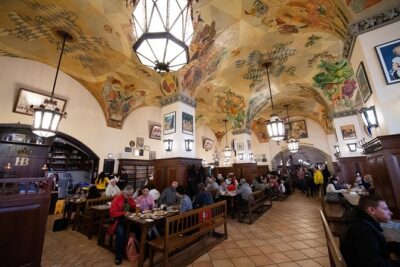
From Marienplatz, the route continues to Hofbräuhaus am Platzl. This famous beer hall is not treated merely as a place for food and drink. It is tied to one of the key moments in the early Nazi story.
Adolf Hitler gave a speech there in 1920 connected with the founding of the National Socialist German Workers’ Party. The stop helps explain how political movements used beer halls as public meeting places, where speeches could reach large local crowds in a familiar setting.
That makes Hofbräuhaus one of the tour’s most memorable stops, but you should keep your expectations in check. You are seeing the exterior and historical setting as part of a walking route, not booking a meal or a private room connected to the event.
The guide’s explanation is important here. Without context, the stop can feel like a strange collision between Munich’s beer culture and Nazi history. With context, it shows how ordinary social spaces could become political venues.
Feldherrnhalle and the Beer Hall Putsch route
The walk then follows the route of the Beer Hall Putsch toward Feldherrnhalle and Odeonsplatz. This failed 1923 attempt to storm the Bavarian Defense Ministry was an early turning point in Hitler’s career.
The Putsch did not give Hitler power. It did, however, become part of the story he later used to build his political image. The tour connects the event with Mein Kampf, Hitler’s semi-autobiographical political manifesto, and explains how the failed revolt fed the movement’s later propaganda.
Feldherrnhalle is an especially useful stop because it lets you examine the difference between a historical event and the way a regime later presented that event. That distinction is vital when studying propaganda. Nazi history is full of carefully shaped stories, heroic myths, and public rituals designed to make political violence look noble.
Odeonsplatz also gives you a sense of the route’s scale. This is still a central part of Munich, not an isolated memorial site. You are moving through active city streets while tracing a confrontation that helped define the movement’s early identity.
A few more Munich tours and experiences worth a look
- Munich Private Tour with a Local – Highlights & Hidden Gems
★ 5.0 · 469 reviews - Mike’s Neuschwanstein & Linderhof Private Tour from Munich
★ 5.0 · 197 reviews - Dachau Concentration Camp Private Tour by Train from Munich
★ 5.0 · 185 reviews - Fall in Love with Munich in a Private Old Town Walking Tour
★ 5.0 · 182 reviews
Resistance, remembrance, and the Monument to the Victims
The tour does not end with Nazi leaders. It also addresses resistance in Munich, including the White Rose Group led by five university students.
That part of the walk is valuable because it brings individual courage into a story often dominated by institutions and military events. The White Rose’s presence in the tour reminds you that opposition existed, though it was dangerous and limited.
You will also see the Monument to the Victims of National Socialism. This stop shifts the tone from political origins to human cost. It is an important pause in a route that includes party offices, speeches, rallies, and government buildings.
I would give this section your full attention. The tour’s subject can easily become a parade of Nazi sites, which risks making the perpetrators more prominent than the people harmed by the regime. The resistance and memorial stops help correct that balance.
Führerbau and the Munich Agreement
The route includes former Nazi Party office buildings, including Führerbau, known as the Führer’s Building. This is where Neville Chamberlain and Adolf Hitler signed the Munich Agreement in 1938.
The building gives the guide a chance to explain how Munich was involved in major European diplomacy before the war. The Munich Agreement is closely tied to the policy of appeasement and to the crisis over Czechoslovakia. The supplied tour details do not promise a full diplomatic seminar, but the site clearly provides a strong setting for discussing how international leaders dealt with Hitler’s government.
This is another place where the private format can be useful. You can ask for more detail about the agreement if that period interests you, or move on if your main interest is the city’s local story.
The former office buildings also show how the Nazi Party operated through a network of institutions, not only through rallies and speeches. The tour’s movement from public squares to party offices gives you a better sense of how propaganda, administration, and power worked together.
Königsplatz, book burning, and the end of the three-hour route
The three-hour walking route ends at Königsplatz. During the Nazi period, the square was used for mass rallies and book burning.
It is a fitting final outdoor stop because the tour has moved from the party’s early public meetings to its attempt to control culture and public space. Book burning was not simply a symbolic act. It showed the regime’s hostility to ideas and writers it considered dangerous.
Königsplatz also helps you picture the scale of Nazi staging. A large open square could be turned into a carefully controlled setting for mass participation, flags, speeches, and political theater. Your guide can connect that public spectacle with the earlier stops at Marienplatz, Hofbräuhaus, and Feldherrnhalle.
At this point, you will have covered Hitler’s rise, the Beer Hall Putsch, Nazi offices, resistance, the Munich Agreement, wartime destruction, and liberation in 1945. The route is packed. If you prefer a slower pace for photographs, questions, or quiet reflection, three hours may feel tight.
What the 4.5-hour museum option adds
The longer option includes the Munich Documentation Center for the History of National Socialism with your guide. This is the better choice if you want more than an outdoor introduction.
The center uses photographs, documents, texts, film projections, and media stations to explain the origin and rise of the Nazi movement, the war, and the postwar period in Munich. Those materials can put faces, documents, and evidence alongside the buildings you have just seen.
I like the longer option because outdoor sites can leave gaps. A former office building tells you where something happened, but an exhibition can show how the organization worked and how the city changed over time. The center also reaches beyond Hitler’s personal story, covering the movement’s growth, wartime events, and Munich after 1945.
The longer visit is not simply an extra room added to the end of the walk. It changes the balance of the experience. You get more help with the causes and consequences of National Socialism and World War II, and you can ask questions while looking at primary material.
The tradeoff is time. A 4.5-hour history program takes up much of a morning or afternoon, and the material is heavy. If you only want a quick introduction to the main sites, the three-hour version may be enough.
How the private guide affects the experience
This is a private group tour, not a large shared walk. That affects the pace and the kind of questions you can ask.
You can request more attention to Hitler’s rise, the Beer Hall Putsch, resistance, wartime bombing, or the postwar period. You can also ask the guide to clarify the role of Munich’s citizens, rather than having to follow a fixed group discussion.
The available languages are English, German, French, Italian, and Spanish. If you are booking for an international family or group of friends, that choice can make a difficult subject easier to follow.
One guide named in the booking information is Mireya, who was singled out with the brief comment that she was great. That is not enough to promise a particular style or guarantee that she will lead your date, but it is useful if her name appears as your assigned guide.
The guide is described as a historian guide, and the tour is built around explanation rather than entertainment. Expect political history, sites, and discussion. You should not expect costumes, staged drama, or a casual beer-tasting atmosphere.
Walking conditions, timing, and access
The advertised duration ranges from three hours to 270 minutes, with the longer choice lasting 4.5 hours. Check the starting times when you select your date, since the available departure schedule is not fixed in the information provided.
The meeting point at Marienplatz is central, but the route itself is a walking tour through Munich’s Old Town. Wear shoes you can use comfortably for several hours and allow time to stop, listen, and ask questions.
The activity is listed as wheelchair accessible. Since the tour includes city streets and a museum option, you should still confirm any specific access needs when booking, especially if you require detailed route information.
The tour ends at Königsplatz for the three-hour route. The longer version also includes the NS Documentation Center, but the exact order and final exit point are not specified. Ask your guide at the start if you need to plan a timed connection afterward.
Is $311 per person a fair price?
At $311 per person, this is not a budget walking tour. The value depends heavily on your group size and the version you choose.
For one person or a couple, the cost is high compared with a standard group walk. You are paying for a private guide, language choice, and the ability to shape the discussion around your interests. That can be worthwhile for serious students of World War II, families with older children, or anyone who wants to ask questions without holding up a large group.
The 4.5-hour option makes the price easier to justify because it adds the NS Documentation Center and guided interpretation of its exhibits. If you already plan to visit the museum on your own, compare the total cost and time before deciding. The added value comes from having the guide connect the exhibition to the streets and buildings outside.
For a group of several people sharing the private booking, the per-person cost may feel more reasonable. For a solo visitor seeking only basic facts, I would consider the three-hour route carefully and make sure the private format matters to you.
The free cancellation window up to 24 hours before the tour and the reserve-now, pay-later option add useful flexibility. They do not lower the price, but they reduce the risk of committing too early to a fixed plan.
Who should book this Munich tour?
I would choose this tour if you want a focused explanation of Munich’s Nazi past and prefer asking questions to listening quietly in a large group.
It suits:
- World War II history readers who want to connect political events with real city locations
- Private family groups looking for a serious, guided lesson suited to their own pace
- Visitors interested in resistance history, especially the White Rose Group
- People who want museum context, making the 4.5-hour version the stronger pick
- International groups that need English, German, French, Italian, or Spanish
I would skip it if your Munich plans are already packed with lighter sightseeing and you do not want several hours on Nazi Germany. The subject is difficult, and the route works best when you have enough attention for careful discussion.
My booking advice
Book the three-hour version if you want the main outdoor sites: Marienplatz, Hofbräuhaus, Feldherrnhalle, Odeonsplatz, Führerbau, the monument, and Königsplatz.
Choose 4.5 hours if the causes and consequences of National Socialism matter to you and you want photographs, documents, films, and media stations to support the guide’s explanation. At this price, I would make the longer option my first choice for a dedicated history visit.
The strongest reason to book is the combination of specific Munich places and private discussion. The main reason to hesitate is the cost. If you can share the private booking with friends or family, the value improves. If not, compare it with a group tour or a self-guided visit to the Documentation Center.
Should you book it?
Yes, if you want a serious, place-based account of Munich’s role in the Third Reich and value a private guide who can answer difficult questions. I especially recommend the 4.5-hour option for readers who want the museum evidence as well as the streets.
No, if you are looking for a cheap overview or a relaxed city walk. At $311 per person, this needs to be a main history activity, not an item squeezed between lunch and another attraction.
FAQ
Where does the tour meet?
Meet your guide outside Hotel BEYOND by Geisel at Marienplatz 22, 80331 Munich, opposite St. Peter’s Church. Do not enter the hotel, as its staff is not informed about the tour.
How long does the tour last?
The available options last three hours or 4.5 hours, which is listed as 270 minutes for the longer duration.
What does the three-hour tour include?
The three-hour walking tour covers Munich’s Third Reich history, including Marienplatz, Hofbräuhaus, the Beer Hall Putsch route, Feldherrnhalle, Odeonsplatz, Nazi Party offices, Führerbau, the Monument to the Victims of National Socialism, and Königsplatz.
Does every option include the NS Documentation Center?
No. The NS Documentation Center is included only with the 4.5-hour option.
What can I see at the NS Documentation Center?
The center includes photographs, documents, texts, film projections, and media stations about the origin and rise of the Nazi movement, the war, and the postwar period in Munich.
Is this a private group tour?
Yes. The activity is offered for a private group.
Which languages are available?
The guide can lead the tour in English, German, French, Italian, or Spanish.
Is the tour wheelchair accessible?
Yes, the activity is listed as wheelchair accessible.
Can I cancel for a full refund?
Yes. You can cancel up to 24 hours in advance for a full refund.
Can I reserve now and pay later?
Yes. The booking option allows you to reserve your place and pay later.
Just added around Munich
- Private Transfer from Munich to Salzburg, English-speaking driver★ 3.5 · 3 reviews
- Private tour from Munich to Rothenburg and Harburg★ 5.0 · 3 reviews
- Scenic Adventure Private Day Tour to The Konigssee Salzburg★ 4.5 · 3 reviews
- Munich: Capture the most Photogenic Spots with a Local★ 5.0 · 3 reviews
- Private Beer Tasting Tour in Munich with Oktoberfest Museum★ 4.3 · 3 reviews
- Munich Photoshoot: A Must-Have Holiday Experience!★ 5.0 · 3 reviews
- Paul’s Private Tour in the Alte Pinakothek Munich★ 5.0 · 3 reviews
- Private Tour to Hallstatt Salt Mine and Skywalk with Lunch★ 5.0 · 3 reviews
Third Reich & WWII Tours, compared.
Birthplace of the Third Reich Guided Walking Tour
Read our review →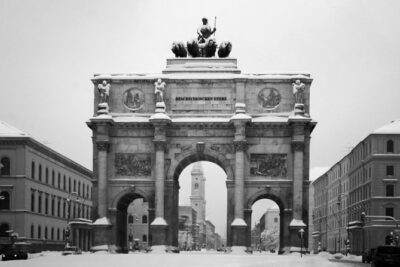
Munich World War II Sites Including Dachau Concentration Camp
Read our review →
Munich City Walking Tour, includes Third Reich & Viktualienmarkt
Read our review →
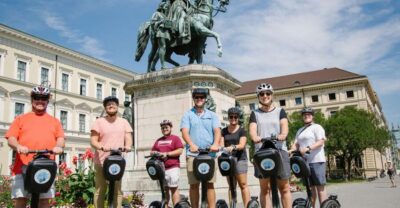
Munich 3-Hour Segway Tour: Nazi Munich & Royal Architecture
Read our review →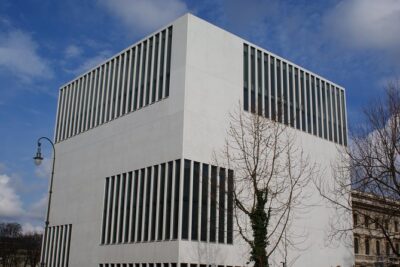
Dachau Concentration Camp Memorial Site And Third Reich Day Tour From Munich
Read our review →Browse the lists this tour appears in