
Reviewed · THIRD REICH & WWII TOURS
Munich Third Reich and WWII Segway Tour
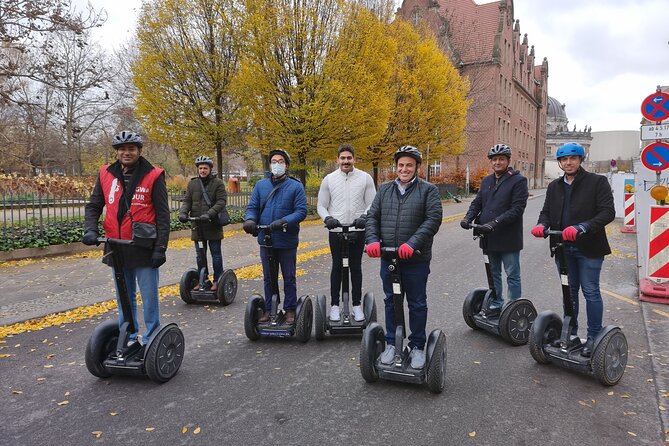
Munich’s Nazi past is spread across the city, and a Segway lets you connect the sites without spending the day on foot. In three hours, you move from Königsplatz and the Führerbau to the Hofbräuhaus, the Residenz, and Odeonsplatz, with the route tying Hitler’s rise to Munich’s wider political story.
I like the way this tour combines serious history with a practical city ride, and I like that guides such as Karl, Josef, Claudia, and Rawen are described as patient, friendly, and willing to answer questions. You also get more ground than on a walking tour, with stops for photographs along the way.
The main drawback is that the route shares public streets and can pass through busy shopping areas. One rider had a Segway problem and fell backward, though fortunately without serious injury. Cold weather is another concern, since riding for three hours can feel much colder than standing outside.
In This Review
- Key points to know before you book
- Why a Segway works for Munich’s difficult history
- Starting at Artur-Kutscher-Platz at 10 a.m.
- Hitler’s Munich years, from 1912 to the Beer Hall Putsch
- Königsplatz, Führerbau, and the physical marks of Nazi power
- Resistance, culture, and the city Hitler wanted to rebuild
- Hofbräuhaus, Hofbräukeller, and the Beer Hall Putsch
- Residenz, Odeonsplatz, and the final view of Munich
- Is $82.82 a fair price for three hours?
- Who will enjoy this Munich ride most?
- Should you book it?
- FAQ
- Where does the Munich Third Reich and WWII Segway Tour start?
- What time does the tour begin?
- How long does the tour last?
- Does the tour return to the starting point?
- What language is the tour offered in?
- How many people can join the tour?
- Can I cancel for a full refund?
Key points to know before you book
- A fast route through Munich: Cover central sights and Nazi-era locations in about three hours instead of walking between them.
- A serious historical focus: Learn about Hitler’s Munich years, the Beer Hall Putsch, Nazi opposition, and plans to rebuild the city.
- Named guides praised for their approach: Karl, Josef, Claudia, and Rawen have been singled out for patience, humor, clear explanations, and help with photographs.
- A good choice for families: Teenagers aged 14 and 17 enjoyed the ride, and beginners were given time to learn the Segway.
- Outdoor comfort matters: Bring warm clothing on a cold day, since the moving air makes the ride feel chilly.
- Small-group format: The maximum group size is 20 people, with the tour offered in English.
Why a Segway works for Munich’s difficult history
Munich is easy to explore on foot in small pieces, but the places connected with the Third Reich are scattered across the central city. A walking tour can leave you spending as much time crossing streets as looking at sites. The Segway solves part of that problem.
You can move between major squares, former Nazi buildings, memorial sites, and central landmarks without wearing out your feet. The vehicle also allows the guide to stop at several locations that might feel too far apart for a compact walking route.
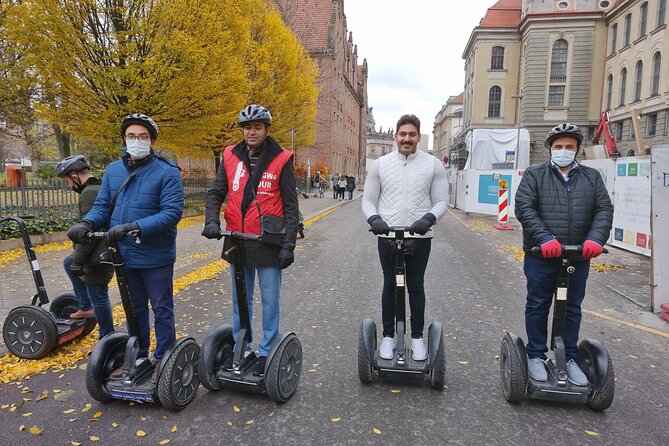
The ride itself is part of the appeal. You do not need previous Segway experience, and several riders found the machines easy to learn after a short introduction. Beginners were given time to gain confidence before the group set off, which matters if you feel nervous about balancing on a moving platform.
Still, this is not a private road or a closed museum route. You ride through the city, and one account describes a crowded section in the shopping district. Pay attention to your guide and the street around you. If you dislike cycling or feel unsteady on moving equipment, a walking tour may suit you better.
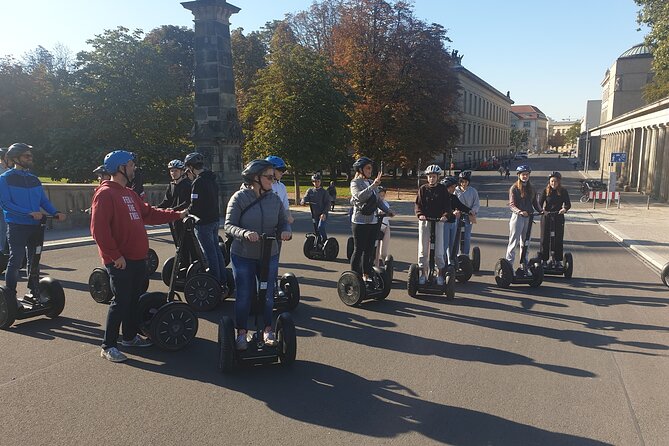
The group can include up to 20 people. That is still a manageable size for an outdoor city tour, but it is not the same as having a personal guide beside you at every stop. On a well-run day, the guide will pause often enough for questions and photographs.
More Third Reich and wartime history walks in Munich:
- Munich: Third Reich & WWII Walking Tour
★ 4.6 · 6,181 reviews - Third Reich Walking Tour Munich
★ 4.5 · 4,291 reviews - Munich: Birthplace of the Third Reich Guided Walking Tour
★ 4.6 · 771 reviews
Starting at Artur-Kutscher-Platz at 10 a.m.
The meeting point is Artur-Kutscher-Platz 2A in Munich’s 80802 district. The tour starts at 10 a.m. and returns to the same place after about three hours. Public transportation is nearby, which makes the start practical if you are staying elsewhere in the city.
Because the experience is outdoors, arrive ready to ride rather than treating it like a bus excursion. Wear shoes that feel secure, and dress for moving air. A cold day can feel especially sharp on a Segway, even if the temperature seems reasonable when you leave your hotel.
The tour is offered in English. Confirmation is provided at booking, and the activity is intended for most participants. The stated group limit is 20 people.
The guides make a real difference here. Karl is described as friendly, patient, helpful with photographs, and generous with answers. Josef is praised for making the history engaging for a family, while Claudia handled a less organized day after another guide failed to appear. Rawen is described as informative and willing to tailor the ride to the group’s interests.
That last point is useful. The advertised route is broad, but the precise rhythm can depend on the guide and the group. You should expect the listed sights, but the amount of time spent at each one may vary.
Hitler’s Munich years, from 1912 to the Beer Hall Putsch
The historical thread begins with Adolf Hitler’s arrival in Munich in 1912. The tour uses the city to explain how a young Austrian who had lost his first major ambition became connected with the political forces that later brought him power.
This is not only a list of Nazi buildings. The route looks at Munich as the setting for Hitler’s early political life, the rise of his movement, and the failed Beer Hall Putsch. You will hear about the attempt to seize power and why it did not succeed.
That context gives the ride its shape. Munich was not simply a backdrop for events that happened elsewhere. It was a key stage for the early Nazi movement, and many stops help show how political ambition, public speeches, party organization, and city planning came together.
The tour also asks who opposed the regime. The inclusion of the White Rose connects the route with German resistance and reminds you that Munich’s wartime story was not only about Nazi power. This is an important balance, especially for families or younger riders who want more than a tour focused only on Hitler.
Königsplatz, Führerbau, and the physical marks of Nazi power
Königsplatz is one of the most important stops on the route. Its formal open space made it useful for political gatherings and displays of power. Seeing it as part of a moving city route helps you understand how public architecture can be used to shape a political message.
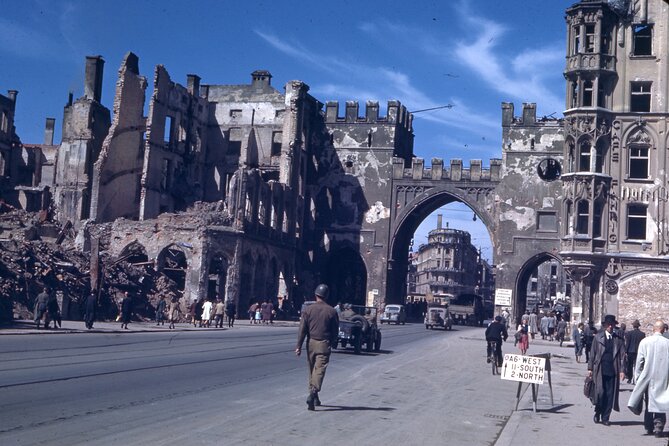
Nearby, the Führerbau gives the tour a more direct connection with the Nazi leadership. The building was tied to Hitler’s official presence in Munich and to the regime’s efforts to make the city a center of its movement.
The former Braunes Haus is another key location. Its name refers to the brown uniforms of the Nazi party, and the site helps explain the party’s Munich base. You are looking at places where organization and propaganda were built, not simply grand monuments.
The Alte Synagoge adds another layer. The route includes it among the city’s Nazi-era locations, making it a useful prompt for understanding how Munich’s Jewish life was affected by Nazi persecution and destruction. The itinerary does not provide a detailed museum visit or indoor entry, so expect the guide’s explanation rather than an extended exhibition.
The same is true of many stops on this ride. Admission is listed as free, which means you are paying for the guided route and Segway experience rather than entrance to a series of museums. This keeps the tour moving, but it also means you should not expect long indoor visits.
More Segway tours in Munich:
- Munich: City Highlights Guided Segway Tour
★ 4.6 · 266 reviews - Munich 3-Hour Segway Tour: Nazi Munich & Royal Architecture
★ 4.9 · 194 reviews - Munich Segway Tour
★ 5.0 · 181 reviews - Munich: City Highlights Guided Segway Tour
★ 4.5 · 161 reviews
Resistance, culture, and the city Hitler wanted to rebuild
The Schelling-Salon appears on the route as one of the places connected with Munich’s political and intellectual life. The tour’s broader purpose is to show the city around the Nazi movement, including the people and settings that did not fit neatly into the official story.
The White Rose stop is especially worthwhile for this reason. The White Rose was a student resistance movement, and its inclusion gives the tour a human counterpoint to the party buildings and military planning sites. If you are traveling with older children, this section can help turn a distant chapter of history into a question about personal courage and choice.
Haus der Kunst shows another side of the regime’s ambitions. The building was part of Nazi cultural policy, which tried to control what art represented and how German identity should look. It helps connect political power with public culture.
The Angel of Peace takes the route into a different period and mood. It is not solely a Nazi site, but it adds Munich’s wider historical setting and gives you a change from the concentrated political story. Since this is a three-hour route, that variety helps keep the ride from becoming a nonstop sequence of party offices and speeches.
You will also hear about Hitler’s Munich apartments, including the apartment associated with 1933 and the earlier address covering 1920 to 1929. These stops are less visually dramatic than a major square, but they help trace the change from political newcomer to national leader.
Hofbräuhaus, Hofbräukeller, and the Beer Hall Putsch
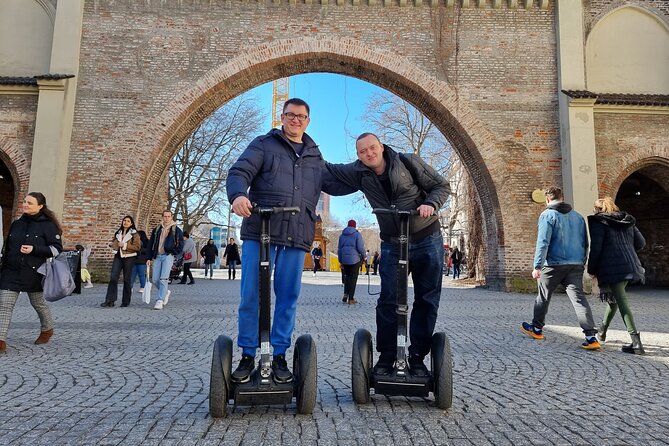
Munich’s beer halls were important political meeting places, and the Hofbräuhaus and Hofbräukeller give the tour a strong local setting for that story. These are not just places for beer and pretzels. In the early twentieth century, large halls could bring together crowds, speeches, party organizers, and political movements.
The Hofbräuhaus is one of Munich’s best-known landmarks, so expect this section to feel more crowded and commercial than the quieter historical stops. One rider felt the route spent too much time in the shopping district and expected more WWII material. That is a fair warning: this is a city overview with a Nazi and WWII focus, not a tightly focused battlefield or museum tour.
The Beer Hall Putsch story gains meaning when you see the central places tied to Munich’s public life. The failed attempt was a turning point for Hitler, and the guide explains why it did not deliver power immediately.
This part also shows the tradeoff of traveling by Segway. You can get close to more places and cover them quickly, but you may pause on a public street rather than sit in a quiet historical setting. The guide’s storytelling is central. Karl, Josef, Claudia, and Rawen are all described as making time for questions, which is valuable when the location itself cannot provide a full explanation.
Residenz, Odeonsplatz, and the final view of Munich
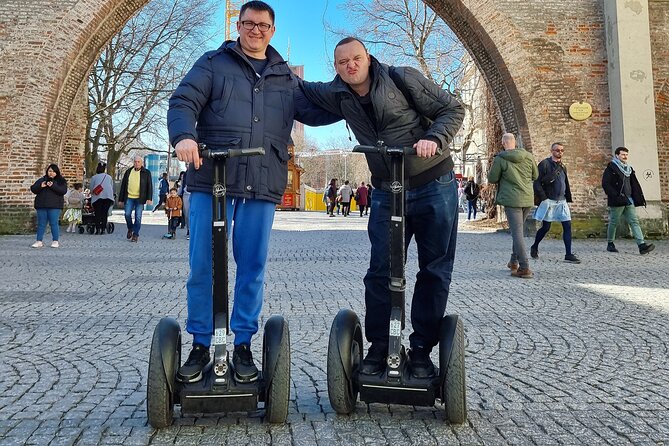
The Residenz München and Odeonsplatz bring the route back to Munich’s older political center. The Residenz represents the city’s royal past, while Odeonsplatz is tied to public power, military memory, and the Beer Hall Putsch.
Odeonsplatz is one of the strongest closing points because it gathers several strands of the tour together. You can consider Munich as a royal capital, a modern political center, and a city reshaped by the Nazi movement.
The itinerary also includes the Maximilianeum and Maximilianestrasse. These locations widen the view beyond Hitler’s personal story and show the civic and architectural setting in which Munich developed. You get a sense of how the Nazi plan to make Munich the capital of its movement sat on top of an older city with its own institutions and identity.
Do not expect every stop to receive equal time. Three hours is enough for a broad overview, not a scholarly treatment of each site. The value comes from seeing the connections in one route, then choosing which places you want to revisit on foot or explore through museums afterward.
Is $82.82 a fair price for three hours?
At $82.82 per person, this is not a budget walking tour. The price makes more sense if you value the Segway itself, the amount of ground covered, and the guide’s ability to connect scattered places.
For a family, it can be a useful way to keep teenagers engaged. A 14-year-old and a 17-year-old reportedly had a great time, and one family found the ride more enjoyable than walking. Couples also get a lively shared activity rather than a static lecture.
The price is less attractive if your main goal is a detailed WWII study. You may prefer museums, a dedicated memorial tour, or a walking route that spends longer at fewer locations. This experience gives you breadth, movement, and a guide’s story, but not admission to indoor attractions or a long stop at every historical site.
The 4.7 rating from 20 ratings and 90 percent recommendation level suggest strong overall satisfaction, but the smaller number of ratings means you should still weigh the practical cautions. The experience depends heavily on the guide, the traffic, the weather, and the condition of the equipment.
Who will enjoy this Munich ride most?
I would choose this tour for first-time visitors who want a quick sense of Munich’s major central sights and Nazi-era locations. It is also a good fit for families with teenagers, couples who like active sightseeing, and anyone who finds a three-hour walking tour tiring.
It suits you best if you enjoy learning outdoors and are happy to keep moving. The guides make time for questions and photographs, but the route is not designed for long, quiet contemplation at each site.
You should think twice if you need step-free certainty, dislike street traffic, or want a strictly WWII-only route. The supplied information says most participants can take part, but it does not provide detailed equipment, age, weight, or mobility requirements. Contact the provider if those details matter to you.
The provider is FireWheels GmbH. Free cancellation is available if you cancel at least 24 hours before the local start time. Cancellations made later are not refunded, and the activity can be changed or refunded if its minimum number is not reached.
Should you book it?
Book this Munich Segway tour if you want history with motion, especially if your group includes teenagers or first-time Segway riders. The route covers a lot, the guides are often patient and engaging, and the White Rose, Führerbau, Königsplatz, beer halls, and Odeonsplatz give the story useful variety.
Skip it if you want a quiet, highly detailed WWII study or if cold weather and city traffic would spoil the ride. For most active visitors, $82.82 is a reasonable price for three hours of guided sightseeing, provided you understand that the experience is a broad city tour rather than a museum-style history seminar.
FAQ
Where does the Munich Third Reich and WWII Segway Tour start?
It starts at Artur-Kutscher-Platz 2A, 80802 München, Germany.
What time does the tour begin?
The stated start time is 10 a.m.
How long does the tour last?
The tour lasts approximately three hours.
Does the tour return to the starting point?
Yes. The activity ends back at the meeting point.
What language is the tour offered in?
The tour is offered in English.
How many people can join the tour?
The maximum group size is 20 people.
Can I cancel for a full refund?
Yes, if you cancel at least 24 hours before the experience start time. Cancellations made less than 24 hours before the start are not refunded.
Just added around Munich
- Private tour from Munich to Rothenburg and Harburg★ 5.0 · 3 reviews
- Scenic Adventure Private Day Tour to The Konigssee Salzburg★ 4.5 · 3 reviews
- Private Transfer from Munich to Salzburg, English-speaking driver★ 3.5 · 3 reviews
- Munich: Capture the most Photogenic Spots with a Local★ 5.0 · 3 reviews
- Private Beer Tasting Tour in Munich with Oktoberfest Museum★ 4.3 · 3 reviews
- Munich Photoshoot: A Must-Have Holiday Experience!★ 5.0 · 3 reviews
- Paul’s Private Tour in the Alte Pinakothek Munich★ 5.0 · 3 reviews
- Private Tour to Hallstatt Salt Mine and Skywalk with Lunch★ 5.0 · 3 reviews
Third Reich & WWII Tours, compared.

Birthplace of the Third Reich Guided Walking Tour
Read our review →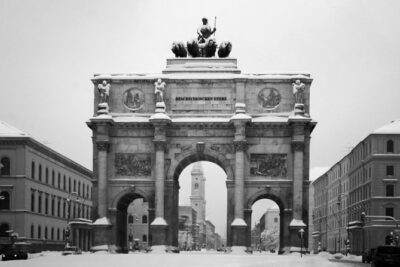
Munich World War II Sites Including Dachau Concentration Camp
Read our review →
Munich City Walking Tour, includes Third Reich & Viktualienmarkt
Read our review →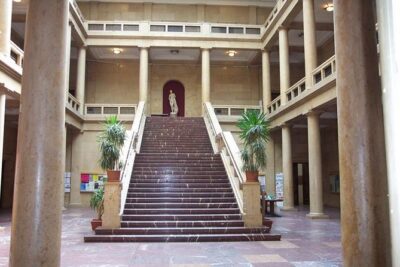
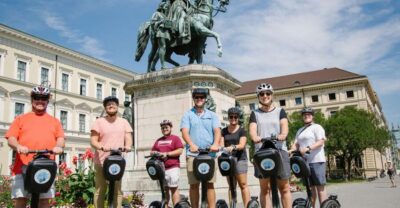
Munich 3-Hour Segway Tour: Nazi Munich & Royal Architecture
Read our review →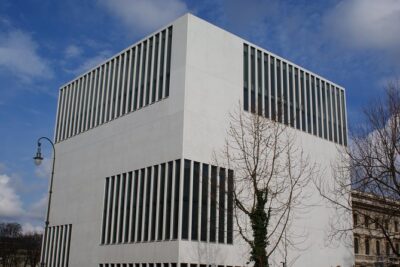
Dachau Concentration Camp Memorial Site And Third Reich Day Tour From Munich
Read our review →Browse the lists this tour appears in