
Reviewed · THIRD REICH & WWII TOURS
National Socialism WWII with licensed guide – private tour
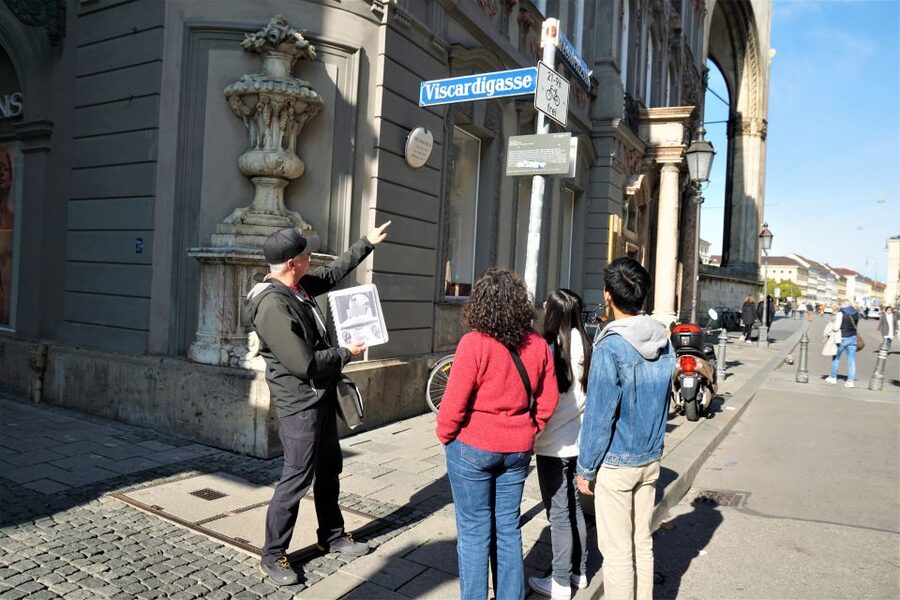
Munich was the birthplace of the Nazi movement, and this private walking tour shows you where that story unfolded. You begin at Feldherrnhalle, trace Hitler’s failed 1923 putsch, learn about the White Rose at LMU, and finish among the former Nazi headquarters at Königsplatz. I like the use of photo material, and I like that resistance receives real attention rather than being treated as a footnote.
The tour is led by a certified guide with more than 10 years of experience, including Wolfgang Brehm, and the teaching style is praised as clear, interesting, and useful for students. My one reservation is the two-hour limit. There is a lot to cover, so expect a brisk outdoor history lesson, not a slow museum visit.
In This Review
- Key points to know before booking
- Why Munich is the right place for this history
- Starting at Feldherrnhalle and Odeonsplatz
- From the Court Garden to a memorial for resistance
- The White Rose at LMU
- The Square of the Victims of National Socialism
- Haus der Kunst and the politics of art
- Munich Residenz and the changing use of power
- Karolinenplatz and the people behind the movement
- Königsplatz and the former Nazi headquarters
- What you get for $259
- Language, access, and planning details
- Who should book this Munich history walk
- Should you book it?
- FAQ
- Where does the tour begin?
- Where does the tour finish?
- How long does the tour last?
- Is admission to the NS Documentation Centre included?
- What languages are available?
- Is the tour private and wheelchair accessible?
Key points to know before booking
- Feldherrnhalle explains the 1923 putsch: You see where Hitler’s attempted takeover of Bavaria ended and learn what happened afterward.
- The White Rose gets serious attention: At LMU, the tour covers the student resistance group, its leaflets, and the executions of its members.
- Nazi art and architecture are part of the story: Haus der Kunst, Galeriestraße, and Königsplatz show how culture and public space were used by the regime.
- A private group can include up to 30 people: The flat price of $259 can be good value for a family, school group, or large party.
- The NS Documentation Centre is an optional finish: Admission is not included, but you can continue inside after the guided walk.
- The subject is handled as serious history: The activity is explicitly not intended for people seeking Nazi or far-right propaganda.
Why Munich is the right place for this history
Munich is not simply a city with a few leftover Nazi buildings. It was where Adolf Hitler arrived, found work, built political connections, and helped turn the German Workers’ Party into the NSDAP. This tour uses the city center to show how a political movement grew through speeches, monuments, organizations, art, and control of public space.
That makes the experience useful for anyone who wants more than a list of dates. You see how places that now look like ordinary squares and buildings were given political meaning. Your guide also explains resistance in Munich, including the White Rose, so the tour does not present the period only through Nazi power.
I especially like the use of historical photographs. Old images can show you what has disappeared, what was renamed, and how the regime staged its presence in the city. The visual material should help you compare present-day Munich with the city Hitler and his supporters wanted the public to see.
The tone is serious and educational. The activity information makes clear that it is not designed for Nazi admirers or far-right visitors. That direct warning is appropriate for a tour dealing with propaganda, mass violence, and political extremism.
More Third Reich and wartime history walks in Munich:
- Munich: Third Reich & WWII Walking Tour
★ 4.6 · 6,181 reviews - Third Reich Walking Tour Munich
★ 4.5 · 4,291 reviews - Munich: Birthplace of the Third Reich Guided Walking Tour
★ 4.6 · 771 reviews
Starting at Feldherrnhalle and Odeonsplatz
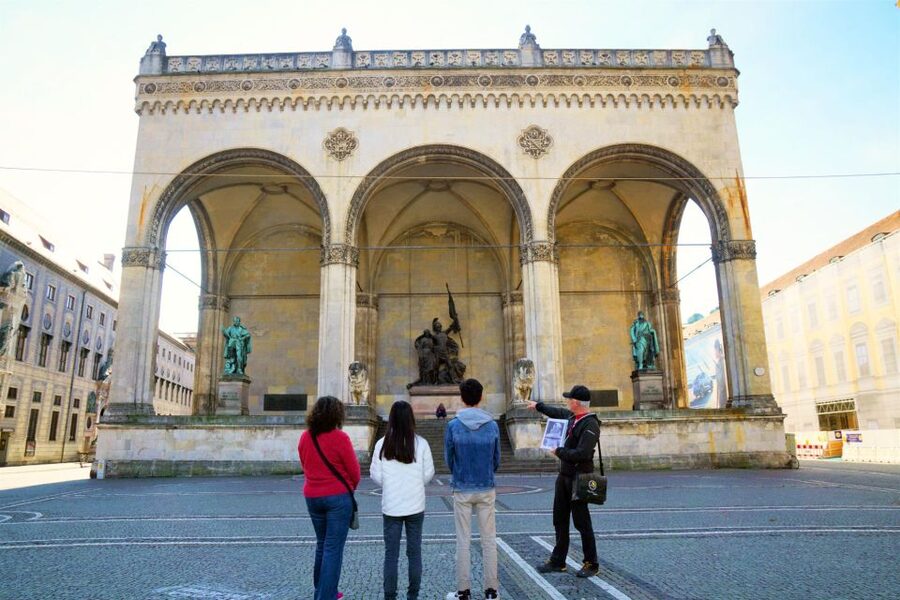
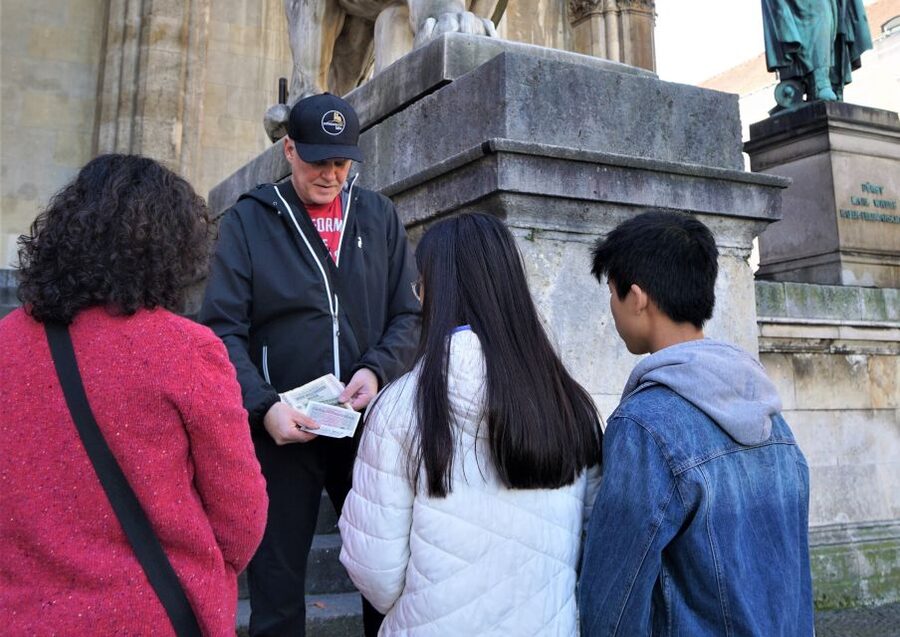
Meet at the steps of Feldherrnhalle on Odeonsplatz, at Residenzstraße 1. This is a practical central starting point, and the open setting lets the guide begin with the geography of the city before moving into the details.
The first part covers why Hitler came to Munich, where he lived, and how he made a living. These details matter because they place him in the city before he became a national figure. You are not starting with the finished dictatorship. You are looking at the early conditions that allowed a political agitator to build an audience.
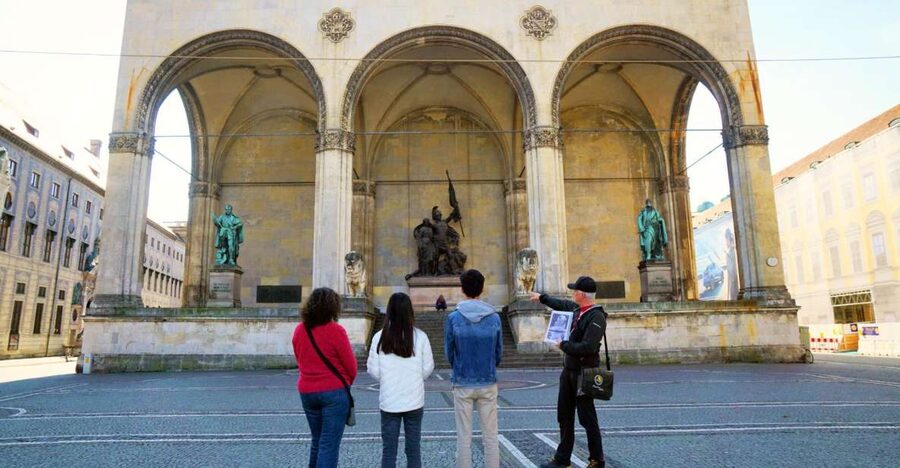
At Feldherrnhalle, the guide explains the 1923 Beer Hall Putsch, also called the Hitler coup. The attempted seizure of power ended here after a confrontation with police. You also learn about the former memorial erected for the Nazi putschists who died, which was later removed.
The site is visually striking, but it can be hard to picture the political drama without guidance. That is where the photographs and the guide’s explanation become important. You are looking at a familiar Munich monument, while the tour shows how the Nazis turned it into a place of ceremony and loyalty.
The schedule gives Feldherrnhalle two short guided sections, one of about 10 minutes and another of about five minutes. That suggests a focused explanation rather than a long stop. If you prefer a detailed account of the putsch, you may want to ask questions early, since the route has many subjects still ahead.
From the Court Garden to a memorial for resistance
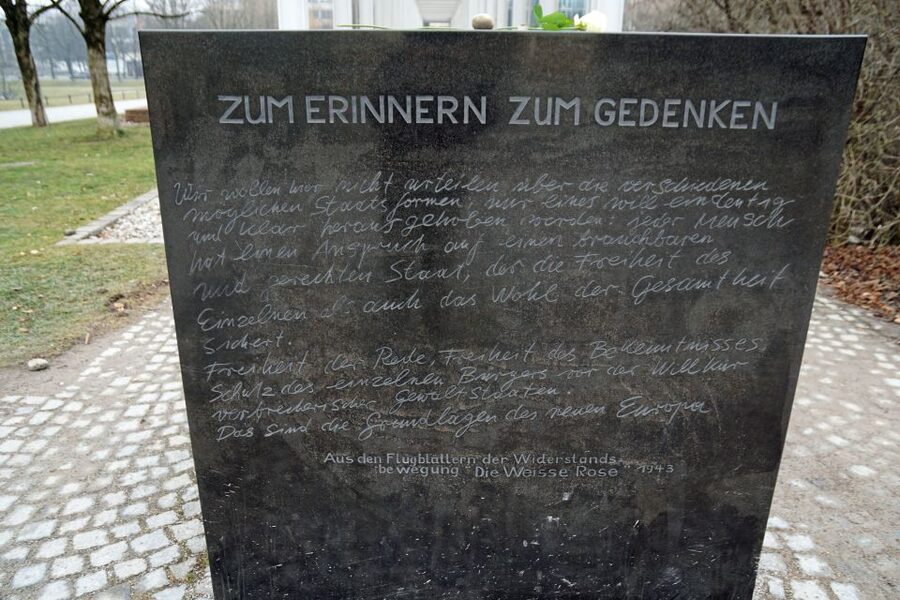
After Feldherrnhalle, the walk continues through the Court Garden. Here you hear about a monument dedicated to resistance fighters. This change of focus is useful: the tour moves from the Nazi attempt to seize power to the people who opposed the regime.
Munich’s resistance story was not simple or widespread, but it was real. The tour gives it a place in the route instead of treating opposition as a final footnote. That helps you understand that individuals and groups made choices under a dictatorship, even when the personal cost could be severe.
The stop is also a reminder that memorials can carry different messages over time. A site shaped by Nazi political ritual can later be used to remember those who resisted. Your guide’s role is to explain that shift and help you read the meaning of the monument today.
The White Rose at LMU
At Ludwig Maximilian University, the tour focuses on the White Rose, one of the best-known resistance groups in Munich. The group produced leaflets opposing the Nazi regime. Its members were arrested and executed, including by beheading.
This part is likely to be especially useful for families and students. One United Kingdom booking came from a parent whose son was studying GCSE history, and the tour was found useful for that purpose. You do not need to be a student to benefit, but the clear timeline and focus on individual choices can make the subject easier to understand.
The university setting also brings the story close to everyday life. Resistance did not happen only in secret military circles or distant political offices. It involved young people in a major place of learning, working with written material and ideas.
The tour does not promise a long visit inside university buildings, and the overall walk remains compact. Think of this as a guided explanation at an important location, supported by photographs, rather than a full exhibition on the White Rose.
A few more Munich tours and experiences worth a look
- Munich Private Tour with a Local – Highlights & Hidden Gems
★ 5.0 · 469 reviews - Mike’s Neuschwanstein & Linderhof Private Tour from Munich
★ 5.0 · 197 reviews - Dachau Concentration Camp Private Tour by Train from Munich
★ 5.0 · 185 reviews - Fall in Love with Munich in a Private Old Town Walking Tour
★ 5.0 · 182 reviews
The Square of the Victims of National Socialism
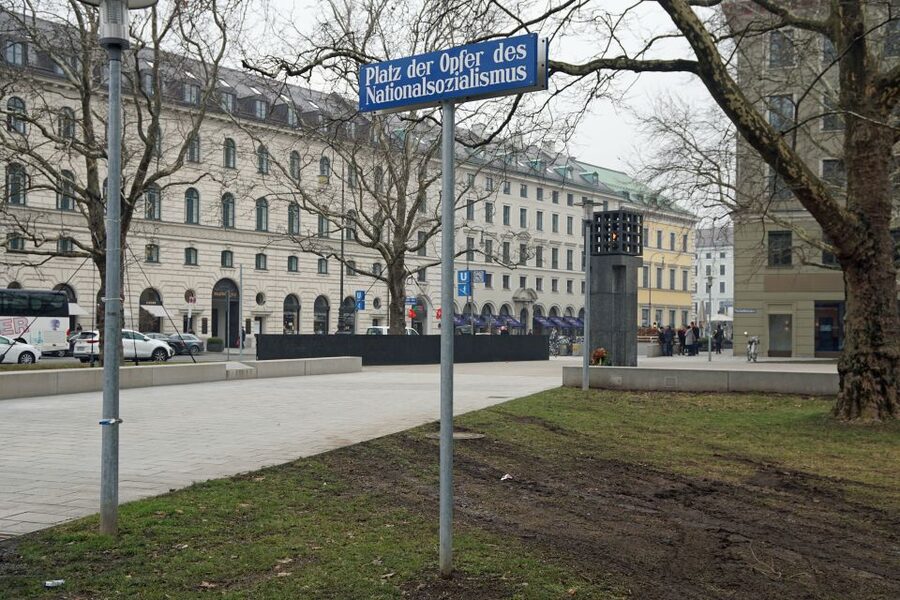
At the Square of the Victims of National Socialism, the guide explains who the victims were. This is an important correction to any tour that focuses too heavily on Nazi leaders and buildings. The central question changes from how the regime operated to who suffered under it.
The stop is brief, listed at about 10 minutes, but its role in the route is large. It gives you a point for considering the victims of persecution and state violence before the tour returns to Nazi art, power, and architecture.
You should expect a sober stop rather than entertainment. The subject requires attention, and the short timing means the guide will have to be selective. If you want the fullest possible context, listen closely and take note of terms or names you may want to explore at the documentation centre afterward.
Haus der Kunst and the politics of art
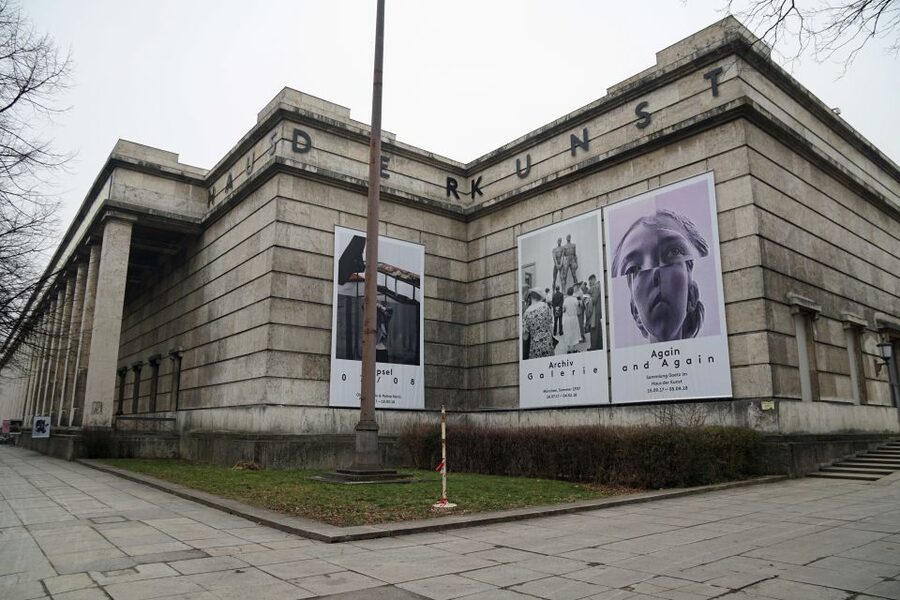
At Haus der Kunst, the guide explains how the Nazis influenced art. The building is a strong place to discuss that subject because the regime used art and architecture to promote its ideas of national identity, authority, and cultural control.
The tour also points out where the Degenerate Art exhibition took place in Galeriestraße. That exhibition attacked art the Nazis considered politically or racially unacceptable. By including both Haus der Kunst and Galeriestraße, the walk shows two sides of the same policy: art approved by the regime and art publicly condemned by it.
This is one of the more distinctive parts of the tour. You are not only hearing about war memorials, party offices, and political violence. You are also learning how a dictatorship tried to shape taste and decide what the public was allowed to value.
The listed stop at Haus der Kunst lasts about 15 minutes. That is enough for a clear introduction, though not enough for a full art lecture. If art history interests you most, ask the guide how the exhibition locations relate to the wider Nazi cultural program.
Munich Residenz and the changing use of power
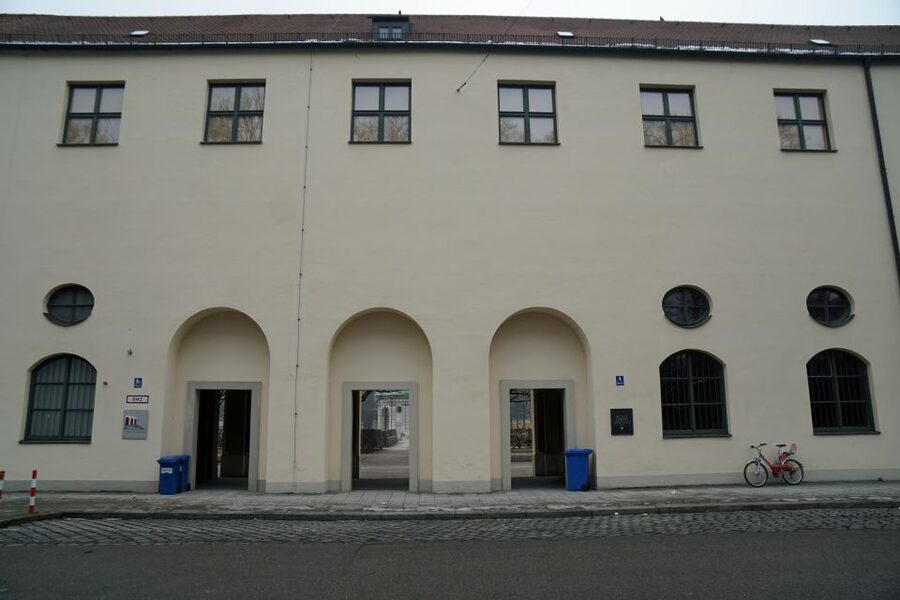
The route includes about 10 minutes at the Munich Residenz. The information provided for this stop is brief, so you should not book the tour expecting a full guided visit to the palace interiors.
Its place on the route helps connect Munich’s older symbols of government and authority with the twentieth-century political story. Your guide can use the location to explain how the Nazi period sat within a much longer history of Bavarian power and public life.
The practical point is simple: this is a walking stop, not an admission-based palace tour. If you want to visit the Residenz rooms, plan that separately and allow extra time beyond the two-hour experience.
Karolinenplatz and the people behind the movement
At Karolinenplatz, you learn about the main sponsors of the Nazis. This is a valuable subject because political movements need money, networks, and social access as well as speeches and street demonstrations.
The stop helps move the story beyond Hitler as a lone figure. It points toward the industrialists and supporters who helped the movement gain influence. For you, that makes the history more precise: the Nazi rise involved people and institutions that chose to support it.
The available route details do not give a separate timed stop for Karolinenplatz, so expect the guide to keep the explanation moving. Still, it adds an important economic and social layer to the tour.
Königsplatz and the former Nazi headquarters
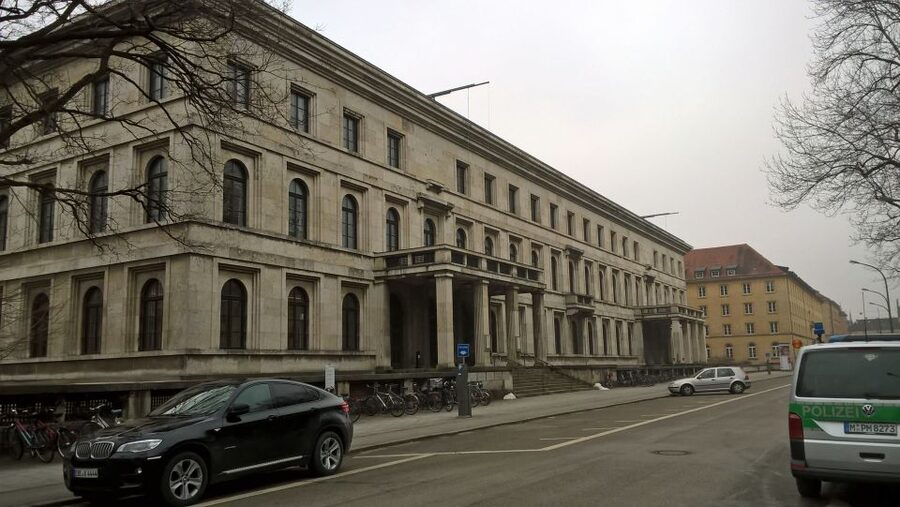
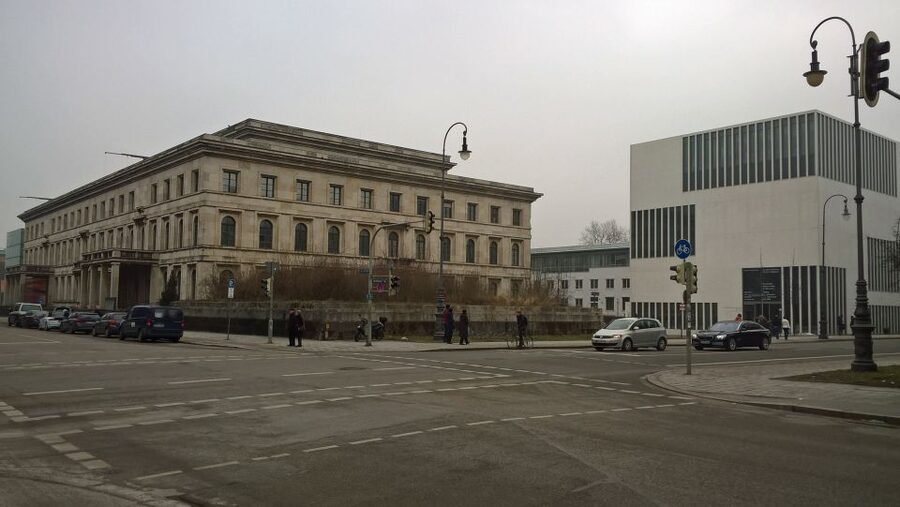
The final section takes you to Königsplatz, ending at Königsplatz 1. This was the party center of the Nazi movement in Munich. The guide covers the Brown House, the Führerbau, Hitler’s office, and the former NSDAP administration.
The Führerbau stop is listed at about 15 minutes. You learn what role the building played and how it fitted into the Nazi headquarters complex. The architecture and open spaces around Königsplatz make the regime’s desire for ceremony and control easier to understand.
The area also shows why physical traces matter. Even when buildings have changed use or have been altered, their location still explains how the Nazis organized power in Munich. The tour helps you read the city rather than simply pass through it.
The walk finishes near the NS Documentation Centre, opened in 2015. You can visit it after the tour, but admission costs extra. I recommend treating the guided walk and the centre as two connected parts: the guide gives you a map and political framework, while the museum can provide more documents, names, and detail.
What you get for $259
The price is $259 per private group of up to 30 people. That sounds high for a two-hour walk if you are booking for one or two people, but the calculation changes for a family, school party, club, or large group. At the maximum group size, the per-person cost is modest.
A private format also means you are not sharing the guide with an open public group. You can ask questions suited to your interests, and a student group can focus on resistance or Nazi propaganda while an adult group might spend more time on the political rise of the NSDAP.
The main value is the guide’s structure. Munich’s Nazi history is spread across ordinary streets, monuments, squares, and buildings. Without context, you may see the sites but miss their connections. The tour places them in a sequence that runs from Hitler’s early Munich years to the party headquarters.
The limitation is time. Two hours is enough for an introduction and a strong overview, but not a complete study of National Socialism in Bavaria. Admission to the NS Documentation Centre is also separate, so include that cost if you plan to continue indoors.
Language, access, and planning details
The tour is offered in English or German. Wolfgang Brehm is named as one of the guides, and the experience includes a professional, certified guide with more than 10 years of experience.
The route is wheelchair accessible. It is a walking tour, so comfortable shoes and attention to weather are sensible, though no specific equipment or clothing is required in the provided information.
The private group can include up to 30 people. That is useful for organized parties, but a group near the maximum size may feel different from a small family walk. If interaction matters to you, ask questions and stay close enough to hear clearly.
You can cancel up to 24 hours before the start for a full refund, and the booking option allows you to reserve now and pay later. Starting times vary, so check availability for your date.
Who should book this Munich history walk
I would choose this tour if you want a focused introduction to Munich’s Nazi past and prefer learning outdoors, at the actual sites. It suits history students, families with older children, school groups, and visitors who plan to visit the NS Documentation Centre afterward.
It is also a good fit if you want resistance included in the story. The White Rose, the memorial to resistance fighters, and the Square of the Victims of National Socialism prevent the tour from becoming a parade of Nazi buildings.
I would hesitate if you want a long museum visit, detailed architectural study, or quiet time at each location. The route covers a lot in two hours, and several stops are short. You will get the most from it if you arrive ready to listen, walk, and ask focused questions.
The strong praise centers on clear explanations, useful information, and guides who keep the subject interesting without making it light. German-language feedback also describes the experience as very informative and worth doing. Those are fitting strengths for a serious topic that can otherwise feel confusing when explored alone.
Should you book it?
Book this private tour if you want the city itself to explain the origins, methods, and victims of National Socialism. The combination of Feldherrnhalle, the White Rose, Nazi art, Karolinenplatz, and Königsplatz gives you a broad foundation in only two hours.
For the best value, bring a group large enough to share the $259 fee and add the NS Documentation Centre afterward. Skip it only if you already know Munich’s Nazi history well or want a slower, museum-first experience. For most first-time visitors seeking a clear and respectful introduction, it is a worthwhile use of a morning or afternoon.
FAQ
Where does the tour begin?
The meeting point is the steps at Feldherrnhalle on Odeonsplatz, at Residenzstraße 1 in Munich.
Where does the tour finish?
The tour finishes at Königsplatz 1, 80333 Munich, near the former Nazi headquarters and the NS Documentation Centre.
How long does the tour last?
The walking tour lasts two hours.
Is admission to the NS Documentation Centre included?
No. You may visit the NS Documentation Centre after the guided tour, but admission is not included in the tour price.
What languages are available?
The tour is available in English and German.
Is the tour private and wheelchair accessible?
Yes. It is a private group tour, with groups of up to 30 people, and the activity is wheelchair accessible.
Just added around Munich
- Private Transfer from Munich to Salzburg, English-speaking driver★ 3.5 · 3 reviews
- Private tour from Munich to Rothenburg and Harburg★ 5.0 · 3 reviews
- Scenic Adventure Private Day Tour to The Konigssee Salzburg★ 4.5 · 3 reviews
- Munich: Capture the most Photogenic Spots with a Local★ 5.0 · 3 reviews
- Private Beer Tasting Tour in Munich with Oktoberfest Museum★ 4.3 · 3 reviews
- Munich Photoshoot: A Must-Have Holiday Experience!★ 5.0 · 3 reviews
- Paul’s Private Tour in the Alte Pinakothek Munich★ 5.0 · 3 reviews
- Private Tour to Hallstatt Salt Mine and Skywalk with Lunch★ 5.0 · 3 reviews
Third Reich & WWII Tours, compared.

Birthplace of the Third Reich Guided Walking Tour
Read our review →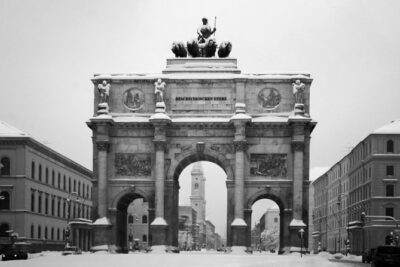
Munich World War II Sites Including Dachau Concentration Camp
Read our review →
Munich City Walking Tour, includes Third Reich & Viktualienmarkt
Read our review →
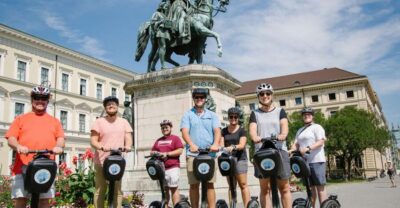
Munich 3-Hour Segway Tour: Nazi Munich & Royal Architecture
Read our review →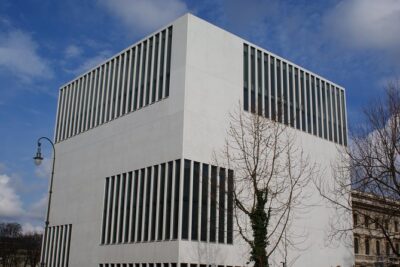
Dachau Concentration Camp Memorial Site And Third Reich Day Tour From Munich
Read our review →Browse the lists this tour appears in