
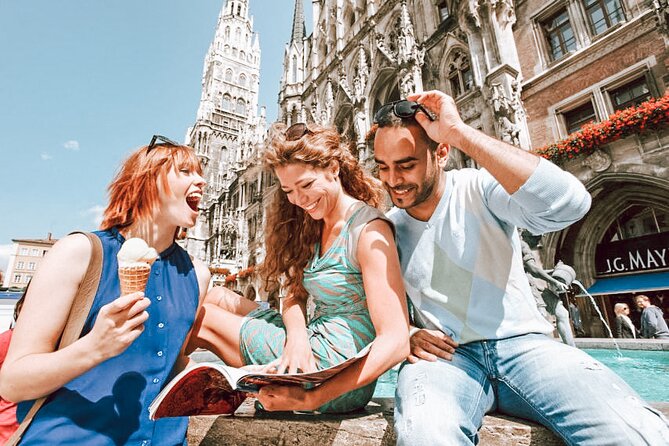
Reviewed · THIRD REICH & WWII TOURS
Private Munich Tour for History Buffs with Architectural Gems and WWII sites
Munich’s past comes into sharp focus on this private walk, which links World War II sites with royal palaces, churches, and some of the city’s best-known buildings. You move from the New Town Hall and St. Peter’s Church to the Residenz and Odeonsplatz, where Nazi history is tied directly to the streets around you.
I like the private format, since your guide can adjust the route and slow down when a story deserves more time. I also like the human touch: Tanja is praised for her clear explanations, patience, and useful advice on getting around and finding good photo spots. The main concern is the short two-hour schedule, especially since Nymphenburg Palace is not close to the central walking route.
In This Review
- Key points at a glance
- Why this Munich tour works for history lovers
- Meeting your guide at the hotel
- The New Town Hall and Munich’s civic face
- Nymphenburg Palace and the Wittelsbach rulers
- The Residenz, royal power, and Nazi connections
- Odeonsplatz and the Beer Hall Putsch
- St. Peter’s Church and the oldest parish in Munich
- How the private format changes the experience
- Who should book this experience
- Practical value, timing, and cancellation
- Should you book the Munich history tour?
- FAQ
- How long does the Munich history tour last?
- Is this a private tour?
- Where does the tour begin?
- Is airport pickup available?
- Which Munich sights are included?
- Does the tour include entrance fees?
- Are transportation costs included?
- Is the tour offered in English?
- Does the tour run in bad weather?
- Can I cancel for a full refund?
Key points at a glance

- WWII history in real city streets: Hear about Hitler’s rise, the Beer Hall Putsch, the former Gestapo headquarters, and Munich’s wartime destruction.
- A private guide for your group: You do not share the experience with strangers, and the route can be adjusted.
- Five major stops: See the New Town Hall, Nymphenburg Palace, the Residenz, Odeonsplatz, and St. Peter’s Church.
- Tanja brings patience and local feeling: Her guidance is especially useful if you want stories rather than a quick list of dates.
- Photo advice is built in: The tour includes tips on strong places to photograph Munich’s roofs, squares, and historic buildings.
- A tight two-hour plan: The schedule works best as an overview, not a full museum or palace visit.
Why this Munich tour works for history lovers
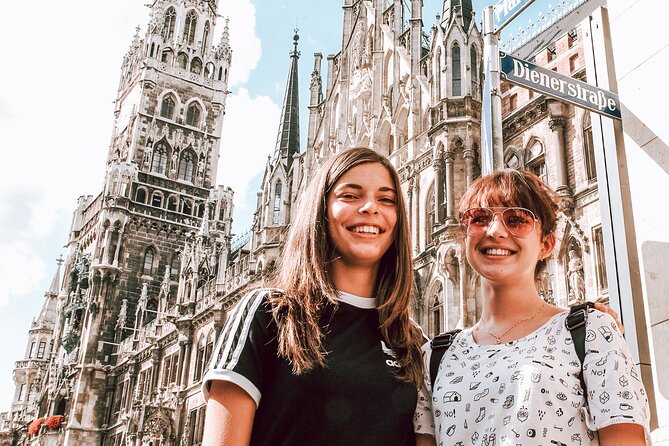
I see this as a shortcut through Munich’s most important chapters. In a small amount of time, you encounter medieval church history, Bavarian royal power, nineteenth-century civic ambition, and the Nazi period.
That mix matters. Munich can look almost too polished at first glance, with grand squares, ornate façades, and tidy pedestrian streets. The guide’s job is to explain what happened behind those façades, including the political events that began or ended in these very places.
The WWII focus is not limited to a single memorial or museum. At the Residenz, you hear about the former Gestapo headquarters and Hitler’s entry into the Nazi Party. At Odeonsplatz, the 1923 Beer Hall Putsch reached its violent end when Bavarian police blocked the Nazi march.
You also get the wider setting. The route includes royal residences and churches, so you can see how Munich developed before the twentieth century and how its buildings suffered during the war. That makes the political story easier to understand than a tour that treats WWII as an isolated subject.
More Third Reich and wartime history walks in Munich:
- Munich: Third Reich & WWII Walking Tour
★ 4.6 · 6,181 reviews - Third Reich Walking Tour Munich
★ 4.5 · 4,291 reviews - Munich: Birthplace of the Third Reich Guided Walking Tour
★ 4.6 · 771 reviews
Meeting your guide at the hotel
Your guide meets you in the lobby of a centrally located hotel, hostel, or vacation rental. You need to provide the exact name and address when booking, and the supplier contacts you by email, so you do not need to call and confirm.
This is a useful start if you are new to Munich. You avoid spending your first minutes searching for a meeting statue or street corner, and you can ask for basic orientation as soon as the tour begins.
The pickup is not available from the airport. Transportation costs are also not included, apart from a note about return tickets to Bruges that does not apply to this Munich route. Since Nymphenburg Palace sits away from the central sights, ask how that part of the route will be handled before you book. The experience is described as a walking tour, but the itinerary covers places that are not all next door to one another.
The tour runs in rain or shine. Bring suitable clothing and comfortable shoes, and keep in mind that a moderate level of physical fitness is expected.
The New Town Hall and Munich’s civic face
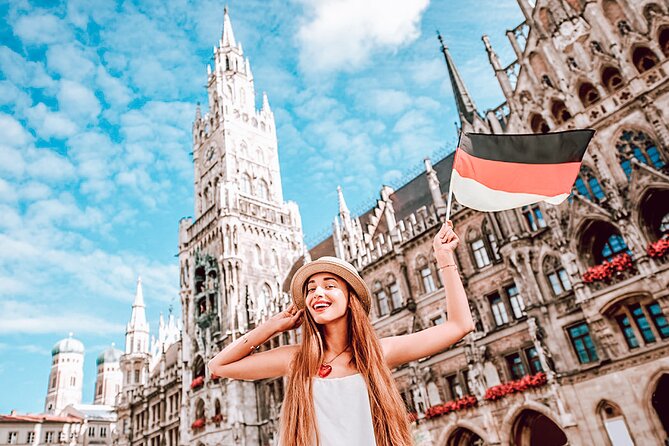
The tour begins at the New Town Hall, or Neues Rathaus, on Marienplatz. Its neo-Gothic design dates from 1867 to 1874 and uses brick and shell limestone. The building still houses the city administration, city council, and mayor’s office, so this is not merely a decorative monument.
Your guide points out the building’s long, intricate façade and explains events connected with its rooms. The description allows about 20 minutes here, enough for an introduction and exterior viewing, but not enough for a full visit to every part of the building.
The tower is one possible extra. You can climb up for views across Munich’s rooftops, but an admission fee is not included, and the tour’s short duration means you should confirm whether there is time. Down in the vault, a traditional restaurant dating to 1867 offers another glimpse of the building’s older public life.
I like this as a starting point because it gives you a quick sense of Munich’s confidence in the nineteenth century. The city was presenting itself as modern, powerful, and unmistakably Bavarian. That civic pride provides a useful contrast to the darker political stories later in the tour.
Nymphenburg Palace and the Wittelsbach rulers
Nymphenburg Palace brings you out to the former summer residence of Bavaria’s Wittelsbach monarchs. Construction began in 1664, reportedly as a gift from a prince to his wife, and the palace grew over five generations of rulers.
You can admire its Baroque architecture and hear how the royal family expanded the property over time. The palace is one of the largest royal residences in Europe, with grand interiors and extensive grounds.
The catch is time. A 20-minute stop gives you an introduction and perhaps an exterior look, but it does not allow a serious examination of the palace rooms or grounds. Entrance fees are not included, either. If royal art, furniture, and ceremonial rooms are high on your list, you will need a separate visit.
For a first overview, though, Nymphenburg adds useful context. Munich’s political story did not begin with the Nazis. Long before the twentieth century, Bavarian rulers used architecture to display status, authority, and family power. That story helps you read the city’s grand buildings with more care.
Because the palace is outside the central cluster, this is also the stop that raises the biggest practical question. Ask whether transport between locations is arranged, paid separately, or left to you. That detail matters more here than at any other point on the route.
A few more Munich tours and experiences worth a look
- Munich: Guided Tour of the historic Town Hall on Marienplatz
★ 4.8 · 63 reviews - Munich Craft Beer & Cultural Tour With Snack
★ 5.0 · 46 reviews - Munich History Tour: Private & Personalized with a Local Guide
★ 4.5 · 33 reviews - Munich and Nazi History Combination Day Tour Small Group
★ 5.0 · 31 reviews
The Residenz, royal power, and Nazi connections
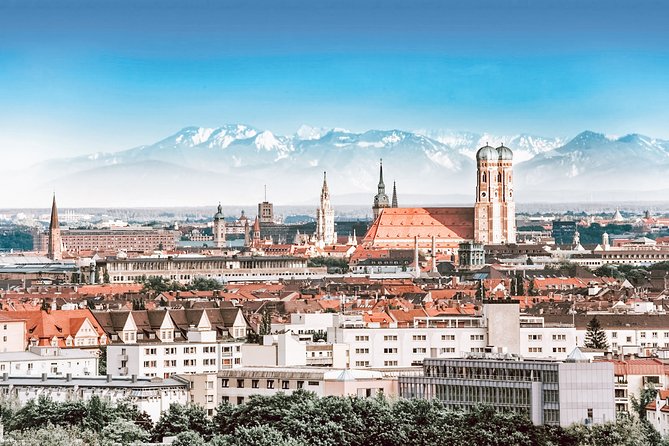
The Munich Residenz offers the strongest blend of royal and twentieth-century history. Bavarian dukes began transforming the site in 1385, and later dukes and kings rebuilt it until it became a vast palace complex.
The building was badly damaged during World War II and reconstructed from 1945 onward. That gives your guide a chance to explain not only who lived here, but also how Munich dealt with the destruction of its historic center.
The Nazi connection is direct. The Residenz housed former Gestapo headquarters, and Hitler joined the Nazi Party here. Those facts give the building a disturbing political layer beneath its courtly appearance.
The Residenz is now Bavaria’s largest museum, but this tour does not include admission. With about 20 minutes allocated, you should think of the stop as an introduction rather than a museum visit. If you want to see the interiors, collections, and reconstructed rooms in detail, plan a longer independent visit.
I find this kind of stop especially useful because it connects architecture to power. The Residenz was not built simply to look impressive. Its size and decoration reflected the authority of the people who governed Bavaria, and later its rooms became part of the machinery of Nazi rule.
Odeonsplatz and the Beer Hall Putsch
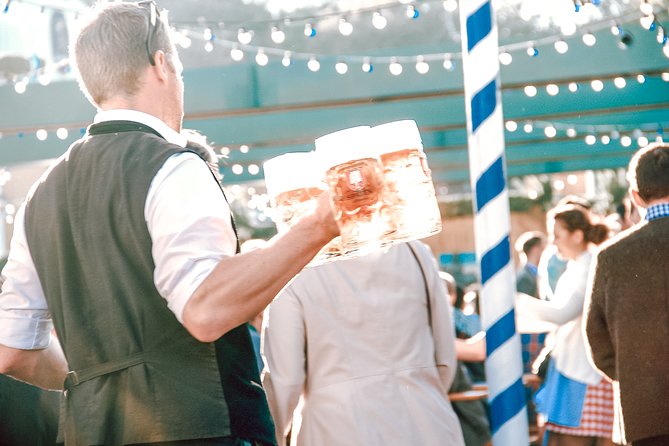
Odeonsplatz is one of Munich’s most important public squares. It has hosted demonstrations, funerals, concerts, and civic gatherings, making it a natural stage for political movements.
In 1923, Hitler’s Beer Hall Putsch culminated here. Bavarian police stopped the Nazi march, and the failed attempt became an early turning point in Hitler’s political career. Your guide can help you picture the event in the same space where people now meet for concerts and public celebrations.
The square is framed by the Feldherrnhalle, the Baroque Theatine Church of St. Kajetan, and Munich’s oldest café. The contrast is striking: elegant Italian-style architecture surrounds a place tied to one of the darkest episodes in German political history.
This stop works best when you take a moment to look around rather than simply listen and move on. Notice how easily a normal public square can become a political stage. The setting helps explain why the Nazis repeatedly used ceremonial spaces, marches, and public gatherings to project power.
Odeonsplatz is also one of the stronger photo stops. Your guide can suggest angles that include the square, the Feldherrnhalle, and the church. You should remember that photography advice is part of the experience, not a promise of a dedicated photography session.
St. Peter’s Church and the oldest parish in Munich
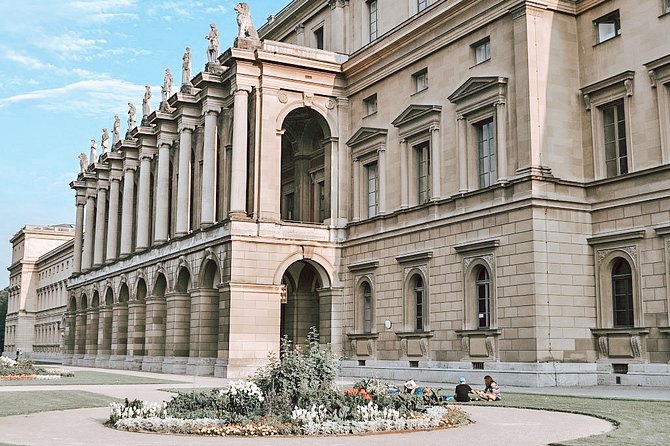
St. Peter’s Church, known locally as Alter Peter, is the oldest parish church in Munich. Its tower reaches 91 meters, and its location near Marienplatz places it close to the city’s central historic core.
The church’s story reaches back to the eleventh century. It was rebuilt after a fire in 1327, and the changes over time reflect Munich’s long religious and civic life.
A 20-minute stop gives you a chance to hear the main stories and admire the church’s role in the old city. If you want to climb the tower, check the time and admission details separately. The tour does not include entrance fees, and the listed schedule is too brief to assume that every optional visit fits.
I like ending here because St. Peter’s shifts the focus from politics and royal power to the daily life of the city. Its age gives Munich a sense of continuity, while its rebuilding reminds you that the city has repeatedly had to repair and reshape itself.
The church also makes a good final point for a short tour. You finish near Marienplatz, where it is easy to continue exploring on your own, find a café, or return to a sight that deserved more time.
How the private format changes the experience
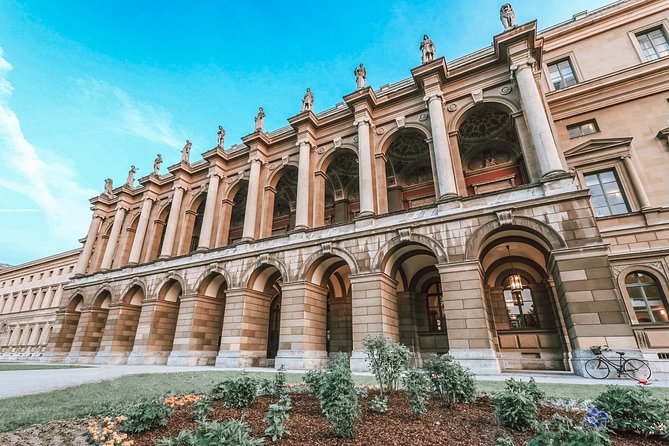
A private tour is most useful when you take control of it. The listed route is customizable, so you can ask for more WWII content, more church and palace architecture, or extra photo advice.
You can also adjust the pace. One particularly valuable detail is the guide’s willingness to slow down when the group begins to tire. That matters in Munich, where a day of walking and standing can add up quickly. Tanja is described as patient and cheerful, with a strong feel for the city and its stories.
The private setup also means you can ask direct questions without waiting for a large group to catch up. If a detail about the Gestapo, the Wittelsbach family, or wartime reconstruction catches your attention, you have room to follow it.
The tradeoff is cost. At $217 per person, this is not a budget walking tour. The value depends on your group size and priorities. For one or two people, the price is substantial. For a family or group that would otherwise book several separate tours, the private format and customizable route may make more sense, especially if you care about a personal pace.
The price includes the guide, private walking tour, taxes, and the hotel-lobby meeting. It does not include food, drinks, entrance fees, or transportation costs. Add those expenses when comparing the total cost with a standard group tour.
Who should book this experience
I would recommend it most strongly to a first-time Munich visitor who wants a fast orientation with serious historical content. It also suits anyone who prefers stories and context to a long museum visit.
History fans will appreciate the direct links to the Beer Hall Putsch, Hitler’s early political life, the Gestapo, wartime damage, and postwar rebuilding. Architecture fans get a broad sample of Gothic, Baroque, Italian-style, and royal design in one outing.
Families and mixed-interest groups may also like the flexibility. One person can ask about WWII, another about Bavarian kings, and someone else can focus on photo locations. The private format makes those different interests easier to manage.
I would hesitate if you want a slow, detailed visit inside Nymphenburg Palace or the Residenz. Twenty minutes at each stop is not enough for that. I would also hesitate if you need airport pickup or want all transfers and admissions bundled into one price.
Practical value, timing, and cancellation
The experience lasts about two hours and offers multiple start times. That makes it easy to place on your first day in Munich, when you want orientation, or early in a longer stay, when you can return to the places that interest you most.
Because the route includes five stops, the schedule is brisk. Treat it as a guided overview, not a complete examination of each site. Wear comfortable shoes, dress for the weather, and be prepared for a mix of outdoor walking and short visits near major buildings.
Free cancellation is available if you cancel at least 24 hours before the local start time. Changes made inside that 24-hour window are not accepted, and late cancellations are not refunded.
Service animals are allowed, and the meeting points are near public transportation. The tour is private, so only your own group participates.
Should you book the Munich history tour?
Book it if you want a private, story-driven introduction to Munich that connects royal architecture with the city’s Nazi and wartime past. The strongest part is the guide’s personal attention, especially if you are matched with someone like Tanja, who can explain details patiently and offer useful advice for the rest of your stay.
Before paying $217 per person, confirm how the Nymphenburg portion fits into a two-hour walking tour and budget for admissions or transport. If you want a clear overview, flexible conversation, and strong historical context, this is a practical choice. If you want to tour palace interiors at length, use this as an introduction and reserve separate time for the Residenz and Nymphenburg Palace.
FAQ
How long does the Munich history tour last?
The tour lasts approximately two hours.
Is this a private tour?
Yes. Only your group participates, and the itinerary can be changed to suit your interests.
Where does the tour begin?
Your guide meets you in the lobby of your centrally located hotel, hostel, or vacation rental.
Is airport pickup available?
No. Airport pickup is not available.
Which Munich sights are included?
The planned route includes the New Town Hall, Nymphenburg Palace, the Residenz, Odeonsplatz, and St. Peter’s Church.
Does the tour include entrance fees?
No. Entrance fees are not included in the price.
Are transportation costs included?
No. Transportation costs are not included, so you should clarify how the route between central Munich and Nymphenburg Palace will work.
Is the tour offered in English?
Yes. The tour is offered in English.
Does the tour run in bad weather?
Yes. Tours run rain or shine, so dress appropriately for the conditions.
Can I cancel for a full refund?
Yes, if you cancel at least 24 hours before the experience’s local start time. Cancellations made less than 24 hours before the start are not refunded.
Just added around Munich
- Private Transfer from Munich to Salzburg, English-speaking driver★ 3.5 · 3 reviews
- Private tour from Munich to Rothenburg and Harburg★ 5.0 · 3 reviews
- Scenic Adventure Private Day Tour to The Konigssee Salzburg★ 4.5 · 3 reviews
- Munich Photoshoot: A Must-Have Holiday Experience!★ 5.0 · 3 reviews
- Munich: Capture the most Photogenic Spots with a Local★ 5.0 · 3 reviews
- Private Beer Tasting Tour in Munich with Oktoberfest Museum★ 4.3 · 3 reviews
- Paul’s Private Tour in the Alte Pinakothek Munich★ 5.0 · 3 reviews
- Private Tour to Hallstatt Salt Mine and Skywalk with Lunch★ 5.0 · 3 reviews
Third Reich & WWII Tours, compared.

Birthplace of the Third Reich Guided Walking Tour
Read our review →
Munich World War II Sites Including Dachau Concentration Camp
Read our review →
Munich City Walking Tour, includes Third Reich & Viktualienmarkt
Read our review →
Munich 3-Hour Segway Tour: Nazi Munich & Royal Architecture
Read our review →
Dachau Concentration Camp Memorial Site And Third Reich Day Tour From Munich
Read our review →Browse the lists this tour appears in