
Reviewed · THIRD REICH & WWII TOURS
Small-Group 2-Hour Munich and The Third Reich Walking Tour
Munich’s old center hides the early story of the Nazi movement in plain sight. This two-hour walking tour connects Marienplatz, the Hofbräuhaus, Odeonsplatz, and Königsplatz, showing how ordinary city streets became settings for speeches, violence, ceremonies, and political power.
I like the small group limit of 15, which gives you room to ask questions. I also like the clear route from the old town to Königsplatz, since it links places rather than treating each site as an isolated fact. The main drawback is that you walk and stand for nearly the entire tour, and the subject is grim rather than light sightseeing.
In This Review
- Key points
- Why Munich is the right place for this difficult walk
- Marienplatz: the tour begins at the center of old Munich
- Hofbräuhaus: beer hall politics and Nazi beginnings
- Odeonsplatz: the failed 1923 coup becomes visible
- Königsplatz: ceremony, power, and the tour’s final stop
- What the guide adds to the buildings
- Price, pace, and practical value
- Weather, clothing, and group comfort
- Who should book this Munich history walk?
- Should you book the 3 p.m. tour?
- FAQ
- How long does the Munich and Third Reich walking tour last?
- What time does the tour begin?
- Where does the tour start?
- Where does the tour end?
- Is the tour offered in English?
- How large is the group?
- Is hotel pickup included?
- Can I cancel for a full refund?
Key points
- Starts at Marienplatz: Begin beside Munich’s Old Town Hall, tied to the 1938 pogrom against Germany’s Jewish population.
- Follows the Nazi rise: Connect the party’s beginnings, Hitler’s Hofbräuhaus speeches, and the failed 1923 beer hall coup.
- Ends at Königsplatz: See former Nazi ceremonial spaces and the building linked to the 1938 Munich Agreement.
- Small English group: The maximum is 15 people, with a local professional guide leading the walk.
- Good historical context: Guide Alun Evans explains how the political story fits into Munich’s streets and buildings.
- Plan for the weather: The tour runs in all conditions, so comfortable shoes and suitable clothing matter.
Why Munich is the right place for this difficult walk
Munich is often sold through church towers, beer halls, and handsome squares. Those sights are real, but they can hide the city’s role as an early center of National Socialism. This walk shifts your attention from postcard Munich to the streets where the movement organized, spoke, fought, and staged its public rituals.
That change in focus is the tour’s real value. You are not simply looking at old buildings. You are learning how political movements use familiar public places, how crowds are shaped, and how a city later chooses to remember what happened there.
The tone matters. This is not a sensational tour built around Nazi memorabilia or theatrical storytelling. The strongest parts are the explanations of cause and context: how the party developed, how Hitler used public appearances, and how the failed 1923 coup became part of Nazi ceremony and propaganda.
Guide Alun Evans is named in the tour information, and several booking details also refer to Alan. He is described as friendly, animated, attentive to questions, and able to explain a difficult subject without turning it into a dry lecture. You should expect a guide-led history walk, not a museum visit or a general introduction to Munich.
More Third Reich and wartime history walks in Munich:
- Munich: Third Reich & WWII Walking Tour
★ 4.6 · 6,181 reviews - Third Reich Walking Tour Munich
★ 4.5 · 4,291 reviews - Munich: Birthplace of the Third Reich Guided Walking Tour
★ 4.6 · 771 reviews
Marienplatz: the tour begins at the center of old Munich
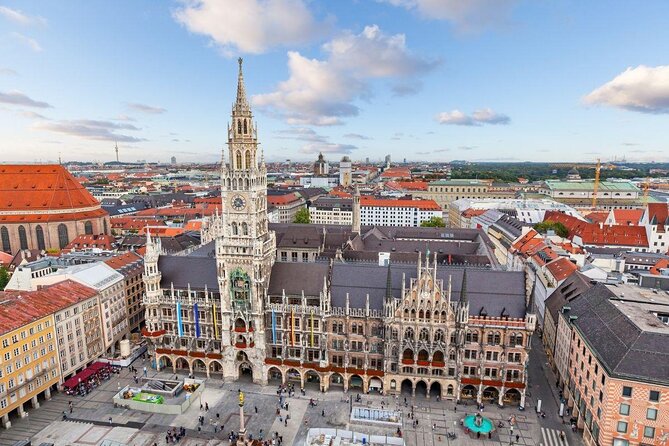
The meeting point is at Marienplatz 8, beside the municipal offices in the heart of Munich. This is an easy central starting place, but give yourself time to locate the exact address. The tour begins at 3 p.m., so arriving early lets you find the group without rushing through the square.
Marienplatz is a useful opening because it looks like classic Munich. The square is busy with shoppers, sightseers, historic buildings, and daily city life. Against that setting, the guide introduces the political events that took place here and nearby.
The Old Town Hall is a key stop. It is connected with the decision to carry out a pogrom against Germany’s Jewish population in 1938. That is a sobering beginning, and the guide’s job is to explain the event with care rather than reduce it to a passing date.
You will spend about 30 minutes in this area, the longest stop on the walk. That makes sense. The opening needs to establish both the physical city and the moral weight of the subject before the group moves on.
I recommend paying attention to the difference between what you can see and what you cannot. Many of the events discussed are not marked by dramatic remains. The value comes from learning what happened at a familiar civic place and understanding how public authority was involved.
Hofbräuhaus: beer hall politics and Nazi beginnings
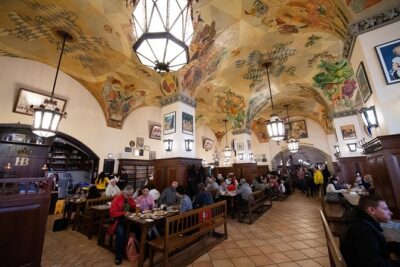
From Marienplatz, the walk continues toward the Staatliches Hofbräuhaus. The stop lasts about 10 minutes and takes place outside, so do not expect a beer tasting or a reserved table as part of the tour. Food and drinks are not included.
The Hofbräuhaus matters because Hitler regularly gave speeches there. Beer halls were important meeting places in Munich, and the guide uses this location to explain how political messages reached a public audience in an informal setting.
Before or around this stop, you also learn about the founding location of the Nazi party and the SS. The exact route and amount of time spent at each point can vary with the guide and the group, but the purpose is clear: connect the party’s early organization with the places where it gathered support.
This is one of the tour’s more useful contrasts. You see a famous Munich institution that many people visit for food, beer, or atmosphere, then learn how the same setting became associated with political speeches and recruitment. The point is not to make the building seem sinister. It is to show how ordinary social spaces can also become political stages.
If you want an extended visit inside the Hofbräuhaus, plan that separately. The tour passes the location as part of the historical route, and two hours is not enough for a full meal stop.
Odeonsplatz: the failed 1923 coup becomes visible
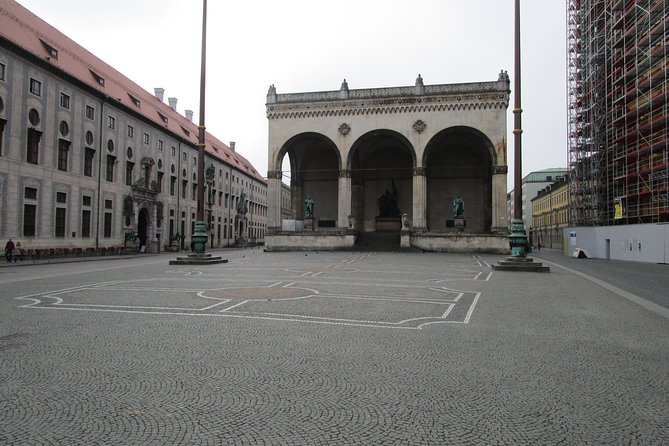
The walk reaches Odeonsplatz, where a gun battle took place between Nazi supporters and Bavarian police during the 1923 beer hall coup. You spend about 15 minutes here.
This stop helps explain why the coup matters even though it failed. The event became a major part of Nazi mythology and later public ceremony. The guide places the confrontation in the setting of the square, helping you understand the risk and symbolism attached to this location.
Odeonsplatz is also a practical point in the walk. After the open space of Marienplatz and the beer hall setting, the route shifts to a location associated with direct conflict. You are not only hearing a sequence of names and dates. You are following the movement through civic spaces where speeches, confrontation, and state power came together.
The limitation is that this is an outdoor explanation. There is no scheduled sitting period, and you may be standing while the guide talks. One person specifically found that the tour could use more chances to sit, especially when the explanations ran long. If you need frequent rests, ask about the pace at the start and wear supportive shoes.
More walking tours in Munich:
- Munich: Old Town & Viktualienmarkt City Walk in German
★ 4.7 · 2,304 reviews - Munich: Night Watchman Walking Tour
★ 4.7 · 2,092 reviews - Munich Ghosts and Spirits Evening Walking Tour
★ 5.0 · 1,900 reviews - Munich Old Town Walking Tour
★ 4.5 · 1,287 reviews
Königsplatz: ceremony, power, and the tour’s final stop
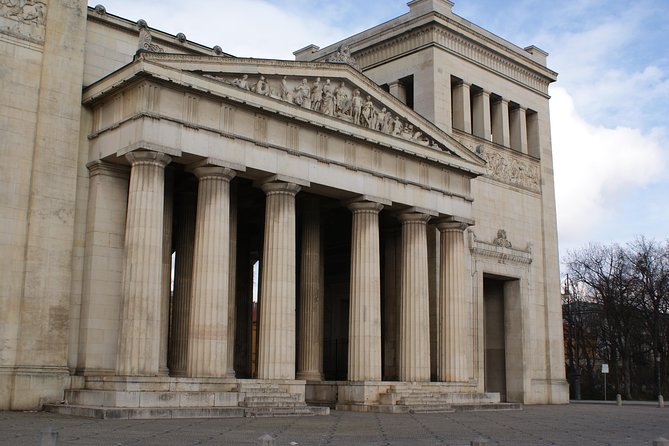
Königsplatz is the last main stop, with about 20 minutes devoted to the area. Here you see the building connected with the Munich Agreement of 1938 and the former ceremonial spaces used by the Nazis to honor the failed 1923 coup.
This is where the tour’s themes come together. Marienplatz shows political authority and persecution. The Hofbräuhaus shows speeches and organization. Odeonsplatz shows violent confrontation. Königsplatz shows how a movement turned places into symbols and used ceremony to shape public memory.
The physical setting is important. Large formal spaces can be used for gatherings, marches, and rituals. Standing there while hearing how the Nazis staged ceremonies makes the difference between a political meeting and a carefully designed public spectacle easier to grasp.
The tour ends at a central location in the Königsplatz area, as described in the route details, although the booking information also says the activity ends back at the meeting point. Because those details do not perfectly match, confirm the final meeting location with the guide before you leave. In either case, you remain in central Munich rather than being taken to a distant suburb.
At the end, you may choose to visit the Documentation Centre for the History of National Socialism. Admission to that museum is not included, and the tour does not provide transport there. Treat it as a separate follow-up visit, not part of the two-hour walking time.
What the guide adds to the buildings
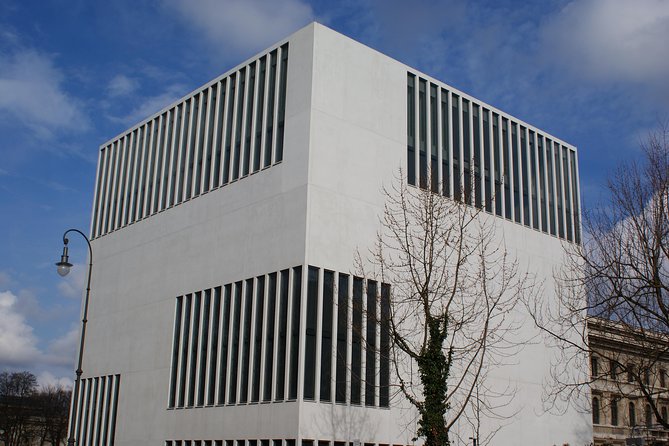
The tour’s quality depends heavily on the guide. A map and a few plaques cannot provide the same sequence of events or answer your questions in real time.
The guide is expected to explain the growth of the Nazi party, not just identify places connected with Hitler. That distinction matters. A list of Nazi landmarks can feel disconnected, while a well-told route shows how political groups build networks, attract followers, use public venues, and turn failed actions into later propaganda.
Alun Evans is repeatedly identified as the guide, and the comments about his work emphasize his command of the subject, friendly manner, wit, and willingness to answer questions. You can also expect the walk to include some general Munich orientation along the way. One particularly useful feature is that the guide points out buildings and locations you might otherwise pass without noticing.
The tone is described as appropriately sensitive. That is important here. A guide can be energetic without making the subject entertaining in the wrong way. The best approach gives you enough detail to understand the period while keeping the victims and consequences in view.
Because the group is capped at 15, you have a better chance of hearing clearly and asking follow-up questions than on a large coach tour. It is still worth staying near the guide, especially in busy areas where city noise can make outdoor explanations harder to catch.
Price, pace, and practical value
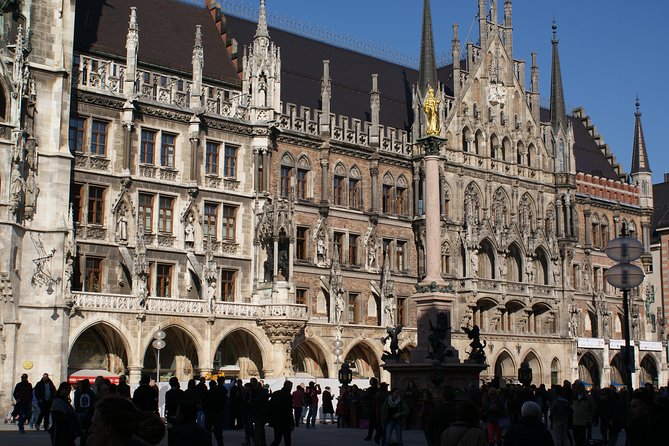
At $60.07 per person, this is not the cheapest way to spend two hours in Munich. You are paying for a professional guide and a focused route, not for entry tickets, food, or transport. The sites on the walk have no admission charge, so the fee mainly reflects the guide’s time, preparation, and historical interpretation.
I think the price is reasonable if this subject is important to you and you want a connected explanation rather than scattered reading. It is less compelling if you only want a general city tour or prefer to explore museums independently.
The two-hour length is a good compromise. It is long enough to cover four major locations and the Nazi party’s rise, but short enough to fit into an afternoon. You start at 3 p.m., which leaves your morning free for Munich’s churches, markets, or museums.
Still, do not mistake two hours for a complete study of National Socialism. The walk focuses on Munich’s role in the movement and on the early political story. It does not replace a visit to the Documentation Centre or a longer museum session.
The route requires moderate physical fitness. You walk between stops and stand during explanations. There is no included transport, hotel pickup, or hotel drop-off, and food and drinks are also your responsibility.
Weather, clothing, and group comfort
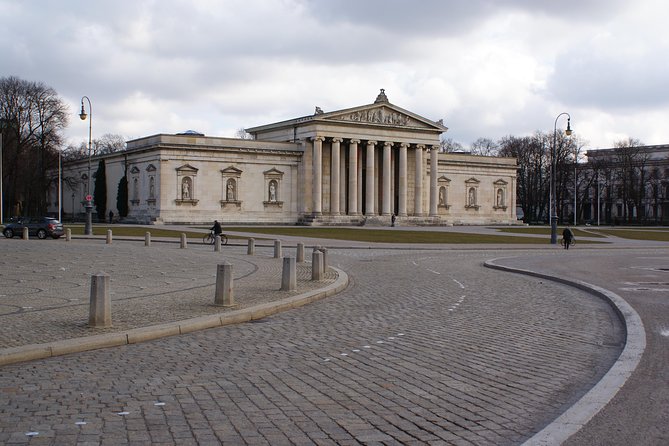
The tour operates in all weather. Munich can be cold and wet, so bring a coat or rain layer when the forecast looks uncertain. Comfortable shoes are more important than dress shoes, since the experience is entirely on foot.
A small group helps, but it does not remove the basic demands of an outdoor tour. You may find the explanations easier to follow if you bring water, dress in layers, and avoid scheduling a tight appointment immediately afterward.
Families can join, and the tour information records a booking that included children aged five and three, with short bathroom breaks arranged along the way. That does not make this a children’s tour, however. The subject is serious, and younger children may not follow the political detail or may find the tone heavy.
The walk can also suit older teenagers and adults with a strong interest in European history, military history, or the development of political extremism. You get the most from it if you are willing to listen, ask questions, and think about how the places looked and functioned at the time.
Who should book this Munich history walk?
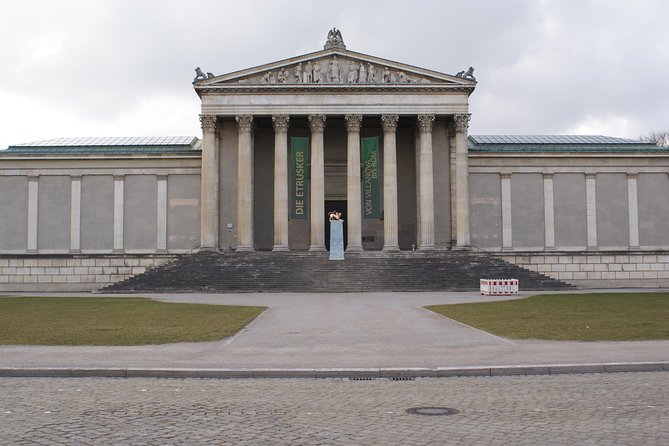
Book it if you want to understand how Munich became central to the Nazi movement and prefer a guide who can connect events to actual streets and buildings. It is especially useful during a first visit, before you explore the Documentation Centre, because the walk gives you a citywide framework.
It also suits people who have read about the beer hall coup, Hitler’s early speeches, or the Munich Agreement and want to see the places named in those accounts. The guide can put those events into a physical setting that a book cannot provide.
You may want to skip it if you are looking for relaxed sightseeing, frequent café breaks, or a broad overview of Munich’s art and architecture. The tour is serious, sometimes emotionally difficult, and light on sitting time.
The 100 percent recommendation rate and five-star rating from 32 published evaluations indicate a very strong response, especially to the guide’s subject knowledge, warmth, and ability to make overlooked places meaningful. One four-star assessment provides the useful counterpoint: the historical focus may feel too heavy for someone who expected a general Munich tour, and more sitting would improve comfort.
Should you book the 3 p.m. tour?
I would book this tour if the Nazi period is a central reason for your Munich visit or if you want a clear introduction before visiting the Documentation Centre. Its best feature is the route itself. In two hours, you move from the civic heart of Munich to beer hall politics, armed confrontation, and Nazi ceremony.
I would not choose it as your only Munich sightseeing activity. Pair it with time for the city’s other attractions, and allow yourself a quiet pause afterward. This is a valuable history walk, but it asks you to pay attention to difficult facts rather than simply admire the scenery.
Free cancellation is available up to 24 hours before the 3 p.m. start time. After that point, the paid amount is not refunded, and late changes are not accepted. With the moderate walking demands, all-weather operation, and serious subject, check your schedule, footwear, and forecast before committing.
FAQ
How long does the Munich and Third Reich walking tour last?
The tour lasts approximately two hours.
What time does the tour begin?
The stated start time is 3 p.m.
Where does the tour start?
It starts at Landeshauptstadt München Stadtkämmerei, Marienplatz 8, 80331 Munich, Germany.
Where does the tour end?
The activity is described as ending at a central location. The booking details also say it ends back at the meeting point, so confirm the exact final location with the guide.
Is the tour offered in English?
Yes. The tour is offered in English.
How large is the group?
The maximum group size is 15 people.
Is hotel pickup included?
No. Hotel pickup and drop-off are not included, and you must make your own way to and from the attractions.
Can I cancel for a full refund?
Yes, if you cancel at least 24 hours before the experience start time. Cancellations or changes made less than 24 hours beforehand are not refunded or accepted.
More 2-Hour Experiences in Munich
- Discover Munich 2-Hour Small Group Walking Tour
★ 4.6 · 491 reviews - Munich: Nazi History 2-Hour Small Group Walking Tour
★ 5.0 · 30 reviews - 2-Hour Segway Discovery Tour Munich
★ 5.0 · 20 reviews - Munich 2-Hour Segway Tour
★ 5.0 · 15 reviews
Just added around Munich
- Private Transfer from Munich to Salzburg, English-speaking driver★ 3.5 · 3 reviews
- Private tour from Munich to Rothenburg and Harburg★ 5.0 · 3 reviews
- Scenic Adventure Private Day Tour to The Konigssee Salzburg★ 4.5 · 3 reviews
- Munich: Capture the most Photogenic Spots with a Local★ 5.0 · 3 reviews
- Private Beer Tasting Tour in Munich with Oktoberfest Museum★ 4.3 · 3 reviews
- Munich Photoshoot: A Must-Have Holiday Experience!★ 5.0 · 3 reviews
- Paul’s Private Tour in the Alte Pinakothek Munich★ 5.0 · 3 reviews
- Private Tour to Hallstatt Salt Mine and Skywalk with Lunch★ 5.0 · 3 reviews
Third Reich & WWII Tours, compared.

Birthplace of the Third Reich Guided Walking Tour
Read our review →
Munich World War II Sites Including Dachau Concentration Camp
Read our review →
Munich City Walking Tour, includes Third Reich & Viktualienmarkt
Read our review →
Munich 3-Hour Segway Tour: Nazi Munich & Royal Architecture
Read our review →
Dachau Concentration Camp Memorial Site And Third Reich Day Tour From Munich
Read our review →Browse the lists this tour appears in